
Cheerful Music’s Snow Jiang Discusses AI and Human Creativity at The AI Summit London
In Partnership with PLAYY. PR
By Nina Parker
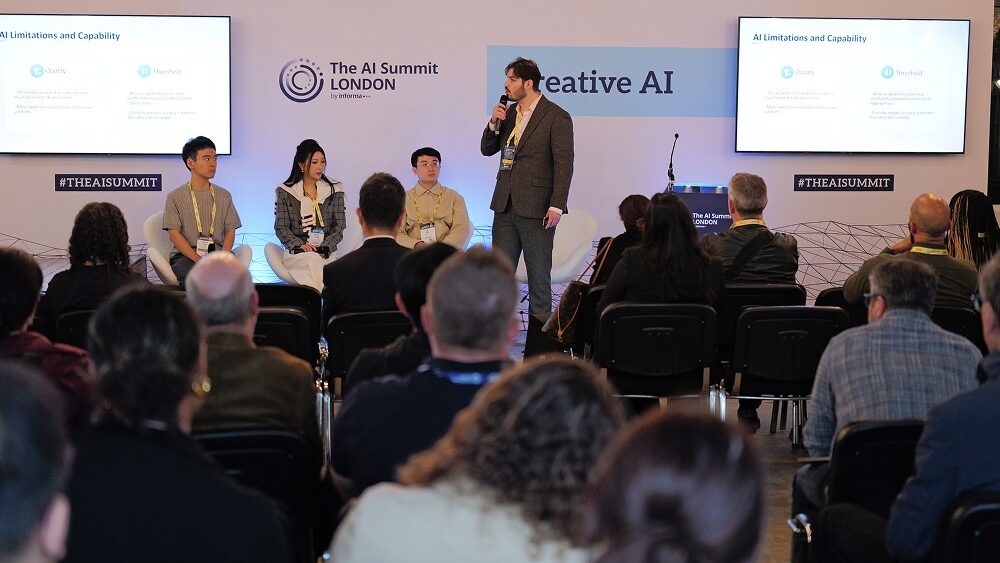
Artificial intelligence continues to reshape the music industry, but at this year’s 10th anniversary edition of The AI Summit London, one company argued that the future of music may rely more heavily on human creativity than ever before. Multi-national record label Cheerful Music took to the stage to discuss the growing relationship between AI and artistry, with founder and CEO Snow Jiang joined by UK A&R Manager Sergio Veloz and producer He Zhu for a discussion panel.
The panel discussion, titled “Can AI Make Human Music More Valuable?” explored the shift in music creation and consumption driven by technological progress. Focus was placed on the rising necessity of storytelling, cultural insight, and emotional resonance in this new landscape. Cheerful Music also captured the audience’s interest by showcasing its expanding range of virtual artist IPs. A standout moment was the presentation of AI artist Lynn (灵玥), who elicited a strong response from the crowd.
Lynn (灵玥) serves as a prime example of this synergy, merging AI-generated vocal performance with human-crafted songwriting to preserve authentic emotional resonance. This successful framework, which saw Lynn’s breakout single ‘RED’ amass more than 210 million views, is set to evolve through the introduction of new virtual artist IPs such as YAN and PeanutsJack.
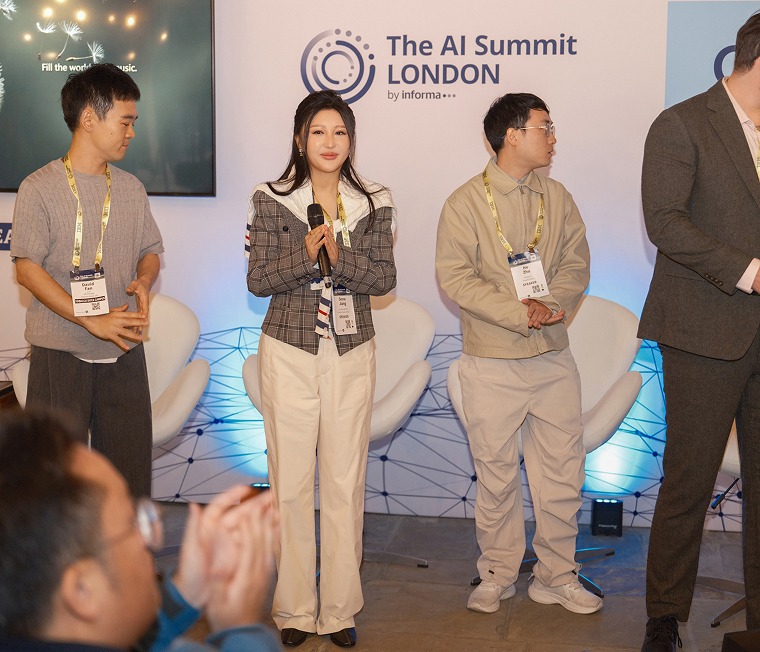
In her role as the visionary force behind Cheerful Music, Snow Jiang bridges the gap between being a professional singer-songwriter and a pioneer in global business strategy. Her leadership is immortalised in a prestigious Harvard Business School case study, an accolade that has seen her return to the institution frequently to mentor students from across 80 countries. During these sessions, she dissects the hit-making logic and strategic growth that have defined her company’s success. This past year alone, Jiang has solidified her position as a thought leader at some of the world’s most influential stages, sharing her profound industry expertise at Harvard, Amsterdam Dance Event, The Great Escape, and, most recently, SXSW.
A striking element of the event was the engagement from professionals across diverse sectors beyond the musical landscape. Such interdisciplinary curiosity offered an unconventional vantage point on the convergence of technology and the arts, serving as a powerful catalyst for Cheerful Music’s strategic roadmap as it navigates the next frontier of global AI innovation.
Snow Jiang joined us to share her insights on the emergence of virtual artists, the function of AI within the creative process, and her vision for the industry’s evolution.
At the AI Summit London, you argued that AI could make human music more valuable rather than less. What makes you confident that audiences will continue to seek out human creativity in an era where music can be generated at scale?
I believe that making music requires us to stay deeply connected to our emotions. Those emotions come from our real lives—our experiences, relationships, memories, and the moments that shape who we are. At its core, music is the transmission of emotion. People don’t fall in love with a song because it is technically perfect. They fall in love with it because, at a particular moment, it reflects something they are feeling themselves. A good example is the World Cup. I’m actually not a football fan, but recently I found myself paying attention to Cape Verde. It wasn’t because of the football itself—it was because I learned about the team’s story and the journey behind them. That human story created an emotional connection, and suddenly I wanted to follow them. Music is exactly the same. People don’t just connect with melodies—they connect with the people and the stories behind them. That’s why I believe the faster AI develops, the more valuable human creators become. In an age of unlimited content, genuine emotion becomes the rarest and most meaningful thing. AI can create music. Humans create meaning.
Many artists are concerned about AI’s impact on copyright, ownership, and creative livelihoods. How do you balance innovation with ethical responsibility, and where do you believe the industry should draw the line when it comes to AI training and artist consent?
I don’t think the choice is between AI and artists. We need both. I’m excited about AI because it can improve efficiency and open up new creative possibilities. But innovation should never come at the expense of creators’ rights. My principle is very simple: artists should always have the right to decide whether their work is used to train AI models. Consent should come first. I believe the future of AI in music is not replacing musicians, but empowering them. Technology should create more opportunities for creators, not fewer.
You’ve spoken at events ranging from Harvard Business School and SXSW to Amsterdam Dance Event and now the AI Summit London. What are the biggest misconceptions you encounter when discussing the future relationship between AI and music?
One of the biggest misunderstandings is that people think AI will replace
Music. I don’t see it that way. Throughout history, every major technological breakthrough has changed the way we create and consume music. From cassette tapes to the iPod, and then to streaming platforms, each innovation became a symbol of its era. AI is simply the next tool. It can make music creation more accessible and more efficient, but it cannot replace human emotion or creativity. Technology changes how music is made. Human emotion is what gives music its lasting value.
Cheerful Music plans to expand its virtual artist ecosystem with new characters such as YAN and PeanutsJack. Looking ahead five years, do you see virtual artists becoming a mainstream part of pop culture, or will they remain a complementary space alongside human performers?
I don’t think it’s a question of replacement. Virtual artists are becoming a new form of creative expression, just like animation, films, or video games. They can tell stories, build unique worlds, and connect with audiences in different ways. At Cheerful Music, we’re developing virtual artists like YAN and PeanutsJack because we see them as new creative possibilities, not replacements for human musicians. In the future, I believe human artists and virtual artists will coexist. Each will have its own audience, its own strengths, and its own cultural value.
Follow Cheerful Music: