
Citi Developers Explore Modern Living With AMRA, a Wellness-Centred Space
In partnership with Citi Developers
By Wyles Daniel
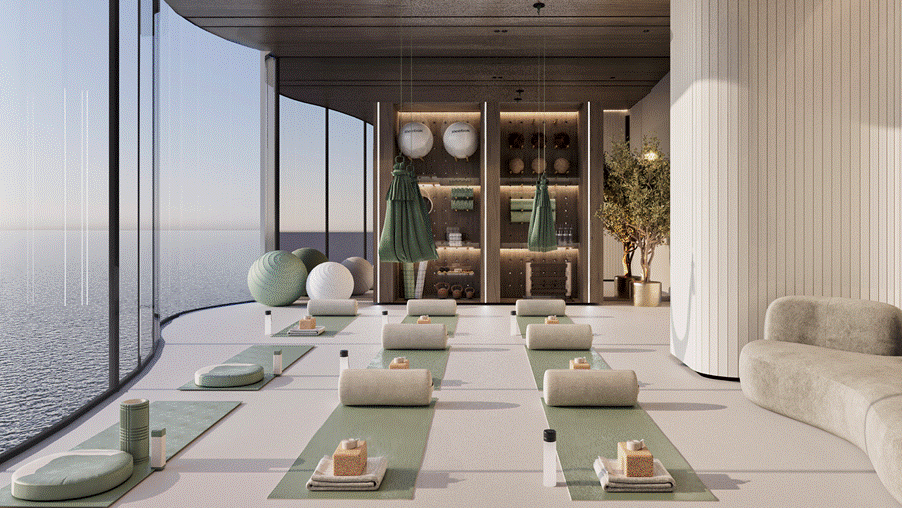
Wellness has become one of the defining interests of contemporary culture, influencing how people work, travel, and even define success. What was once a niche pursuit has widened its appeal, shaped by mindfulness, nature, and the need to slow down. Citi Developers’ latest project, AMRA, enters this landscape as a space designed to reflect how people want to live now. Bringing together residential living, hospitality, and wellness experiences in a setting shaped by intentional design, the project suggests that wellbeing is no longer an activity to schedule, but a rhythm to build daily life around.
A Place Designed to Feel Different
AMRA sits inside a rare Blue Carbon lagoon in Umm Al Quwain, a location that immediately sets a tone of quiet and spaciousness. The uninterrupted water views and preserved landscape form the backdrop for a development that Citi Developers describes as an Integrative Wellness Resort. The idea is straightforward but ambitious, blending architecture, routine wellness practices, and community spaces into one setting. Rather than present wellness as a collection of add-ons, the project treats it as a framework for how a place should function.
The three towers contain 820 fully serviced residences, but the design aims to avoid the formality often associated with large developments. Instead, the flow of the property takes cues from nature. Soft transitions, open sightlines, and access to outdoor areas are central. Biophilic design principles guide much of the structure, recognizing the influence that natural environments can have on clarity and mood.
Culture, Creativity, and Daily Rituals
Where some wellness projects focus on amenities, AMRA leans into the cultural and emotional dimensions of wellbeing. Partnerships with international firms shape the project’s creative identity. Carefully selected art adds a visual layer to the environment, while interior and architectural collaborators such as 1508 London and Trush Design establish the tones and textures that define individual spaces. Operational partners contribute to a daily rhythm that is meant to feel grounded rather than staged.
The wellness elements reflect this same approach. Cryotherapy and hydrotherapy sit alongside yoga and Pilates pavilions, meditation decks, and landscaped paths. These features are arranged to encourage repetition and routine, supporting the idea that small daily practices shape long-term wellbeing. Dining programs will emphasize nutrient-rich and sustainably sourced ingredients, reflecting a growing shift toward food that contributes to clarity and balance.
Public Figures Who Align With the Lifestyle
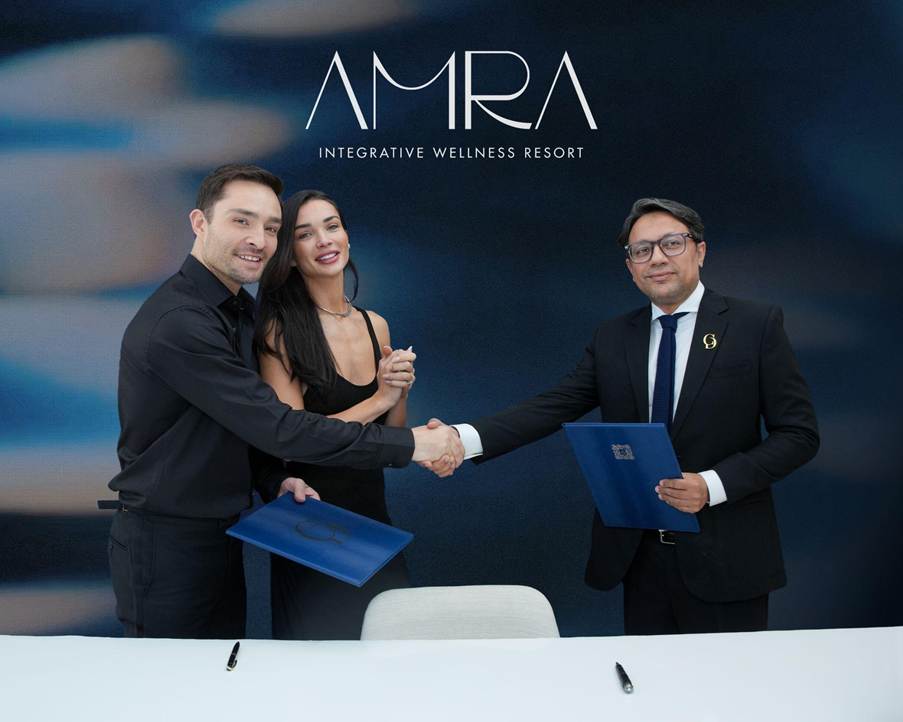
Actors Ed Westwick and Amy Jackson serve as ambassadors for AMRA, although their role feels less promotional than participatory. Jackson describes the environment as grounding, while Westwick notes the project’s focus on calm and connection. Their involvement ties the development to a broader cultural trend in which public figures are gravitating toward slower, more intentional lifestyles.
A Preview of Where Wellness Culture Is Heading
Citi Developers has structured AMRA with long-term relevance in mind. A resort-grade operational model and a payment structure that extends post-handover offer predictability and accessibility. The project is scheduled for completion in Q4 2028, arriving at a time when global interest in wellness-centred environments continues to expand.
AMRA does not present wellness as a trend or a retreat. Instead, it positions wellness as a way of shaping physical space and daily life. In doing so, Citi Developers contributes to a cultural shift that places value on balance and connection. As wellness becomes further embedded in how people define a fulfilling lifestyle, AMRA stands as an example of how built environments can accommodate these priorities in a thoughtful and consistent way.
The information provided in this article is for general informational and educational purposes only. It is not intended as legal, financial, or professional advice. Readers should not rely solely on the content of this article and are encouraged to seek professional advice tailored to their specific circumstances. We disclaim any liability for any loss or damage arising directly or indirectly from the use of, or reliance on, the information presented.