
Creating Stories That Refuse to Scroll: Oana Martisca on Power, Memory, and Film
In partnership with APG
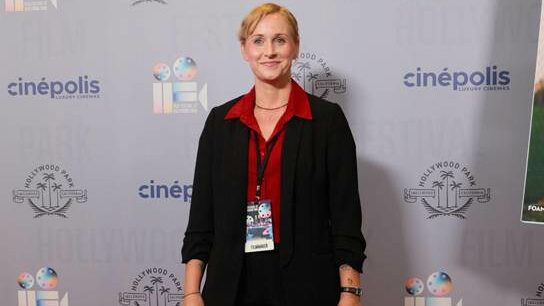
Attention, according to Oana Martisca, has become the most aggressively mined resource of the digital age, and truth is often the collateral damage. As a filmmaker, producer, storyteller, and the mind behind the social documentary, News Without a Newsroom, Oana positions her work in open resistance to a culture she believes is engineered for speed and algorithmic reward. Her craft, she notes, is rooted in long-form truth, an approach she describes as both ethical and rebellious in a media landscape dominated by virality.
A Childhood Shaped by Propaganda
Oana traces that instinct back to her childhood. She was two years old when she witnessed footage that she describes as a life-altering political moment. According to her, those broadcasts of the harsh reality of power became an early lesson in how propaganda can seep within the folds of memory. “I was so young, but that moment stuck with me. I realized the influence it held in my life and my views of the country I lived in,” she recalls.

Growing up amid censorship and limited information sharpened what she describes as an “anti-propaganda reflex,” one that continues to shape how she evaluates stories and chooses what to tell. In her view, truth is not a stylistic choice but a responsibility formed through the contrasting experiences of her life.
Discovering Freedom in a New Country
Having later moved to the US, Oana says her understanding of freedom, particularly freedom of speech, became more concrete. She emphasizes that her background makes her acutely aware of what is lost when voices are controlled or erased. That awareness, she says, informs both the subjects she gravitates toward and the way she approaches them on screen.
According to Oana, she has always been drawn to reportage and journalistic modes of storytelling. She speaks with admiration about journalists who embedded themselves in combat zones, risking their lives to document fragments of reality that might otherwise vanish. “I’ve always been inspired by their fearlessness. I believe that they represented people like me, those who didn’t have a voice or the power to share their narrative,” she says.
In her view, those journalists functioned as advocates, translating lived experience into public record and, at times, held the power to influence policy over public conscience. She believes that authority in storytelling once carried greater moral weight, particularly for people without access to power. Yet, she notes the decline of that flexibility, urging that it’s something contemporary filmmakers must actively resist.
Pushing Back Against the Algorithm
Oana is openly critical of the attention economy, arguing that the dominance of short-form, vertical content has reshaped not only what people watch but how they think. “The algorithm is starting to lead our lives,” she says, explaining that her resistance to it is philosophical rather than nostalgic. According to her, long-form storytelling allows subjects to reveal themselves gradually, without being reduced to moments designed to perform. That patience, she believes, is where truth still has room to exist.
Her influences reflect that worldview. Oana admires writers who indulge immersive, human-centered approaches. In her view, their work demonstrates how observation and personal presence can coexist without turning the story into spectacle.
Oana continues to explore themes of displacement, migration, and belonging. According to her, extensive travel across Europe and South America has deepened her understanding of cultural identity and linguistic nuance, allowing her to approach communities from a position of proximity rather than distance. She sees film as a form of preservation, capable of holding stories that would otherwise be lost to speed or indifference.
What Comes Next
With regard to future projects, Oana is developing a fictionalized autobiographical project, which she plans to adapt into a film or television series. She describes it as a hybrid of travel writing and lived memory, still evolving in form. Alongside this, she remains actively engaged in short-form filmmaking, which she views as a space for experimentation.
In Oana’s view, resisting the algorithm requires conviction and a willingness to be misunderstood in a world that may be driving toward conformity. Ultimately, she believes that as the new realm of storytelling favors momentum over reflection, the most radical act for a storyteller can be to slow down and tell the truth on their own terms.