
How the Moped Became a Musician’s Favourite Ride
In partnership with Direct Bikes
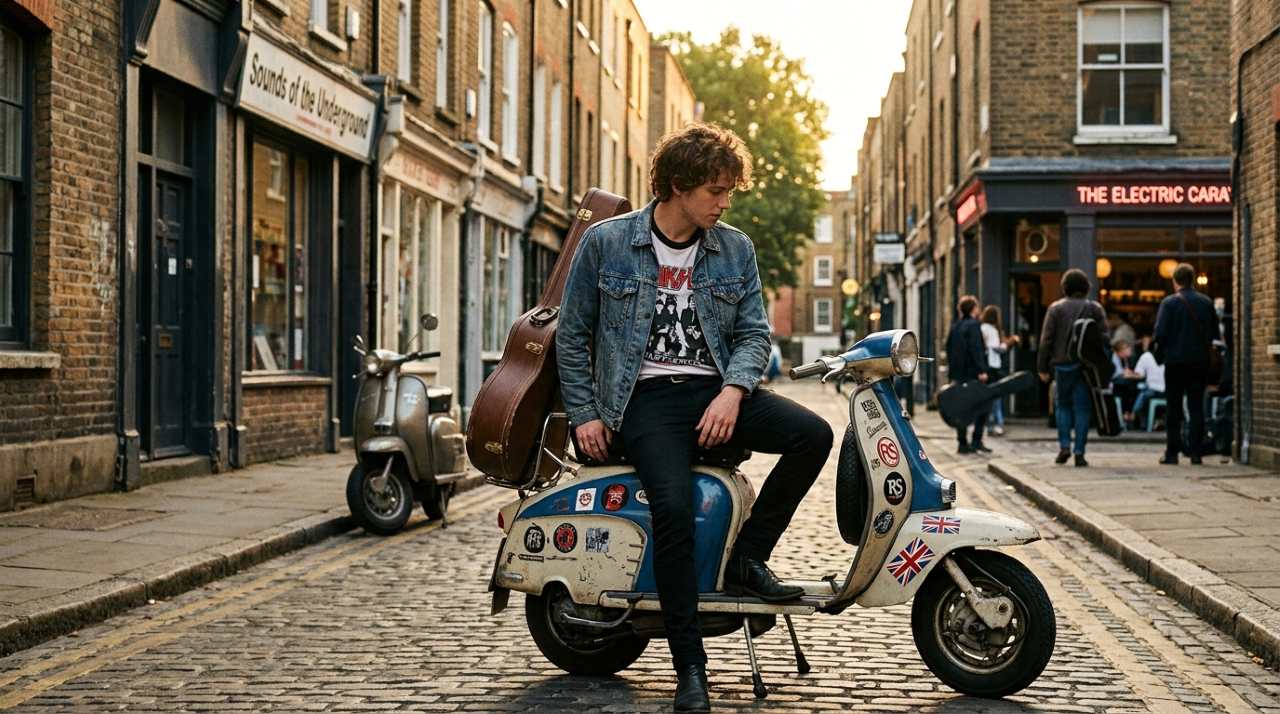
Freedom, rebellion, identity – these ideas tend to ride deep in music history. Machines on two wheels have carried such meaning for decades. Think of souped-up bikes thundering along U.S. roads. Picture old scooters darting between buildings in Paris or Rome. These images stick because they match the rhythm of songs about breaking rules. Lately, though, something simpler shows up more often near stage doors and studios. Not flashy, not loud – the moped now rolls beside singers, rappers, guitar players. It moves without fanfare yet fits perfectly within the scene.
Out on the curb near music spots, you’ll spot mopeds, small, cheap, full of charm. Not loud like big bikes, yet somehow they fit right in with artists moving through crowded streets. Their usefulness shows in how often musicians choose them. Simple machines, built for real days in busy towns.
A Symbol of Independence
For many artists, particularly those early in their careers, transportation can be one of several logistical challenges. Touring schedules, late-night rehearsals and changing gig times may require a level of flexibility that public transportation does not always offer.
Mopeds offer a practical solution. They are relatively affordable to purchase, cost-efficient to operate and easier to park in crowded cities where many musicians live and work. For emerging artists balancing day jobs with studio sessions, a moped can provide a reliable way to get across town without the financial burden of a car.
But practicality is only part of the appeal. Musicians have often been drawn to vehicles and tools that align with a sense of independence, mobility and personal style. A moped aims to deliver both. Whether it’s a classic Italian-inspired design or a modern customised machine, riders can inject their own personality into every journey.
The Famous Riders
The connection between musicians and scooters has a real place in music history.
Few artists embody the relationship more completely than Paul Weller. During the late 1970s Mod Revival, Weller and The Jam helped make Lambrettas and Vespas inseparable from British rock style. Photographs of Weller arriving at gigs on a scooter became closely associated with his image, alongside his sharp tailoring and Rickenbacker guitar.
Earlier still, John Lennon and George Harrison were both known to ride Vespa scooters during the 1960s. At the height of Beatlemania, scooters represented youthful modernity, and their adoption by members of The Beatles helped cement scooters within British pop culture.
More recently, Liam Gallagher has carried the scooter-influenced mod aesthetic into the Britpop era, while Justin Bieber even collaborated with Vespa on a special-edition scooter design. Different genres, different generations, same attraction to the romance of two wheels.
Perfect for City Life
Music scenes have traditionally flourished in urban environments. Cities such as London, New York City, Berlin and Los Angeles are packed with rehearsal spaces, record labels, venues and creative communities. Unfortunately, they are also packed with traffic.
For artists who spend their days moving between meetings, recording sessions and performances, sitting in traffic can feel like wasted time. A 50cc moped offers a way around that problem. Their small size allows riders to navigate congested streets more efficiently than most cars, while their low running costs make frequent travel affordable. Getting moped insurance can be affordable and accessible. In cities where parking spaces can be scarce and expensive, the ability to park almost anywhere is a major advantage.
Many musicians also appreciate the simplicity of riding a moped. Unlike larger motorcycles, they are generally less intimidating for beginners and require less maintenance, making them an accessible option for artists whose primary focus is creating music rather than maintaining vehicles.
The Style Factor
Image matters in the music industry.
Throughout history, musicians have embraced fashion, vehicles and cultural trends that help define their artistic identity. Mopeds occupy a unique place in that landscape. They can feel stylish and distinctive without seeming overly extravagant.
Vintage scooters and mopeds have become particularly popular among indie musicians, singer-songwriters and alternative artists. Their retro aesthetic aligns perfectly with the nostalgia-driven visual trends that continue to influence album artwork, music videos and social media content.
A photograph of an artist leaning against a weathered scooter outside a rehearsal space often feels more authentic than a staged image featuring a luxury sports car. In an era when many fans value authenticity, the understated appeal of a moped can feel especially fitting.
A Touring Companion
While mopeds are not replacing tour buses anytime soon, they have found a place within touring culture.
Many musicians use them for local transport when performing at festivals or spending extended periods recording away from home. Rather than relying on taxis or ride-sharing services, artists can quickly travel between hotels, venues and local attractions on their own schedule.
In parts of Europe and Asia, where scooters are deeply integrated into daily life, visiting musicians often embrace them as the easiest way to explore new cities. The experience provides a sense of connection to local culture that can be difficult to achieve from the back seat of a car.
Sustainability and Changing Priorities
Environmental awareness has become an increasingly important issue within the music industry. Festivals, touring companies and artists themselves are under growing pressure to reduce their environmental impact.
Modern mopeds, particularly electric models, align with these changing priorities. Electric scooters produce no tailpipe emissions and are significantly quieter than traditional motorcycles, making them attractive to environmentally conscious musicians.
For artists looking to reduce costs while lowering their environmental footprint, electric mopeds offer an appealing combination of practicality and responsibility.
More Than Just Transport
Perhaps the biggest reason mopeds continue to appeal to musicians is that they represent something larger than transportation.
Music has always been about movement—physically, emotionally and culturally. Artists spend their lives chasing ideas, opportunities and experiences. A moped can reflect that restless spirit. It is a vehicle often associated with exploration, spontaneity and freedom.
Unlike luxury cars that can feel distant or unattainable, mopeds are accessible. They can carry a sense of everyday adventure that appeals to musicians at different stages of their careers, from unsigned performers playing local clubs to established artists looking for a simpler way to get around.
As music culture continues to evolve, the connection between musicians and mopeds shows no sign of slowing down. Whether parked outside a recording studio, used to navigate city traffic on the way to a gig or appearing in the background of a music video, the moped has become a recognizable part of music culture in its own understated way.