
In the Spaces Between Sounds: Will Lyu’s Quiet Approach to Music
In partnership with APG
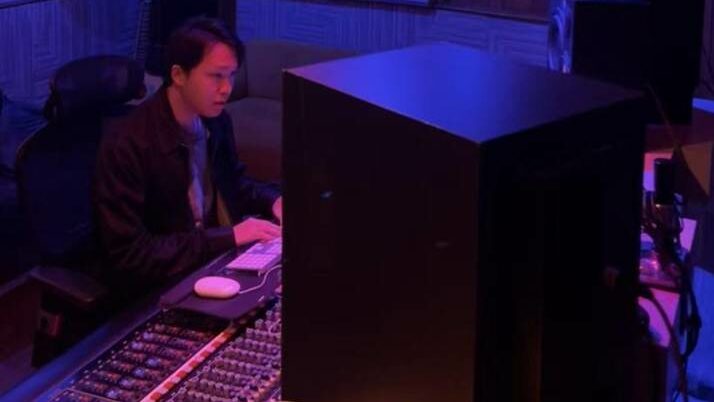
Will Lyu doesn’t chase volume. His music arrives quietly, built from small decisions that reward attention: a guitar line left deliberately unresolved, drums that feel more implied than declared, harmonies that linger just long enough to create tension before dissolving. In an era shaped by immediacy, Lyu’s work suggests patience — an understanding that emotion doesn’t need to announce itself to be felt.
Listening Before Speaking
Lyu’s relationship with sound began long before studios or sessions entered the picture. Guitar was his entry point — a way of understanding how emotion could live inside vibration. What mattered wasn’t speed or virtuosity, but feeling: how a note sat in the air, how it decayed, how it made the body respond.
That sensitivity would later shape how he approached recording itself. Rather than treating sound as something to be controlled, Lyu learned to treat it as something to be observed. Small shifts mattered. Imperfections stayed.
Learning the Studio as an Instrument
That mindset deepened when he moved to Los Angeles to formally study recording and production. Studio environments introduced him to a different way of thinking about music — one rooted in collaboration, discipline, and intuition rather than rigid genre boundaries. Sessions became conversations, and sound became something malleable, shaped collectively rather than imposed.
At a well-known studio, Lyu experienced the pace and expectations of major sessions. The experience sharpened his attention to detail and reinforced the idea that the most impactful choices are often the most understated ones.
Mentorship Under Om’Mas Keith
His development continued under the mentorship of Om’Mas Keith, the Grammy-winning producer widely recognized for exploring the emotional language of modern hip-hop and R&B. Working closely with Om’Mas, Lyu served as an engineer on numerous sessions, contributing directly to the technical and sonic execution of recordings with genre-bending artists, such as Soul in the Horn. The experience placed him inside high-level creative environments where precision, trust, and instinct were essential, reinforcing an approach to sound that values emotional clarity as much as technical discipline.
That openness carries directly into Lyu’s artist project, YELV. Rather than presenting a fixed identity, the project feels like an evolving space, shaped by memory, movement, and experimentation. Songs drift between softness and structure, often built around contrasts: organic guitar against digital processing, intimate moments framed by expansive sound design. The result is music that feels internal, as though it’s unfolding inside the listener rather than being projected outward.
Leaving the Human in the Machine
Lyu’s approach reflects a broader shift among contemporary artists who see music less as a finished product and more as an ongoing process. He treats each piece as a moment rather than a statement meant to define him permanently, allowing the work to remain fluid — responsive to different collaborators, contexts, and emotional states.
At the center of it all is a belief that sound carries meaning beyond words. Lyu often views frequency as a form of communication — a way to transmit feeling without explanation. That philosophy guides his decisions in the studio, where technical choices are informed as much by intuition as by training. Instead of chasing perfection, he leaves traces of humanity intact.
Quiet Intention Over Spectacle
This balance between control and vulnerability, which lends his music a sense of restraint and focus. Nothing feels rushed. Nothing feels forced. Each element seems chosen not for impact, but for resonance. It’s a sensibility that stands apart from trend-driven production, offering an alternative path rooted in attentiveness and emotional honesty.
Looking ahead, Lyu is focused on expanding both his collaborative circle and his sonic vocabulary. Having developed inside studio environments built on dialogue and trust, he’s actively seeking new collaborations with artists across different musical spaces, viewing each exchange as an opportunity to explore unfamiliar textures and emotional directions. At the same time, he plans to continue evolving his own music through experimentation — testing new sounds, structures, and production approaches. For Lyu, growth lies in staying open: letting collaboration and exploration push his work into places that feel unfamiliar, and therefore worth pursuing