
Living Crafts’ GOTS-Certified Clothing: A Leader in Sustainable Fashion
In partnership with LIVING CRAFTS
By Nia Bowers

GOTS, the Global Organic Textile Standard, has become one of the most widely recognized labels for organic textiles. It imposes strict environmental and social requirements from farm to finished product. For consumers, it functions as a verifiable signal rather than a marketing claim. For brands, it represents one of the most demanding textile certifications currently in use.
LIVING CRAFTS adopted GOTS long before it became part of mainstream sustainability conversations. Founded in 1985, the German company began producing textiles during a time when organic cotton represented less than 1 percent of global cotton output. Today, LIVING CRAFTS’ core collections, ranging from socks and underwear to nightwear and casual basics, are produced under GOTS rules that limit chemical inputs, regulate wastewater treatment, restrict hazardous dyes, and require independently monitored social conditions in factories.
Frank Schell, Managing Director of LIVING CRAFTS, says the standard has helped structure their production for decades. “GOTS creates clarity. It shows what can be verified and what cannot be ignored,” he explains. As regulatory pressure grows in Europe, including incoming rules on eco-design and extended producer responsibility, standards like GOTS are gaining new relevance.
The Environmental Stakes of Textile Production
Global textile production remains resource-intensive. Cotton farming alone accounts for an estimated 6 percent of global pesticide use, according to published agricultural data. Water consumption varies widely by region, but conventional cotton can require thousands of liters of water per kilogram. GOTS restricts genetically modified seeds, prohibits synthetic fertilizers, and limits the most toxic pesticides. These rules shift farming toward lower-impact methods.
Within manufacturing, dyeing and finishing contribute significantly to environmental harm. Wastewater from untreated dye houses can contaminate local rivers and soil systems. The GOTS protocol requires wastewater treatment facilities and bans a long list of hazardous substances. For companies working across multiple countries, these rules provide a baseline that applies regardless of local regulation.
LIVING CRAFTS sources from suppliers in Lithuania, Turkey, India, and Germany. Monitoring across these regions requires third-party audits and documented traceability. Schell notes that GOTS is useful for maintaining consistent production expectations. “It gives the same requirements whether you produce in Europe or Asia,” he says.
Transparency and Consumer Trust
European consumers are increasingly scrutinizing sustainability claims. New EU guidance requires brands to provide measurable evidence, and several member states have already penalized misleading environmental marketing.
GOTS certification provides a structured, independently verifiable system for LIVING CRAFTS’ product lines. Instead of highlighting generic “eco-friendly” language, the brand directs consumers to clearly defined standards.
LIVING CRAFTS currently serves the European market as its core region, with worldwide shipping. The company states that its customer base has grown to more than 200,000 buyers. The brand’s approach aligns with market reports showing steady demand for durable basics, a category less vulnerable to trend cycles and better suited to traceable production.
Balancing Affordability and Sustainability

Price remains a major obstacle in expanding access to sustainable fashion. Certified organic textiles generally cost more due to lower yields, more labor-intensive farming, and stricter manufacturing oversight. Yet consumer expectations for affordability remain strong, particularly during periods of inflation.
LIVING CRAFTS describes its clothing as high quality offered at affordable prices. The company is part of the Dennree Group, which also includes the Denns BioMärkte organic retail chain.
The company reports steady annual revenue with consistent year-over-year growth. Its best-selling items – socks, underwear, essentials, and nightwear – reflect consumer demand for reliable, repeat-purchase items. These categories allow a stable production model rather than constant style turnover.
Preparing for New European Regulations
The coming years will bring major policy changes. The EU’s Strategy for Sustainable and Circular Textiles aims to reduce waste, improve recyclability, and discourage ultra-fast fashion practices. Proposed regulations include design requirements for durability and repairability, digital product passports, and producer responsibility for textile waste.
Brands that already operate with documented traceability may adapt more quickly. For companies dependent on unregulated subcontracting or short-term suppliers, compliance may require substantial restructuring.
LIVING CRAFTS’ supply chain, built over several decades, includes long-term relationships with factories that already operate under GOTS controls. While no certification solves every challenge in textile production, the structure provides a foundation for upcoming regulatory shifts and aligns with broader European sustainability targets.
A Standard That Continues to Hold Weight
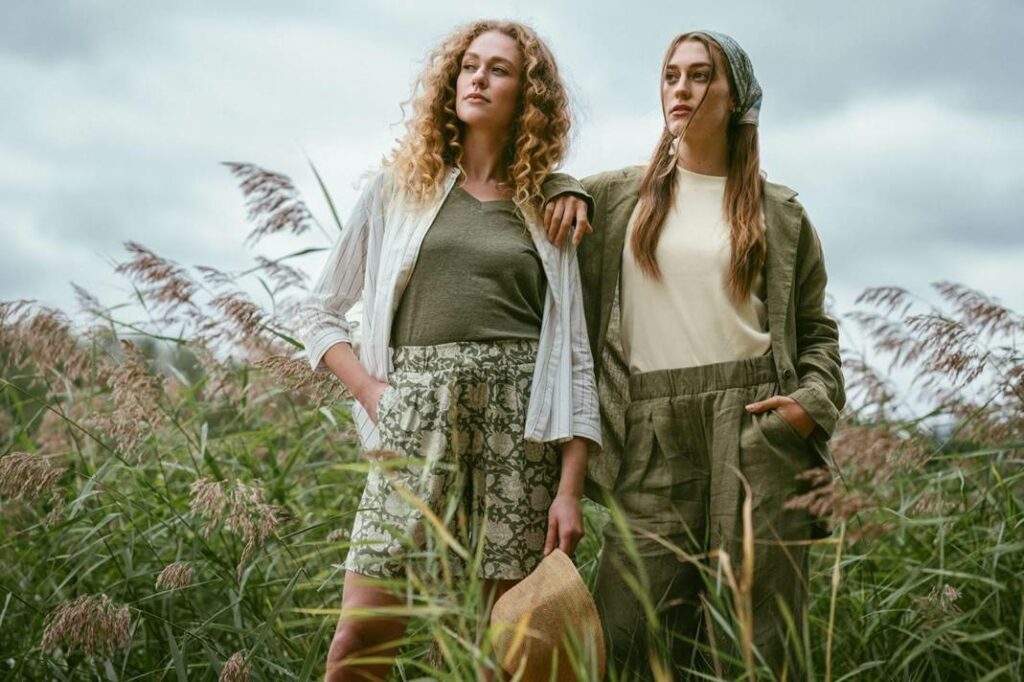
Sustainability claims have grown more common and more contested in recent years. GOTS is one of the few globally recognized standards that incorporate both environmental and social criteria. For companies such as LIVING CRAFTS, the certification is not described as a solution to all industry problems but as a defined framework with measurable requirements.
Schell sums it up simply: “You cannot improve what you cannot measure.”