
May Sfadia: The Songwriter and Producer Stepping Into the Spotlight
In partnership with May Sfadia
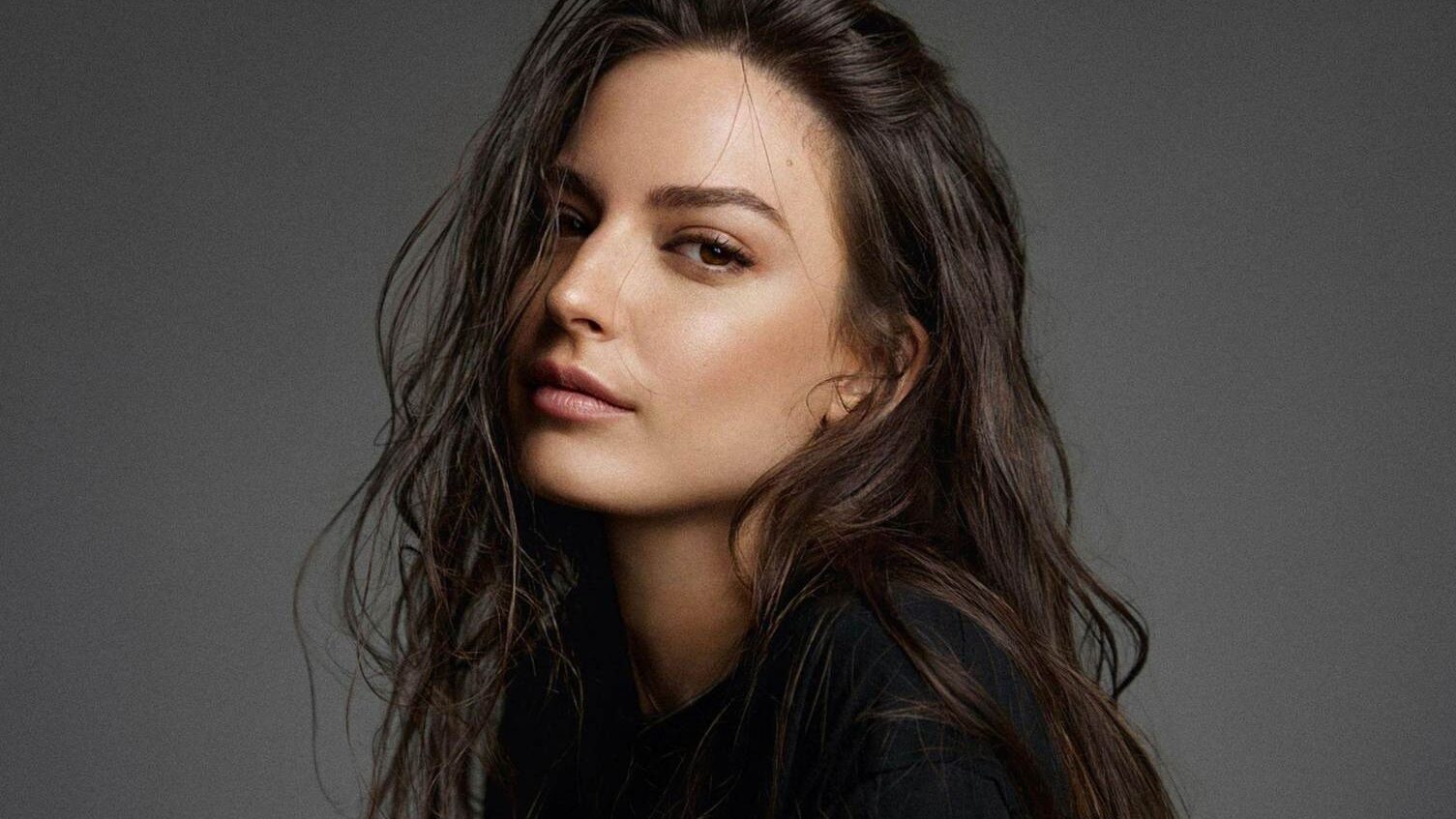
She helped create Israel’s Eurovision 2023 entry, wrote and produced songs for other artists, and built a name for herself in the music industry long before audiences knew her face. But behind other artists’ successes is a singer with varied musical interests who taught herself to record, arrange, and produce music – and is now focusing on her own work as a performer. Meet May Sfadia.
The Girl from Haifa Who Wanted to Be Everything
May Sfadia says she is 31 and grew up in Haifa with a microphone in her hand and one big dream: to live on stage. Even as a child, she never really believed in musical boundaries. In her bedroom, standing in front of the mirror, she would imitate singers like Sia, Mariah Carey, and Christina Aguilera, then switch to Israeli songs by artists such as Idan Raichel, and an hour later find herself singing a larger-than-life rock ballad. “I always loved a bit of everything,” she says. “I would shut myself in my room for hours and sing. I always felt most alive on stage, and I imagined it every night.”
Sfadia says that by the age of 16, she was the lead singer of the Haifa Big Band Orchestra, while also singing classical music and taking part in opera productions. She was drawn to different musical worlds and felt no need to choose between them. What interested her most was the meeting point between styles: the freedom of pop, the depth of classical music, the emotion carried by the voice, and the possibility of telling a story through sound.
During those years, she also began writing and composing at the piano in her parents’ home. Gradually, she realized that the feeling she experienced when singing someone else’s song was nothing like the one that came over her when she sang something she had created herself. She wanted to release her own music, but she did not yet know that the road ahead would lead her behind the scenes of Israel’s music industry.
When the Dream Didn’t Work Out, She Learned to Produce Music
Her first step was to try following the conventional route. Sfadia invested her savings in producing a song she had written and composed, working with a music producer and a publicist in the hope of launching her career as a singer. But the song did not achieve the success she had hoped for, and the remaining budget was not enough to continue along the same path.
Rather than give up or wait for the next opportunity, she decided to learn music production herself. She bought equipment for a home studio and began teaching herself how to record, arrange, and produce music through YouTube tutorials. At first, the goal was simple: to record demos of her own songs so she could hear them as she imagined them, and perhaps share them on social media.
But the more she learned, the more she discovered an entirely new world. She realized she did not have to limit herself to writing lyrics and melodies or entrust her vision to someone else. She could build an entire song herself, from the initial idea to the very last sound.
For months, she shut herself away in her childhood bedroom and set herself a challenge: every day, by midnight, she had to finish a new song. She wrote, composed, sang, and produced. After a month, she had 30 songs. Not all of them were perfect, but that was never the point. She experimented, played, made mistakes, and learned. Without thinking about playlists, trying to fit into the industry, or searching for the next hit, she simply discovered what she was capable of creating.
Then one song led to new opportunities.
The YouTube Song That Led to New Collaborations
One of the songs she created during that period became a musical playground for her. She enjoyed every stage of the process and decided to upload it to YouTube, without a PR campaign or a carefully planned marketing strategy. For the first time, she presented a work in which everything came together in one person: the performance, the lyrics, the melody, and the musical production.
The response was surprising. Although the song did not reach a mainstream audience, requests soon began coming in from songwriters, singers, managers, and other industry professionals. People wanted to know who this woman was, how she could create an entire song on her own, and how she did it.
One of her first opportunities came through a songwriting session with singer Ran Danker. It was the first time Sfadia had worked with another artist on a song that was not intended for her, but written specifically for him. They met at her home in Haifa, and during the session, the song “My New Dress” (HaSimla HaHadasha Sheli) was born.
For Sfadia, it was a turning point. What had begun as an attempt to learn how to produce her own music had become a profession in its own right. Other artists came to work with her, and their creative sessions gave rise to songs. She discovered that she could be more than the singer performing a song: she could also be the person who identified its emotional core, built its musical world, and worked with another artist to express it.
Almost by accident, she had built a second career – as a songwriter and producer in Israel’s music industry.
Behind “Unicorn”: The Road to Eurovision
Further opportunities followed. One was her involvement in creating “Unicorn,” the song that represented Israel at Eurovision 2023, performed by Noa Kirel. Sfadia co-created the song alongside Doron Medalie, Noa Kirel, and Yinon Yahel.
“Unicorn” finished third at Eurovision in Liverpool. For Sfadia, the achievement marked her entry into a musical story that crossed Israel’s borders and reached audiences around the world. She received an ACUM Award for her work on the song.
But behind that success lies a paradox that has followed her throughout her career: while the songs she created reached audiences, her own voice was not always at the center of attention. She worked on other artists’ songs, while her own story as a singer was still taking shape.
Even so, Sfadia never abandoned her original dream. Alongside her work with other artists, she continued creating music for herself, singing, and searching for a way to bring all the musical worlds she carried within her to the forefront.
From the Studio to Center Stage
That same year, Sfadia released “Halvai VeLo Tihye Lekha Af Achat” (“I Hope You Never Have Anyone Else”), a song that revealed a more vulnerable and intimate side of her. It was a reminder that Sfadia was not just the woman who knew how to create a song for someone else – she was also an artist with a voice, a presence, and a story of her own.
She later released her debut album, Ke’ilu Ein Machar (As If There Were No Tomorrow), with most of the tracks produced by Sfadia herself. The album brought together the technical expertise she had developed over the years and her personal world as a songwriter and performer. It allowed her to showcase her musical range without confining herself to a single style or separating the songwriter from the producer and the singer.
The journey has not always been easy. Sfadia says one question has followed her throughout the years: “What’s your musical identity? You do this kind of music and that kind of music, too.” In an industry that often looks for clear-cut definitions, it is easy to feel that you have to choose a side – to be a pop singer, a ballad writer, or an electronic producer. But Sfadia believes an artist’s musical identity does not necessarily have to be defined by a single genre.
“What makes an artist someone with a genuine musical identity, in my eyes, is their character, the voice they were born with, and the truth they bring,” she says. To her, it is possible to move between different musical worlds as long as something internal connects them. Perhaps that is also why moving between classical music, pop, electronic production, and emotionally driven songwriting does not feel like a contradiction to her, but rather like different parts of the same language.
When Everything Comes Together in One Voice
Sfadia is one of those artists who build their careers over time, layer by layer. Her journey has included songs that failed to take off, projects that never came to fruition, long hours of independent learning, and decisions often made out of necessity. This unconventional path has given her experience with different stages of making a song: from the first idea, through the lyrics and melody, to the production and performance.
Today, after years of helping others find their voices, she wants to put her own voice at the center. Not by erasing what she has built as a songwriter and producer, but by bringing all the experience, knowledge, and freedom she has gained into the music she performs herself. Her dream is to reach the biggest stages, connect with audiences through her own songs, and create a bond that rests not only on past successes, but on who she is as an artist.
Perhaps that is the real story of May Sfadia: a woman who set out to release a single song of her own, discovered that she could write, record, and produce music herself, and along the way built a career in Israeli pop.