
Monotronic Leads a Genre-Defying Revolution Blending Electronic Precision with Indie Soul
In partnership with Monotronic Records
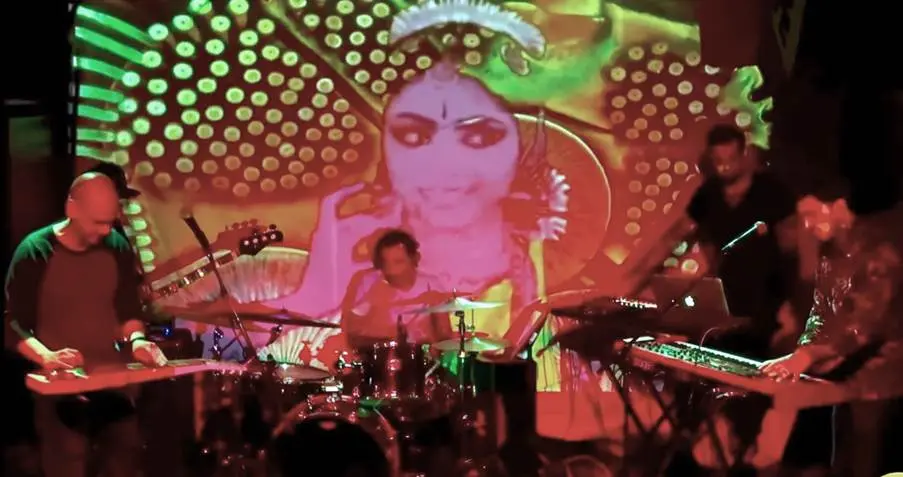
Something about Monotronic’s music feels like motion caught mid‑frame: part late‑night city drive, part half‑remembered journey across a continent you once crossed with a backpack and no clear plan. The songs hit with bright synths, punchy drums, and guitars that cut through the mix, yet a quieter current runs underneath, hinting at deeper questions about where we come from and where we are headed. That tension, between immediacy and reflection, is where Ramsey Elkholy has chosen to build Monotronic’s world.
Monotronic is officially rooted in the Entertainment and Music industry, but the project behaves more like a long-running art experiment than a standard band. Elkholy writes and produces all the songs, lyrics, and music, plays guitar, and produces all the music videos, treating sound and image as parts of the same narrative rather than separate products. His goal is simple and direct: to build brand awareness and encourage more people to know and connect with Monotronic’s music as it grows from a cult project into a globally recognized name.
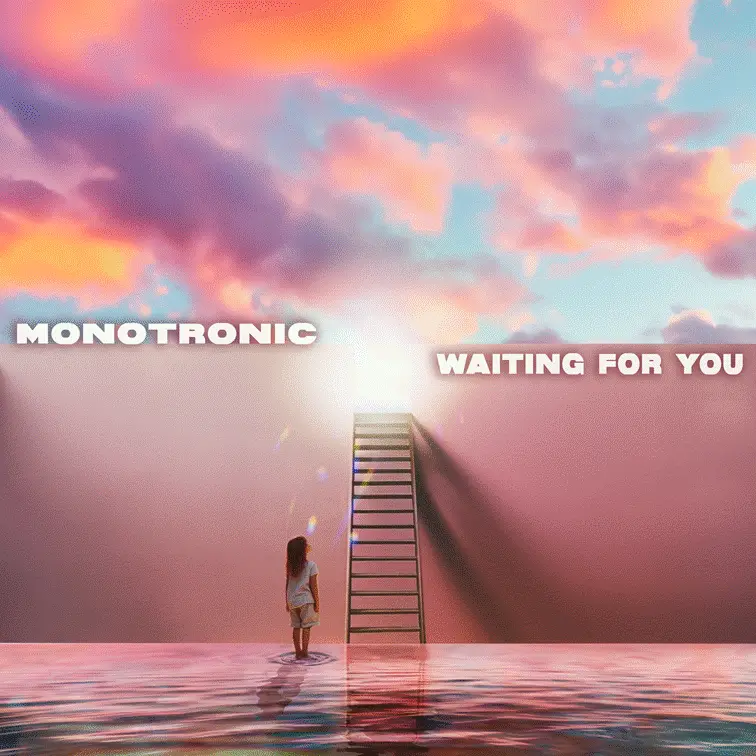
The turning point arrived with Waiting for You, the latest Monotronic album, released on 20 January 2026 and already tallying more than 2 million streams. It is a clear milestone, not only commercially but artistically, a record that consolidates years of work into a cohesive statement. The focus track, Kettle Song (Yama Yama), amplified through its dedicated video, has become a calling card for the project’s sound: indietronica that blends indie rock with a thread of electronic pulse, accessible yet idiosyncratic.
An Anthropologist at the Heart of a Band
Ramsey Elkholy stands at the center of Monotronic as its writer, producer, guitarist, and visual architect, but his story starts far from the usual route through rehearsal rooms and local scenes. Trained as an anthropologist, he treats music as a way of studying people: their habits, their joys, the stories they tell themselves when no one else is listening. That mindset shapes the way he builds songs, treating sounds and moments like cultural artifacts to be collected and reassembled into something that still feels like pop.
His travels over the years, through regions including Sumatra and India, have left their mark on the project. Those journeys do not appear as surface‑level references, but as subtler choices in rhythm, texture, and melody, often described as a worldly perspective that colors Monotronic’s material. The band’s own description likens the project to an adventure‑seeking backpacker returning to New York City after nearly a decade abroad and turning that experience into music. This image fits neatly with Elkholy’s dual identity as anthropologist and songwriter.
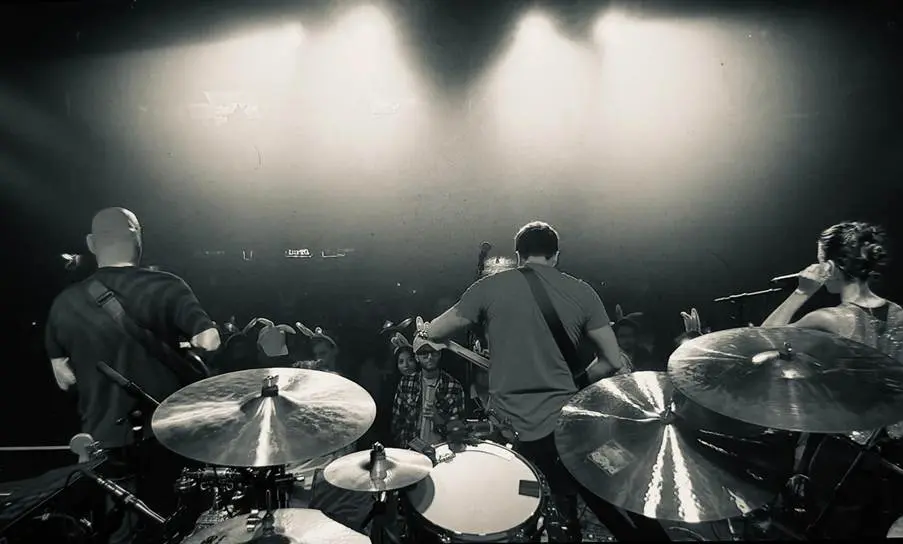
Before Monotronic began filling iconic LA rooms, Elkholy cut his teeth in Lower East Side dive bars, sharing cramped stages with some of the best players in New York City and learning how to hold a crowd in unforgiving spaces. That apprenticeship paid off when he moved west: in Los Angeles, Monotronic was filling venues like the Viper Room and the Troubadour almost immediately, proof that the New York years had sharpened both his instincts and his live show.
Monotronic’s sound has been described as a hybrid of indie rock and electronic elements; an indietronica blend that sits comfortably alongside artists like Phoenix, The Killers, Tame Impala, Daft Punk, and MGMT without imitating them. Guitars, synths, and beats are all there, but they are arranged with the care of someone used to cataloguing details. Elkholy frames his role not as control for its own sake, but as a way to keep the project’s voice sharply defined.
Waiting for You: Two Years of Quiet Work
The story behind Waiting for You reads like a slow-burning project that needed time to reveal its own logic. Over roughly two years, Elkholy wrote across different locations and headspaces, including an East Village apartment and the humidity of Tulum, Mexico, building songs that initially felt like separate experiments. Only later did their shared disposition come into view: a record about the slow work of self‑knowledge, about learning to listen to a constant signal beneath the noise of everyday life.
Across its 11 songs, Waiting for You moves through Monotronic’s internal library of sounds. The album opens with Looking Away, and from the first few beats, it’s clear you’re in for a ride; an impression reinforced by its music video, which follows a red 1969 Buick Skylark convertible winding down desert roads in a dream-like journey. There is a post‑punk charge in tracks like Everything Moves, where the band leans into sharper edges, and Asian‑inflected color in Kettle Song (Yama Yama), which hints at Elkholy’s time in Asia without turning those influences into ornament. The album also features standout collaborators: renowned bassist Mohini Dey anchors Close Enough, and legendary drummer Omar Hakim, known for his work with Daft Punk and David Bowie, handles drums throughout. The record feels like a map of the questions he has been asking himself for years, structured to invite listeners to trace the same path.
The title carries more weight the longer you sit with it. Waiting for You could point to another person, to a version of oneself that has not yet arrived, or to the moment when scattered experiences finally make sense. The phrase itself appears in the outro lyrics of Sun Song, a detail that rewards close listening and challenges fans to catch the moment the album’s name quietly surfaces. “Songs, for me, are about listening to that low hum that never really goes away,” Elkholy suggests, speaking to the patience required to write a record that feels this cohesive. The album’s early performance, released on 20 January 2026 and already exceeding 2 million streams, suggests that this patient work is resonating with listeners worldwide.
From Steady Steps to Sold-Out Rooms
Monotronic’s journey has been defined less by overnight spikes and more by a series of steady, tangible steps. Since its early days, the project has built an audience through singles that landed, music videos that captured attention, and live shows that turned curiosity into loyalty. The band notes that its last four music video releases premiered at number one on VEVO, highlighting the strong connection between the visual side of the project and audiences.
Live, Monotronic has moved beyond its starting point and onto showcase stages that matter. The project has played MUSEXPO and has been invited to play in Austin this March for SXSW, where international industry figures and new fans will continue to discover the album as it builds momentum. Those performances fed directly into a fall tour that sold out rooms in Denver, Seattle, Portland, San Francisco, Los Angeles, Phoenix, and two dates in Texas, a clear sign that the songs are not only streaming well but also drawing people into physical spaces, one of the surest measures of real impact in today’s music world.
Geographically, Monotronic’s reach has widened quickly. The project now serves key markets in the USA and UK, with top streaming and fan bases also emerging in Brazil, Mexico, and the Netherlands, reflecting how its indietronica mix of indie rock and electronic elements cuts across borders and languages. Elkholy’s stated goal is to share his music with as many listeners as possible, but the underlying ambition is broader: to cement Monotronic’s place as a distinctive voice in modern music…, one that sidesteps easy genre lines while still delivering songs that can fill playlists, venues, and late‑night bus rides.
Monotronic does not claim to solve a specific “problem” for clients in a traditional business sense; instead, it offers something more challenging to quantify but just as valuable in culture. The project shows how a single writer‑producer, drawing on academic training, global travel, a Lower East Side apprenticeship, and a clear ear for hooks, can carve out a recognizable sound in a crowded space. Each step, from VEVO premieres to showcase slots, sold‑out rooms, and an album clearing millions of streams within weeks, adds more weight to that story.
Monotronic’s genre‑defying vision is changing what modern music can sound like through steady, quietly insistent work rather than grand slogans. Elkholy’s path from anthropologist and traveler to songwriter, producer, and bandleader gives the project a rare, grounded perspective. “I want people to know about Monotronic’s music,” he says, and with Waiting for You gaining momentum and the project stepping onto bigger stages, that wish feels less like a hope and more like the natural next step.