
No Safety Net: Ting Han Lin’s One-Take Philosophy and the Future of Jazz Performance
In partnership with APG
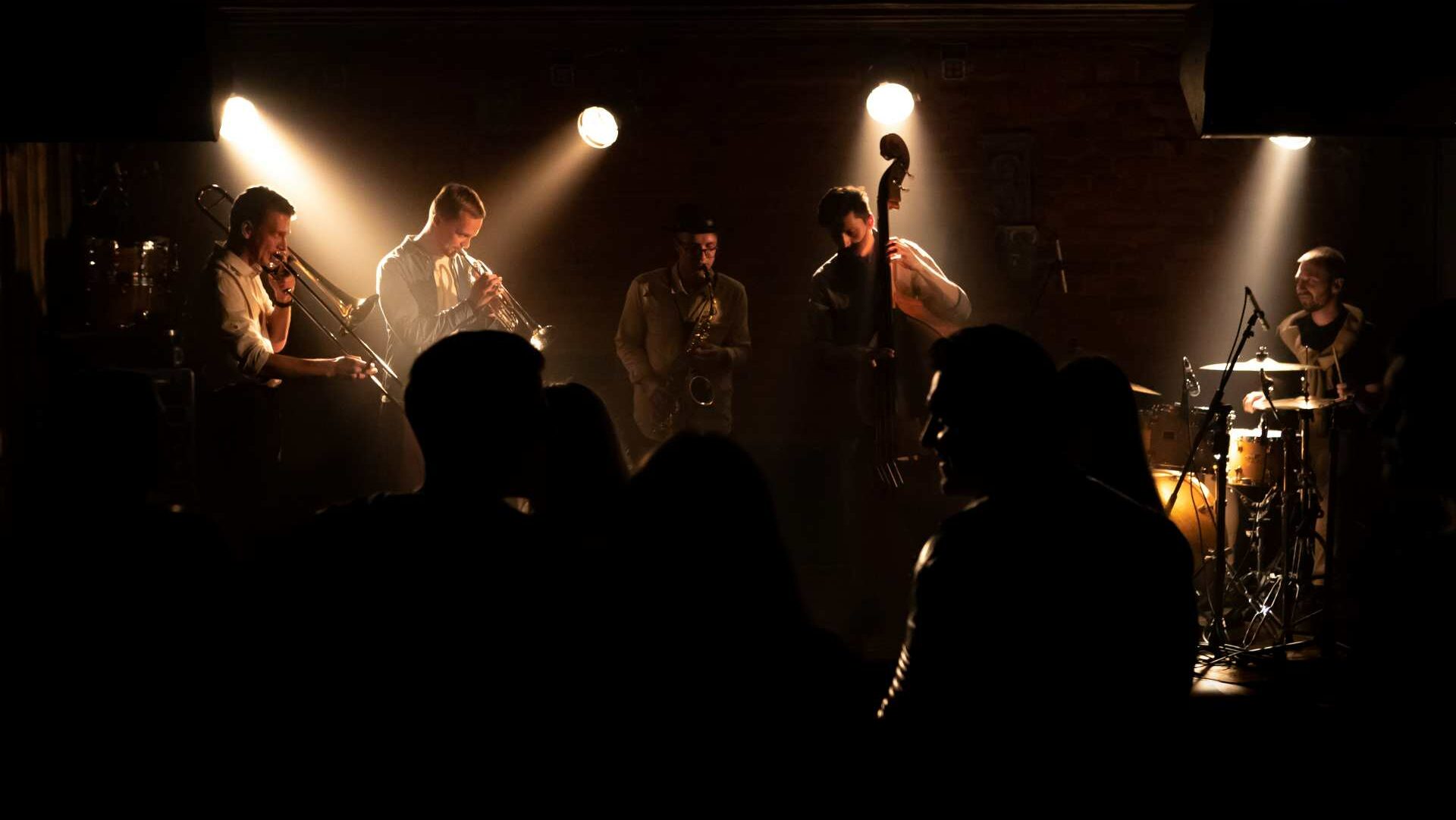
In contemporary jazz recording, safety has become standard. Multiple takes, digital comping, pitch correction, and microscopic post-production edits have influenced aspects of modern recording practices and, in some cases, how musicians think. Precision is no longer earned only through preparation; it can be assembled later. Against this backdrop, music director and bassist Ting Han Lin’s recent production of the jazz single “Misty” rejects the industry’s reliance on digital safety. Choosing a high-risk, high-reward methodology, Lin recorded the track live in a single take, with no punch-ins. This decision can carry professional risk; in a high-fidelity market, any minor rhythmic fluctuation is permanently etched into the master. By bypassing the “undo” button, Lin positions himself as a purist dedicated to the authentic, uncompromising jazz tradition that demands excellence in the moment of creation.
The One-Take as Philosophy, Not Gimmick
For Ting Han Lin, the one-take approach is a rigorous professional methodology rather than a nostalgic gesture. It is a test of preparation that places extreme demands on timing, harmonic awareness, and ensemble trust. In an era of loop-based jazz, recording “Misty” in one take serves as a definitive statement on the contract of honesty between the musician and the listener
The choice of “Misty” was intentional. As a standard, it offers no place for a bassist to hide; it requires a deep understanding of the melodic arc and a precise and well-structured harmonic foundation. This approach aligns with the original tenets of jazz, where the discipline of the performer is the primary filter for the art. It is a rejection of the “disposability” of modern tracks, favoring instead a performance where every vibration of the string carries the weight of a singular, irreversible decision.
Inside the Studio: Precision Under Pressure
The technical execution of the “Misty” session required a sophisticated live-room dynamic. Operating without the luxury of stitching together the best parts of multiple takes, Lin had to maintain absolute structural integrity throughout the duration of the track. In this environment, the bass serves as the structural anchor, requiring a level of concentration where the role of listening becomes more critical than the act of playing.
Collaboration at the Highest Level
Authority in the jazz world is developed through years of experience in high-level interaction. Ting Han Lin’s career is defined by such dialogues. At this echelon of the industry, true collaboration is not about individual flash; it is about the sophisticated interplay and musical versatility required to support a master soloist.
Elite musicians respond to the restraint and reliability of their foundation. By providing a solid harmonic foundation for artists of this caliber, Lin has established himself as a musician whose value lies in his ability to listen and adapt in real-time. This level of professional trust is earned only through a consistent track record of reliability, reinforcing the idea that at the highest levels of the American music industry, your reputation is built on the stability you provide to the ensemble
The Sunset Strip to the Studio: A Study in Versatility
While “Misty” highlights his jazz purism, Lin’s professional footprint extends far beyond a single genre. He has successfully dismantled the myth that technical purity requires isolation, shifting between the improvisational freedom of jazz, the high-energy demands of rock, and the atmospheric complexities of modern Gospel.
This versatility is a strategic necessity in the U.S. music market. Whether he is laying down a groove for a commercial cover band or providing the harmonic spine for a major religious institution, the discipline remains the same: adapt the tone, the pocket, and the presence to suit the room. By operating at the intersection of diverse musical worlds, Lin proves that professional bassists often adapt to different musical styles while maintaining consistent technical fundamentals.
The Bass as a Leadership Instrument
Ting Han Lin is expanding the role of the bass within ensemble arrangements by embracing its function as the “invisible anchor”. Rather than seeking the spotlight through unnecessary complexity, he exercises leadership through restraint and timing. He views the instrument as the connective tissue between rhythm and melody, a philosophy that informs both his studio recordings and his live ensemble work.
In the one-take environment of “Misty,” this leadership is manifested in the confidence he provides his bandmates. When the foundation is unshakable, the rest of the ensemble is free to take risks. This “being felt, not seen” approach is a professional advantage, positioning the bassist as the architect of the song’s emotional arc and helping establish a steady rhythmic groove in the final recording.
Discipline Over Nostalgia
Ultimately, Ting Han Lin is drawing on a historical recording technique while adapting it to contemporary production practices. The one-take recording of “Misty” is not the headline, it is the evidence of a career built on obsessive preparation and cultural adaptability.
Lin’s work highlights that the bass is the foundation that moves people, and that reliability, when executed at this level, is its own form of high art. In the end, the preparation is the performance, and for Ting Han Lin, the low notes are exactly where the truth lies.