
On This Caribbean Island, the Water Worth Traveling For Runs Down Its Mountains
In partnership with Discover Dominica Authority
By Kyle Russell
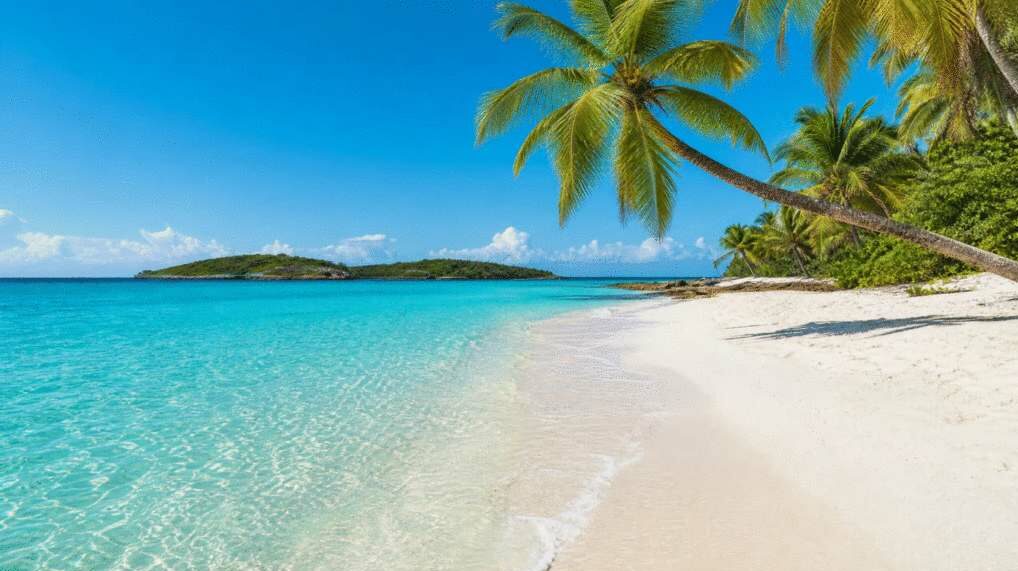
On a Caribbean island that has spent a century marketing its coastline, the more interesting water is inland. Follow one of Dominica’s rivers inland and you’ll find freshwater flowing through landscapes that have sustained island communities for generations. Dominica has carved out a distinctive tourism identity built as much around what runs down its mountains as what laps its shores.
Dominica calls itself the land of 365 rivers, one for every day of the year. The number is old and it is used constantly, by government literature and by people describing their own backyard, and it holds up: the island is carved by dozens of named watersheds feeding rivers like the Layou, the Roseau, and the Indian, most of them tracing back to the central mountain ranges that run the length of the interior. Ten of those rivers alone qualify as major. The rest are no less real for being smaller.
The mountains make their own weather
Dominica’s rainfall is not incidental. The island’s volcanic interior, still active enough to produce boiling mud and sulfur springs further south, pushes warm, moisture-laden trade winds upward until they cool and fall as rain, almost daily, over the highlands. That rain becomes the rivers. The rivers become swimming holes, plunge pools, and the kind of roadside spot where someone will tell you, unprompted, that the water there is some of the best on the island.
That reputation deserves an honest footnote. Water distribution on the island is not evenly solved. Some communities still deal with intermittent supply, and pipe infrastructure hasn’t caught up everywhere with what the rivers themselves provide. The rivers are not a promise that every tap on Dominica runs clean; they are a reflection of a mountain range that produces an abundance of freshwater. The distinction matters, and it is also part of why the government has increasingly framed water as a resource to protect rather than a given to advertise the past.
A different kind of luxury
None of this reads like a spa brochure, and that is the point. The Ti Tou Gorge, a narrow volcanic channel visitors swim into rather than walk, does not need staging. Neither does Emerald Pool, a short hike from the road and cold enough that most people yelp on entry. Freshwater bathing here isn’t a treatment; it’s a Saturday. Locals have soaked in these same rivers long before anyone called it wellness tourism, and the appeal to a visitor is less about ritual and more about the plain fact of clean, cold, moving water in a place that has an unusual amount of it.
The government has long recognised water, much like the rainforest, as a natural resource that requires active stewardship. Water conservation and security are part of broader efforts to protect the island’s environment and support its tourism industry, an acknowledgment that the 365-rivers reputation only holds if the rivers themselves are managed for the long run.
For a wellness traveler or a slow-nature type tired of infinity pools engineered to look like the ocean, that is the sell: an island where the luxury is not a swim-up bar built to resemble nature, but nature itself, running downhill, free, and cold enough to make you gasp. You don’t need a treatment menu to appreciate the island’s fresh water. You just need a few minutes off the trail and a chance to experience it up close.
Dominica isn’t selling a beach vacation. It never really has been able to, not against islands with longer stretches of white sand and calmer water just offshore. Rather than competing for the traditional beach traveler, Dominica offers a different kind of appeal, rooted in the character and natural beauty of its interior. It sits upstream: a mountain range that makes its own rain, distributes it through hundreds of channels, and hands visitors a version of natural luxury that is difficult to replicate in a resort courtyard. That’s a harder story to put on a postcard, but one that unfolds naturally over the course of a week on the island.
There is a version of this trip that never touches the coast at all. A morning at Trafalgar Falls, twin cascades dropping into a shared pool at the base of the mountain. An afternoon further inland, tracing a smaller river most guidebooks skip because it doesn’t have a name recognizable enough to sell. A late swim somewhere quiet enough that the loudest sound is water moving over rock. None of it requires a reservation, and most of it doesn’t require a guide, though a local one will get you to the good spots faster.
That’s the idea. Not just a coastline to explore, but 365 rivers that invite visitors to look inland instead of only out to sea.