
Why Gambling Has Always Been Rock ’n’ Roll’s Favourite Vice
In partnership with bestonlinecasino.com
By Nina Parker
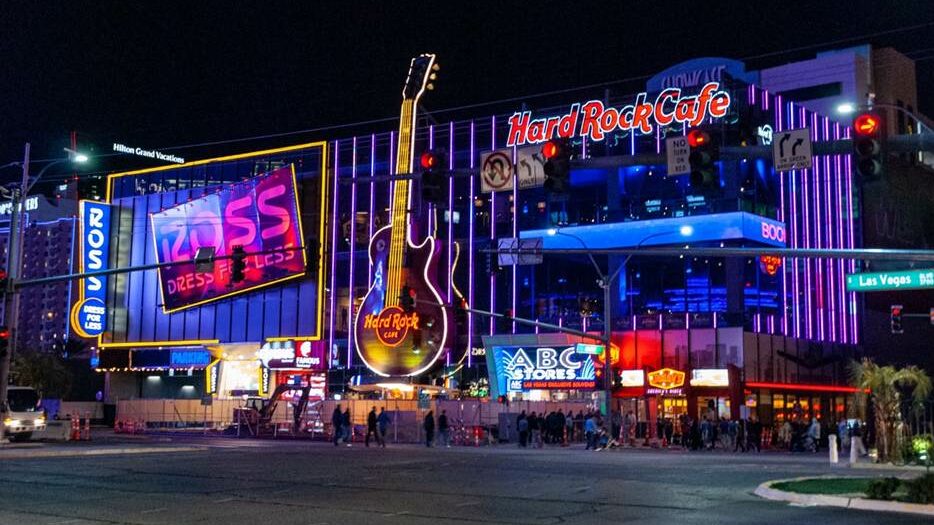
From Elvis at the Sahara to Noel Gallagher’s poker nights, the music world has always had a complicated, electrifying relationship with the roll of the dice
There is something deeply rock ’n’ roll about gambling. Not the glamorous Hollywood version, though that exists too, but the raw, reckless thing underneath it: the willingness to put everything on the table and watch what happens. It is no coincidence that the same generation that invented rock music also populated the Las Vegas Strip.
Elvis Presley performed 837 concerts at the Las Vegas Hilton between 1969 and 1976, turning the hotel into a cathedral of excess and joining a long tradition of legendary rock venues and nightlife institutions that have shaped music culture around the world. The King of Rock ’n’ Roll did not merely perform in casinos; he inhabited them. The neon, the crowds, the perpetual midnight: Vegas offered rock stars something the rest of the world could not, a place where the rules did not apply. Where money moved fast and nights had no end.
But the connection goes deeper than residencies and headline slots.
The Blues at the Root
Long before electric guitars and sold-out arenas, gambling was woven into the DNA of American roots music. The Mississippi Delta blues, the genre from which all rock music ultimately descends, was saturated with it. Robert Johnson, the Delta bluesman whose recordings from the 1930s influenced everyone from Eric Clapton to the Rolling Stones, was a gambler by instinct and by necessity. His song “Ramblin’ on My Mind” captures the itinerant gambler’s worldview perfectly: always moving, always chasing, never settling.
Bessie Smith, the Empress of Blues, was famously reckless with money and famously brilliant on stage. The same appetite for risk that led her to bet on long shots drove her to take musical risks that redefined what a vocalist could do. Gambling was not just a habit for these artists. It was a philosophy. Life was precarious, money was scarce, and the only honest response was to play the hand you were dealt as boldly as possible.
Vegas, the Rat Pack, and the Great Rock Migration
By the time Sinatra and the Rat Pack colonised the Sands Hotel in the early 1960s, gambling had become inseparable from cool. Dean Martin, Sammy Davis Jr., Peter Lawford: they moved through casinos the way other men moved through drawing rooms, with complete ownership of the room. Rock ’n’ roll watched and learned.
The Rolling Stones played Las Vegas for the first time in 1965. They hated it. Keith Richards famously described early Vegas as “neon and plastic,” a far cry from the sweaty London clubs where the band had cut their teeth. But something stuck. By the 1970s, rock’s biggest acts, Led Zeppelin, Elton John and the Eagles, were all deeply embedded in the Vegas ecosystem, even if their relationship with it remained complicated.
Elton John’s fondness for excess is well documented. What is less often noted is that gambling was a consistent thread through his most chaotic years. In his autobiography Me, John describes spending in ways that would have alarmed anyone around him, card tables included. “When I’m in, I’m all in,” he has said about his personality. The casino floor was just one expression of that.
Britain’s Own Complicated Relationship
On this side of the Atlantic, the relationship between music and gambling has its own particular flavour, more understated but no less present.
Noel Gallagher is an open and enthusiastic card player. He has spoken in multiple interviews about poker games that stretched through the night on tour, the table offering the same competitive release as a packed arena. Liam Gallagher, his brother and eternal rival, is equally candid about enjoying a bet. The Gallagher brothers’ willingness to stake everything, on their music, on each other, on a hand of cards, has always been part of what makes them compelling.
Paul Weller, the Modfather, grew up around betting shops in Woking, Surrey, a working-class institution as central to British life as the pub. For his generation, a Saturday afternoon flutter was not an indulgence. It was community. It was a way of reading the room, of testing your instincts against everyone else’s.
Amy Winehouse, whose personal mythology is dense with vice and vulnerability, was known as a regular at poker games in North London. Friends and fellow musicians have recalled her as a sharp, instinctive player. The same qualities that made her a once-in-a-generation songwriter apparently transferred well to reading a table.
The Digital Casino and the Streaming Generation
The cultural relationship has not faded. It has transformed.
The rise of online gambling did to casinos what streaming did to record stores: it democratised access while changing the texture of the experience entirely. Where once you had to travel to Las Vegas or Mayfair to access serious casino gaming, today the infrastructure is global and immediate.
For music fans who absorbed their gambling mythology through the records of Sinatra, Richards and Winehouse, the top online casino comparison sites now map out exactly where to find that same energy: the anticipation, the strategy and the tightly controlled chaos, all on your own terms.
It is a shift that mirrors the music industry’s own trajectory. The intimacy of a great vinyl record and the intimacy of a late-night poker game share the same quality: both ask for your full attention. The digital versions of each are more accessible but no less absorbing, when you choose the right platform.
The Instinct Remains
What has not changed is the underlying impulse. Rock ’n’ roll has always been about defying the odds: the provincial kid who should not have made it, the second album that confounded expectations, the comeback that the press had already written off. Gambling is the same narrative in miniature. You are told the house always wins. You play anyway. Sometimes you lose. Sometimes you walk out with more than you came in with. Either way, you chose to play.
That choice, that refusal to accept the cautious option, is as old as the Delta blues and as current as whatever is streaming at number one this week. The roll of the dice will always be rock ’n’ roll’s favourite vice. Not because musicians are reckless, though some certainly are. But because they understand something the careful and the cautious do not: the only way to win big is to risk something real.