
How Daniel Blumberg became Hollywood’s most in-demand composer
At home in Hackney, the Oscar-winner explains the immersive process and restless creativity that has made him a go-to collaborator in the film world
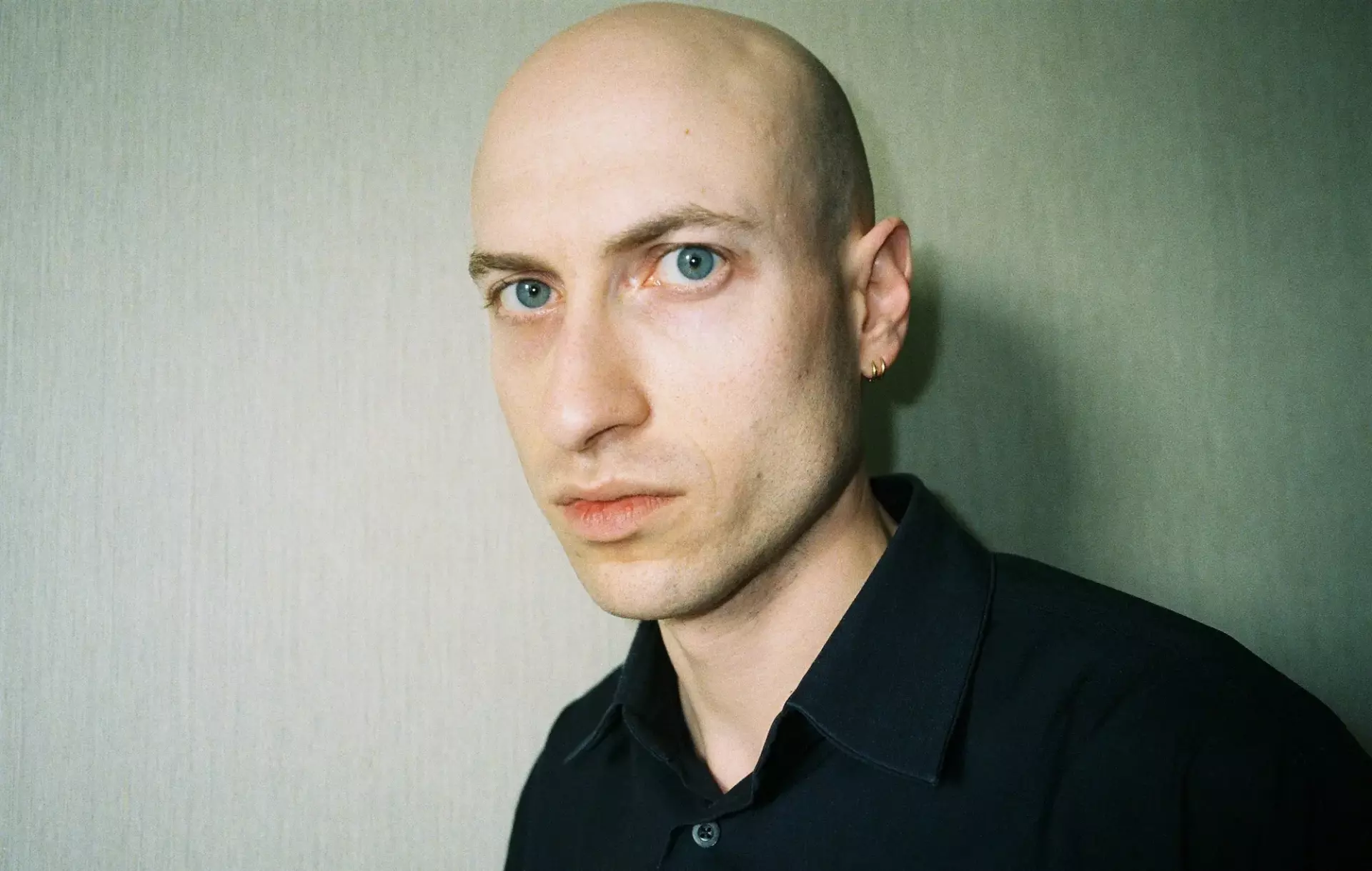
The east London flat that Daniel Blumberg welcomes me into almost feels like a film set, one carefully assembled to depict a ramshackle genius artist. To get to the kitchen, where we sit down to talk about Blumberg’s rise to becoming one of Hollywood’s most in-demand composers, we head through a living room with all manner of keyboards and other musical equipment where a sofa and television would normally live. In between, a mattress lies on the floor of a bedroom with more instruments assembled next to it.
In the kitchen, countless drawings made with silverpoint are strewn across the table and floor, with some pinned onto the walls. It’s only halfway through our hour together, scooching to the side so Blumberg can return a borrowed keyboard at the front door, that I realise I’ve been sitting inches away from his Oscar trophy, won for his haunting score for The Brutalist, on a shelf. It’s surely the smallest and most unassuming place an Academy Award has ever found its home.
The house, home to Blumberg for the last 15 years, has been with him across his path from indie band member to avant-garde solo musician and then Hollywood composer. It’s a place full of countless stories, some of which spill out of him in conversation. If I use the bathroom, I’m told to “just ignore” the mess in the bath. It was created, he says, from experimenting with submerging hydrophones in water with Gianfranco Rosi, the director of new Blumberg-scored documentary Pompeii: Below the Clouds, which explores life in the shadow of Mount Vesuvius.
To fully transmit the bubbling noise and heavy shadow of nature in the region, Blumberg tried to place the hydrophones inside the active volcano (“I was a bit worried because I’d borrowed them from a University!”) but he explains that the projection of the music into the volcano led to “two sounds on top of each other” and an unsatisfactory result. The journey and adventure of such endeavours is important to Blumberg’s process, he says, but “if it sounds shit and doesn’t function, then throw it in the bin”.
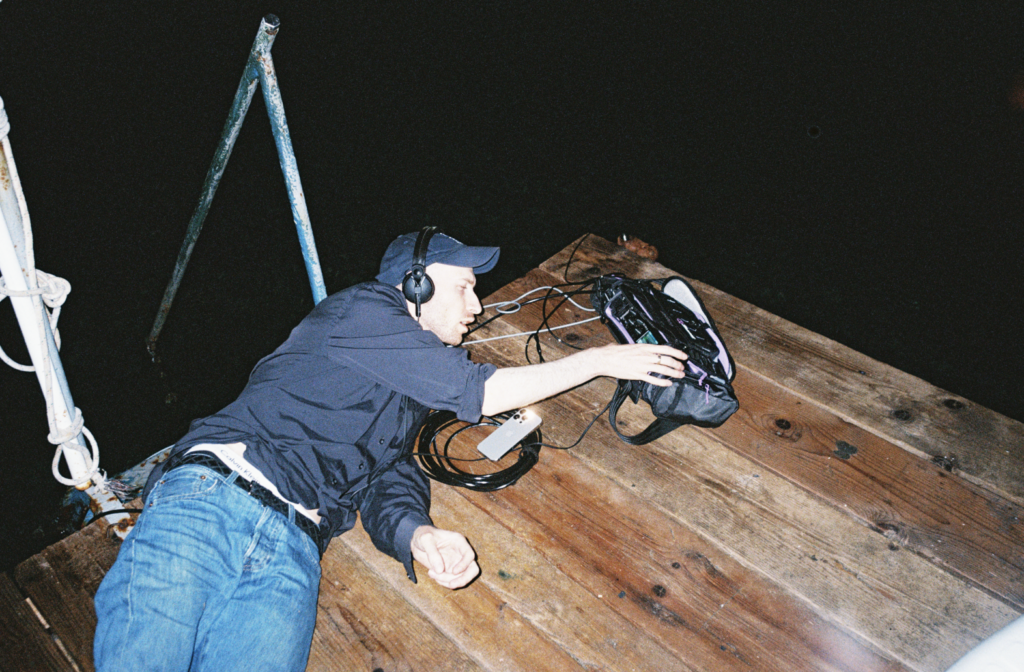
A later experiment that did work, though, was submerging the speakers into the sea in the volcanic region of Baia. Heading down to the water at 2am (daytime saw too many boats and tourists swimming affecting the water flow), a “magical” creation came when lapping water interacted with the sound waves of the music pushing back, and a key part of the deeply immersive new score was captured. “It was a collaboration with the landscape,” Blumberg smiles.
Such immersion in the worlds of his projects is now common – and vital – for Blumberg. It was when working on his first film score, Mona Fastvold’s The World to Come (2020), that he was invited to spend time on set for the movie, something that would become integral to his process moving forwards. “I really liked feeling the world [of the film], what the production designer had done, and also hearing Mona talk to the actors about the intention,” he says. “It adds a bit of context.”
For The Brutalist, Brady Corbet’s mammoth 2024 period drama which won Blumberg his Oscar, he travelled to the Carrara quarry in Italy, where a vital scene in the film is set. “I thought the marble quarry would be an interesting acoustic space, and it helped me get an extra feel for the project,” he says.
It’s another example of Blumberg offsetting his self-diagnosed technical limitations with a sense of adventure and discovery in his work. “I don’t read [music],” he says. “I’m not technical in terms of composition – I’m very instinctual. I rely on feeling stuff. I can’t come to something and say, you know, ‘In this scene, it would be great if it changes into augmented whatever.’ I just have to feel it.”
Literally the day after the sound mix for The Brutalist was completed, Blumberg began work on The Testament of Ann Lee, a project from both Fastvold and Corbet, about the Shaker movement. Writing full songs for a musical once again showed Blumberg’s dexterity as a musician as well as his inquisitive nature. As part of his research for the film, he travelled to the Massachusetts living museum Hancock Shaker Village and sunk himself into yet another unfamiliar world.
“When I look back at those three projects,” he reflects, “I feel really lucky to work with those people, collaborate with those artists, the directors, and all these amazing musicians.”
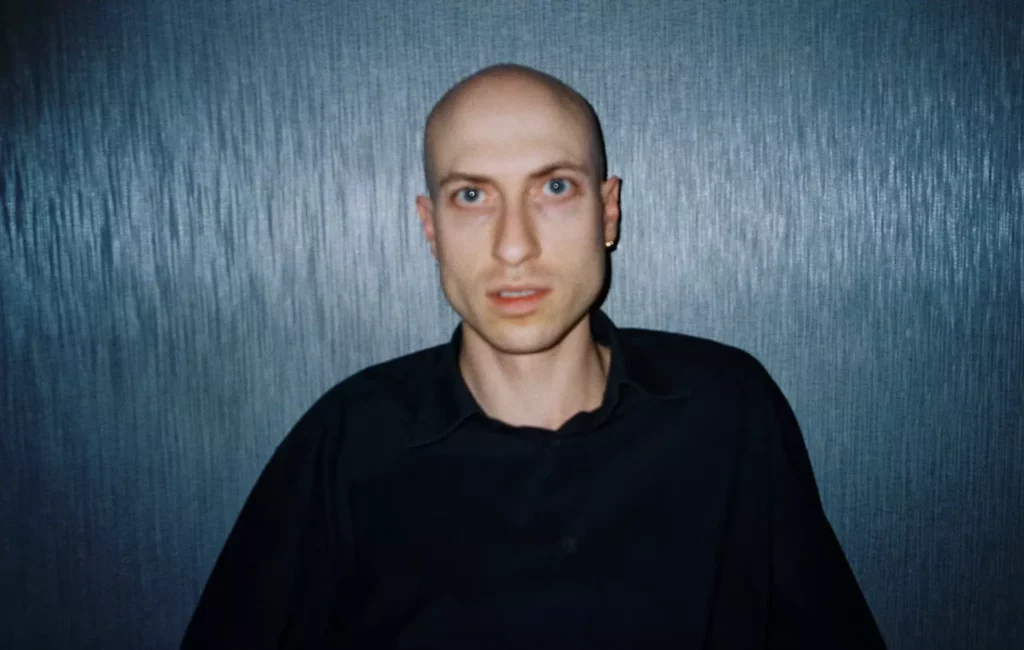
It’s through people that Blumberg has been able to access what he describes as a fresh start in music. First known as the member of indie bands he’d rather not name or discuss, he considers his 2014-penned and 2018-released album Liv as “the start of my work in music” and the oldest work of his that he “still values”.
“I’m pretty contrary, which is probably good, probably bad,” he says. “Sometimes I’m contrary to myself as well. A lot of the time when I do my own records, the first thing I want to do a few months afterwards is say, ‘I would never do that [again] like that. That wasn’t good. I want to do it differently.’
“When I was younger, I was really frustrated with my work all the time,” he offers. “Now, having a bit of retrospect, I know a bit more about how to house stuff. People have been important in my life,” he adds, singling out Seymour Wright, one of two saxophonists who plays on Below the Clouds as well as a host of other Blumberg projects.
It’s a careful line the composer now finds himself towing, with calls for new work inevitably increasing post-Brutalist. He concurs that the requests are getting more regular, but – aside from literally not having the hours in the day so far – being picky remains vital to him. “The Brutalist became commercialised, and there’s been more people asking me to be part of instigating stuff than ever in my life,” he says. “As an artist, you have to instigate things a lot, whether that’s me waking up and putting a blank piece of paper down – no one’s asking me to do that drawing.”
Again, it’s through people and collaborators that he finds his feet. “You can learn a lot from the people that you work with,” he adds. “If I did loads of shit films or stuff that I wasn’t actually genuinely interested in, then my taste would definitely start being…” he trails off, before offering: “You have to be careful with who you surround yourself with.”
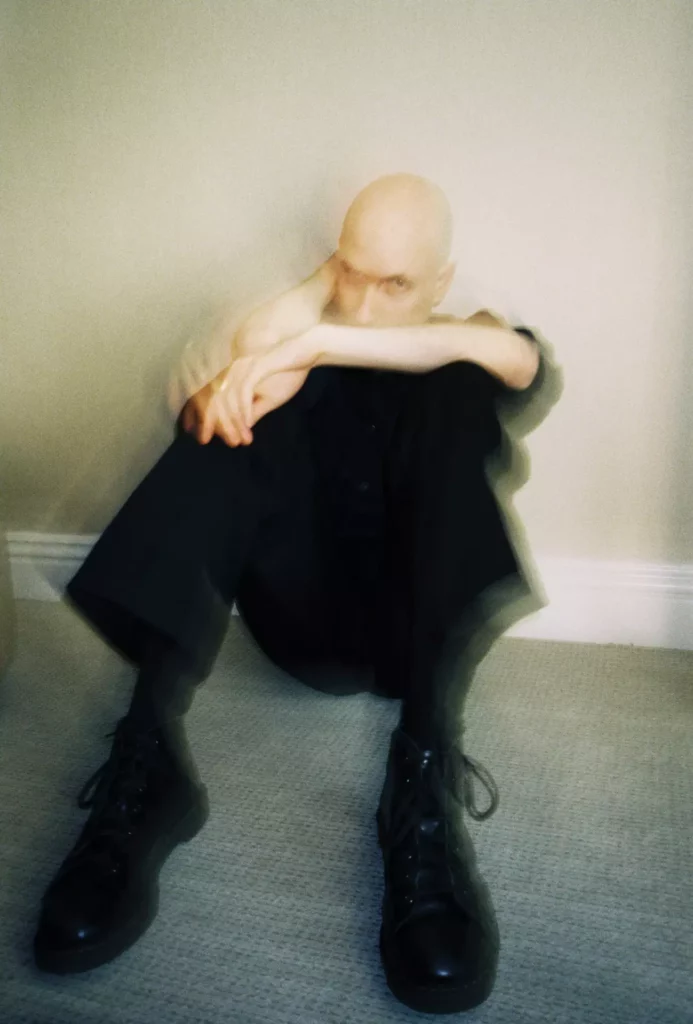
Often surrounding Blumberg is the community at Café OTO, the legendary avant-garde performance space just down the road from his flat in east London. Such was the impact of the space – and his discovery of improvised music as a whole – that OTO got a shout out from Blumberg on the biggest stage of all at the Oscars.
As well as his collaborators, it’s when discussing his drawings that Blumberg really lights up. If he were in a creative rut with music-making, he says, a short break to the kitchen to work with silverpoint could spark him back into life. If he’s on the phone, he’ll often be doodling alongside the chat, and tells me that if he were struggling to finish his sentences in this very interview, having a drawing on the go while talking would help him express himself better.
“It has a relationship to improvised music,” he says. “When I saw improvised music [for the first time], it was from the drawings that I connected to it. It was almost like the stage was the blank page, and the way it was being filled, you didn’t know what was going to happen. That’s what happens when I do drawings.”
Silverpoint, an ancient technique of drawing with silver first used by medieval tribes, struck a particular chord with Blumberg. “I really love the way that the oxygen in the room affects it, or the oil on my hands,” he says.
It’s a technique which seems perfectly emblematic of Blumberg’s work so far. Like submerging microphones in volcanic seas or making dynamic Hollywood scores from the most unassuming setting possible, “it’s a collaboration with something uncontrollable”.