
Meet Cusk, the guitar-violin duo formed by a twist of fate
Esmé Creed-Miles and Evie Hilyer-Ziegler met at a night of improvised music, with this fluid and impulsive ethos carrying through to a debut EP
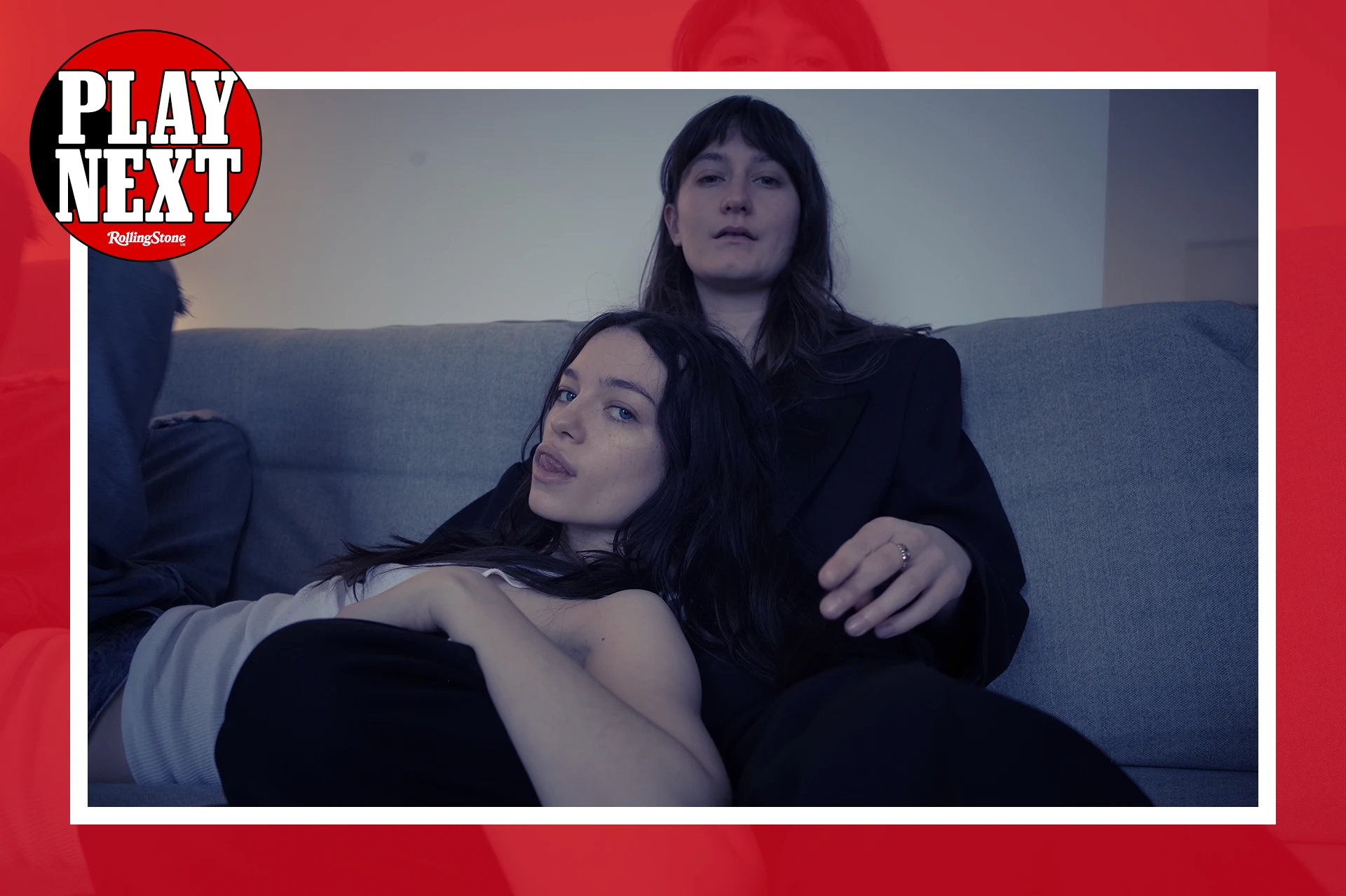
The way the two members of Cusk met feels like something from a film. “For some reason, she thought I came across as cool,” Evie Hilyer-Ziegler, who was on stage as part of a night of improvisational music at Dalston’s Shacklewell Arms, says of then-stranger, now-bandmate Esmé Creed-Miles. “It’s kind of a romantic story,” Esmé laughs, going on to approach Evie that night and begin a fruitful creative partnership.
At the time, Esmé, also a successful actor, was sitting on solo material that she felt needed extra input, and Evie – a stalwart of the burgeoning traditional folk scene of London – took a shine to the guitar-based material.
The songs were then sculpted into the unusual but impactful tracks that make up Cusk’s self-titled debut EP, released on The Bird Records, the label of Black Country, New Road drummer Charlie Wayne (who also plays live with Cusk).
Read our interview with Cusk and listen to their music via our Play Next playlist on Spotify below.
Esmé – what did you want to bring to these songs you had that you thought Evie could provide?
Esmé: PJ Harvey was a big inspiration for that EP. and a very obvious one at that. Even on her very first record, she has these anarchic, clashing, string arrangements that are really amazing. I just knew I wanted to have strings on the record, but I didn’t want them to be conventional strings, and didn’t want it to feel like this arranged thing. When I saw Evie play, she just has this really unique tone. Because it was an improvisation night, I was watching her finding melody in real time, and it was always something that was completely elevating the whole thing. I was just like, ‘She’s really talented’, and I could see it instantly.
I got her number and she came and started playing strings. After that, we started doing lots of gigs just the two of us, me on guitar and Evie on strings. We started writing songs together. I’d bring her l some chords and then she’d come up with a melody or a harmony. Evie’s now writing songs on guitar as well, and I’m writing vocal harmonies for that. It just evolved from playing live into having this really good musical chemistry and also being really good mates. It just made sense that it was a band.
The songs were all written at a time before the two of you had met though – what was going on at that time Esmé?
Esmé: I wanted to make music when I was 18, and I ended up getting swept up into acting, and I really just wanted to be a musician. I had to honour this young version of myself and honour those demos and fully realise them, because they’ve been this dream. I initially wrote the bulk of those songs and then brought them to Evie, but Evie’s essentially like the lead guitarist. It’s like Johnny Marr in The Smiths. Those riffs and those melodies are what brings those songs together. Even though those specific songs are older, I still feel like it’s very fair to say that this is a full collaboration project.
What narrative are the songs telling?
Esmé: Not to be really naff, but I only properly came out a couple of years ago. A lot of those songs are about a very specific sort of queer yearning, and a juvenile attempt to confess things and then replace them with heteronormativity immediately afterwards. There’s a lyric in ‘Don’t change I love you’ where I talk about sleeping with a girl for the first time, and then I very quickly rectify that with, “and now I’m going out with a guy!”
It’s funny because I was very repressed for a long time, and so there’s a bit of painfulness there for me sometimes when I think about them. As with most people, you’re drawn to writing about attachments and relationships and love, and the whole landscape of how I relate to men and sexuality and love has completely changed since I came out, and so like I sometimes sing some of those lyrics with a bit of sadness. I’m like, ‘Oh, I didn’t need to do that’, or, ‘I didn’t need to have that lyric’. I could have just been really honest in the song, but I couldn’t at that point in time.
Evie: I’ve got quite bad hearing, so I sometimes struggle to pick out lyrics unless I can see someone’s mouth or I know exactly what they are. We’ve had some quite funny moments where I’ve been trying to do BVs [backing vocals] and it’s just been completely the wrong word. But since we’ve been playing them more just in this last year, I hear a really young person in those lyrics, but also you’re so wise beyond your years.
Tell us about getting Jenny Lee Lindberg from Warpaint to sing on the track ‘Did it make you cry’ – how did that come together?
Esmé: It’s really crazy and full circle. I was an unhealthily obsessive Warpaint fan when I was a teenager, and then Jenny Lee became my obsession because she put out a solo record. You can literally scroll down on my Instagram and see me posting a picture in 2019 or something of my iTunes, [saying that] I love Jenny Lee so much. I was obsessed with her. I was in LA because I was working out there as an actor, and I went to some shoegaze show, and I saw her in the street. I went up to her, and I was like, ‘Sorry to be one of those people, but I am your biggest fan. I’m sure you’ve heard that before, but I’m obsessed with you, and you changed my life’.
She was so cool, and then I had an afterparty at the place I was staying at, and I just very boldly was like, ‘Would you like to come to my party?’ And she was like, ‘OK!’ So she came to the party and she saw I had some guitars in my apartment and she was like, ‘Do you make music?’ I was a bit shy about it, and she was like, ‘Put your tunes on!’ Everyone had had a few drinks, so I played some of my demos at this party. And she was like, “I love your demo. Hit me up when you’re recording, and I’m gonna come sing on it!’ …so I did!
Have you been writing new material, and how are you seeing that change now you’re writing new songs from scratch together?
Evie: I don’t think it’s much different. I’m singing a bit more though. We’ve got very different voices, but I think we’ve figured out a really cool sound together. My style of writing has has evolved a lot through meeting Esmé. I’ve been waiting for my rock violin moment, and it’s finally here! I’m I’m very excited about that. But I think ultimately it’s still capturing the same thing. We share similar instinctual responses to music making and a lot of what ends up sticking is what happens in one moment.
Esmé: The ethos of the EP was to have it be really instrument first. I’m really inspired by rock groups that lean into arrangement that is slightly avant-garde or instruments that are feel unexpected, like PJ Harvey and Nick Cave – they’re grand and they take you on these journeys. Evie brings with her not only exemplary fucking musical talent, but also a huge wealth of knowledge about arrangement and all these different influences. I just listened to rock my whole life, and Evie’s like fucking encyclopedia of folk! With our next record, I want to keep that tradition of feeling really intentional and instrument-focused with these raw live arrangements. I don’t think that’s ever gonna change because that’s just how we play our instruments, and we want to capture that feeling of what it’s like to write these songs.