
Porridge Radio’s Dana Margolin goes solo: ‘I had to knock everything down’
On a drizzly Monday morning in London, the singer takes Rolling Stone UK on a walk of the places that inspired her gorgeous, minimal new music for her first solo interview
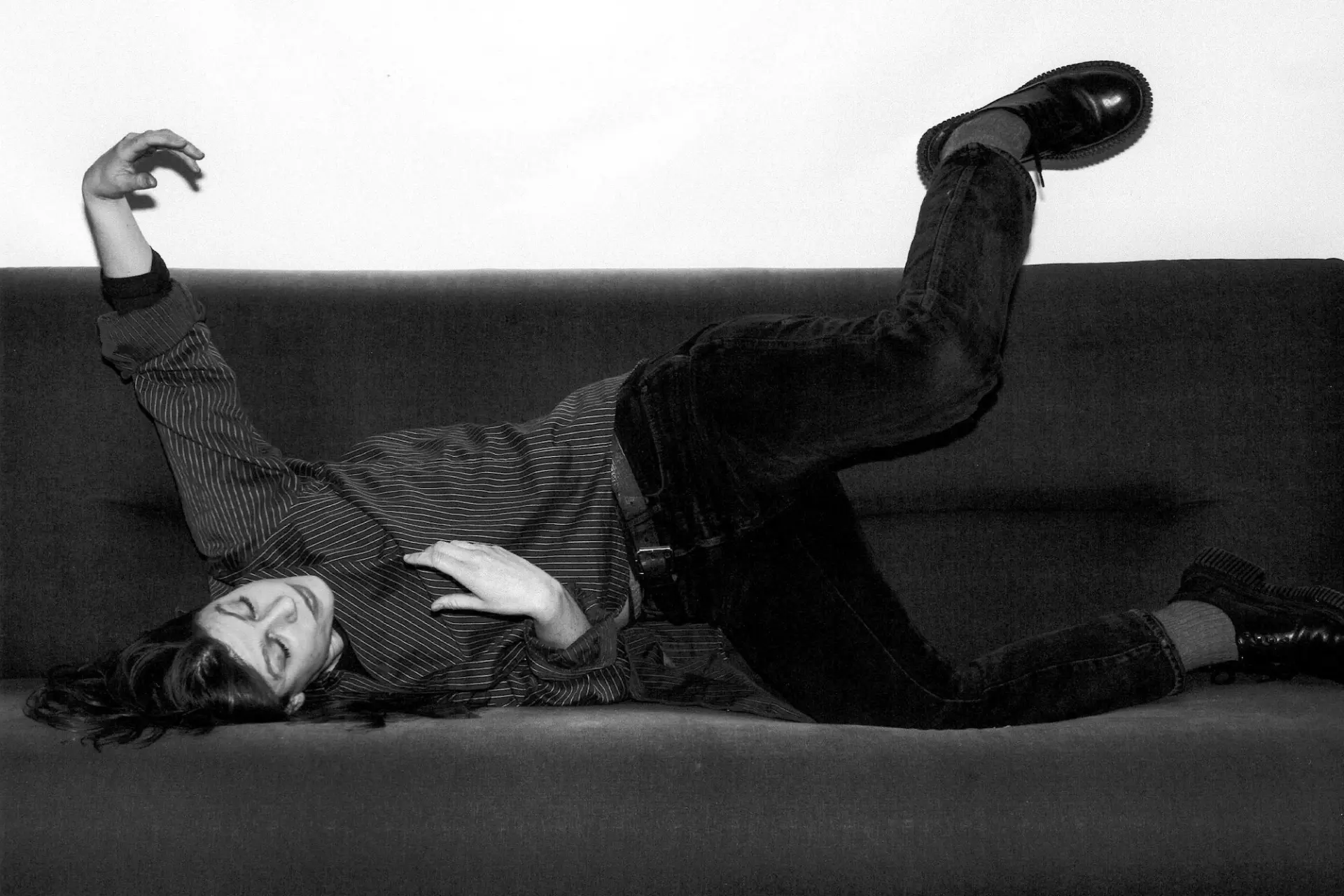
Dana Margolin didn’t think she felt anything at all about the breakup of her band Porridge Radio until the end of their final show in Glasgow last year. Coming off stage before the encore, her bandmates asked her, “Why haven’t you said anything this whole show?” The question triggered something in the singer, who emerged back on stage, “and just started weeping and weeping.” She and her bandmates cried through the rest of the show and then, when it was over, Margolin remembers thinking to herself: “I have to create this new person.”
Across ten years and seven studio albums – the last three released via Secretly Canadian – Porridge Radio became one of the UK’s best indie-rock bands, beloved on both sides of the Atlantic. Their songs contained a stirring rage, delivered blisteringly on stage by Margolin. Internally, though, the idea of a band and all it represented became a “cage” to the singer, she explains.
“It was very much something that we all were ready to move on from,” she says, clarifying that the band remain good friends and that the breakup wasn’t one of animosity. Despite this, her internal narrative at the time was one she now describes as “dramatic” with a smile, but felt deeply real at the time.
“For a long time, I was living the life of a dead person,” she says. “There was a version of myself that had created this thing and had written all these songs and was performing them all the time. I was living in her skin, [but] was like, ‘This isn’t mine’.”
The band’s breakup, then, represented a fresh start at life as well as at music. “I built a cage around me, but the door to the cage is open,” she remembers thinking. “As we decided it was over, suddenly I walked out of the door and I could then see every other door.”
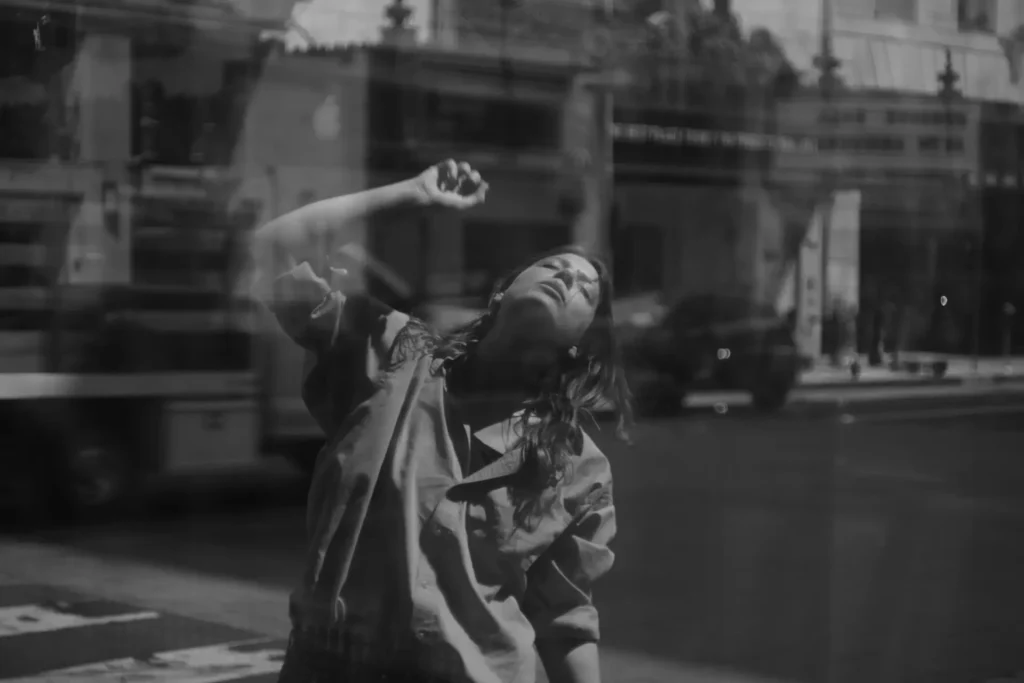
For our interview, her first about the new music that follows the band’s dissolution, Margolin suggested we take a walk. Specifically, she wants to give Rolling Stone UK a tour of central London based around visiting three sculptures by the legendary Jacob Epstein.
“My New Year’s resolution was to look up,” she says as we take in The Rush of Green, Epstein’s striking final sculpture before his death in 1959 that stands on the edge of Hyde Park. “When you walk around,” Margolin says, “you can drown out your insides and be filled up with everything that’s around you.”
The new music she’s made revolves around this same idea of de-centering the self, and finding inspiration externally. “I joke that I died and came back to life,” she says, “but I think I did die, and for a really long time it was excruciating to exist. [Now] I walk everywhere and try and take everything in. I’m trying to take it all in so I can try and find something to communicate with the world.”
While her first batch of solo music, including gorgeous debut single ‘Big Beautiful Sound’, was written and completed before the breakup of Porridge Radio, that event was followed by an even bigger break with the past for Margolin.
“I had to knock everything down,” she remembers. “I was carrying everything on my back, and it wasn’t sustainable.” As becomes true for so many creatives, she also had to wrestle with the dichotomy of “the thing that has burned you out also being the thing you care about the most in the world and are obsessed with and is your way of relating to everything around you.”
She adds: “I’ve been writing songs even before I could play instruments, before I knew anything. To then be like, ‘Oh, this thing has made me die’, it really destroyed me. But I couldn’t give it up, because… I just can’t. I don’t have that that choice. I know I’m just going to be making music forever.”
Currently, she is spending 2026 on what she describes as a “sabbatical year”. Most of her days are spent walking, reading, researching and remembering to look up. “The idea,” she says, “is to break everything all apart, walk out of the thing that you created that hurt you, and rebuild it in a way that can work. If it doesn’t work, then figure it out. Nothing makes sense in a day.”
The second Epstein sculpture we reach is the striking Mother and Child, which hangs menacingly on an archway just off a main road. Depicting the Virgin Mary and Christ, it’s a gorgeous yet unsettling presence that thousands walk past yet barely notice every day.
Margolin would love to make sculptures, she says, but considers her songs as a similar thing. “You start with a block of a feeling,” she says, “and you carve into that feeling something that can exist in time and that you have to perform. Every time you perform it, you’re performing a time-based sculpture. It’s just made out of me, and I’m sculpting it live every time I do it. I would love to make sculptures that you could hold in your hands, but I can hold a song in my hands in a way. It just only exists in time.”
‘Big Beautiful Sound’ is a striking and minimal first glimpse at Margolin’s solo material. Based around her voice and softly plucked acoustic guitar, it’s imbued with a stillness that rarely populated her Porridge Radio songs.
Its video, directed by Mike Mills and Joe Nankin, sees Margolin walking and swaying almost formlessly through the streets of Los Angeles. “He just sees things in such a beautiful way,” Margolin says of Mills. “I think he saw me in a really honest way, and I was so moved to be captured in that way.”
‘Big Beautiful Sound’ was recorded in a Somerset barn across three weeks with a crew of collaborators that included her former Porridge Radio bandmates. “It was the best work of my life, probably ever,” she smiles. “It was about trusting the moment that you’re in and trusting the intuition,” she says of the free and fluid process of recording.
“Stop overthinking it,” she’d tell herself. “Everything won’t be perfect all the time. Just know that you know what you’re doing. I need to trust that each sculpture captures a particular moment that it’s created in.”
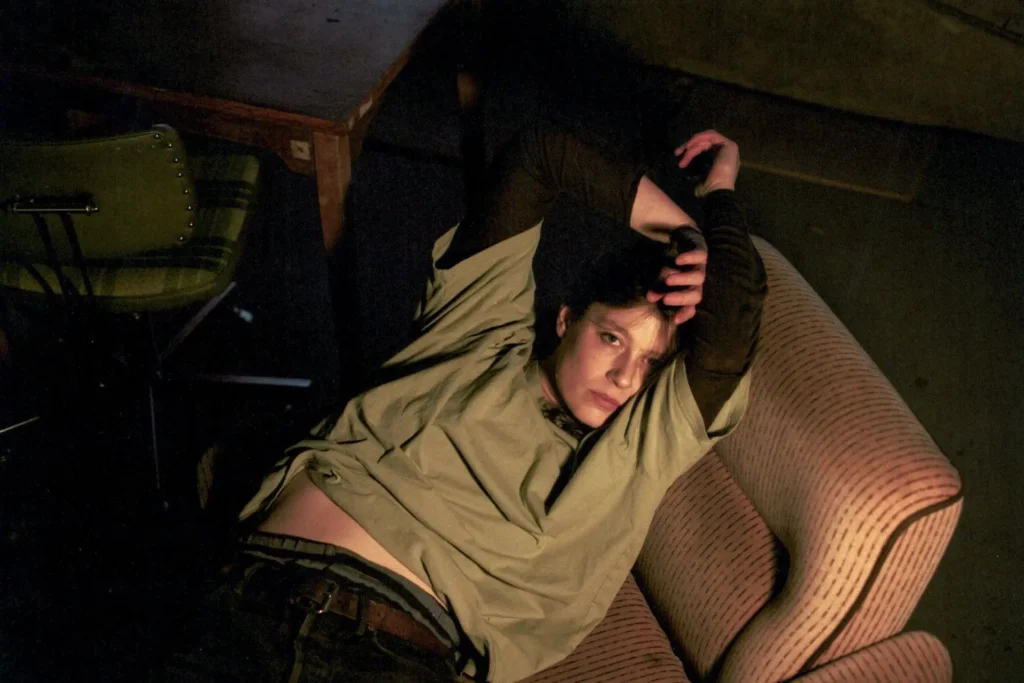
The third and final sculpture on the tour – reached as Monday morning drizzle starts to fall – sits precariously on a platform outside the Trades Union Congress building. It was commissioned to commemorate the trade union members who died in the two world wars, and I suggest that it’s a slight shame that its immediate surroundings look shabby and un-loved. Margolin disagrees, suggesting that’s kind of the whole point.
“So much of London is fugly in this way,” she laughs, “but then you look into all of the different spaces, and you’re like, ‘Oh, it’s so incredibly full of history, and it’s full of all the people who lived here’.
“So much of this city has been co-created by the people who have lived in it over hundreds of years,” she adds. “You can walk around being like, ‘I’m in fugly London and all the paint is peeling and like all the pavements have broken up and there’s too much traffic and it’s dirty and my nose is full of soot.’ Or you can think, ‘Isn’t that incredible that this place was built by people?’ And not only that it was built by people explicitly, but it’s implicitly built by us. The ways that the pavement is broken up is because of the ways that people have walked on it.”
What is abundantly clear about this rebirth for Margolin, and of the new music she is beginning to release, is that it all revolves around openness and curiosity about the world and how she is herself changing. “I’m really obsessed with people and how they make things and how we create the spaces we’re in,” she says.
“You don’t know that you’re a participant in the world that you’re in, and we just walk around so much the time unaware of the fact that we’re not audiences to the world – we’re very much in it, and can go and engage with the things that other people have created.” On that note, she smiles, “shall we keep walking?”