
Meet Eaves Wilder, the singer making a 90s-influenced dream world
With only a few existential crises along the way, the London singer turned anger and disillusionment into newfound power on the glorious and deserved second chance of debut album ‘Little Miss Sunshine’
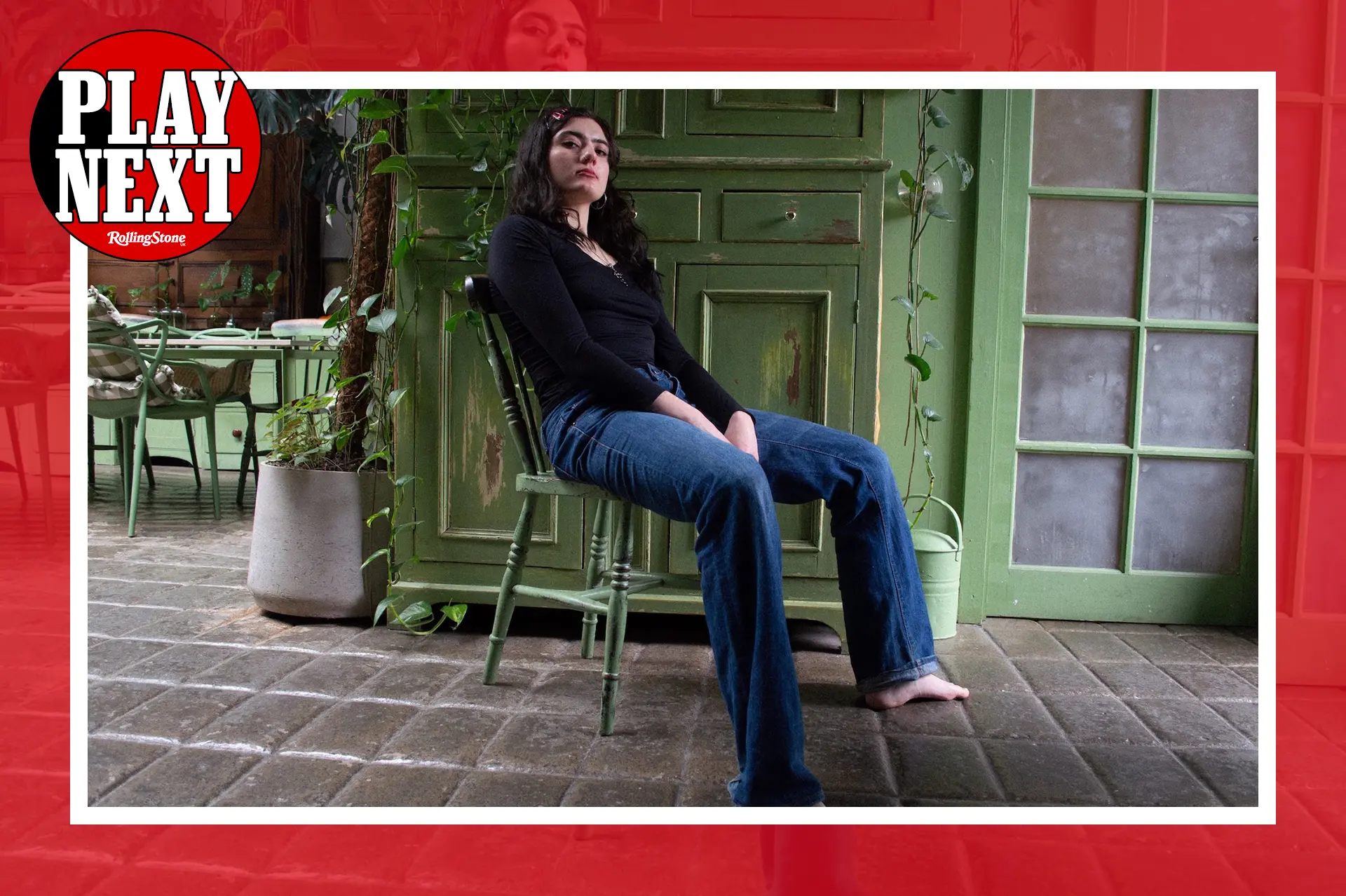
The words “screw it, I’m becoming a nun” have become a last resort declaration-turned-meme for countless women disillusioned with modern life and especially the dating world in the online age. Few actually get as close as Eaves Wilder did though.
When the young north London-based singer and songwriter started Googling local convents and their application processes, it wasn’t even about swearing off the quest for love. She had simply become tired of the music she was making and the world she had to exist in.
“I felt quite disenfranchised,” she says today. “I grew up studying, and was an absolute obsessive of, bands from the 60s and the 90s, and the world I was in completely the opposite of what I thought it would be. I felt like there was too much noise and too many people releasing songs, and I felt like I was one of them. I wanted to step back and see if I had something that I actually wanted to say.”
In retrospect, she says the frantic searching of nearby convents was an attempt to “create some escapism for myself,” adding: “I was trying to go somewhere else and experience a different life.”
There are elements of said lifestyle, she says, that are “particularly appealing to our generation. We don’t really believe in anything. We don’t have much hope [or] much community. We don’t have much of a connection with nature. It’s all about this really individualistic mentality. The idea of being in a convent is the complete opposite. Even if you’re not religious, something about that was really appealing.”
Though the plan to drastically change her lifestyle never fully materialised – “I told my boyfriend and he said, ‘You know we’d have to break up, and also you could never have a beer again!’” – it did spur on a new creatively freeing period, where the songs that would make up debut album Little Miss Sunshine were penned.
“It just started to be true,” she says of how her songwriting changed. “I started to have lyrics that felt like how I was actually feeling in that exact moment. Before, it was always more retrospective or hypothetical. Then it started to be really honest, and that felt really exciting.”
With Little Miss Sunshine out on April 17 via Secretly Canadian, we talk to Wilder about her creative struggle and subsequent breakthrough, the escapism of (imagined) nature and more. “I’m definitely in a better place now than I was then,” she smiles. “I haven’t Googled the convents in a while.”
Read our Play Next interview with Eaves Wilder and listen to her music via our Play Next playlist on Spotify below.
What did it feel like when you started to write songs again after the break? What sounds and ideas were coming out?
It started from a point of me being like, ‘I’m gonna quit music, so what would I make? I’m just gonna experiment a little bit and see what I would make’. I was really anti-music at the time. I was, like, over it. I was really into books, and it was all coming from a few books and a few movies that I loved. About half way through, I realised, ‘Oh, this is all coming from the same place, and these will tie in together. Maybe it could be a thing!’
I remember talking to my mum and my sister, and my sister knew I was having writer’s block. She kept on hearing songs by, like, Olivia Rodrigo, and being like, ‘You should write a song like that!’ I’d say, ‘Fuck off! I’m trying!’ I remember just being like, ‘I can’t write a banger right now. I just can’t’. I just wanted to write something really pretty, and she was like, ‘Well, you’re allowed to do that too’. That just clicked something in me. I was like, ‘Oh, I could just make something that I think sounds really nice and isn’t meant to have mass appeal’. I remember my mum playing me a Liz Fraser song, which I’d never heard before. I went straight to the shed in my garden and wrote the first song for the record.
You’ve said your album is about world building, and its song titles – ‘Hurricane Girl’, ‘The Great Plains’, ‘Mountain Sized’ – are very tied to nature. What does the world you’re building look like in your head?
It was the polar opposite of where I actually was, in this really rainy spring in the UK. Everybody was so depressed! I was thinking of really vast American landscapes. I was super into the Laurel Canyon scene, and then from that, I was reading Daisy Jones and the Six, and Little House on the Prairie has always been one of my favourite books. It all just seemed to be this place that was pure fantasy and escapism – just being a little girl on a ranch, not having to think about her phone or, like, having a job or joining a nunnery…
Tell us about your recent single ‘Hurricane Girl’ – was writing that an important step in the development of the album?
It made me a bit reflective. I wrote it originally about a friend, and then between starting to write it and finishing it, I got diagnosed with ADHD. I clocked that I was definitely also writing a bit about myself. [The diagnosis] helped me realise that instead of having hate towards this girl, it helped me have love, because I understood her. I was like, ‘Oh shit, I think we probably both have this thing that makes us really tempestuous and up and down’. Musically, it was just so fun. I just wanted to write a fat riff! That was my main goal. I was listening to loads of cock rock, and it made me really proud that I could incorporate that into my voice, which is quite the opposite of the cock rock sound.
Can you explain the journey you went on from your desire to make pretty music all the way to this cock rock sound?
I wasn’t feeling very brave at first, I had no swag about me. I was really just figuring stuff out, and I didn’t know what I was doing. As it went on and my confidence grew, I started to just feel so confident. I’d think, ‘I’m gonna write a Pearl Jam riff today, and then tomorrow I’m gonna try and do like a Mazzy Star thing’. It made me so much more confident with each inspiration I took on towards the end.
Your new single is called ‘Mountain Sized’ – can you tell us how it came together?
A song I’ve always loved is ‘The Fear’ by Lily Allen. Other than it being a perfectly written song, I love the lyrics of her just listing all of the most unlikable worst things about herself. She’s not even doing it in a cool, Brat way – she actually sounds like a dick. I thought that was so cool, and it goes back to the thing I was talking about with girls having to be likable or super digestible. I don’t think I was very digestible at the time. I had all these thoughts that were terrible and I just wanted to say them all out loud and just write a list of all the ways I was being a dick. But then the chorus is aspirational, and it’s ambitious. It’s saying, ‘Right now I’m in this place, but where I want to be is somewhere else’. To me, it felt like such a big leap – as big as a mountain – to get there at the time.
The album is called Little Miss Sunshine – did that film inspire the album?
It actually didn’t! I’ve watched it before, but [the title] was more of a joke to myself, because I was such a bitch at the time – I was really going through it. I wasn’t nice to be around. Really, I was quite unhappy and really angry at the world actually, I think. I liked the idea of it, especially when you’re a woman that’s my age, it’s really not hot to be really angry or kind of a bitch or annoyed, and you need to have this sunny disposition. That’s what’s encouraged. And I really want to have that! At first I present as having that, but then deep down, I’ve got all of this other shit that’s going on, and that’s songs like ‘Mountain Sized’ and ‘Hurricane Girl’. I tried to use weather to describe all of these different weather fronts that were coming in and out of me at the time. It started off as a joke, and now it makes me quite happy, because the point of the album was trying to find the light in things again. I guess I did that eventually.