
A fake AI album released in my name made me realise why the law needs to change
When folk singer Emily Portman discovered albums released in her name generated by artificial intelligence, it led her to discover how UK law is currently failing to protect artists from the growing issue
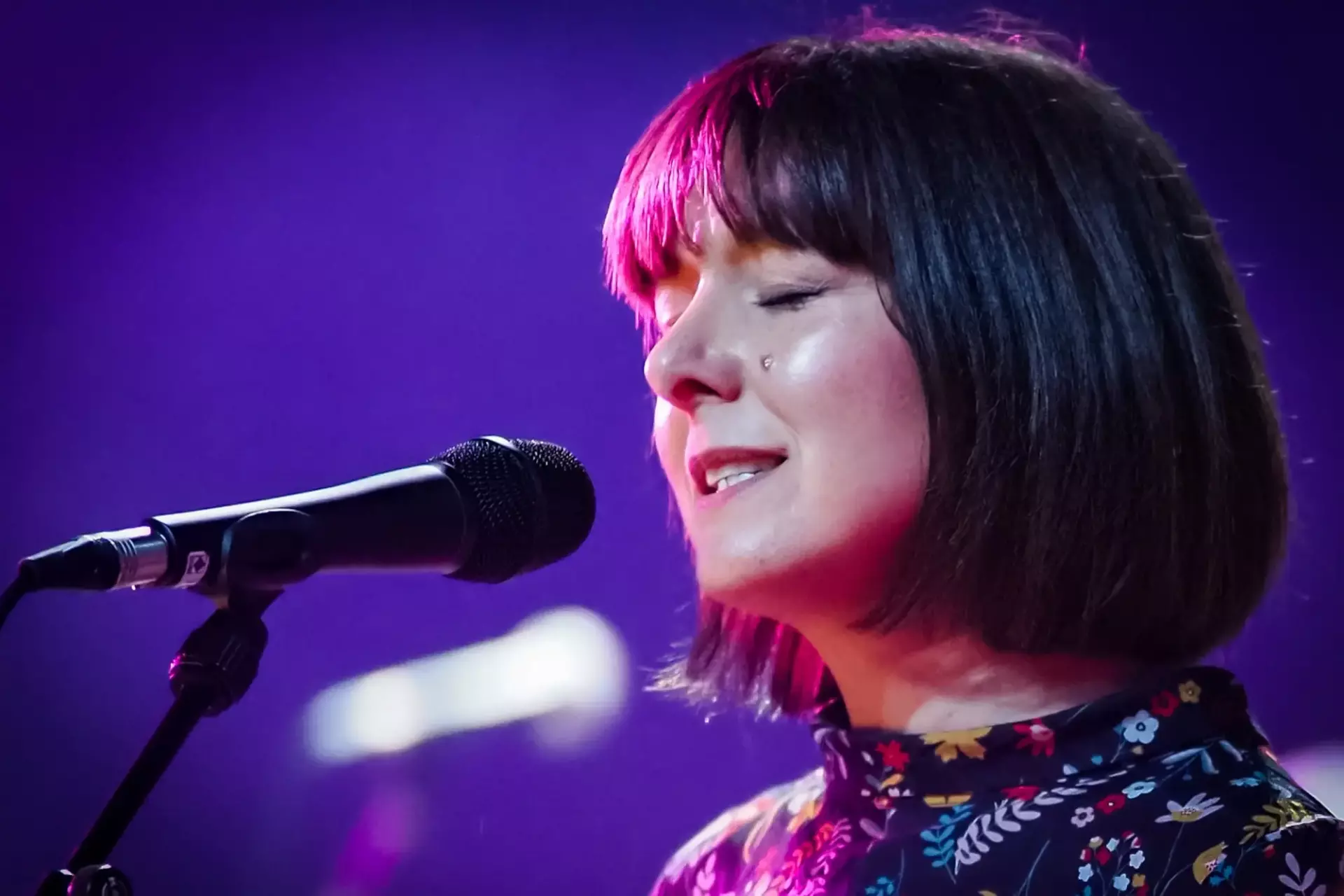
It was an ordinary day in the life of a folk singer-songwriter in July 2025. I walked into my shared music studio and began working on some new songs. Then a notification popped up on my phone. People were congratulating me on my new album.
I was confused – I wasn’t due to release a new album until the following May. What could they mean?
I opened Spotify, Apple Music and Amazon. There, released under my name, was a new album for sale. The cover showed an illustration of a whale and some mystical-looking symbols. The font was strikingly similar to that on my last album, Coracle. The record was called Orca. It looked plausible. It even looked like something I might have created.
At first, I suspected a mix-up. There is another Emily Portman, a country singer in America. Perhaps our profiles had become tangled? But when I listened, it wasn’t her. The voice had a Celtic ‘folky’ lilt, but with a synthetic pop edge. The songs carried folk-and fairytale-inspired titles: Hare Spell, The Clockmaker’s Wife, Whisper of the Willow. They suggested literary and folkloric stories, exactly the kind of writing I’m known for.
I’m a songwriter from Glastonbury, Somerset, now living in Sheffield. I’ve been writing folk and fairytale-inspired songs for as long as I can remember. I also sing traditional songs; my undergraduate and master’s degrees specialised in traditional songs of these islands. So, it was deeply unsettling to see a traditional title, ‘Black Is the Colour’, on the track list, only to discover that neither the melody nor the lyrics bore any relation to the original folk song, even though it sounded, at first glance, very much like the kind of song I might sing myself. The sound world was eerily similar too. The harp featured throughout.
Orca, an instrument closely associated with my work through my long collaboration with the brilliant harpist Rachel Newton. The more I listened, the more I felt a creeping, uncanny recognition. This music was mimicking my artistic identity.
I messaged my distributor and friend, who runs an independent record label, and has his finger on the pulse. He replied immediately: “AI.”
This was the first I’d heard of fraudulent AI albums being released under real artists’ names. Over the following days, I learned that AI fraud in music is on the rise. Often it is obvious “AI slop” (bland, obviously computer-generated music). What made my case particularly disturbing was that Orca appeared to have been trained on my own catalogue to imitate my work – obviously without my consent.
My first step was to get the album removed. With my distributor’s assistance, Apple took it down within 24 hours. Spotify and YouTube took much longer. I was required to complete a copyright infringement form and specify which law had been breached. With support from the Musicians’ Union, I learned that the issue was “passing off” – the album falsely presenting itself as my work.
After weeks of frustrating correspondence, Spotify finally removed it. By then a second album had gone up, this one called Hi Ocean, and much more obviously of the aforementioned ‘AI slop’ variety. Distribution companies that do not use two-step verification make it easy for anyone to impersonate an artist online. Unfortunately, the distributor responsible for uploading the AI-generated fake albums lacked this safeguard. Both distributors and streaming platforms need to tighten their security to stop this from becoming a common occurrence.
My experience revealed how far behind the law currently is. Unless I trademark my name (something usually only world-famous artists do), I have little protection against this happening again. And because the music is newly generated, it would be extremely difficult to prove any infringement, even when the music is uploaded to my own platforms under my name and bears uncannily similar sounds and themes.
The most distressing impact was the erosion of fans’ trust. One listener contacted me, distressed that they had unknowingly streamed the fake album. But why would they doubt it? Fans should be able to trust that the music under an artist’s name is genuinely theirs. Instead, listeners were left feeling foolish for believing it was real, while others dismissed it as “obviously fake.”
As AI voice and music generation improve, distinguishing real from synthetic will only become harder. Without clear regulation, consumer confidence will erode. If fans cannot be sure what they are hearing is genuinely created by the artist they love, trust in the entire music ecosystem weakens.
What was glaringly clear is that there are insufficient laws to deal with AI fraud. I was unable to discover who created the album. They were not held accountable. Beyond requesting takedowns – a slow and clumsy process – I had no power.
The wider threat of unregulated generative AI to music creators is profound. Artists are already reporting lost work because clients are choosing AI-generated music rather than hiring composers and performers. These tools are powerful precisely because they are trained on vast amounts of existing music, again, without our agreement. AI firms should not be allowed to train systems on artists’ life’s work without consent or compensation. This is not abstract data; it is our craft, our livelihood, and our creative identity.
The public support and press attention I received were heartening. People do care about real artists. They do not want a dystopia in which artists’ identities can be copied, their work imitated, and entire creative lives replicated at the touch of a button for quick profit.
These are already challenging times for musicians. Arts funding is difficult to secure, and streaming has steadily eroded our incomes. Yet small-scale artists continue to find ways to release their work, often with community backing. I recently launched a successful Kickstarter campaign to help fund my album, Dominion of Spells, and once again I was struck by the strength of grassroots support. When people buy our music and merch, when they come to our concerts, they are sustaining an entire ecosystem – one built on connection rather than extraction.
That support points toward something worth fighting for: a future in which AI technology serves creativity rather than exploits it, where independent artists can earn a living without competing against unauthorised imitations of their own artistic identities, and where the value of music flows more readily to those who create it than to the platforms that distribute it.
What I would like to see now is decisive action from the Government. We need stronger copyright laws that acknowledge generative AI and prevent the unauthorised training of models on our copyrighted work. We need transparency, so platforms clearly label AI-generated material. We need meaningful accountability for those who impersonate artists or commercially exploit their identities.
The fraud is not theoretical. It is already happening. Our identities are being hijacked. Our music is already being absorbed into datasets. Unless legislation catches up with technology, artists will continue to fall through the cracks of outdated law.
Creative work deserves protection. The arts enrich our lives and significantly contribute to the economy. Without legal safeguards, we risk undermining not only musicians’ livelihoods, but the very human, beating heart of music that connects, moves, and inspires us.
Emily’s real album, ‘Dominion of Spells’, is out now on Hudson Records—a celebration of the power of human-made music.