
DJ Harvey: ‘Now is better than it’s ever been’
‘The Keith Richards of Dance Music’ on 35 years of Ministry of Sound, the return of Rulin’, punk mentalities and why he doesn’t mind phones in his crowds
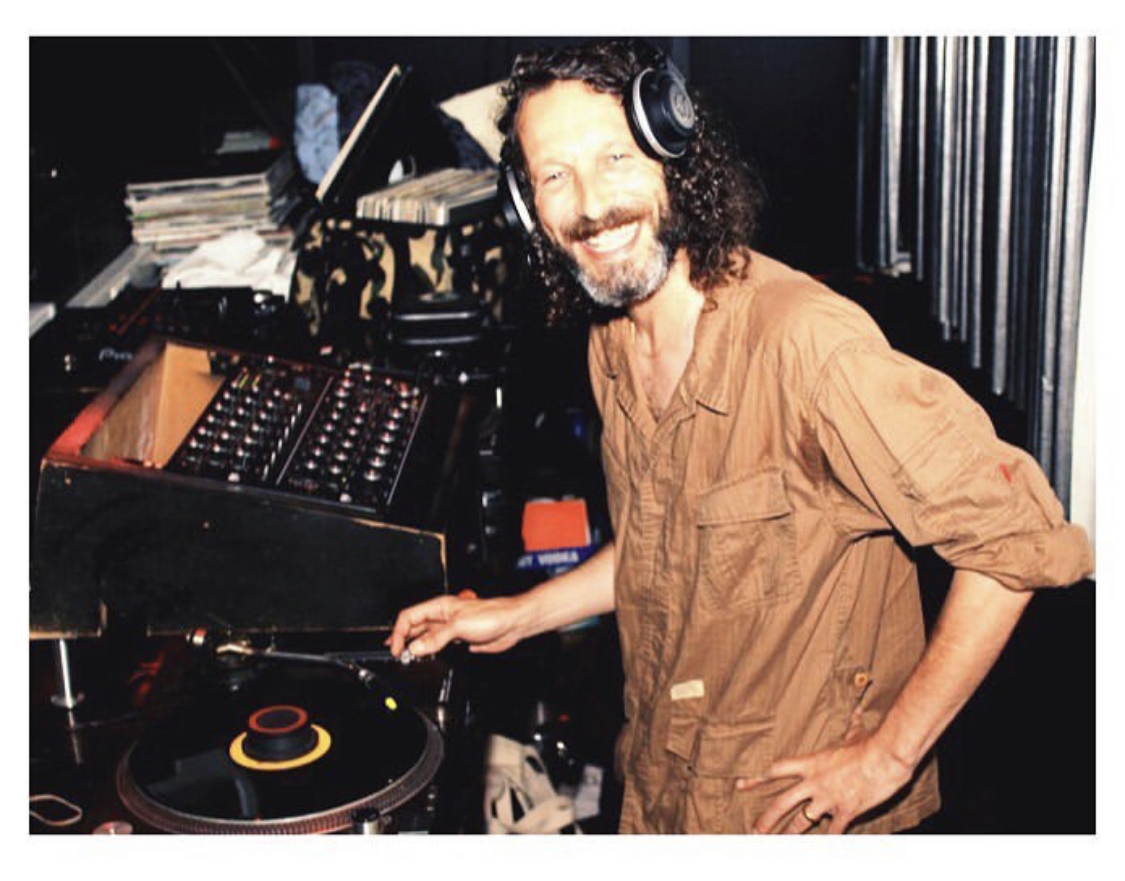
When our call connects, I ask DJ Harvey how long I have him for. “Until you annoy me,” is the response. Though said with a laugh, I’m aware he’s got one eager eye on the swell happening at the bottom of his road in LA. “I don’t know if you know how surf works,” he says, “But you’re actually riding the cosmic waves of the sun. It’s fucking unbelievable, man.”
Born in London, established in Cambridgeshire, and with roots across the globe, the 64-year-old has been settled in LA’s Venice Beach since the mid-2000s, where his outside endeavours are a perfect balance to a life spent in dark rooms playing loud music. “It’s the best place in the whole world. Just to go and spend a day at First Point Malibu and surf away your cares, ‘cause when you’re surfing, you’re worrying too much about whether you’re gonna drown to worry about your gas bill.” He’s not in to all that “wellness shit” though, he assures me. In his eyes, chocolate cake is a health food because it makes you happy. He backs up his point: “The guy who invented Pilates died when he was 52, and the guy that invented Nutella lived to 104.” His mum’s diet of tea and gin and tonic has kept her “rocking” well into her late 80s (or is she 90? He can’t quite remember). Ultimately, “happy is healthy.”
Harvey is a character. A loveable rogue. A self-confessed ‘personality DJ’. His sets are defined by their unpredictability, fluidity, and the hours over which they stretch. Regardless of the setting, Harvey’s dancefloor-first mentality at legendary parties, such as Moist, New Hard Left, Tonka Sound System and Mercury Rising, has established a cult-like following of fans, or ‘study masters’, over the last 4 decades.
“There’s a lot to be said for an intimate venue with the sweat dripping from the ceiling and everyone’s sort of locked in and close up and social and stuff,” he says, “but there’s also something to be said for when a wave of joy goes through a crowd of 10,000 people. That will make your hair stand up.” That’s home for Harvey. “I’m very confident [there], and I can enjoy playing the harp that is the atmosphere.” As such, the distinguished selector continues to capture the hearts and minds of partygoers the world over.
Perhaps somewhat contradictory, though, is that fact that despite finding comfort in these majorly public settings, Harvey is also known for being somewhat elusive. He tells me early on that he’s not really “huge” on doing interviews, yet he is, ironically, the dream interviewee.
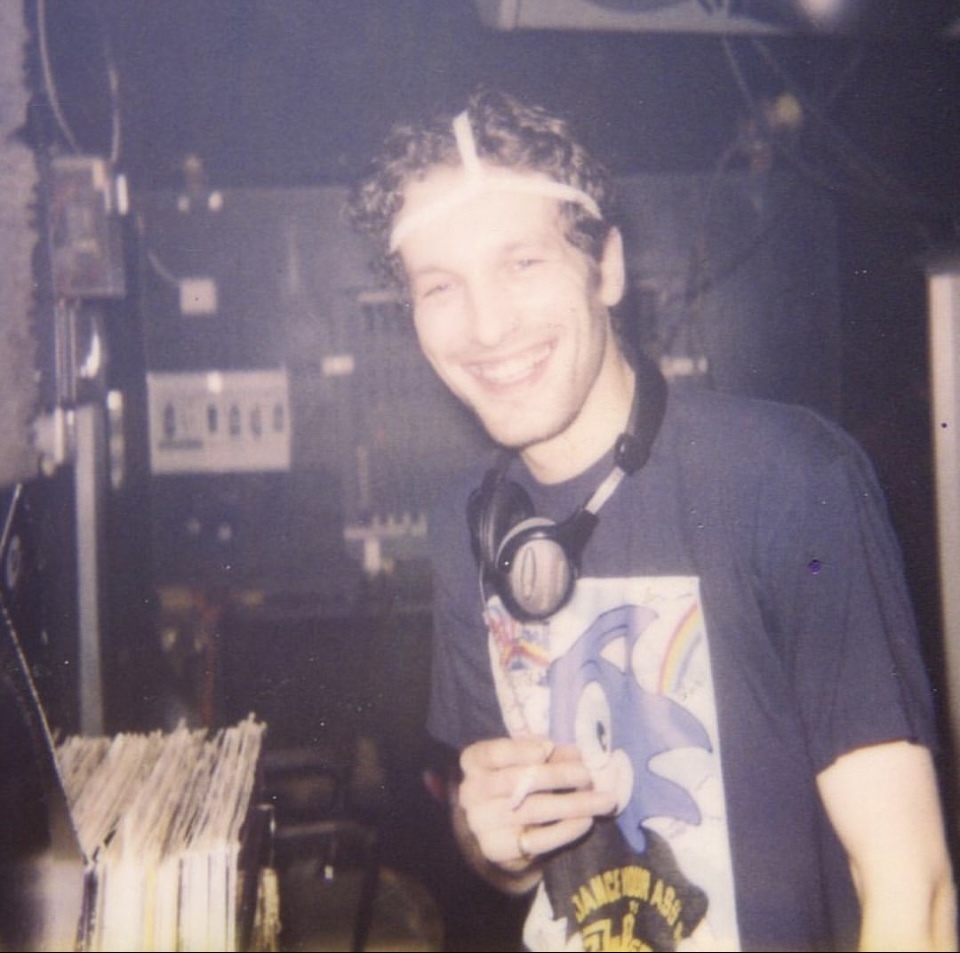
Our hour-long conversation feels more akin to a catch up with an old friend over a pint rather than that of a journalist and a world-renowned DJ trying to force some kind of rapport over an 8-hour time difference and a dodgy connection. As such, the conversation is broad. Three pints and a split bag of crisps deep, kind of broad.
We cover everything from our shared East Anglian upbringings and sniffing glue (“I thought I could predict the future”), to the Queen Mother’s secret to a long life (morning Gin and Dubonnets, if you were wondering; “She was sauced up.”). This is by way of Wendy Richard and Are You Being Served? (“We’ll raise a pint of snake bite to her memory”), getting his vintage Lambretta stolen (twice) and fishing it out of a river, and how to successfully sign on for the dole whilst living it up in the South of France (“I would give all the letters to my grandma and be like, ‘Send one of these in once a week.’”). You could say the ease with which he moves through topics of conversation is reflective of the long-form genre-fluid journeys he takes his crowds on, but honestly, I think the lad just loves a chat. What we really should be discussing, though, is his only UK appearance this year, ‘cause it’s a big one.
On 22 August, Ministry of Sound will celebrate 35 years with a one-night-only return of Rulin’, with DJ Harvey at the helm. The institution, founded in 1991 by Justin Berkmann, revolutionised London’s club culture with a sound-first approach, non-heirarchical dancefloor experience, and in securing one of the capital’s first ever 24-hour licenses. Inspired by New York’s Paradise Garage and its community-driven energy, the club’s now main room, The Box, is stuff of nightclub legend boasting unrivalled acoustics and an immersive dancefloor experience. The seminal Saturday night party series, Rulin’, first launched in 1990s, helping to shape and influence London’s burgeoning party scene for a generation with all-night, genre bending parties. So, how’s the original resident DJ gearing up for the night? “I’m just gonna rock up with a little stick thing and play some music.”
The significance of the event and it’s record pre-sale sell out time doesn’t seem to phase him, though. In fact, he shouldn’t be mistaken as the sort of person you should expect to hang around on nostalgia with for very long, if ever. “Good luck with my disco dementia,” he laughs. “Fuck trying to remember anything that happened in the 35 years.” His philosophy is simple: “Now is better than it’s ever been.”
Whilst critical of a small minority of “moaning old fuckers” and the “monstrous corporate beast” that comes with a growing industry, there are more opportunities for more people, with even more music to be played. He says that now is “a wonderful time to be a DJ.” His active disdain for the not-like-it-used-to-be attitude is also a huge part of his charm and a driving force behind his pursuit of the now. “I was never – and I never will be – one of those people,” he says.
Even in an age when clubs and venues are banning phones in a bid to return to a simpler, more connected time of dance culture, Harvey’s attitude is still one of live and let live. “Fuck all those no phone clubs,” he says. “It’s not the phone, it’s the people. It’s the crowd that [can be] dickheads.” Harvey’s crowd are welcome to bring their phones and record, because “they’re respectful people who act respectfully.” He doesn’t see the phone as a regression of experience; it’s just an evolution. The culture of now.
“It used to be called Trainspotting,” he tells me. “You would have like 3 or 4 sort of dorky guys deep at the front of the fucking decks watching the labels go round and round and round and then back before Shazam people would take photographs of the record and then go back and try and find it like that.” There’s always been a kind of recording or capture of what’s been going on, he tells me.
He’s a Shazam man himself, using it to find new music in the backs of taxis in Mexico, in coffeeshops, whatever his girlfriend is playing on her phone, or in his mate’s car. “I don’t dig,” he says. “There’s music everywhere, so I just pick up on what’s around.” But that’s not to say he doesn’t still have a soft spot for a physical find. I hear him shuffling through cassettes over the phone: Miami Vice 2, Easy Listening Hits of the 60s and 70s, The Best of Chicago, The Best of Kenny Rogers. “I haven’t really done the Spotify Radio thing,” he tells me. “If you go and buy a dusty old cassette from a junk shop, there was no algorithm involved in what tracks are on there, so you’re gonna find something, hopefully, that Spotify wouldn’t even think about playing but will still inspire you.”
“I think maybe a few years back you didn’t necessarily have access to this unlimited library of music,” he continues, as we discuss whether there was a more intentional approach to listening before the streaming age. “When you went out with your pocket money to spend on music, you’d maybe be a little more careful on your selection. It’s like, “OK, well I like the cover of this one, but I’ve never heard of them, so I’m not gonna spend my 3 quid on that.” He muses that you would probably have less music that you were more into instead of unlimited possibility and the constant search for the ‘next thing’. Case in point being his first record, Thin Lizzy’s The Boys Are Back in Town, and how he listened to it until “there was no music left on the fucking record. It was gone.”
But ultimately, the phone thing isn’t an issue for Harvey. “It’s an issue for DJs that have used phones to build their careers and now wonder why every single fucker in their show is just standing there with their arm in the air.”
In a social media age, artists, bands and DJs, particularly at a grassroots level, contend with a new, or growing, expectation to market themselves even more. But Harvey argues that you don’t have to; it’s a conscious choice. The “punk attitude,” he says, would be to say, “Just don’t do it. Step outside it. Rise above it.” That’s not to say he doesn’t see the phone as a fantastic medium to advertise yourself or your ‘thing’, “but if you’re losing your focus or your way because you feel you’re tied to this only way of becoming a DJ, then you got it all wrong, mate.”
Having cut his teeth as a teen drummer in John Peel approved post-punk band Ersatz, long before commanding dancefloors across the globe, Harvey’s roots reach back into the seventies punk movement. He recalls the advent of the genre as being born out of a culture of hardship; devaluation of the pound, garbage strikes, oil crisis, unemployment. It was so adverse that it produced a “creative wave as a knee-jerk reaction against it, which was whatever you wanna call it; punk rock or new wave,” he recalls. “So, if you’re pissed with what’s going on right now, pull your finger out and fucking dye your hair blue and throw an electric scooter at a cop car, you know?” Words to live by.
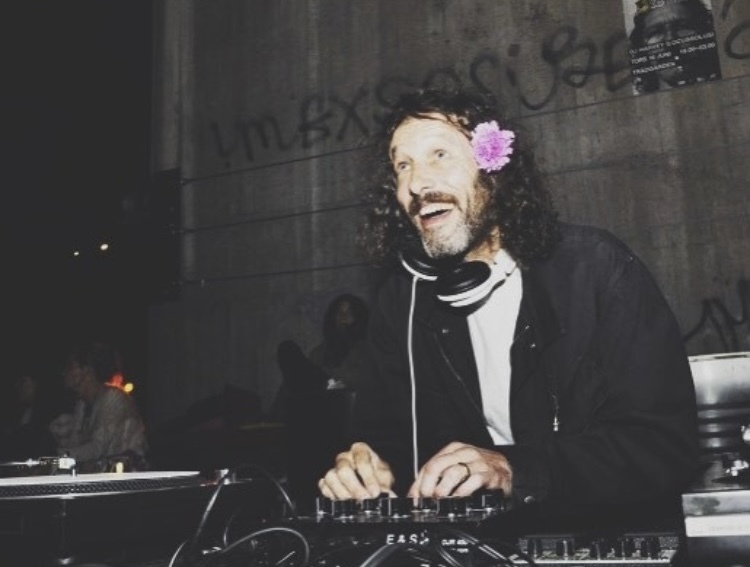
And have we lost any of that punk DIY mentality of just giving something a go, or of creating the spaces we want to see? “Absolutely not,” he says. “I feel there’s amazing shit going on all over the place and there’s maybe a sort of a veneer of stupidity and idiocrasy that sort of veils most people’s idea of what’s going on, but really, if you can think straight, you can get your shit together, man, and be creative and joyful and fucking punk as you wanna be…”
His advice? “Don’t try too hard. Enjoy yourself. Put on a party for your mates and basically get on with it. If it’s gonna work out, it will.”
As we come to the end of our chat, talk turns back to DJ Harvey’s only UK show this year. “Ministry’s a great club. They’ve just put some new sound and lights in there. There’s no reason why it shouldn’t be an absolutely fantastic night.” But even so, he’s still resistant to hovering over the past and leaves me with one last musing.
“One of the things that gets me is the sort of 90s revival that’s happening right now, you know? A lot of the people that I know in their sort of late teens, early 20s, they’re all about this sort of music from 30 years ago. And I thought to myself, ‘Man, if I’d done that when I was your age, I’d have been listening to the Charleston.’”
And that right there is the DJ Harvey school of thought in action: “Now is back in the day. Now is great.”
Get tickets for Rulin’: DJ Harvey (All Night Long) at Ministry of Sound on 22 August here.