
‘They make the laws to chain us well’: Folk music fights for its rights
As of March 2026, Scottish folk pioneer Dick Gaughan has served notice to record label Celtic Music to reclaim the rights to his music. Here, music historian Colin Harper, along with artists The Mary Wallopers, Barbara Dickson, Allan Taylor and Martin Simpson, discuss the impact of Gaughan’s fight for other elderly artists, and the protest at the heart of folk music’s continued legacy
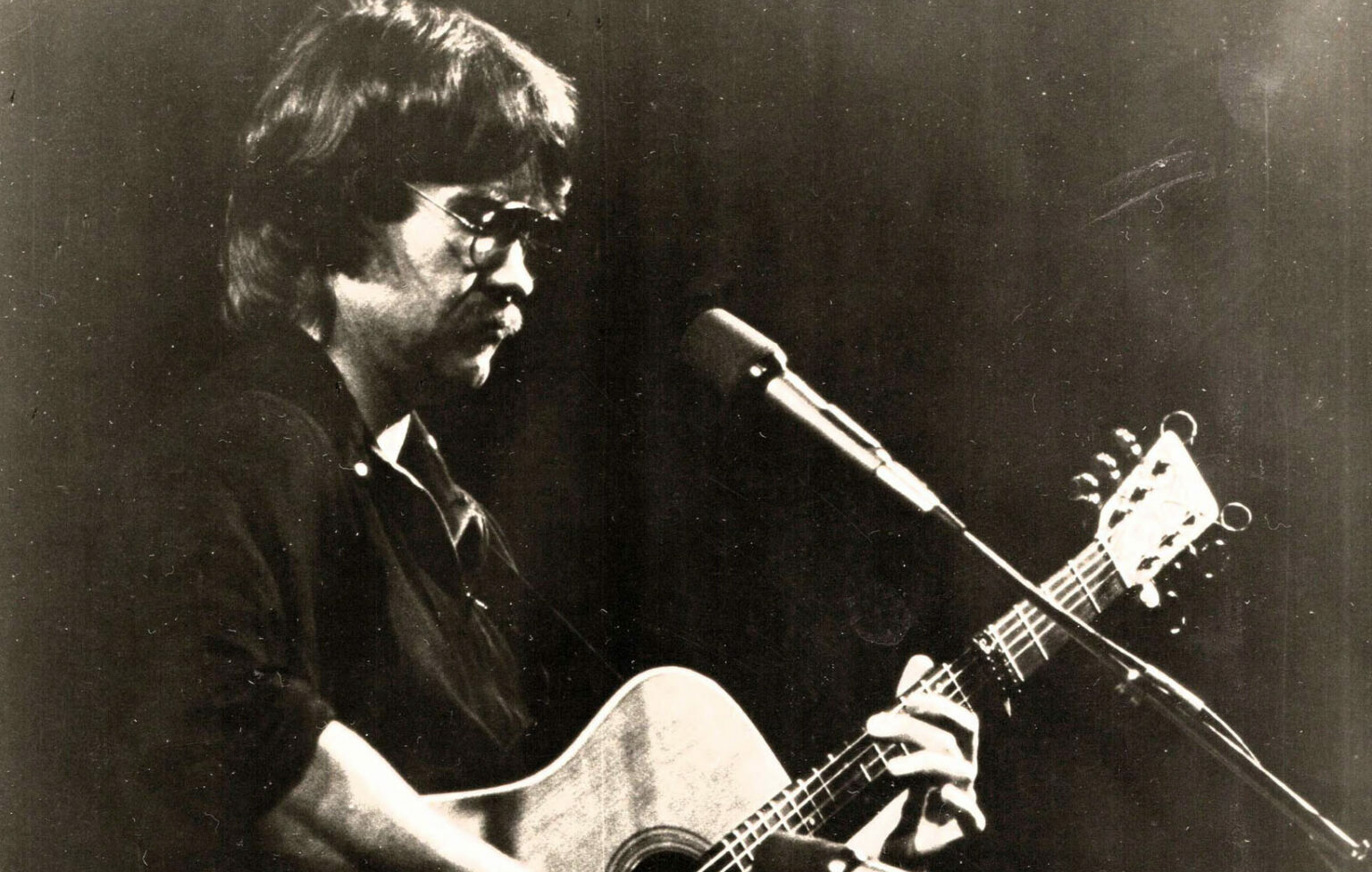
From Ireland’s Lankum and The Mary Wallopers, to Scotland’s Brògeal, folk music has been in the midst of a large-scale revival. For the first time since The Pogues brought their punk-inflected brand of trad to the masses in the 80s, the appeal of shared storytelling, the catharsis of collective singalongs, and the left-wing politics intertwined with traditional folk music is selling out stadiums and appealing to a younger, switched-on generation.
There’s no better time for new folk music fans to explore the history of this genre – but regrettably for some of the artists whose music is owned by independent label Celtic Music, a significant proportion remains inaccessible, unavailable to buy either in physical form or to stream. Now, some of these musicians, including beloved Scottish singer Dick Gaughan, are attempting to change that.
Celtic Music
Founded in Yorkshire in 1978 by the late Dave Bulmer, Celtic Music was initially launched as an outlet for Irish session tunes that he had collected, before expanding into original releases, record production and acquiring back catalogues from defunct labels including Trailer/Leader, Black Crow Records, Making Waves, Mulligan, Folk Heritage and Rubber Records. Despite the prestige and breadth of the music catalogues of which the label claims ownership, Celtic Music’s name is embroiled in complaints from certain artists about public availability of their music, rights to works and allegations of unpaid royalties, as well as numerous documentations of legal battles. With little of the Celtic Music catalogue available to stream online, and their last physical release being in the mid-2000s, there is limited opportunity for the generation of royalties.
Back in 1997, an Observer report described how a number of leading folk musicians had accused Bulmer of manoeuvring artists into signing restrictive contracts, sitting on recordings in hopes of them becoming more valuable and of failure to pay regular royalties to some of their artists. The report told how Durham-based folk-rock band The Whisky Priests took their case against Celtic Music to the High Court in 1993, alleging that they had not received royalties for their albums Nee Gud Luck and The First Few Drops after signing with the label in the 80s. In an out-of-court settlement, they obtained costs and the recording and publishing rights to their entire catalogue. “Celtic Music almost destroyed our careers,” The Whisky Priests’ Gary Miller told the newspaper, citing unpaid royalties, lack of promotion and a contract which prevented them from moving to another distribution company, as reasons. Speaking out in response, Neil Sharpley, Bulmer’s business partner, who remains at Celtic Music today, denied that the label had “destroyed any musician’s career” or that they had failed to pay royalties.
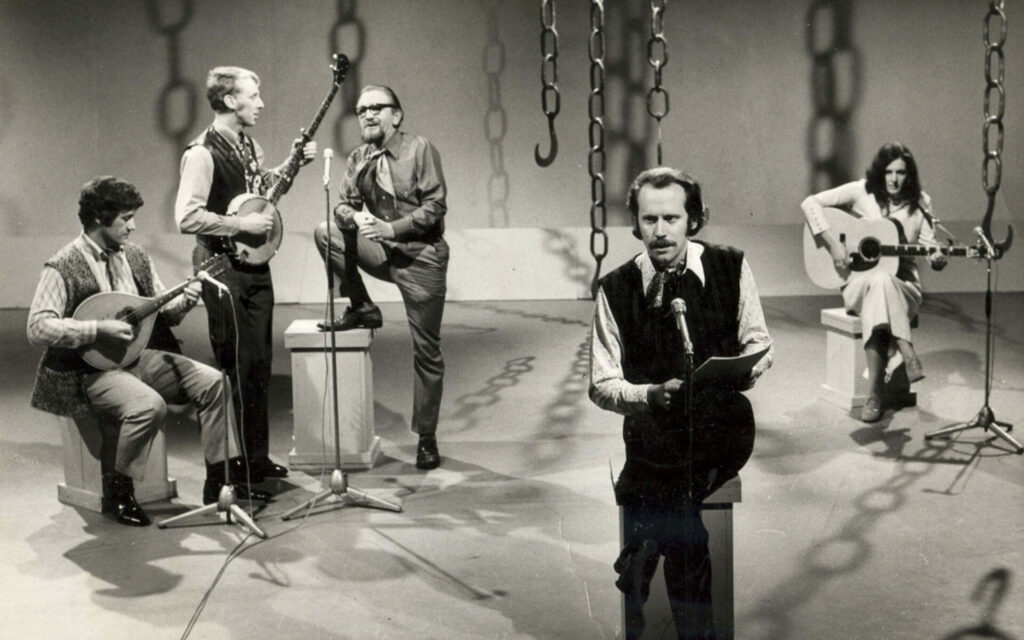
In the same article, Bob Wearn, a spokesman for the Musicians’ Union – an organisation which also placed the label on their blacklist – was quoted as telling the Observer: “We have a number of outstanding legal cases against this company and we warn our members that it often fails to promote records. When it does promote, some artists find they do not get royalties. We’ve had successes. The courts have torn up several ‘unfair’ contracts.”
Currently, the three people who call themselves Celtic Music consist of the late owner’s two sons, Calum and Robert, and Bulmer’s 75-year-old brother-in-law Sharpley, a former solicitor struck off in 2001 for embezzlement.
“They have stopped people making a living from their work”
Martin Simpson
With Sharpley’s involvement, Celtic Music’s trump card has always been their in-house knowledge of the law and ability to issue complex legal letters, meaning they have in many cases gone unchallenged by artists. As such, the label continues to defend ownership of the music in their possession, music which they are not seemingly actively monetising by making widely available online or on the physical music marketplace, either by licensing or by selling catalogues back to its owners or to the families of artists who have passed on.
Given that the label appears to be operating with limited imperative to allow the music to be heard, it raises questions around their motives for withholding it. Quite simply: why? And, for what gain?
Sheeran shines a light
The situation was recently highlighted when Ed Sheeran purchased a second-hand copy of English singer-songwriter Allan Taylor’s 1979 album The Traveller in a record store in Williamsburg, Brooklyn. After hearing the album, which was originally released on Rubber Records, the Grammy and BRIT Award-winning singer-songwriter commented on Instagram that he couldn’t find it anywhere online. “So feels like a special vinyl in the collection,” he wrote.
Taylor and Sheeran bonded during a number of subsequent telephone calls, and as a result, Taylor decided to host The Traveller on Spotify in June this year. But within 24 hours, Celtic Music contacted him with strict instructions to remove the album from the streaming platform. This was the first correspondence he’d had with the label since they acquired Rubber Records’ catalogue in the mid-80s.

Speaking to Rolling Stone UK, Taylor, who has since retired from performing due to health issues, discussed the romanticism of The Traveller as appealing to a new wave of artists like Sheeran. “I sense there’s a growing movement amongst the really young upcoming musicians that they like the idea of the lonely man [or] woman wandering down the street with a guitar over his shoulder, looking for a place to play and a place to sleep for the night,” he says.
“I think it holds a fascination for that generation. So, The Traveller could have been part of that if Celtic Music had seen the light. They could have been gracious when I put it on [Spotify].”
Taylor continues: “I don’t know how long it [The Traveller] was available [in physical format] because I never got royalty statements or cheques or any kind of money from Celtic Music.” He has also noted how, following the removal of the album from Spotify, the label has since uploaded it to YouTube. “I wrote to them and said, ‘I expect a royalty statement and any financial rewards from the exposure,’” he recalls. “And of course I’ve heard nothing.”
Reputation
In conversation with Rolling Stone UK, Scottish singer and actress Barbara Dickson, perhaps best known for her duet with Elaine Paige on ‘I Know Him So Well’, tells her story. Dickson’s 1969 Trailer Records album about the Jacobite rebellions, The Fate O’ Charlie, recorded with Archie Fisher and John MacKinnon, came into Celtic Music’s ownership after Trailer and Leader’s founder, Bill Leader, who had entered into some financial difficulty, licensed the works in the mid-70s to Highway Record Company. When that label went into receivership in 1990, with Leader’s recording company having already been dissolved in 1987, the works were acquired by Celtic Music.
Today, The Fate O’ Charlie remains unavailable to buy except for CD-R copies released by the label in 2003, which can be bought second-hand. A reissue in 2017 on Grey Scale, an imprint of Gonzo Multimedia, was withdrawn by “mutual consent” between Grey Scale and Celtic Music, says a representative for Grey Scale, because Celtic Music retain the rights.
Dickson alleges that Celtic Music are “sitting on these master tapes, and they should not be permitted to do that. They’ve not contributed anything to the process.” Occasionally, a battered physical copy of The Fate O’ Charlie makes its way into Dickson’s autograph queues at the end of her shows. She tells the owners, “Hang on to that, that might be [worth something].”
Money matters
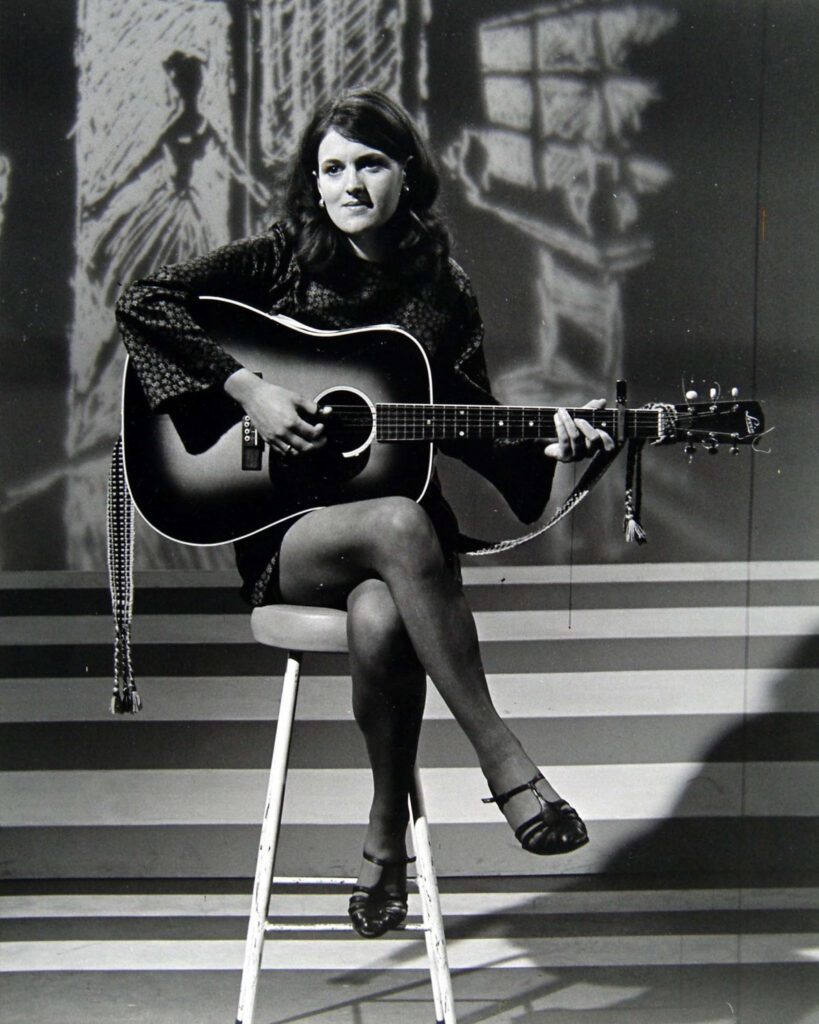
An example of these practices contributing to financial hardship for affected artists is that of gifted British folk artist Nic Jones, who is best known for his 1980 album Penguin Eggs, released by Topic. After Jones sadly suffered a career-ending road traffic accident in 1982, his wife, Julia (now deceased), set up Mollie Music to release bootlegs and live recordings of music from his first four albums, which had been acquired by Celtic Music in the 80s. This followed several requests for copies of the albums to be made available so that Jones could benefit from royalties. “Before this he regularly received thousands of pounds every year in royalties,” Julia told the Observer in 1997. “Since Bulmer got our records, we have got nothing.”
English singer-songwriter Martin Simpson’s first album, Golden Vanity (1976), originally released on Trailer/Leader, was acquired by Celtic Music in the 90s but has never been made available on CD, or other physical formats, by the label, nor to stream online. Giving his opinion on Nic Jones’s situation to Rolling Stone UK, Simpson says, “There was an opportunity there for Celtic Music to actually make available his first four albums which were all on Bill Leader’s label, but they didn’t do anything. There’s a man who basically was destroyed in a car crash and had no way of making money apart from a later record for Topic.
“The fact that they have stopped people from making a living out of their own efforts and their own work and their own back catalogue, I cannot see how that’s not against the law. I really can’t,” Simpson says in disbelief.
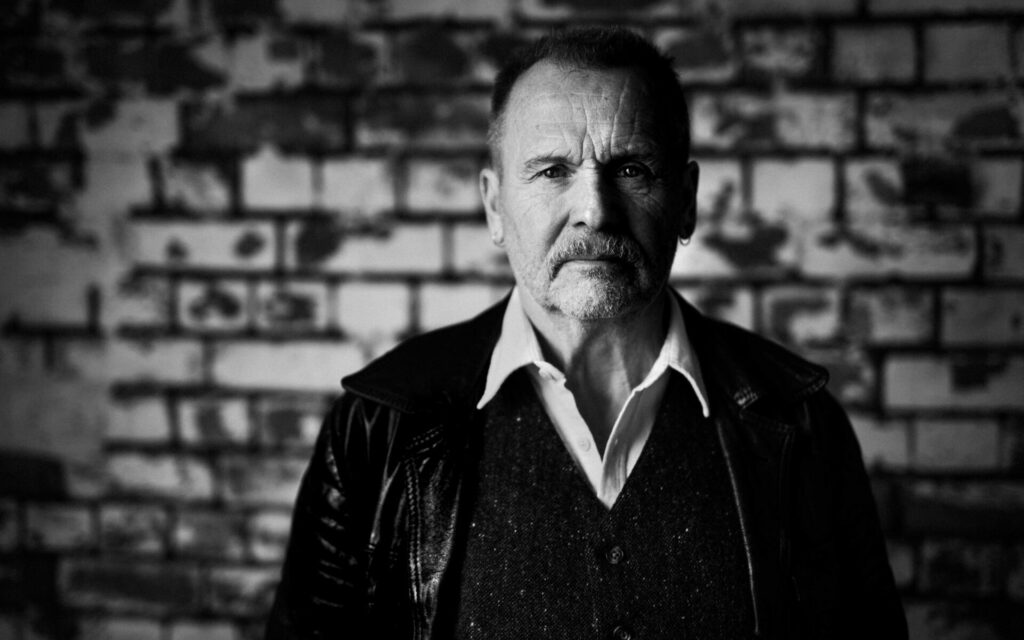
Jones made a remarkable return to live performances in 2010, 28 years after the accident, with a handful of festival appearances.
As regards his own music, Simpson is less fussed about the availability of his albums which are in Celtic Music’s possession but voices his opinion that the company collected record labels in the 70s “like they were stamps” and, in his view, did not run them “properly” by attempting “to make money or to do right by the people that they clearly represent”.
In a more recent case, Lal and Mike Waterson’s highly regarded 1972 album Bright Phoebus was approved for a remastered reissue by the family yet blocked by Celtic Music who won a 2018 court victory against Domino Recording Company for copyright infringement because Celtic Music still owned the rights to the album. As a result, the reissued copies were destroyed.
For Marry Waterson, daughter of Lal Waterson, who oversaw the reissue, she’s frequently told just what those songs mean to people and their “importance”: from Richard Thompson (“Lal should be an honorary Brontë,” he told The Quietus) and Pete Paphides, who explored the album in his BBC Radio 4 series Lost Albums, to Paul Weller, who recorded Waterson’s ‘Never the Same’ for his 2025 album Find El Dorado.
“It’s an extraordinary piece of work featuring the absolute best musicians and the most eccentric and brilliant writers and singers,” says Simpson.
Following the legal case against Domino Recording Company, Celtic Music stated in a 2018 press release that the album had been authorised for release in 2000 on CD and remained available in that format. At the time of writing, an online search showed only that second-hand copies are available for upwards of £36. Waterson noted that Celtic Music had made the album available on Spotify last year, yet, speaking on behalf of her mother’s estate, she states her belief that the label “are still generating income from my mum’s songs on Bright Phoebus and not paying royalties”.
“Bright Phoebus is an extraordinary piece of work”
Martin Simpson
Multi-instrumentalist artist Andrew Cronshaw’s first two albums, Earthed in Cloud Valley (1977) and Wade in the Flood (1978), came into Celtic Music’s possession via Highway Records when Celtic Music bought the Trailer/Leader catalogues. But these albums are not available for sale and, according to Cronshaw, he has had no response to his requests to license tracks or albums from Celtic Music.
“I’ve never received any royalties, nor communication, from Celtic Music,” says Cronshaw. “It’s a long time since Earthed in Cloud Valley and Wade in the Flood came out. I’ve never had royalties from Celtic Music, but I would imagine there wouldn’t have been many to receive – I don’t know whether they would have made it past break-even for the labels, and as Celtic Music hasn’t reissued them, there won’t have been any subsequent royalties or accounting relating to a rerelease. It may be that Celtic Music have received royalties related to them, I don’t know.”
Commenting on the wider situation about the availability of music owned by Celtic Music, Cronshaw says, “The only time I spoke with Bulmer was at Finsbury Park Fleadh – I think the 1996 one. I asked him about reissues of Trailer/Leader albums, particularly those by Nic Jones, for which people had been asking. He responded that while there were people who wanted them, there wouldn’t be enough to make it financially viable.
“Back then he might have been right, for most if not all of what he had acquired. But that was before the online world happened. And what he said then doesn’t explain or justify Celtic Music – either while Bulmer was alive or since he died – not even doing licensing deals with the various companies that have offered them, which would have brought Celtic Music money, whereas not doing those deals and simply hanging on to everything has presumably earned them nothing.” He then alleges, “Unless of course they’ve been getting royalties that they haven’t passed on to artists.”
“As Celtic Music hasn’t reissued my albums, there won’t have been royalties relating to a rerelease”
Andrew Cronshaw
Rolling Stone UK contacted Celtic Music and asked for confirmation that no royalties were owed to artists – or the families of deceased artists – including Allan Taylor, Andrew Cronshaw, Dick Gaughan, the members of Clan Alba, Nic Jones and Lal and Mike Waterson.
The label stated: “Like most businesses, we do not conduct our affairs via the media, but in any event we are sure you will understand that confidentiality and data protection issues would arise if we did.”
They continued: “If there are any performers with whom we have a business relationship who have any questions or issues, they should obviously contact us to discuss them. It is equally obvious that we are unable to communicate with performers (or their successors) who do not keep us updated with their contact details.” They then suggested that Rolling Stone UK pass on this message to those we have been in contact with.
‘We’ve never owned one handful of earth’
Rolling Stone UK also asked Celtic Music about the lack of availability of the music in their possession. Their response stated: “This is a wide and general question to which the answer may vary from case to case. The reasons are usually economic and are often only practical with direct support from the artists or their heirs.” They attest that they have “released and rereleased many parts of our catalogue, and will continue to do so, when and where it is practical to do so.”
Celtic Music added: “You will know the economic issues that arise with regard to production of old back catalogue recordings in specialist or niche genres. It is of course relevant whether the performers in question are alive or dead, are still performing or not, and are willing to collaboratively promote any re-releases. Negativity and antagonistic attitudes stoked by some third parties in apparent support for a particular different agenda are unhelpful.”
They also mention the technical challenges involved in making analogue recordings available digitally, saying “these decisions are ultimately up to the record company on how to best convey the material. For instance, many older folk music master recordings in our catalogue were recorded sometimes in less-than-ideal circumstances. In many cases, it is the rawness of the folk performance that is important; digital sanitisation of recordings does not always do the performances any favours. Energy from these performances may be lost or diluted and in some circumstances can risk losing the soul of that recording. These factors mean that the approach is not simply purely technical, and that options as to the extent of ‘digitisation’ and ‘cleaning up recordings’ may vary.”
“Celtic Music has released and rereleased many parts of our catalogue, and will continue to”
Celtic Music
When asked why, in lieu of not making the music in their possession available for streaming or for sale in the foreseeable future, the label is not negotiating the return of the rights to artists, Celtic Music responded: “Regrettably, certain third parties have campaigned to alienate some performers, stoking an antagonistic attitude which helps no one. We always welcome positive collaborative direct discussions with performers or their heirs free from preconceived notions of what is right or wrong. The position is not one-sided.”
The statement continues: “We are always willing to talk directly to performers about mutual interest but have had very little if any direct contact from many of the relevant people or their heirs, making positive collaboration difficult. In many cases, their whereabouts and contact details, are, have been, or remain unknown to us, and sometimes there may be a question as to who has inherited the interest in the material.”
It is reasonable to question why many of these artists haven’t attempted to make direct contact with Celtic Music, yet seemingly the answer lies simply in the label’s reputation within the folk music community. Dickson recalls Celtic Music as being poorly regarded by her peers – including other Trailer and Leader artists – whose works ended up in its hands.
Dick Gaughan
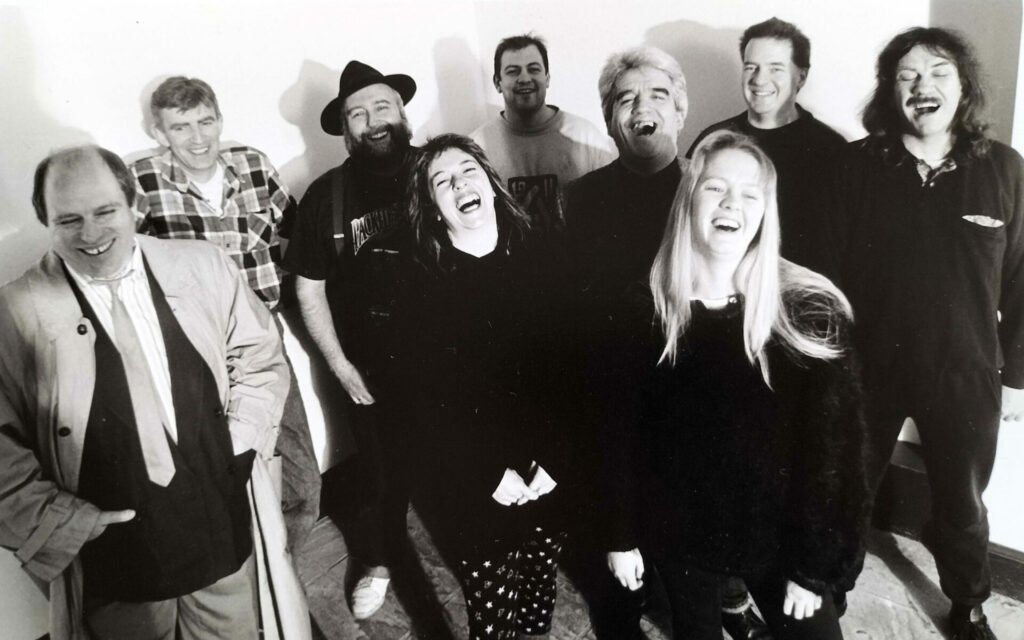
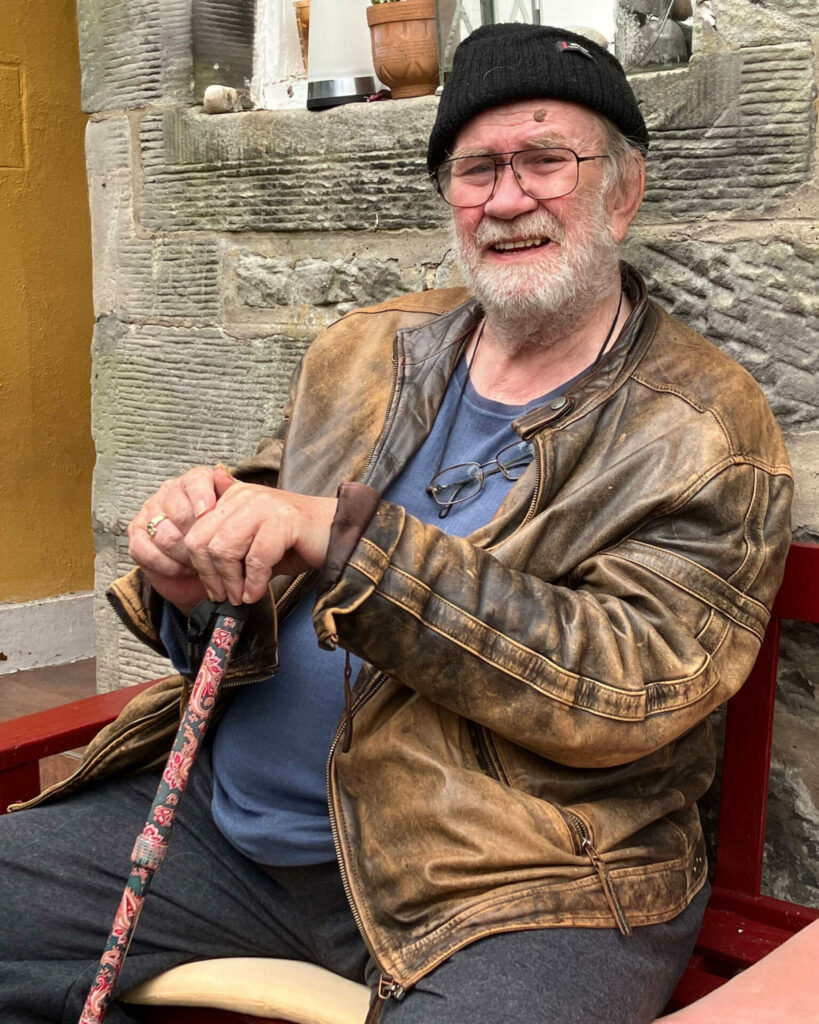
As of late 2025, music historian Colin Harper has been assisting Scottish folk pioneer and fiercely passionate social justice advocate Dick Gaughan in raising funds via the set-up of a GoFundMe to pursue legal advice to test Celtic Music’s claims to the rights of seven of his albums recorded between 54 and 31 years ago.
Best known for his 1981 album Handful of Earth, a collection of political anthems and devastatingly beautiful ballads, the 78-year-old’s six-decade-spanning career sadly came to an end in 2016 due to an earlier stroke. As detailed on his fundraising page, none of the albums in question are available digitally via Celtic Music and have been absent from the CD and physical music marketplace for many years – bar the 1995 Clan Alba CD, which can be bought through Amazon Marketplace for £31.23 at the time of writing, from a mail-order entity linked to Celtic Music.
The artist’s relationship with the label came to an end following the release of Clan Alba, the album by his Scottish folk supergroup of the same name, which featured fellow solo artists Brian McNeill, the late Davy Steele, and Patsy Seddon and Mary McMaster of the duo Sileas.
The double album was recorded in 1994 in a studio built at Elsdon, Yorkshire, which was co-owned between Gaughan (a 25 per cent owner), engineer Geoff Heslop (also 25 per cent), and Celtic Music’s Bulmer and Sharpley who owned 50 per cent. According to Gaughan, he had a verbal arrangement with Bulmer that the two-CD album would be priced at only £1 above the standard price of a single CD, but in the spring of 1996 it appeared as a seemingly mail-order-only item at what Gaughan considered to be an over-inflated price (£27, the equivalent of £55 today). As it stands, members of the band including Gaughan, Seddon and McMaster have stated that they never received money from the sale of the album.
In a 1996 issue of Folk Roots, a letter from Gaughan clarified his position and relationship with the label, and how, from that year, Celtic Music would not be releasing any more of his recordings due to Gaughan voicing his opinion that he was “thoroughly frustrated by the inefficiency with which they handle releases”.
Gaughan does not recall having received a royalty payment from Celtic Music, nor has he heard of Northworks, an entity affiliated with Celtic Music in the Performing Right Society database which claims 100 per cent mechanical royalties (payments made to songwriters and music publishers whenever a copyrighted song is reproduced, manufactured, or streamed) to 61 of his songs, as outlined in his GoFundMe.
Whilst Celtic Music say they are “constrained in what they can say in regard to Gaughan,” they stated to Rolling Stone UK that they are “in correspondence with his representatives about our detailed past business relationship with Dick, who intimated in or around 1995 that, amongst other things, he wished to receive no more contact from us, making any positive collaborative projects obviously difficult to achieve.”
At the time of writing, Gaughan’s GoFundMe is sitting at over £66k, exceeding the original goal of £35k at just over a month from launching in July 2025 and, on 16 March 2026, his solicitors served notice to Celtic Music in relation to three of his disputed albums: No More Forever (1972) and The Boys of the Lough (1973) under the 50–70-year law, and Call It Freedom (1989) under a US law whereby an artist can generally regain copyright of their works after 35 years.
The 50–70-year UK law, otherwise known as the “use it or lose it” principle, is explained by Gaughan’s lawyer, Lindsay Gledhill, as a “built-in statutory protection which came into existence because when sound recording copyright got extended to 70 years the record labels potentially were going to get a lot of benefit, even in relation to music when they weren’t actually releasing the music.
“After 50 years, you have a right to serve a notice on your record label if they’re not actually having your work released. And after that they have a choice: they can either continue as they are or they can rerelease the work. If they want to continue as they are, that’s fine. No one is accusing anyone of anything. No one is blaming anyone for anything. But it’s simply the fact that if they don’t rerelease the work then the sound recording copyright will expire and any rights on the performances will revert to the performer.”
Although the label could continue to own a sound recording if they choose to rerelease, the 50–70-year law does come with some conditions. Namely that a record label would need to make a record available for streaming and also release it in sufficient quantities to meet the demand of the public to hear that recording again. As well as this, after 50 years the label will no longer be able to offset royalties against any historical debt, with all royalties being paid directly to the artists.
“The record label does have a choice to rerelease, so [artists] must be prepared to accept that and see that as a satisfactory outcome,” Gledhill surmises.
“I want – and Dick wants – his music to be able to be heard,” says Harper of the effort.
This isn’t an industry epidemic that has specifically targeted folk and trad music. Artists from Prince to Paul McCartney have famously secured ownership of their catalogues, while more recently – and perhaps most famously – Taylor Swift won a six-year battle to regain control over her master recordings. Applying a strategy in which she rerecorded her music in order to devalue the original masters, Swift eventually regained ownership of them in 2025. Yet the difference here is that the majority of folk musicians affected cannot generate the revenue needed to buy back their rights.
Moreover, in the case of Gaughan – and seemingly the general sentiment within the wider folk circle – the conversation doesn’t centre on money, but rather on legacy. Speaking to the Guardian in 2025, Gaughan said: “To find that the music I made, that I put a lot of work into, is just not available – it’s like your life isn’t available.”
“Dick wants his music to be able to be heard”
Colin Harper
As Harper rightfully says when Rolling Stone UK meets him over a cup of coffee in Belfast, “What good is it doing anybody to keep that music from the public? I think it skews history when large chunks of music aren’t available.”
Folk and trad music and ballads have long served as a kind of living heritage, preserving cultural identity and community values across generations through oral tradition, not to mention its role as a vital means of protest for the working person to challenge injustice, and to narrate the political, social and economic climate of the time. You only need to listen to Gaughan’s ‘Workers Song’, Billy Bragg’s ‘There Is Power in a Union’ or Chumbawamba’s encyclopaedic English Rebel Songs 1381-1914 to see the vitality of the sentiments.
The new wave
Folk music’s heritage has not been lost on Dundalk’s The Mary Wallopers. The raucous five-piece founded by brothers Andrew and Charles Hendy have been vocal supporters of Gaughan’s cause, sharing their cover of ‘Workers’ Song’ at their show at Glasgow’s famous Barrowland Ballroom, with a call to action to donate to the GoFundMe. When initially getting into ballads, the pair knew the kind of rebellious Irish tunes about joining the IRA, but Gaughan’s appeal came in his very socialist, left-wing sentiment, and a disarming aggression that you don’t often hear from others who play in the DADGAD alternative guitar-tuning style.
“Our favourite thing is delivering a message passionately and expertly,” explains Charles. “It’s nice to have power behind it. All these issues that he’s singing about a lot of the time, they’re things that make you angry. Honestly, I’m moved by listening to his music. Many times, I’ve been on the verge of tears listening to these aggressive songs because, after so long, people are still fucking people over immensely.”

Andrew continues: “He put so much of his time into the miners’ strikes and was singing for people to get their rights from their workload, and now the fact that some of his music is not being given to him, it’s like he’s getting the same injustice done to him that he fought against for his whole career.”
The band have long been critical of the “poisonous” music industry, having grown up acutely aware of similar injustices in the folk circle, such as Christy Moore’s band Planxty, whose producer, Phil Coulter, sold the rights to three of the band’s albums to an American-Irish label. The Mary Wallopers have no label themselves, despite being approached many times over the years. “We don’t fucking trust them and they don’t have any need to exist anymore unless they’re going to pump a load of money into you and make you a sensation, which we have never been interested in and never will be interested in,” Charles says.
“The lowest behaviour possible is taking something as pure as music and a message and going, ‘I’m gonna make a load of money off this; I’m gonna own this.’ The people own it; everyone owns it. Everyone has a right to it.”
On the topic of Celtic Music allegedly sitting on Gaughan’s catalogue, the brothers compare the label’s behaviour to that of present-day landlords who allow properties to stand empty amid a housing crisis. They interpret the label’s in-house knowledge and use of the law as a means of wearing artists out so they can’t challenge Celtic Music’s claims, likening it to the way that modern clickbait journalism appeals to the overworked brain, rather than to incite critical thinking or to rouse. “This is why this sort of music needs to be out there,” Charles says, “because people deserve to be riled up and shook. Wake up and get something better for yourself.”
As younger musicians, Andrew believes that it’s important that they try to shine a light back to the people like Gaughan who inspired them. “We’re in a position that maybe people who might not know him can then end up listening to him. It’s class that people put together [Dick Gaughan’s] R/evolution compilation album [a Kickstarter-funded seven CD+DVD boxset of Gaughan’s works]. The industry is so rotten, and it’s why it’s so important for people that are like-minded like us to try to support each other.”
‘Music isn’t made to be locked up’
The GoFundMe page for Gaughan outlines a very simple goal: to bring the music home to the man who made it and then share it far and wide. However, “the law costs a lot of money,” as Harper points out.
“If I want to get back the rights to my first record [Golden Vanity], which I made 50 years ago, it’s going to cost me at least £1,000 in lawyers’ fees just to get started,” says Simpson. “I feel like I’m doing the best work I’ve ever done now, not when I was 22. I don’t need to have this record out. I deeply resent that if I did want to get this record out, it would cost me money because, you know what? It’s my fucking record. I made it.”
On the topic of the law, Charles Hendy quotes Gaughan’s version of ‘The World Turned Upside Down’, citing the lyrics as speaking the truth: “They make the laws to chain us well.” “That’s what the law is for, is to make ordinary people find it impossible to go after the money people,” he says. “They’ve made a lineage of inaccessibility. They’re enemies of accessibility. I think really what they hope for is to just wear everyone out so that no one has the energy.”
However, with the success of Gaughan’s fundraiser, there’s “a chance to roll that dice for as long as people are happy to keep funding,” Harper told me hopefully. “I’m not going to give up, and neither is Lindsay, our solicitor.” And the ball has already started rolling.
On Friday 29 May 2026, a second fundraiser was set up to raise financial aid for an additional 13 artists who have expressed a desire to retrieve their works from Celtic Music. The goal target of £23k would allow for 13 carefully crafted legal letters to be sent to Celtic Music which could potentially result in the retrieval of 23 albums. For these now-elderly artists, regaining the rights to their work would allow it to be heard by a brand-new audience. On top of this, it would also provide financial support through full royalty payments, as per the 50–70-year law, as well as a new option of selling on those rights for a meaningful sum. The GoFundMe has stated that “four reputable music businesses (including one major label) have been sounded out about this, and offers would be available to those artists. Artists would have their music reissued at least digitally, available to the world, and would receive a significant sum to deal with daily life.”
“It’s not for royalties in any way; it’s the rights, it’s the justice. I would be hanged for a principle”
Barbara Dickson
As of June 2026, letters of rights assertion have been sent on behalf of two of the 13 legendary folk acts from the 70s: Dave Burland, for his first three albums, and Robin and Barry Dransfield, for two albums made with Trailer, including The Rout of the Blues, Melody Maker’s ‘Folk LP of the Year’ in 1970.
Sadly, Barry Dransfield died a week before this, aged 79. On an update to the GoFundMe campaign, his brother Robin said, “We always remembered the two Trailer albums with great regard, so regaining the rights and the chance for them to be re-issued would be fantastic. Now, there is an added poignancy to this due to Barry’s recent death from Alzheimer’s and associated problems, so it would also be a tribute to him to see this project succeed.”
Reflecting on the importance of retrieving the music for the families of artists who have passed on, Harper says, “People like Amy Scott, daughter of the late Geordie singer/songwriter Pete Scott, who died in 2023, inspire me – there may only be a few hundred fans of her dad these days, but Amy maintains his website and has created a beautiful CD of unreleased archive recordings. Pete’s 1971 album for Rubber [Don’t Panic] is one of those we aim to retrieve. Likewise, Roy Bailey’s [self-titled] 1971 debut for his daughter Kit. Music like that has a meaning beyond words for the families and friends of an artist no longer with us. It’s not about making money – they just want the music of their loved ones to live on, to inspire people new and old.”
Separate from the 13 artists above, on 1 April 2026, a letter of rights assertion for The Fate O’ Charlie was also sent to Celtic Music on behalf of Dickson and the heirs of the late John MacKinnon and Archie Fisher.
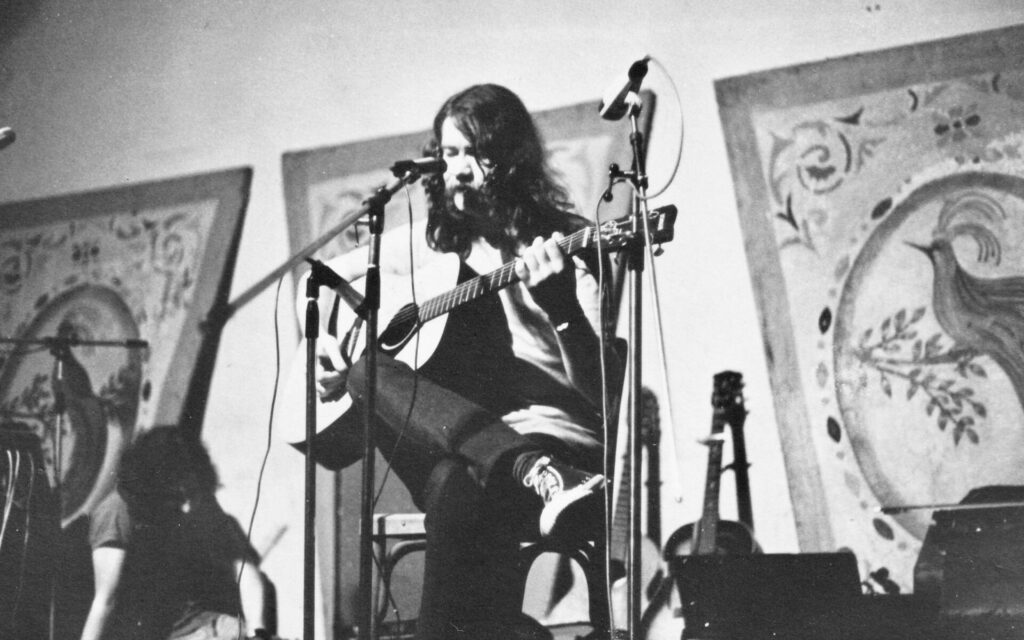
Reflecting on Gaughan’s plight and the other 13 artists, Dickson is happy to hear the news, saying, “I’ve always wanted there to be some kind of action against Celtic Music because of the way that they have been described to me by other musicians.” For her, it’s important that elderly artists know what happened to their work and if they can get the rights back for it. As regards her case, she says, “It’s not for royalties in any way; it’s the rights, it’s the justice. I would be hanged for a principle, and this is a principle that [Celtic Music] should not have [The Fate O’ Charlie], because they don’t deserve it.”
On a similar topic of principle, Taylor discusses his wishes to regain ownership of The Traveller. “I’d like to get back the ownership of it so I can put it on Spotify and in my name,” he tells me. “I’m not looking at it as a means of income. I’ve done my time and I did very well. I’ve got health problems, so I don’t want to spend the few years I’ve got harking back to something 50 years ago,” he says. “It would be [for] recognition, and it would be gracious to give owners their copyrights back.”
In the case of Celtic Music, while they state that they continue to release music, much of it remains difficult for its creators and their families to access so that a new and willing audience can hear it. “It’s not, ‘Oh, Dick Gaughan made a great album, but it was destroyed in a fire and nobody got to hear it,’” says Harper. “Dick Gaughan made great albums, and they’re currently locked up in a shed in Harrogate.”
Celtic Music said in a closing statement to Rolling Stone UK: “A more pertinent question might be to enquire why performers are unwilling to make contact and collaborate with their record company regarding the promotion of their back catalogue recordings, rather than (as you imply) make return of rights demands through third parties. Whilst some third parties may seem to be ‘campaigning for the artist’, it is important to note that in many cases they are commercial competitors, interested in promoting their own projects, and whilst the added interest to an artist’s career is always welcomed, such third-party motives in doing this are not necessarily as noble as they may seem initially from the outside.”
Time will tell as to the outcome of this battle, but ultimately, as Harper says, “music isn’t made to be locked up.”
Taken from the August/September issue of Rolling Stone UK, out now. Order your copy here.