
How Giggs became a Trailblazer: ‘You just have to live your movie’
The UK rap titan opens up about being a Rolling Stone UK award-winner, his new centre for neurodivergent kids St James House, and his upcoming landmark live event, The Chronicles of Giggs.
Giggs is recalling the night he returned to his old stomping ground, Peckham, to headline the opening day of Gala Festival in May 2026. “Everywhere I looked, I was seeing different memories. If I look left, there’s one memory, if I look a centimetre to the right, I see another memory… We came into Peckham Rye Park right where I got arrested in 2012, and I was like, ‘That’s crazy. That could have been the end of my life, the end of my career. Instead, I’m coming back to perform.’ The emotions were mad.”
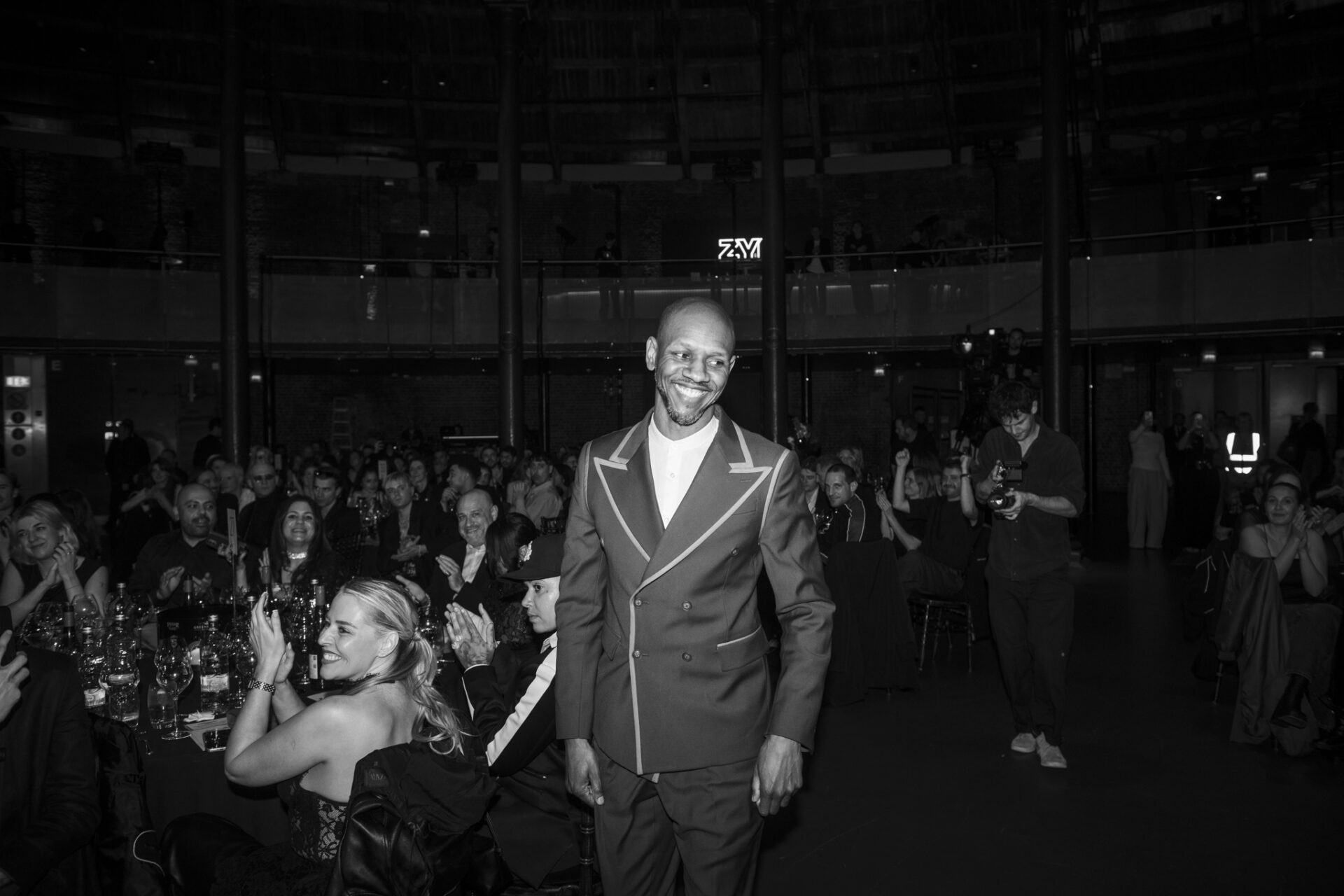
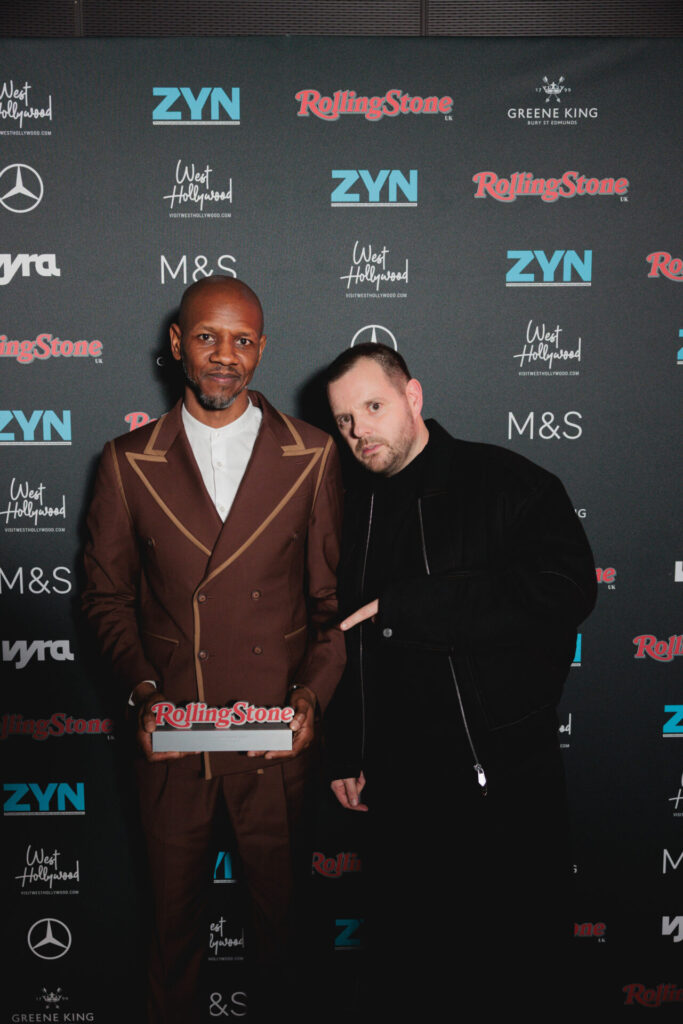
That night, fans were treated to a celebratory run-through of the vast catalogue of hits that have made Giggs one of British rap music’s most respected names – hits that alternate between tough, bracing hip-hop, south London road rap, shuffling dancehall-caked rhythms, melodic mainstream singles and heavy collabs with grime kingpins like JME. Across this hugely varied catalogue, Giggs achieves an organic feeling of continuity thanks to his now-iconic voice: deep and gravelly, spacious in delivery, cheeky in tone and never far from breaking into laughter. Its unmistakable nature has played a huge role in elevating Giggs to new heights in recent years. Heights that have now been recognised with another in a long line of accolades: he is now the winner of The Trailblazer Award, supported by Mercedes-Benz, at the Rolling Stone UK Awards 2026.
As he joins Rolling Stone UK to discuss the award while en route to catch a flight to New York, the 43-year-old (born Nathaniel Thompson), acknowledges that his journey has been a long road. A 2003 conviction for firearms possession meant he could not travel to America for 10 years, putting touring there out of the question.
In 2010, a UK tour was cancelled after the Met Police raised security concerns about his music and background with venue promoters as part of the controversial Form 696 risk assessment. Giggs was among the artists who deemed the assessment to be racially charged before it was eventually scrapped in 2017 after mass lobbying. In 2012, he was acquitted of firearms charges, but not before he had been held on remand for six months.
“I appreciate the love, man,” says Giggs. “Especially after all these years, after the grind of having a hard time in the game, having shackles on my creativity and my work. Not being able to go America, being banned from radio, banned from TV shows, can’t do any shows. It’s just one thing after another, so to still be here today and getting recognition, and still getting love; it feels good.”
Giggs first started dropping music in the mid-2000s with the release of cult hood mixtapes like Bloody Raw, SN1 – The Beginning (with brothers Joe Grind and Gunna Dee) and, most famously, The Best of Giggs tapes, a four-part series from 2008 onwards that introduced the rapper’s growing base of London rap fans to soon-to-be classics like ‘Talkin’ da Hardest’ – a track now recognised by many UK rap fans as England’s unofficial national anthem.
Presented by DJ Big Ryde, these tapes were pivotal in helping establish UK road rap as a defined sound, something totally distinct from both American hip-hop and grime, and a movement that would help lay foundations for a wide range of talented young British lyricists to come through in the 2010s and 2020s. Taking influence from US hip-hop, Jamaican sound system culture, and UK pioneers like Rodney P and his crew London Posse, but adding a new millennium edge and staying committed to coldly, unapologetically documenting crime, violence and conflict in modern south London, Giggs and his cohorts landed on something genuinely fresh. Here, he undeniably blazed a trail.
“This is what I wanted,” he says, reflecting on the growth of the UK rap scene in recent years. “I wanted mandem from the streets, or just people who love music, from our side of the pond, to thrive in hip-hop. To be respected globally, and our bangers be playing in the clubs. I just love everyone being successful, getting money, changing their lives, doing things that they never thought they would do.”
As the 2010s progressed, Giggs’ high work rate and willingness to spray on a range of different attention-grabbing sounds propelled him into new spaces. Thanks to a string of popular singles and projects including 2016’s Landlord (which reached number two in the UK Albums Chart) and 2017’s Wamp 2 Dem, plus collaborations with huge global artists like Drake and UK legends like Kano and Stormzy, he continued amassing a huge fanbase.
“There are different eras of Giggs for different people,” he explains. “You’ve got people who love old, old-school Giggs freestyles, then you’ve got people who came after that, around ‘Talkin’ da Hardest’, or the [2008 debut album] Walk in da Park time. Then you had people after ‘Look What the Cat Dragged in’, and the B.o.B track [‘Don’t Go There’], from [JME’s] ‘Man Don’t Care [feat. Giggs]’ times, ‘Whipping Excursion’, ‘Lock Doh [feat. Donae’o]’, ‘Incredible Sauce [feat. Dave]’. People remind me of songs, and I’m like, ‘Yeah, fucking hell, that was a banger, innit?’” he laughs. He’s not wrong – it’s a serious catalogue.
Over this period, he levelled up the skills he’d been honing across UK underground rap tapes for years – chiefly, the ability to spit punchy, authoritative bars on lounging, melodic hip-hop beats, delivering just the right balance between menace and humour. While some rappers pepper beats with fast, skippy flows – and anyone who’s heard his verse on ‘Man Don’t Care’ knows he has it in his locker – Giggs has consistently favoured slower, spacier verses packed with weighty pauses, his measured tone commanding authority. On tracks like ‘Times Tickin’ (feat. Popcaan)’ and ‘Linguo (feat. Donae’o)’, he became known for floating along on just one simple rhyme scheme for whole verses (or close to), squeezing every ounce of wordplay and flexibility out of a couple of rhyming syllables. The lightheartedness at the core of some of the most well-known bars that emerged during this period (“Kill ’em with D / Kill an MC / Digestives / Cinnamon tea”, for example) demonstrates the playfulness and joy with which the south Londoner has always approached music. For him, that attitude and the deep love for music that it reflects has been essential to his success.
“I just love music, so I’m always gonna make bangers, because that’s what I love doing,” he says. “I make music when I’m sad and when I’m happy, when I’m pissed off, and when I’m excited. So, it’s nothing for me to go again, go again, go again. And even if no one likes it, I like it, you know what I’m saying? So it’s just perseverance, really, in doing what you love.”
Throughout our conversation, Giggs regularly flashes an infectious grin or bursts into excited laughter. He is most animated when discussing the landmark live show he recently announced: The Chronicles of Giggs. Set to take place at the OVO Arena Wembley on 16 December, it’s a night designed not just to celebrate his catalogue but to pay homage to a range of influential artists who helped shape his evolution as an artist.
The full line-up consists of Jamaican dancehall pioneer Beenie Man, New York hip-hop trio The LOX, south London sound system Saxon Sound and boundary-pushing garage collective Heartless Crew. The genesis of the show can be traced to Giggs’ appearance at the UK debut of Lauryn Hill and Wyclef Jean’s festival Diaspora Calling! earlier this year.
“Being there and hearing the classics, after performing myself, hearing Erykah Badu run classics as well, then Dave Chappelle and Cipha Sounds running old-school UK, reggae, dancehall, hip-hop classics, then the Fugees came out… I was like, ‘Nah, this vibe is crazy,’” he reflects. “I didn’t know I needed to hear all these classics. It felt emotional. So I wanted to bring that kind of vibe as well, in my own way, with my own format. I want to give the fans that feeling.”
How does he see the show shaping up? “Nonstop vibes, front to back, through different genres and legends that have dominated for decades. We’ve got a big show curated, with a crazy order of how everyone’s gonna attack it. It’s the chronicles of Giggs, but it’s also other catalogues that have helped me become Giggs as well. Beenie Man’s catalogue inspired Giggs’ career, The LOX inspired my career, my life, Saxon too, ’cos I used to be a DJ and so I appreciate sound-system culture, and Heartless, who are the original crowd-controllers. There are so many different flavours. I’m gonna be performing. I’m gonna be master of ceremonies; I’m everything.”
You’d be forgiven for thinking this unique concert would be dominating Giggs’ brain right now, but in fact, he’s spending a huge portion of his time on a social project that reaches far beyond the confines of the music industry. St James House, an education and assessment centre for children with neurodevelopmental differences, SEND and additional needs, based in Gravesend, Kent, is deeply personal to him.
He launched the centre in partnership with OMG, an organisation founded and led by Jamal Miah that encompasses the OMG Foundation, a registered charity for disadvantaged kids, and an independent school in London, as well as St James House. The plan is for the latter – which is currently being renovated as Giggs and his collaborators push to raise £930,000 via auctions, donations and special events involving famous figures like magician Dynamo, artist Damien Hirst and singer Robbie Williams – to offer a space for neurodivergent young people to learn more about themselves and, crucially, thrive in whatever field they wish to pursue.
“A lot of people need the support, and they’re struggling to get it, or get the information,” Giggs explains. “I just wanted to create a place that can help. I know we can’t help everyone, but at least it’s a start, you know? It’s a place to get information, if you wanna get your EHCP [Education, Health and Care Plan] for your child, or even just get assessed to know if your child is autistic, to be put in the position to be able to get support. Because it’s so hard to figure out and understand. It was for us, anyway.”
Here, he’s referring to the personal struggle he’s been embedded in, alongside his family, to get his seven-year-old son Israel an autism diagnosis. Giggs himself has spoken publicly about finally realising he was autistic in his thirties, after noticing similarities between his experiences and those of his older son ML, particularly the feeling of being alone at school. Now, he’s battling to help others – not just his own children – who are butting heads with a system that often doesn’t work. But despite the support St James House has received, progress isn’t easy.
“It’s bloody draining, fam,” he says. “Because first, it was like, we’re gonna put this together, and loads of people should feel the pain and get on board, but it’s just not really like that. But anything worth building takes the most work, you know? There’s so much to do, but I just keep going. I didn’t build a career in five minutes, so I know nothing takes five minutes.”
This last point begs the question: what lessons has he taken from music that’ll help him in this venture? “Just don’t give up. Keep going forward – that’s it, man. God always provides; he will provide. Just keep trying to do the right thing; he’ll help you put it together. You know, next thing, we’ll have 100 assessment centres and schools!”
He continues: “You just have to live your movie, bro. That’s what I do. When you’re watching The Pursuit of Happyness, one of your favourite parts of that movie might be when he’s in the toilet crying with his son ’cos he has to sleep there overnight. That’s the most horrible part of my man’s life, but now that’s the most inspiring part of the movie. So I understand that the hardest parts of life are important, and I try to figure out, ‘What does this mean for me?’ or ‘Why has this happened?’ You might have a fucking awful day, but that’s just another sick part of the movie.”
In a classic example of just how Hollywood Giggs’ life has become, in September he joined hip-hop mega star Jay-Z onstage at the Tottenham Hotspur Stadium, with New York’s finest performing ‘Talkin’ da Hardest’ alongside Giggs, in a scene that even a few years ago would have seemed totally surreal. “That’s exactly what I’m talking about. Before, when I used to make music, or even just listen to artists like Jay-Z or The LOX or DMX, that’s legendary shit happening there, and you’ve seen their story. Now, man’s part of the story! It’s like I’ve jumped into the television. It’s mad.”