
Dangerous dreamer: Mika
Seven years after his last English-language release, Mika returns with new album, 'Hyperlove'. Here, the “created by the UK” artist reveals the method behind his melodies
By Nick Levine
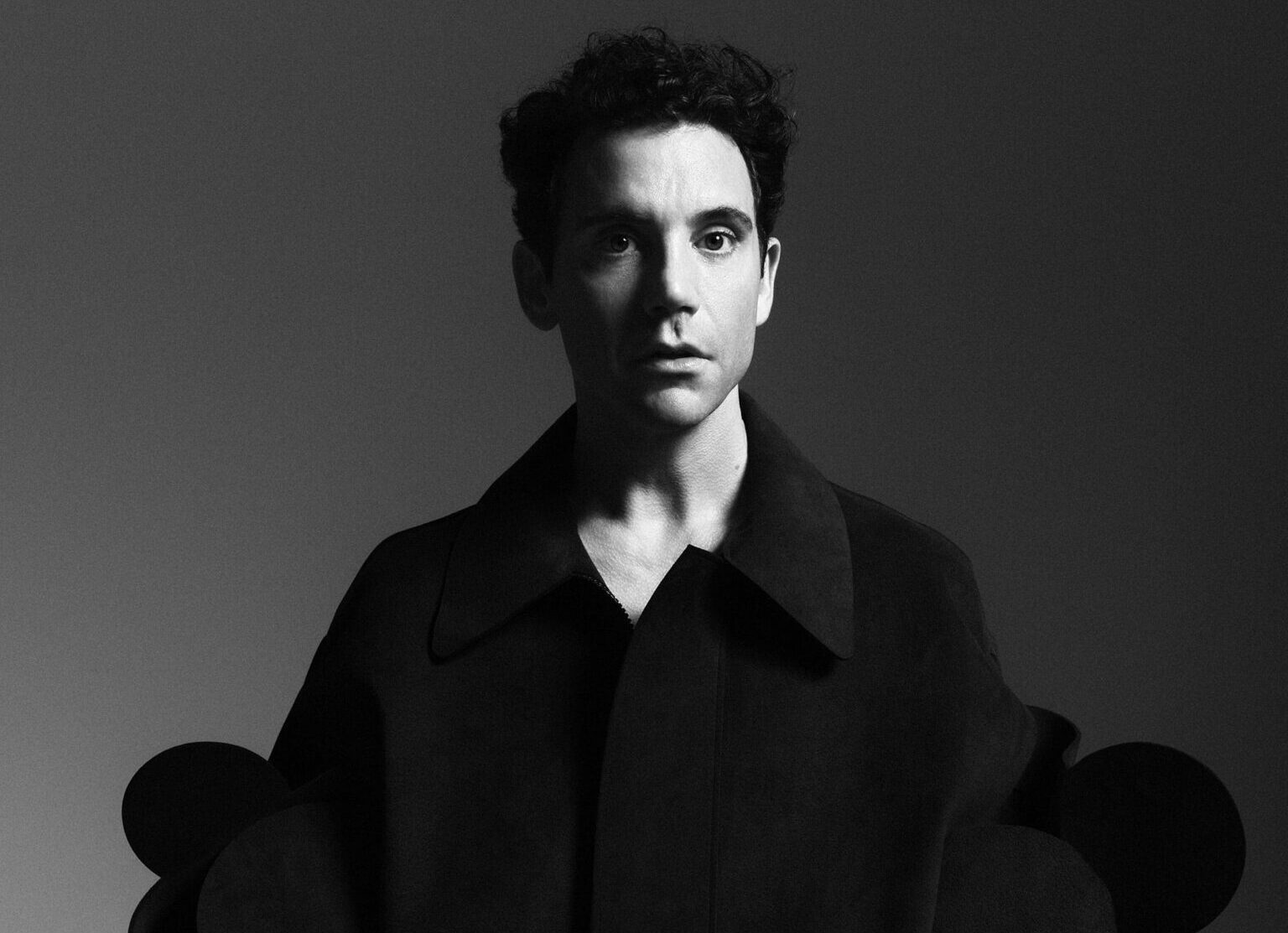
Mika’s schedule is so packed that it takes him a second to remember where he is. “Fuck knows!” he says with a smile, speaking over Zoom from a smart-looking but hardly geo-specific hotel room. “No, I’m in Madrid!” he adds as the penny drops. “I flew in from London yesterday to do radio interviews and film a TV show.” That TV show is La Voz, the Spanish version of The Voice, which Mika has recently joined as a coach. Later, he’ll play a live show with a 2.30am curtain call – “only in Spain!” he says with an eye roll – before waking up early to fly to Montreal.
By any rights, Mika should seem a bit manic, but actually he’s fun, friendly and unflappable. He’s heading to Montreal so he can “film visuals on one of the biggest green-screen stages in North America”. It’s a state-of-the-art space that musicians are normally “locked out of”, he says, “because video budgets have disappeared”. However, Mika prides himself on “really fucking fighting” to make sure his content looks like the “high-production poetry” he sees in his head. “If you’re not a gargantuan artist selling out seven nights at The O2, you’re told to ‘make do’, but I reject that,” he says. “Delusions of grandeur are our best friend. The world tries to tell us it’s a condition that needs to be suppressed, but that is bullshit.”
Mika describes himself as a “dangerous dreamer” and his vivid imagination really shines through on his excellent new album, Hyperlove. Set for release on 23 January, it’s his first English-language album since 2019’s My Name Is Michael Holbrook and a welcome reminder of his gift for making “alternative experimental pop” (his words) with utterly transcendent melodies (ours). The shimmering album closer ‘Immortal Love’ is a new Mika midtempo classic to file alongside 2006’s ‘Relax, Take It Easy’ and 2009’s ‘Rain’.
When Hyperlove’s co-producer Nick Littlemore suggested the album sounds like “we’ve hijacked a radio station on Fire Island in 100 years’ time,” Mika decided to recruit John Waters to serve as its “master of ceremonies”. Waters, the director of subversive queer films like Pink Flamingos and Hairspray, supplies a wry narration on several spoken-word interludes. “He told us we were a bunch of weird boys,” Mika recalls, which is a major compliment coming from Waters, a man known as “the Pope of Trash”.
Mika started Hyperlove alone in a conscious effort to “capture the sense of euphoria when it’s literally just me and a piano”. In a way, he was returning to the freeform approach that he loved as a student at London’s Royal College of Music. He imposed no limits on where a song could go and reeled off lyrics in a stream of consciousness. The album’s thrilling lead single, ‘Modern Times’, references the ancient Egyptian sun god Ra and the homoerotic work of Italian writer-director Pier Paolo Pasolini. “I created much more randomly complex music than I ever would have composed if I’d been precise and controlling,” Mika says.

Then, Mika sent his multi-layered piano demos to Littlemore, a member of the experimental dance duos Empire of the Sun and PNAU, who helped to recast them as electronic dance music with a psychedelic edge. “Nick has a more psychedelic brain than me, probably because of all of the psychedelics he’s consumed – it’s a spiritual thing for him,” says Mika. “And he was like, ‘You started these songs organically, so every single sound on this record has to be made by a vintage analogue synth.’” Littlemore spent his own money sourcing the rare retro equipment he needed to fulfil this brief. “There’s not a single ‘in the box’ sound on the entire album,” says Mika proudly.
This feels fitting because Mika has never been an “in the box” kind of artist. When he smashed into the mainstream with 2007’s Life in Cartoon Motion, his multi-platinum debut album, the artist born Michael Holbrook Penniman Jr. was instantly captivating and utterly uncategorisable. Just 23 at the time, he was a classically trained musician who was also a natural showman; comparisons to Freddie Mercury would have been inevitable even if he hadn’t namechecked the Queen frontman on his number one single ‘Grace Kelly’. There was definitely a dash of rock theatricality in his music, but Mika could ping between galloping disco (‘Love Today’), blissful bubblegum (‘Lollipop’) and tear-stained balladry (‘Happy Ending’).
He also defied categorisation because he was an inherently international proposition: he was born in Beirut to a Lebanese-Syrian mother and an American father, then raised mainly in Paris and London. And while Mika declined to label his sexuality in early interviews – a more unusual stance then than it is today – he still attracted thinly veiled homophobia.
“I was accused of being brazen, but I think it was brazen homophobia,” Mika recalled in 2023, more than a decade after he came out as gay. The slight suspicion that seemed to surround him in the UK must have been doubly frustrating given that Mika sang playfully about the pressure to conform to industry norms on ‘Grace Kelly’: “I could be hurtful, I could be purple, I could be anything you like.”
Mika’s second studio album, 2009’s The Boy Who Knew Too Much, went platinum in the UK, but his two subsequent efforts, 2012’s The Origin of Love and 2015’s No Place in Heaven, fared better in Europe. In 2011, ‘Elle Me Dit’, a pounding electro banger that he recorded in English as ‘Emily’, became a huge number one hit in France. So for many years, he focused his energies on markets that embraced him more warmly: from 2013–2015 and from 2020–2021, he served as a judge on X Factor Italia. When he co-hosted the following year’s Eurovision Song Contest in Turin, many British pop fans felt like they were reconnecting with an old friend. “I was created by the UK, but 100 per cent I went away,” he says today.
The story has a happy ending, though, because Mika’s mutual love affair with the UK is now fully rekindled. In February, he’ll play London’s 12,500-capacity OVO Arena Wembley and Manchester’s 23,000-capacity AO Arena: his biggest-ever headline shows. He believes the turning point came in 2023 when he signed up to appear as a judge on The Piano, a lovely and uncynical TV competition series in which amateur musicians perform on pianos in major railway stations. “It completely reconnected me with the UK, and not just London, because we film in different cities: Glasgow, Leeds, Cardiff,” he says. Mika now keeps a little recording studio “in the sticks” near Hastings.
So, does he feel more understood in 2026 than he did back in 2007? “I think I do, but that’s logical because times have changed and the business has changed,” he says. “When you refuse to function within a system that the gatekeepers want to maintain, you’re going to end up with a problem. But now, there are so many more artists like me, who fight for their autonomy to do projects the way they want.”
Mika has grown in confidence and no longer feels like a lone wolf, but he’s still the dangerous dreamer he always was. “My intention is clear: I make alternative experimental pop,” he says. “I’m not trying to make music that plays in the aisles of Lidl. If that happens, it’s brilliant, but I’m not fighting for that space.”