
Notting Hill Carnival at 60: Six decades of protest and power
“Notting Hill Carnival is joyous – but also a resistance,” says Symone Williams, daughter of one of the founders of one of London’s most vital cultural events. We celebrate 60 years of the event that gives the city its heart and colour every summer, and meet those ensuring it will continue for many years to come
By Anu Shukla
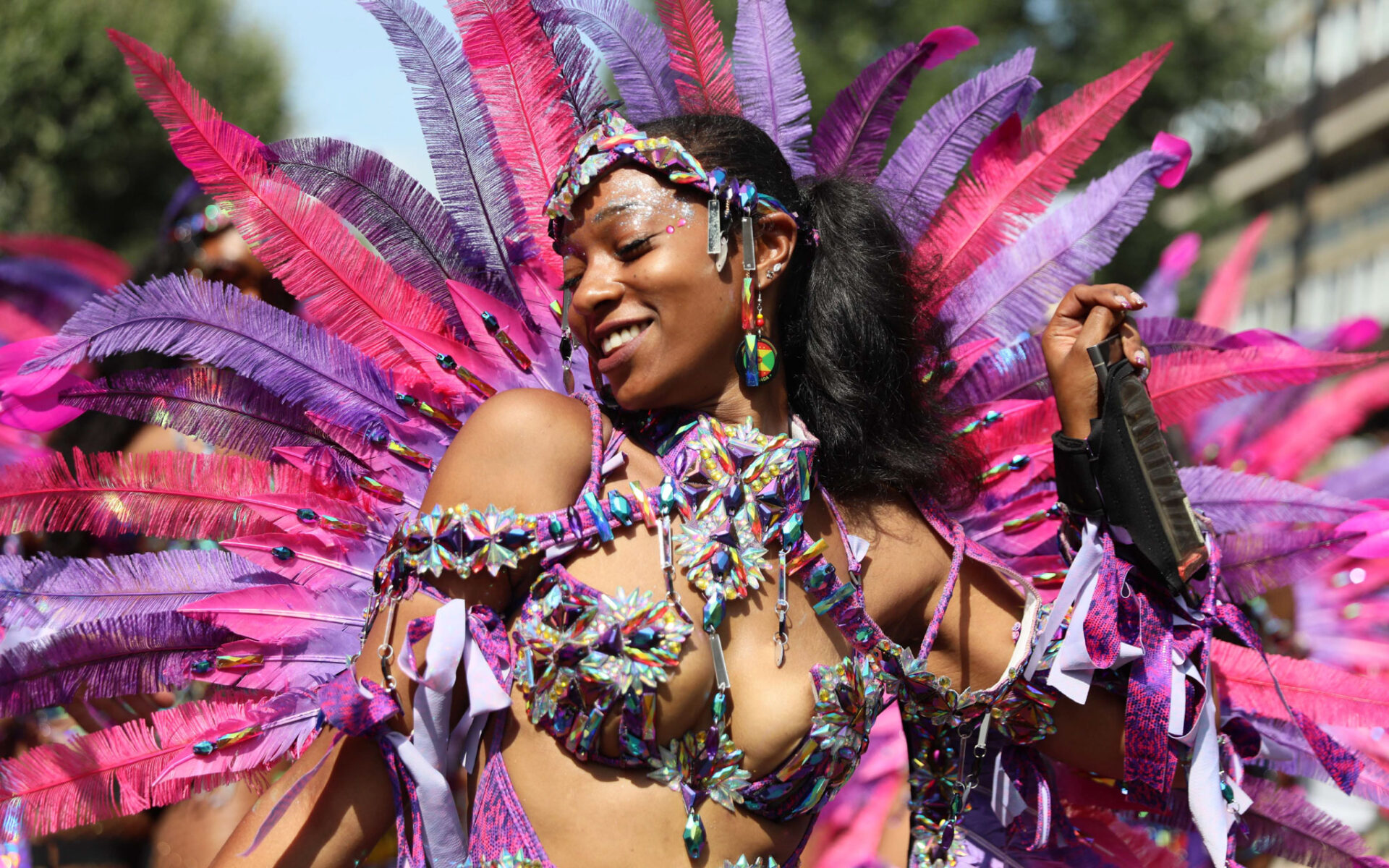
Feathers, diamantes, rhinestones, sequins, glitter, crystals and pearls sparkle under the last rays of sundown at west London’s Yaa Centre. It’s where young guardians of pan-Caribbean mas and steel band legacies are being primed to fly the flag for Notting Hill Carnival for the next six decades.
To understand Carnival, you have to understand Mas. Short for “masquerade”, it originates from Trinidad’s Canboulay celebrations (from the French cannes brûlées, meaning “burnt cane”), where freed people parodied colonial oppressors while channelling celestial beings, nature spirits, indigenous dynasties, African royalty and folklore. The incredible costumes for the Notting Hill Carnival Parade are created by Mas Bands.
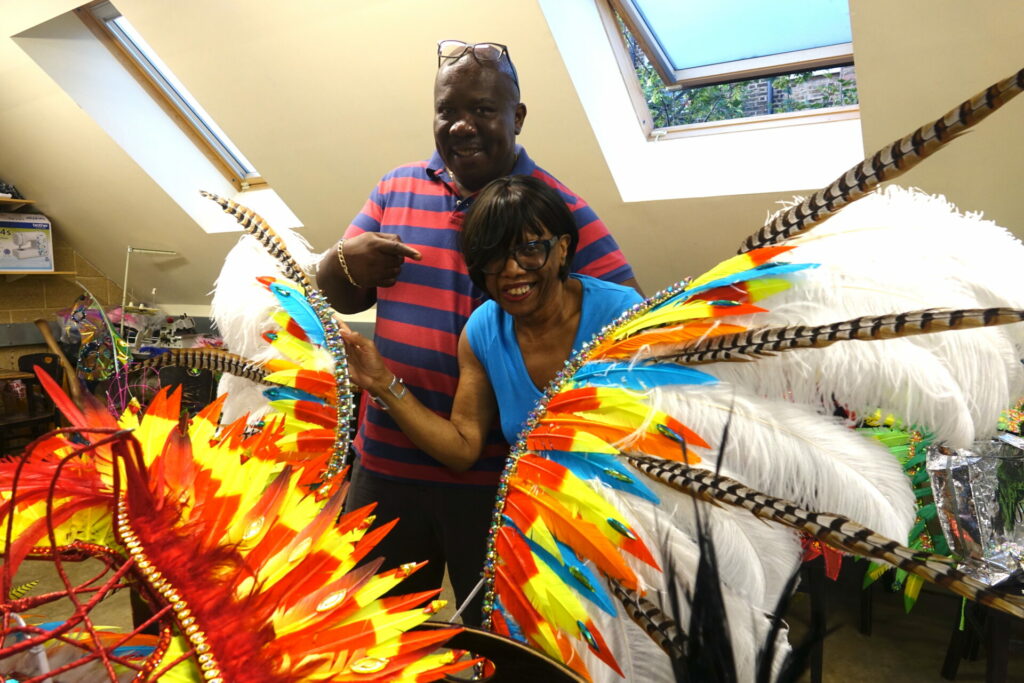
The pre-Carnival energy is infectious, and I’m feeling a little dizzy with excitement watching sisters Jean and Carol put the finishing touches to their phenomenal costume designs as the sounds of the Ebony Steel Band rehearsals reverberate throughout the building. The sisters are capturing the visual concept of “Spirit of the Elements” for this 60th anniversary of Carnival, inspired by the event’s overarching theme “The Pioneers to the Present”.
Jean leads the Masology Mas Band, and her workshop is bursting with colour. She’s got a large order of costumes to get through and a team of five helping her. “I’ve been doing this for 40 years,” she tells me. Carol and I encourage her to try on one of the pieces as Masology crew member Danny joins us for the banter.
“The ‘ology’ refers to the study of something, whether it’s psychology, sociology or philosophy,” he says. “So ‘masology’ is the study of Mas.”
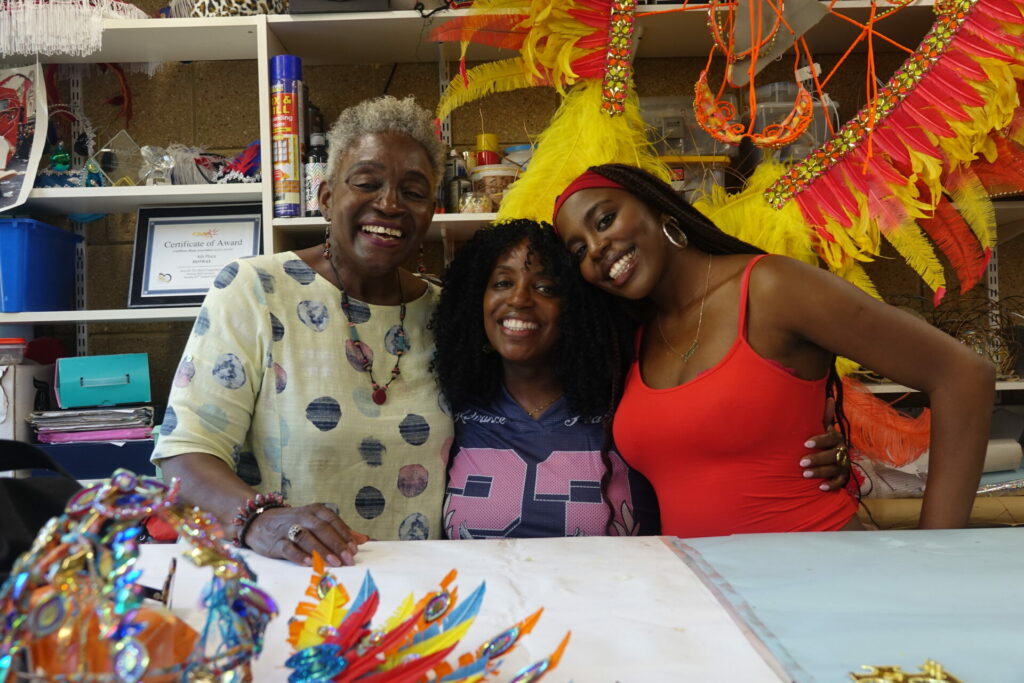
Adjacent to Jean’s workshop, three generations of women from the legendary Genesis Mas Band are sitting in another workshop surrounded by headpieces and costumes. Around a huge pattern-cutting table scattered with plumes and galvanised wire, I’m talking with Layne Williams, granddaughter of Notting Hill Carnival co-founder and Genesis Mas originator Vernon Williams, his widow and former chief costume maker Allyson, and their daughter Symone, who now leads the band’s costume design and is training her nieces so they can continue the legacy. Allyson removes a 46-year-old headpiece inspired by the Genghis Khan dynasty from a box and places it on her head. It’s a proud moment as it’s one of the very first pieces her late husband ever created and it was recently restored on BBC programme The Repair Shop.
“My dad taught me ‘Mas is the message,’ because the costumes are a tool to tell stories through characters symbolising rebellion against slavery,” says Symone. Mas characters like Dame Lorraine parody 18th-century French plantation owner wives in ridiculously exaggerated European ballgowns. Trinidadian character Jab Molassie embodies survivors deformed after being thrown into molasses pits on colonial sugarcane estates. The Moko Jumbie channels ancient West African protective guardians. “They stand tall on stilts so they can see the evil coming before anyone else,” says Symone. “And we absolutely did see evil coming from afar.”
She adds, “What you will understand about Caribbean culture is that it will take something dark and devastating and create joy from it. Joy is how we resist. Notting Hill Carnival is joyous – but also a resistance as it occupies the streets. In London, you couldn’t walk home without bottles thrown at you or being called the n-word. So taking up space on the streets is the resistance: it’s showing up in our creations to tell our stories – that’s our protest.”
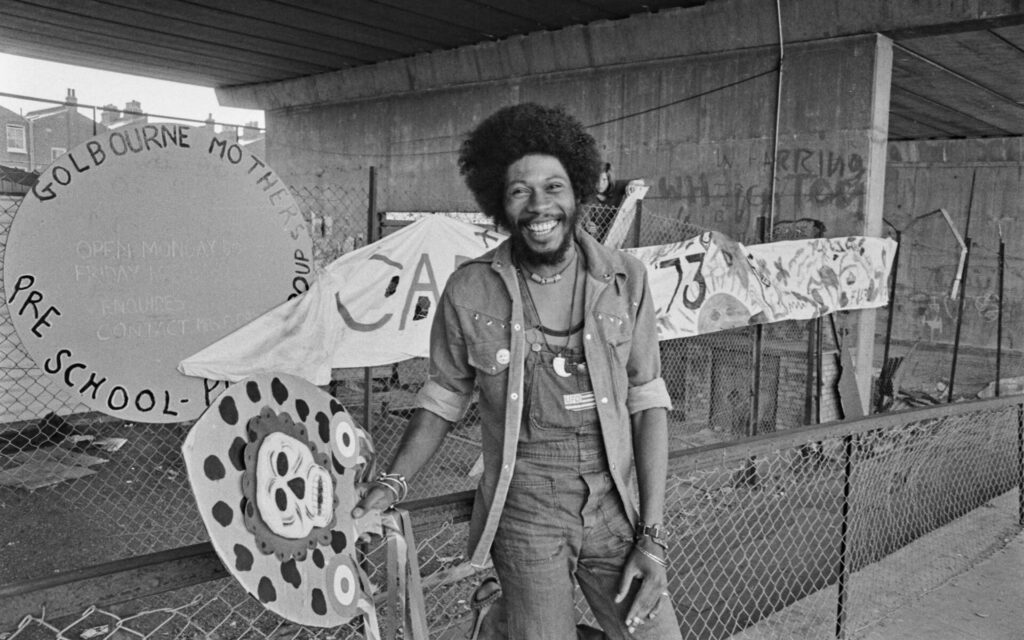
It’s true. Notting Hill Carnival never happened in a vacuum. It was historically inevitable as a product of anti-colonialist resistance. As a critical component of the Black British Liberation Movement, it became an unapologetic expression of cultural survival conceived to love-bomb the shit out of a hostile Britain. A direct response to systemic racism, violent police brutality, and the tragic, still-unresolved 1959 murder of Kelso Cochrane in Notting Hill, it alchemised anti-immigrant violence into a multicultural street protest of pure joy. Today, a huge plaque honours over 70 pioneering elders, including Claudia Jones, who sparked the first indoor carnival, and Rhaune Laslett, who launched the first outdoor event alongside Russell Henderson’s steel band in 1966.
Six decades on, it’s impossible to imagine a world without Carnival.
Influential sounds
From Windrush elders like Lord Kitchener writing the definitive soundtrack of arrival, to pioneers like Sterling Betancourt introducing the steel pan, to 15-year-old Linett Kamala (aka the “Sound System Queen”) becoming the first female DJ to play on a Carnival sound system four decades ago, the Black British experience has shaped the soundtrack of modern Britain. Without reggae, Lovers Rock, drum and bass, jungle, grime, or hip-hop breaking into the mainstream when it did, how much longer would it have taken for Black British culture to rewrite the pop chart?
Kamala’s been giving numerous DJs their Carnival debuts at her sound system for decades. “You can never predict the tunes that become Carnival anthems,” she says. “Some artists will release a tune in the lead-up to the event to build momentum – the excitement of collectively hearing it played across the footprint is like no other.”
In 2004, sound systems had Wiley’s ‘Igloo’ instrumental riddim on repeat. Lethal Bizzle’s ‘Pow! (Forward)’ debuted after circulating as an unreleased white label vinyl promo that same year. Kamala recalls briefly banning it “purely from a crowd safety perspective”, she laughs. Also in 2004, the bassline from Sticky and Ms Dynamite’s ‘Booo!’ generated a historic crowd reaction, while in 2022 Burna Boy’s ‘Last Last’ became the definitive anthem of the first post-lockdown Carnival.
Music has provided the soundtrack to the protest movement that is at the core of Notting Hill Carnival’s legacy, which former Island Records chief and Carnival pioneer Darcus Beese has played a part in.
Raised on the frontlines of the anti-racist struggle, listening to dub poet Kwesi Johnson’s Carnival staples like ‘Fite Dem Back’ and ‘Inglan Is a Bitch’, Carnival is in Beese’s DNA.
As we sit in a Chiswick bar one sunny afternoon, he tells me how his upbringing informed his choices as chief of a major record label. “I signed artists who were unapologetically Black that you may not have heard of then – whether it was Stevie Hyper D, George the Poet or Me One. My responsibility was that I just can’t be seen to be signing white people all the time.”
His parents, Barbara Beese and former Race Today editor Darcus Howe, were prominent civil rights campaigners in the Black British Panthers and among the “Mangrove Nine” who won a landmark legal victory after being falsely charged with “inciting a riot” during a 1970 protest against police raids on Notting Hill’s Mangrove Restaurant. Darcus junior was just 12 months old at the time. By the age of seven, he was holding placards, vocalising chants for justice. “I remember Linton Kwesi Johnson had this footage of me at a demo in Bradford with a megaphone and the audio ended up on a record about George Lindo – and there’s me chanting, ‘Free George Lindo,’” says Beese.
In 1976, Junior Murvin’s ‘Police & Thieves’ was booming from multiple Carnival sound systems as a seven-year-old Beese ran for cover from the full-scale riot that had erupted. The violence had been sparked by the heavy-handed deployment of 1,400 police officers and the “sus” laws which saw police disproportionately target young Black men. Under those laws, anybody could be stopped, searched and held, even if only suspected of planning a crime.
Photographer Ian Watts captured the scenes and recalls the moment: “It was so ironic, as we could see what we heard on the Junior Murvin record literally happening before our very eyes. It was surreal, like a film.”
As Black youth retaliated against intense surveillance, tracks like Desmond Dekker’s ‘007 (Shanty Town)’ rang from sound systems a short distance away, where people continued dancing to ska and reggae, matching the unfolding scenes in real time.
Channel One’s Mikey Dread was there and remembers running from police. Recalling the trauma, he tells me: “It was the kind of thing that you don’t think you would experience.”
But witnessing the power of the static sound system introduced by then Carnival director Leslie Palmer inspired him and his brother Trevor aka Jah T to kickstart Channel One.
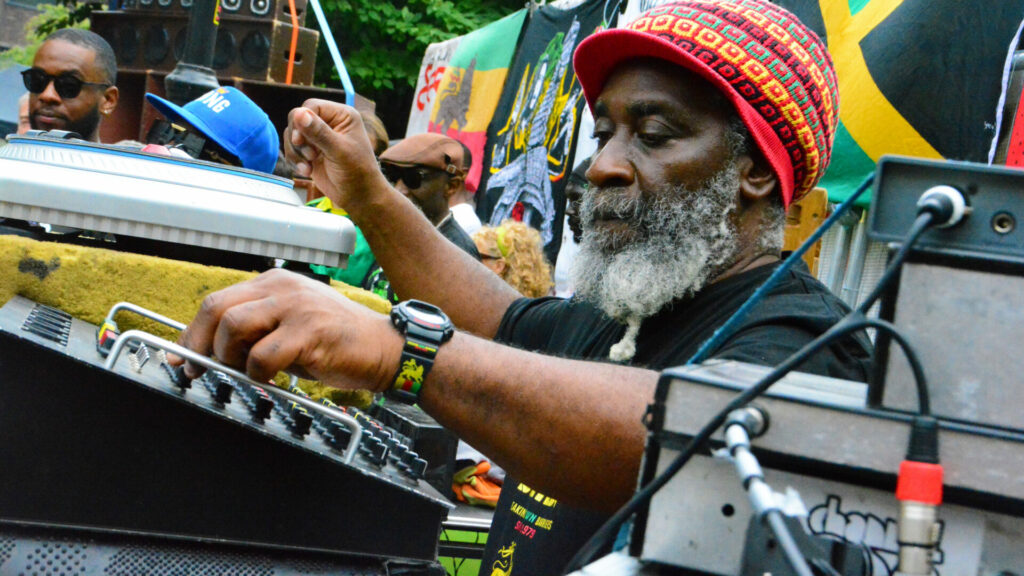
Soundsystem culture has categorically shaped the trajectory of UK club culture. “Half of Carnival wouldn’t be there if sound systems were stopped,” he explains. “We’ve always been fighting, but because of what we do, we make our own liberation with our own steel bands, our own sound systems.”
In the aftermath of the riots, despite threats to ban it, Howe made the case that Carnival was a non-negotiable ingredient of Caribbean culture and liberation, challenging hostile authorities before securing Arts Council funding for the event.
A place shaped by its people
Kamala’s parents moved to Notting Hill from Jamaica in the 60s and, like most immigrants then, paid high rents for substandard dwellings now valued at premium prices. “Despite being survivors of the worst crime in the history of humanity – the enslavement of Africans – and because of Carnival’s ethos for nurturing unity, we are the ones that made Notting Hill what it is and gave it the vibe it’s become famous for,” she says.
Carnival takes place in the borough with the UK’s biggest rich-poor divide. Its exponential growth reveals a stark contrast between the £400m it generates yearly for London’s economy and the structural inequality facing the community that birthed it. Grenfell Tower sat on the brutal intersection of this reality. On 14 June 2017, fire engulfed the council block in North Kensington, killing 72 people. The same borough’s council that deferred safety upgrades watched £20 million mansions sell on the streets where Windrush families like Kamala’s once lived. Ever since, Carnival observes a 72-second silence at 3pm – one second for each life lost. Every sound system and Mas band simultaneously switches off power during a moving display of community grief and solidarity. That same sense of solidarity and unity has epitomised Carnival’s energetic frequency since its inception, says Kamala.
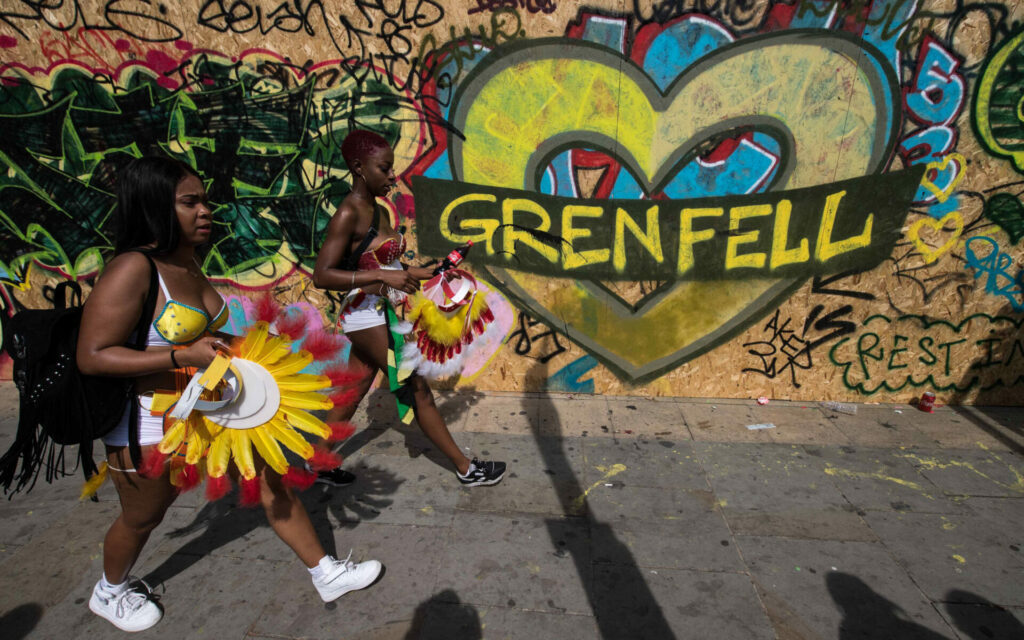
It’s a testament to Carnival’s history of overcoming existential threats, and it’s a precedent set by its elders. When white supremacist violence crippled the Windrush community in 1958, Claudia Jones launched an indoor carnival to promote unity. When Covid shut down the streets, the community found a way back. Most recently, when politicians stoked panic with warnings of a Hillsborough-style crush in a bid to turn Carnival into a ticketed Hyde Park event, the community and the Mayor of London hit back – asserting that Carnival belongs on the streets and securing £4m funding to improve crowd management.
“Carnival is resilient – we will always find a way,” says Carnival CEO Matthew Phillip. “It’s a product of resistance that stems from our Caribbean roots. If you go back to the origins of the steel pan, you’ll find it was an incarnation of the skin drum that was banned in the colonial Caribbean because they feared people would use it to communicate and rebel. So the community has, and always will, find a way.”
From a modest parade in 1966 to the mammoth-sized festival it’s become, Carnival stands as living proof that division isn’t inevitable. “A people’s art is the genesis of their freedom,” wrote Jones. Her words were prophetic and still apply in a post-Brexit climate of anti-immigration-fuelled racism.
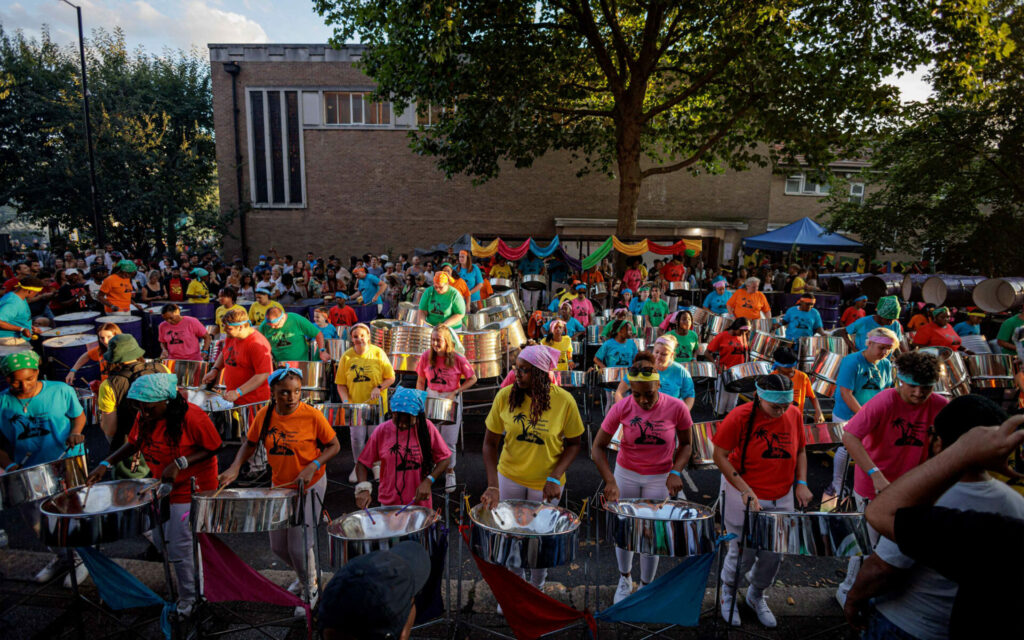
“All we can do is be ourselves, welcome people and do what we do – which is play music, celebrate life and the traditions of those that paved the way,” says Rampage Sound DJ and BBC Radio 1Xtra host Maurice Dennemont. “Carnival always reminds us how multicultural our society is. There’s very much a sense of togetherness amongst the revellers, something we’re sure the mainstream media and the likes of Reform UK hate and wouldn’t want people to see.”
Scores of young artistic directors, sound-system builders like Volcano’s Courtney and Kenny, mas band designers, steel band arrangers, soca singers, and DJ crews like DJ Mad Fingers’ SSP, continue to show up. Meanwhile, pioneers like Soca superstars Triniboi Joocie and Ms Desire nurture new talent and witness younger generations investing blood, sweat and tears into expanding the sound. People and organisations like these are keeping the culture massive, ensuring that Carnival’s spirit of unity and its profound impact on UK music and culture will continue for the next six decades.
Taken from the August/September issue of Rolling Stone UK, out now. Order your copy here.