
Ryan Beatty : “Ultimately I know, sometimes to get to something good you have to hurt first”
Backstage with the singer as he slowly opens-up and discusses the man in Massachusetts that he met who became the emotional engine behind album Sweet Fortune
By Jude Jones
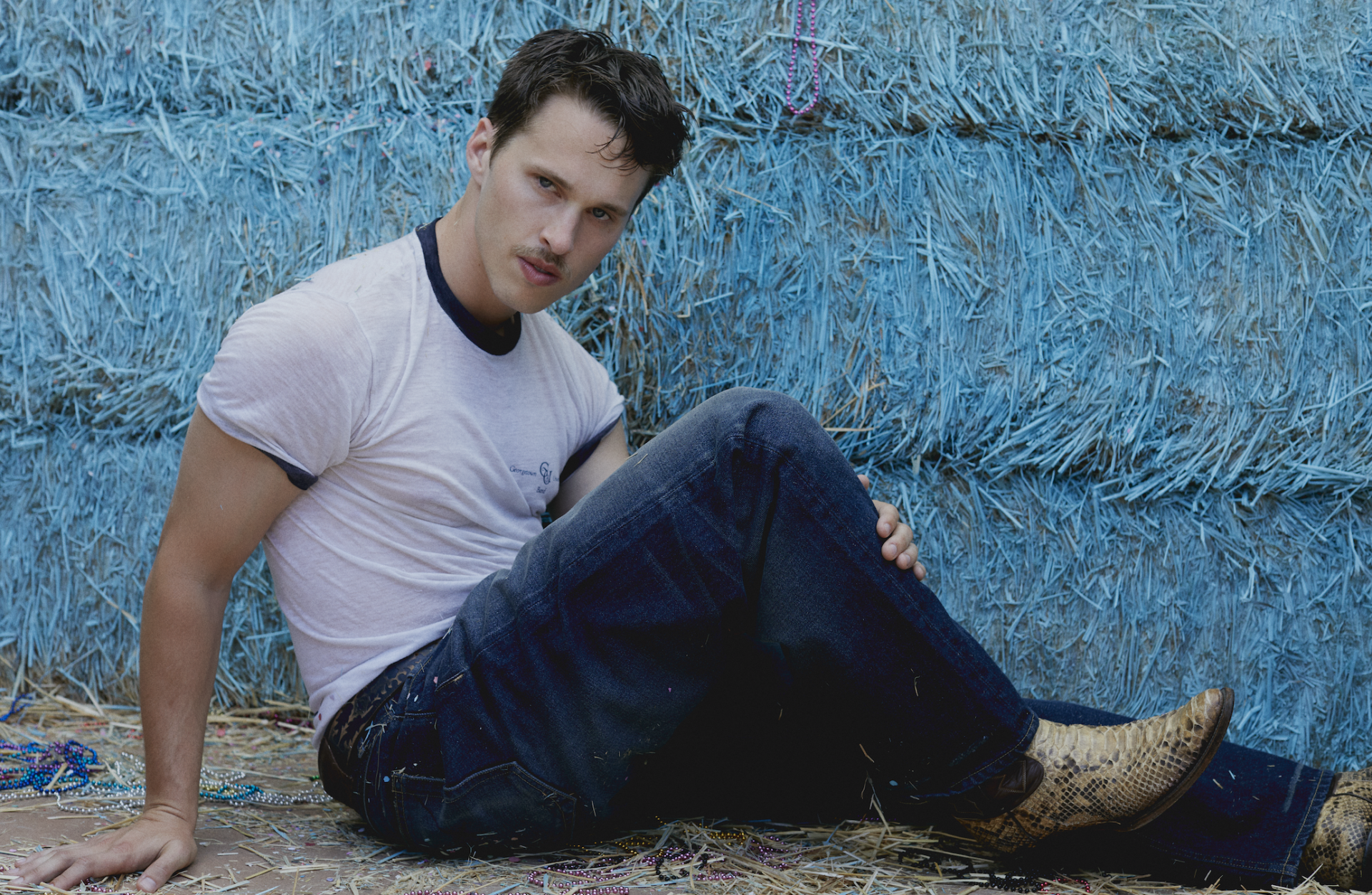
For his entire career – an époque that now spans over half his life – 31-year-old Ryan Beatty has been chasing catharsis. It all started, like more heavy-hitter music careers than you’d expect (see Dua Lipa, Troye Sivan), with a low-production pop cover on YouTube, a doe-eyed 15-year-old chirping Bruno Mars’s ‘Marry You’ to an audience of six million from his Fresno bedroom. Back then, circa 2011, that was enough to attention make a smalltown boy an overnight star. “All I ever wanted to do was sing,” he tells me when we meet during soundcheck ahead of his O2 Shepherd’s Bush Empire gig. “It was the first thing I was good at.”
As the views rolled in, the pop-arazzi latched on, christening him the next Justin Bieber (he was helped, presumably, by his swooping auburn fringe and boy-next-door smile). Before long, he was releasing schmoozy love songs on Ryan Seacrest and Radio Disney, manufactured for him by black-tied, fat-pocketed executives in LA boardrooms.
In a way, it was everything he’d dreamt of, a sort of Disney fairytale. But something didn’t sit right: the lyrical pining for blonde-haired girls, the performing of songs devoid of his voice. “It was a blur,” he remembers, “everything was moving so fast. And when you’re young, everything feels like it’s moving so much faster, you know?”
Tonight, Beatty will get some catharsis. It’s the last show of a two-month-long, 32-stop North America and Europe tour for his most recent album, Sweet Fortune. And when he appears on stage come dark, belting blood-soaked lyrics about religious trauma (‘White Lightnin’) and heartbreak (‘Ribbons’) to a sold-out audience the Shepherd’s Bush venue, it’s carved into his face. Lyrics about the turbulence of love and life (‘Phantom’), about trying to find meaning in them both and, more often than not, failing (arguably, all of the above). Lyrics about his man, farawayin Massachusetts (‘Too Many Ways’) and with the sunrise glowing in his eyes (‘Bright Red’).
Ryan Beatty is an American singer-songwriter whose fans run the musical gamut from Jane Remover to Jack Harlow, Brockhampton to Beyoncé. The latter two he has also boasted as collaborators. Beatty performed the backing vocals for some of the renegade boyband’s most emphatic tracks of the 2010s, then authored four more on Beyoncé’s Grammy-winning 2024 album Cowboy Carter, an effort which deservedly won him a coveted golden gramophone to call his own.
Sweet Fortune, released this summer, was a joyful injection of Americana to a discography hitherto composed primarily of soul-wrenching, bleeding-heart pop. His debut, 2018’s Boy in Jeans, had wrestled with those years of closeted confusion to Frank Ocean-esque R&B. Sophomore Dreaming of David, released in 2020 and named for the Michelangelo statue, peeled back the production but rolled with parallel themes.
Beatty concluded this triptych in 2023 with Calico, an aching and heartbroken 33-minute dirge, heralded by critics and fans as the young singer’s masterpiece. But with Sweet Fortune, he wanted to break out the harrowed mould he’d put himself in. “I remember when I put out the first teaser about [Sweet Fortune],” he says. “So many of the comments were fans saying, like, ‘Oh my God, I’m not emotionally ready for this’ or, ‘Just when I got back into a good headspace’. And I was just sat laughing because I’m thinking, ‘You guys don’t realise I’m about to put out the happiest music of my career.”
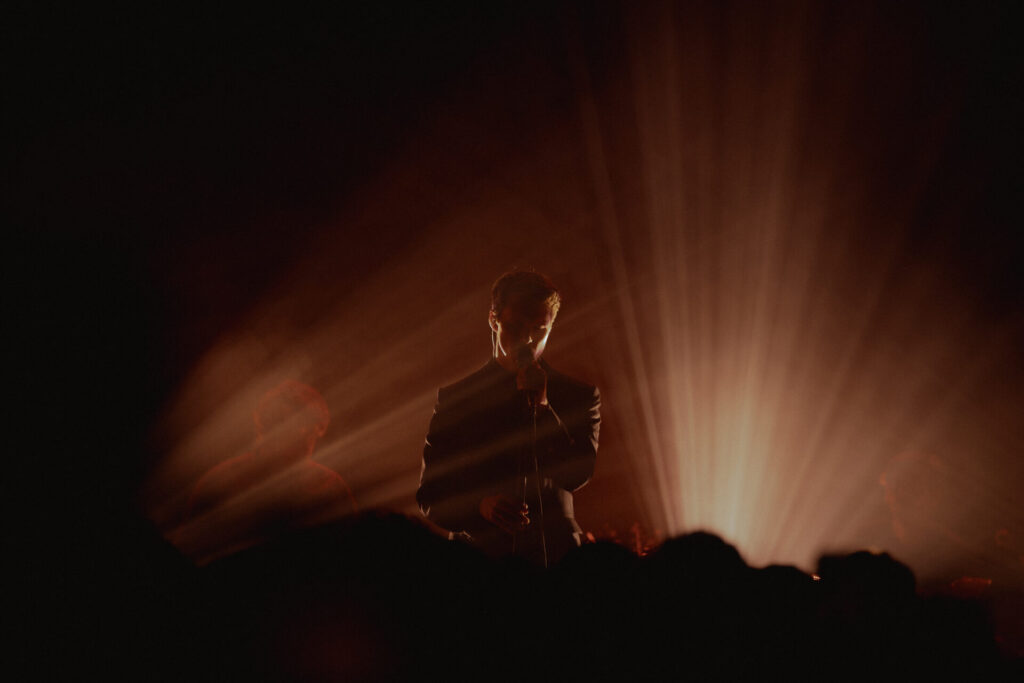
Speaking, Beatty can come across as timid or shy – a trait ill-at-ease with his excruciatingly diaristic lyrical persuasions. He has publicly admitted to disliking interviews, saying he prefers to let his music talk. And sitting before me, he often answers questions with his gaze averted and eyes closed, as if carefully trying to envision the contours of each response before he gives it. From time to time, the subsequent responses are swift. Do you consider yourself a romantic? “I guess so”. Does he have a favourite love song? “I’m a Libra so I can never decide on one. I’ll come back” (eventually, he circles back to settle on Labi Siffre’s ‘Bless the Telephone’, a solid pick).
But talking backstage, swaddled in a dark-grey trench and black scarf styled around his head in a Jayne Mansfield bow (“I never get to dress like this in LA”), Beatty slowly opens-up. He talks willingly about the tribulations of his childhood, the hiding who he was and the necessary “grit” that it all built into him. He’s happy to say the emotional engine behind the album was a man he’d met – the swooned-about man in Massachusetts – who’s now his boyfriend. However, the occasional bouts of shyness will always be there; it wouldn’t be him otherwise. “I was scared to play him [Sweet Fortune],” Beatty says of his partner, unnamed, “it’s a very vulnerable thing.”
That shyness, of course, dissolves on stage. And if the raison d’être of his show is catharsis, this is something of a communal offering – like a potluck of the soul, or that one scene in Midsommar. The audience, a gung-ho medley of gay couples, gay singles and girls with eager smiles, belt his lyrics back at him as he flutters his falsettos and croons – all suited up; eyes, again, closed – into the microphone, with few on-stage theatrics. “I will actually be crying in there,” a fan chipperly had told me earlier, just shy of 2pm, as I arrived at the venue to talk to Beatty. Judging by the audience as he sang – “did you really go to a Ryan Beatty concert if you didn’t cry at least once?”, asked a Reddit thread posted after the performance – she was not the only one.
“Making music ultimately is a gift for people,” Beatty explains to me back before the show. “My music touches on my own personal traumas and heartbreak, but I feel like my shows end up becoming this cathartic experience for everyone. It’s like looking in a mirror.”
Does he ever get tired of looking in that mirror? “It can be hard, because obviously I’m speaking about my own life,” he says. “But I can tell how much it means to other people. And ultimately I know, sometimes to get to something good you have to hurt first.” Ah yes, sweet catharsis.