
Why Blackness is inherently punk
In a new extract from We Were Here: A History of Black People and Alternative Music, writer and Big Joanie musician Stephanie Phillips details the long history between Black people and punk music.
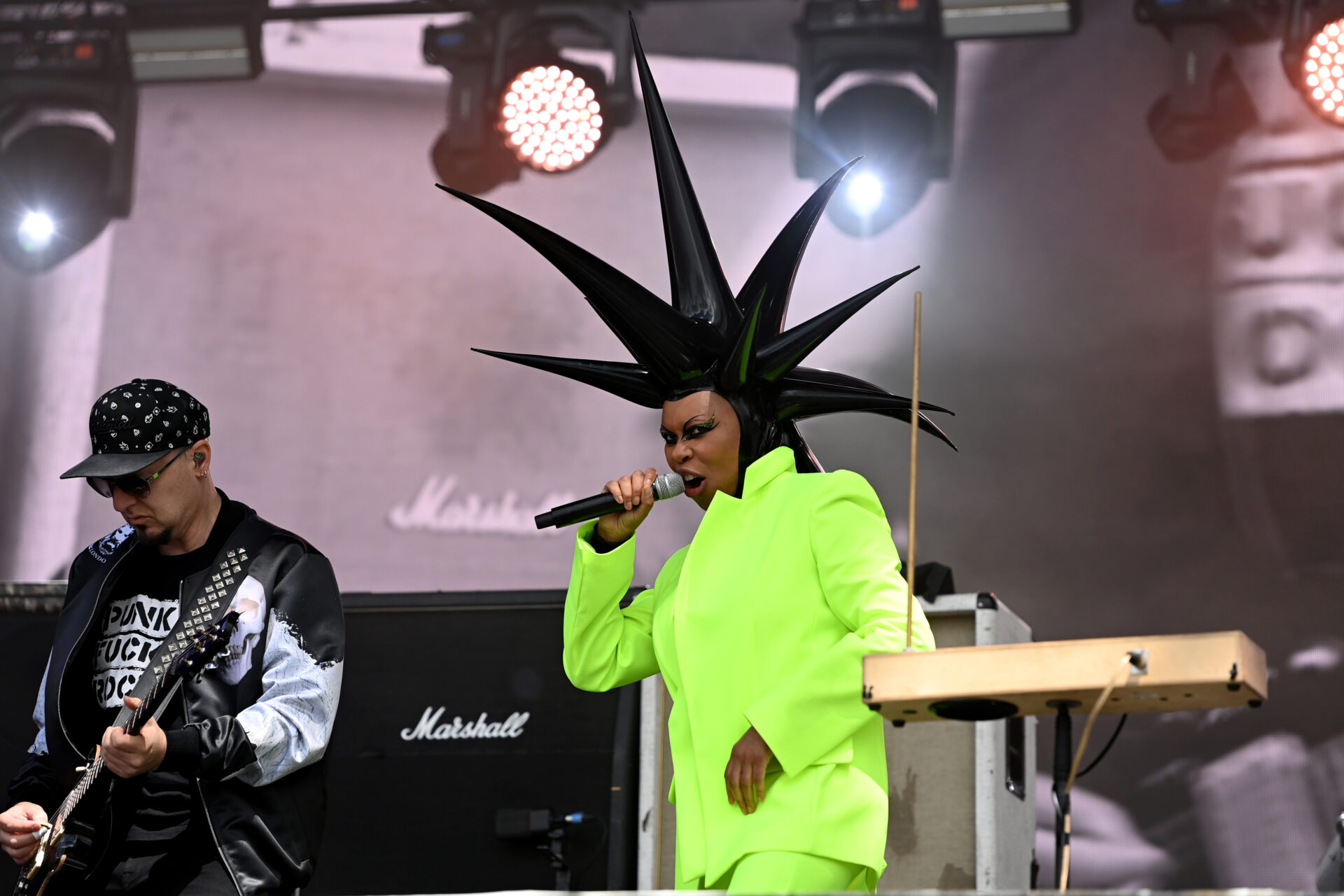
The punks and the metalheads, the indie kids and the rockers often romantically view themselves as agitators of the state, who refuse to conform and exist beyond the restricted confines of modern society. Think about the Sex Pistols famously swearing up a storm in 1976 on Bill Grundy’s Today show, an incident that at the time garnered the band equal measures of infamy and interest in the press. To be alternative is to be viewed as a corrupting influence on society by those in power, as when in 2008 the Daily Mail accused emo bands like My Chemical Romance of being part of a ‘sinister teenage craze that romanticises death’, following the death by suicide of thirteen-year-old emo fan Hannah Bond. To be alternative often means to show solidarity with marginalised communities through political activism, as seen in the Rock Against Racism movement that started in the UK in the 1970s to fight the rising influence of the far right.
Matthew James-Wilson’s 2020 Pitchfork essay on indie music gave a straightforward definition of indie music, while highlighting the obvious gaps in how it views itself as outsider art. “Since indie music first blossomed as a reaction to the corporate conglomeration of the 1980s, it has represented a culture and business model that holds idyllic potential for creatives with unconventional ideas and few resources. It was an ethos invented by and for outsiders that relied on the vagueness of what an outsider could be.” These characteristics of self-reliance due to lack of available funds and resources could just as easily apply to the Black community and the many ways Black people exist in the world as they do to alternative music subcultures. Not only are there similarities in the characteristics of the indie and Black communities, but, in many ways, to be Black, in the Western world at least, is to exist in a constant state of being an outsider. As I’ve said to myself many times over the years when others doubt why I need to hear the roar of feedback ringing in my eardrums, Blackness is inherently punk!
This is a statement that can prompt a sense of joy, intrigue or controversy depending on who’s listening. I say Blackness is inherently punk because it is. As a people that have been disenfranchised, overlooked, excluded and discriminated against, the Black community’s way of surviving and thriving has been through relying on each other, often in a DIY fashion. Whether that be through creating and distributing guides to help Black motorists navigate the roads of the American South during segregation or passing a hat around at rent parties of early twentieth-century Harlem to get the landlord off your back, finding ways around a system that works against you is an essential part of Black culture. I often think back to the Brooklyn-born musician Tamar-kali Brown’s explanation of the symbiotic nature of her punk and Black identity in the documentary AfroPunk, in which she states, ‘Being caught in a system that you can’t identify with and being contrary, that’s the true energy of punk.’
There are many that believe the trauma the Black diaspora has experienced through slavery, white supremacy, colonialism and generally being on the outside of white mainstream society has fed into the art that Black people create. The impressively prescient 1959 film The Cry of Jazz, directed by Edward O. Bland, sees an interracial jazz club debate whether jazz, which at the time was popular among sections of white urban youth culture, was an art form that could only have been born through the Black experience. In one scene, the Black main protagonist fiercely argues for the uniquely Black outsider origins of jazz, saying: ‘The Negro looks at the human arena in America indirectly. He views America with a special clarity and penetration. He can do this because he’s grown up in a corner and made the most of it.’ The protagonist goes on to explain that Black people survived the horrors of the world through the music they create whether that be blues, spirituals or jazz, saying, ‘We made a memory of our past and a promise of all to come.’ Although the film is specifically about jazz as a genre, it can be seen as an allegory for the transformation of rock music, which came, in part, from the blues, a genre that saw Black people communicating their struggles, and was then twisted into a symbol of unique outsiderdom by white rock artists – minus the kind of discrimination experienced to get there.
It is easy to see why alternative music and culture would appeal to Black people on a political level. When Daphne Brooks, Professor of Black Studies at Yale University, fell into the alternative scene in the 1990s in her early twenties, it seemed to be a world of possibilities. “Alternative was really about breaking free of the status quo and embracing and affirming a kind of experimentalism that was and is aesthetic, but also infused with sociopolitical radicalisms. It was about a refusal to continue to participate in cultural normativity.” What better way to express your anger at the political state of the world than using a medium that has bragged about being the best outlet to express anger at the political state of the world?
Many Black alternative artists have used this music as a space to confront societal norms. In 1979, the UK punk band X-Ray Spex led by lead singer Poly Styrene wrote songs about consumerism, identity and environmentalism decades before it became popular to speak about such topics. Later, in the 1990s, Skunk Anansie shocked the British public with their open and forthright political messaging through songs like ‘Little Baby Swastikkka’ and ‘Intellectualise My Blackness’.
While alternative music can act as a space for Black people to express their outsider attitudes and feelings of alienation, it must also be stressed that the consequences for Black people are much higher than for white people. In 2025, during their Glastonbury performance Bob Vylan led a crowd to chant ‘death, death to the IDF’ in protest against the ongoing genocide in Gaza.
The band were met with a widespread backlash. The then-prime minister, Keir Starmer, deemed their chant ‘appalling’, Glastonbury Festival commented the band had ‘crossed a line’, and the band had their US visas revoked and were removed from a number of scheduled festival dates that summer. Frontman Bobby Vylan later clarified in an Instagram post that the chant was not ‘for the death of Jews, Arabs or any other race or group of people’, also stating that ‘we are for the dismantling of a violent military machine. A machine whose own soldiers were told to use “unnecessary lethal force” against innocent civilians waiting for aid.’
Many Black artists are aware of the societal microscope they are under when operating in alternative spaces that already make them stand out. Writer and musician Brontez Purnell felt that this was why his parents were unsure about his life path when he started to drift towards punk culture. ‘Sometimes I think that’s why it seemed so crazy to my parents when I became a punk in middle school,’ says Purnell. ‘It’s because what [punk] is supposed to mean is a deviation from the norm, or a sixth sense about why the world is wrong and it has been proven time and time again that Black bodies pay a way higher cost for deviating.’
Purnell’s parents’ unease about his punk lifestyle is reminiscent of many Black parents’ fears about their child getting into the alternative lifestyle. Adding an extra target on your back when you’re already dealing with the realities of being a marginalised person is a frightening concept. It was why so many Black alternative fans remember their families discouraging them from listening to their favourite music. If Black alternative fans are willing to put up with the double target on their backs for being part of the alternative scene, then it should be clear that this is a style, sense of being and community that they truly love.
We Were Here: A History of Black People and Alternative Music by Stephanie Phillips is published on 27 August by Faber. Stephanie will be in conversation about the book with Gary Powell (The Libertines) at Rough Trade East on 1 September. Tickets here.