
Come Together: Girls Don’t Sync
With an impeccable knowledge of multiple genres and a knack for skilful edits, the Liverpool collective create an unrivalled atmosphere of unity and celebration, while championing inclusivity and political action
By Anu Shukla
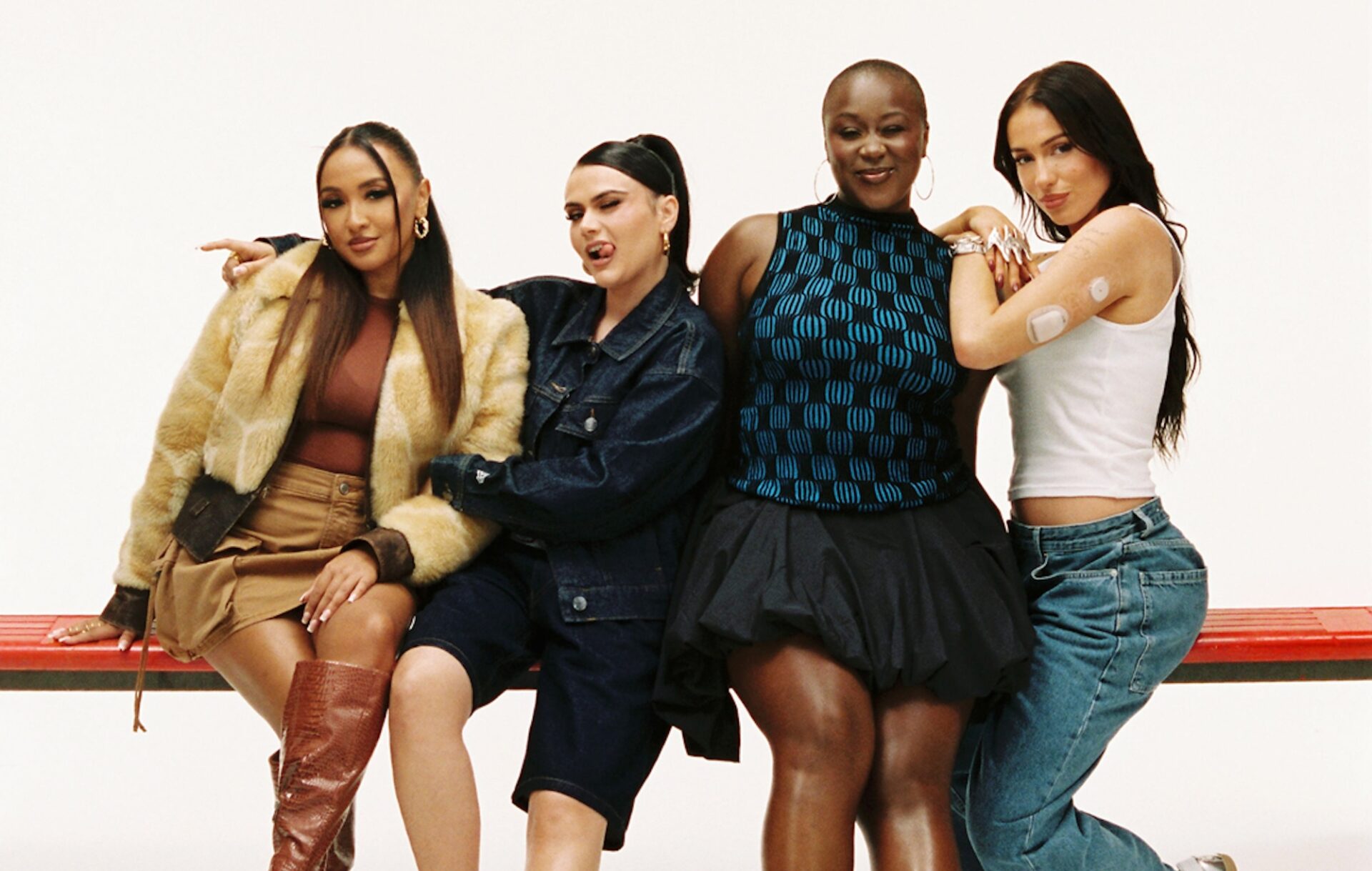
Unapologetic in their drive for inclusivity, Girls Don’t Sync are redefining the gender balance of lineups and dance floors across the UK and beyond. In their time together, these four friends have evolved from a DJ collective into full-scale artists. With their radical reshaping of ye olde sausage fest, they could well be the Slits of the rave scene, urging the unseen, unheard, misgendered, violated and abused to claim their space. They’re sparking a movement, platforming new talent and mentoring the next generation of women and gender minority DJs to step up to the plate.
Girls Don’t Sync are Matty Chiabi, Sophia Violet, Hannah Lynch and Gaia – aka G33. In their sets, they tear through house, UK funky, dancehall, drum ’n’ bass, techno, UK garage, Afrobeat, Bollywood, Middle Eastern sounds and more. With animated responses to whoever’s on the decks, they challenge each other, trading a full-on dialogue of beats and pieces. It’s an evident testament to the statement that embodies their name – which Chiabi came up with in the shower. It’s a double entendre: an affront to the stereotype that women who DJ rely on the sync button because they can’t beat match. “What we’re saying is that we are skilled DJs,” she says. “But it’s also ironic because as friends, women and as a group, girls do sync: emotionally, creatively, professionally. So we might not ‘sync’ on a technical level, but we do in every other sense, and that’s what’s allowed us to go strong for nearly five years.”
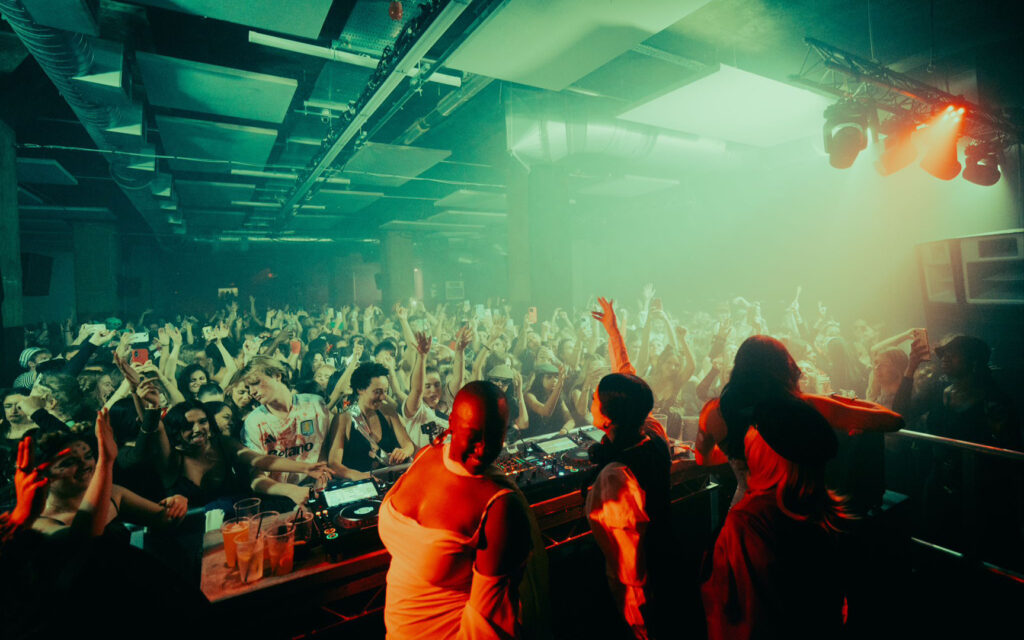
The girls are hunkered down in a hotel in Shepherd’s Bush when I speak with them via Zoom on a rainy Wednesday morning. They’ve spent the week in the studio ahead of their sell-out Friday gig at new north London venue Archives. “I think we’re planning to put the DJ decks in the middle of the room. We’ve always felt that it gives our crowd such a great experience,” says Lynch. “It should be good being in the middle of the action.”
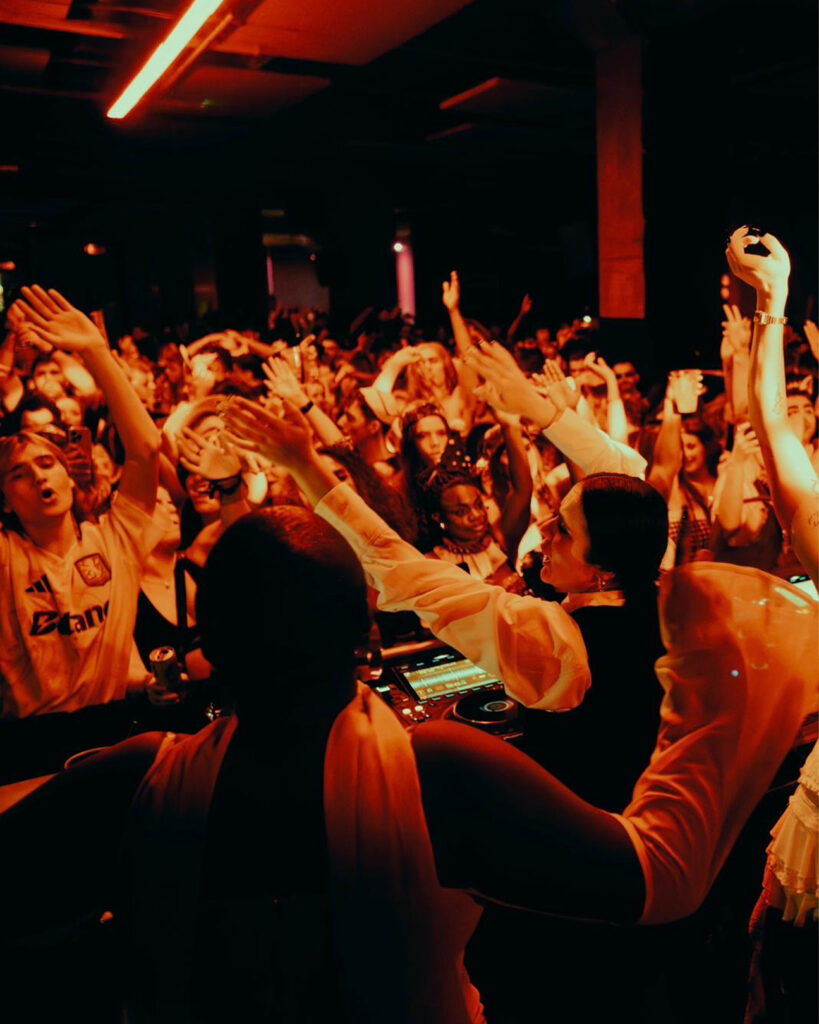
At the show a few days later, there certainly is plenty of action. As I enter the sweaty, packed throng, someone hollers: “What’s happened to all the men?!” As a woman, I’ve never felt safer navigating my way to the front. Thousands of awe-inspired women dominate the space, their eyes sparkling with excitement at the sight of the other women on the stage that they can directly relate to. Girls Don’t Sync are known for their grounded, authentic personas, and the line between the DJs and their fans is often blurred. It’s not unusual for their fans to become their friends, and then artists in their own right. Some of them are on tonight’s bill, including British-Nigerian artist Madeline. “She’s an old student of mine who I taught through this mentorship campaign,” says G33. “She’s just started DJing and she’s been so dedicated. We just wanted to give her an opportunity for that opening slot.”
Others on tonight’s lineup include Club Angel and BBC Asian Network’s Brit-Pakistani act DJ Manara, known for blending classic Bollywood edits with R&B, house and garage. The sound resonates with G33, who has Indian-Italian heritage. “It’s so nice to make that musical representation for our South Asian fans,” she says.
Earlier this year, after meeting him as a fan at a previous gig, Girls Don’t Sync invited up-and-coming trans DJ Charlie Adams to play their Birmingham show.
“He told us he wasn’t feeling confident as a transgender artist, but then he started DJing, so we booked him – and he was absolutely amazing.” Lynch’s girl-friend, Nay Maxwell, is another rising talent also inspired by the group.
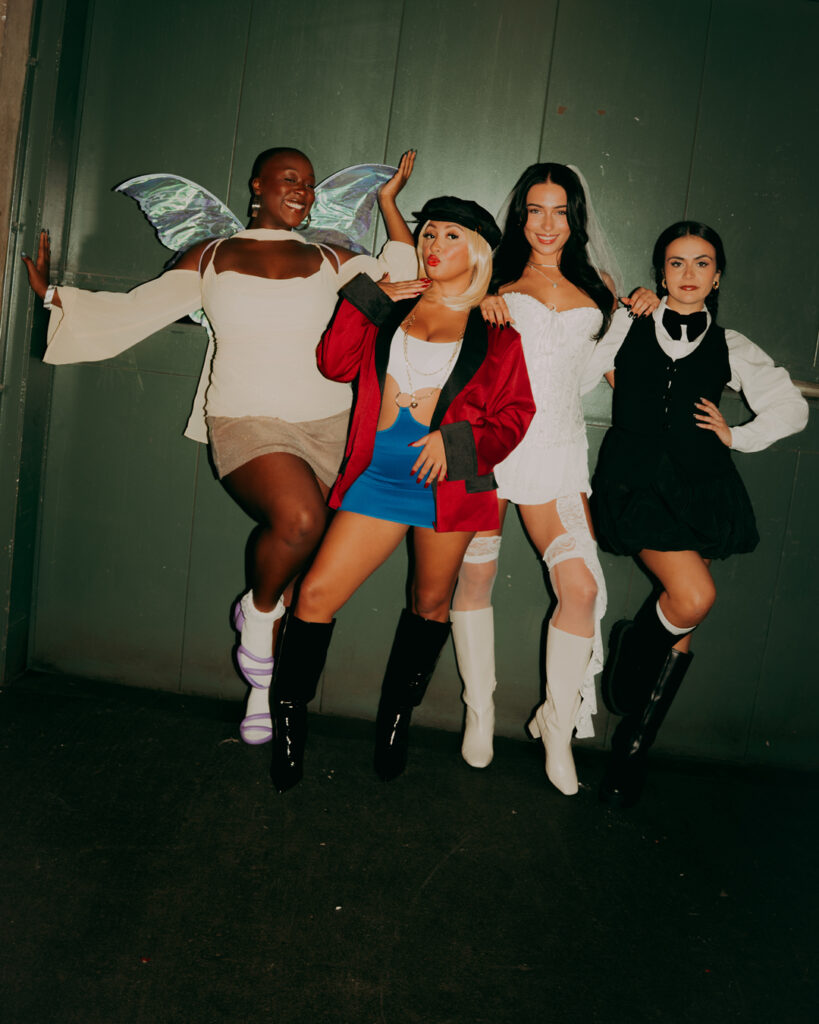
Before each and every one of their gigs, there are some house rules, with the band’s social accounts often reminding people to respect each other’s space. “We have zero tolerance for any form of abuse on the dance floor,” says Lynch.
Queer dancer Kodalet Ladipo confirms this on the night of the London show, recalling how the collective protected him after he was physically attacked at a night they were booked for. They refused to play until the perpetrator was reprimanded and removed from the venue. “They did that for me, even when they were just about to go on and play. That’s what they stand for: making sure it’s a safe space for queer people too,” he says.
Violet, who has Type 1 diabetes, tells me she’s passionate about raising awareness and showing fans what it’s actually like to live with the condition. She uses an Omnipod insulin pump, which has resonated with many fans who also wear one. “Fans often reach out with comments like, ‘No way, she’s wearing an Omnipod! I’m showing this to my daughter,’” says G33. In the band’s promotional photos, the device is deliberately visible on Violet’s arm.
Violet says that when she’s DJing, she often connects with people in the crowd who are wearing one too. “It’s about representing a community that often feels unseen,” she says.
Whether it’s the Type 1 community, the South Asian, Black, gay or queer communities, Girls Don’t Sync represent them all, says Chiabi. As we navigate the crowd, we give up on detecting straight white men and meet psytrance lovers Hannah and Alice, who have rocked up with 15 of their friends from Bristol University. “Girls Don’t Sync are strong, independent women who just love music and play great tunes,” says Taryn, one of the group of friends. “Most famous DJs are men, not women, so it’s nice to see them do what they do.”
Her friend Gracie agrees: “They attract a lot of women to their shows because they themselves are everyday women that have done well for themselves. Ultimately, women like to see other women play and this inspires more to DJ.”
Towards the last hour or so of the show, we finally find ourselves in the green room, where Nia Archives is milling about. There’s a fun, vibey, down-to-earth atmosphere, and we meet Nessie, a Girls Don’t Sync friend who grew up with G33 and Chiabi in south London. She’s been going to their shows for the past four years. “The crowds are there because they see themselves in the girls. You come for the music but you also come for their energy,” she says.
Earlier this summer, the quartet made their Ibiza debut with residencies at Amnesia and Pacha. “It’s a different crowd, and we prioritised certain tracks for an audience that knows a great spectrum of house,” says G33.
“There was also a lot of joy in thinking, ‘You know, Ibiza might not be ready for this, but I’m gonna go hard anyway,’” adds Chiabi. With crowds of devoted Ibiza heads interspersed with friends from back home on both the dance floor and the decks, they transformed Ibiza into the ‘GDS house’. “It almost felt like a house party with ravers who might not necessarily have gone to a superclub like Amnesia – and we were quite aware of that when we were playing. People had so much fun and everyone was so warm and welcoming,” recalls Chiabi.
The Ibiza crowd also included people they’d invited after meeting them on the flight over or during nights out. Chiabi recalls receiving a message from their manager after one night: “She was like, ‘You’ve added, like, 25 people to the guest list – did you have a good night out then?” It’s nothing out of the ordinary. Days before their Archives gig, G33 and Chiabi invited a bunch of girls they’d met on the Victoria Line. On Instagram, they respond to requests from students who can’t afford to attend their gigs. “It’s important for us to do what we can to dismantle that lack of inclusivity – plus, we want others that haven’t been clubbing to experience this and promote accessibility.”
Earlier this year, Girls Don’t Sync released their debut track, ‘Our House’, which featured on their recent Code Orange EP (a second EP with key collaborators is also currently in the works). Lynch tells me that it epitomises exactly this attitude. “It sends a strong message that in our house we’re all the same,” she says.
The track was inspired by a session with Basement Jaxx. “We went into the studio, and they literally threw us into the booth, and were like, ‘Make some whacky sounds. Can you sing? Even if you can’t, just try, go for it, pull in all your identities,’” recalls Chiabi. “It was the maddest experience ever – obviously because we were in the studio with Basement Jaxx, but also because they shoved us into the booth for something that could potentially end up on their album. It was such a unique and special experience that we carried that energy into the session when we made ‘Our House’.”
Girls Don’t Sync have come a long way since 2021, when they first came together as a collective platforming female acts at Liverpool’s iconic District, after venue owner Eric Gooden urged them to start throwing their own nights. GDS embody that naughty north–sexy south connection: Brixton girls Chiabi and G33 spent their teens raving together before landing at District during their uni years. This is where they met Lynch and Violet, who were both DJing at the venue. Lynch’s dad, DJ 2Kind, was part of the rap group Lyrical Compact, while Violet also grew up inspired by her DJ mum and music venue owner dad.
District is one of few Black-owned indie venues and is one of the only ones to survive since Covid. Many of the venues they once all played at have now shut down.
“There’s no funding and the government fails to recognise them as important landmarks that cultivate culture, livelihoods, careers, confidence and oppor-tunities. It’s sad to see, so it’s important for us to advocate for their existence,” says G33.
“This is why we are political – but also by nature because of who we are, as it directly relates to our identities and the cultures we come from. You see this in the crowds we pull,” says Chiabi. “I would say that our message to young people is to stay informed, educated and empathetic, because that’s how change happens – even in the current climate where people are being silenced through punishment for speaking out.”
G33 agrees. “We come from places like Brixton, where music was the product of resistance. Using your artistry to talk about injustice is something we’ve definitely done. Our audience is also very young and mixed, and it’s important to remind them that music has always been political. So we’re encouraging them to galvanise in groups; take the conversation beyond social media. There is strength in numbers, and right now a global uprising is bringing many people together through the power of music.”
As people flood out of the venue, conversations about that power – and how they used it at the end of the night to demand a free Palestine and show support for the people of Sudan and Jamaica – continue to rumble well into the night.