
How the Faith tour defined George Michael’s sexual identity
Paula Abdul tells us about working with George Michael: “The goal was to make the choreography feel sexy and powerful, but also distinctly George.”
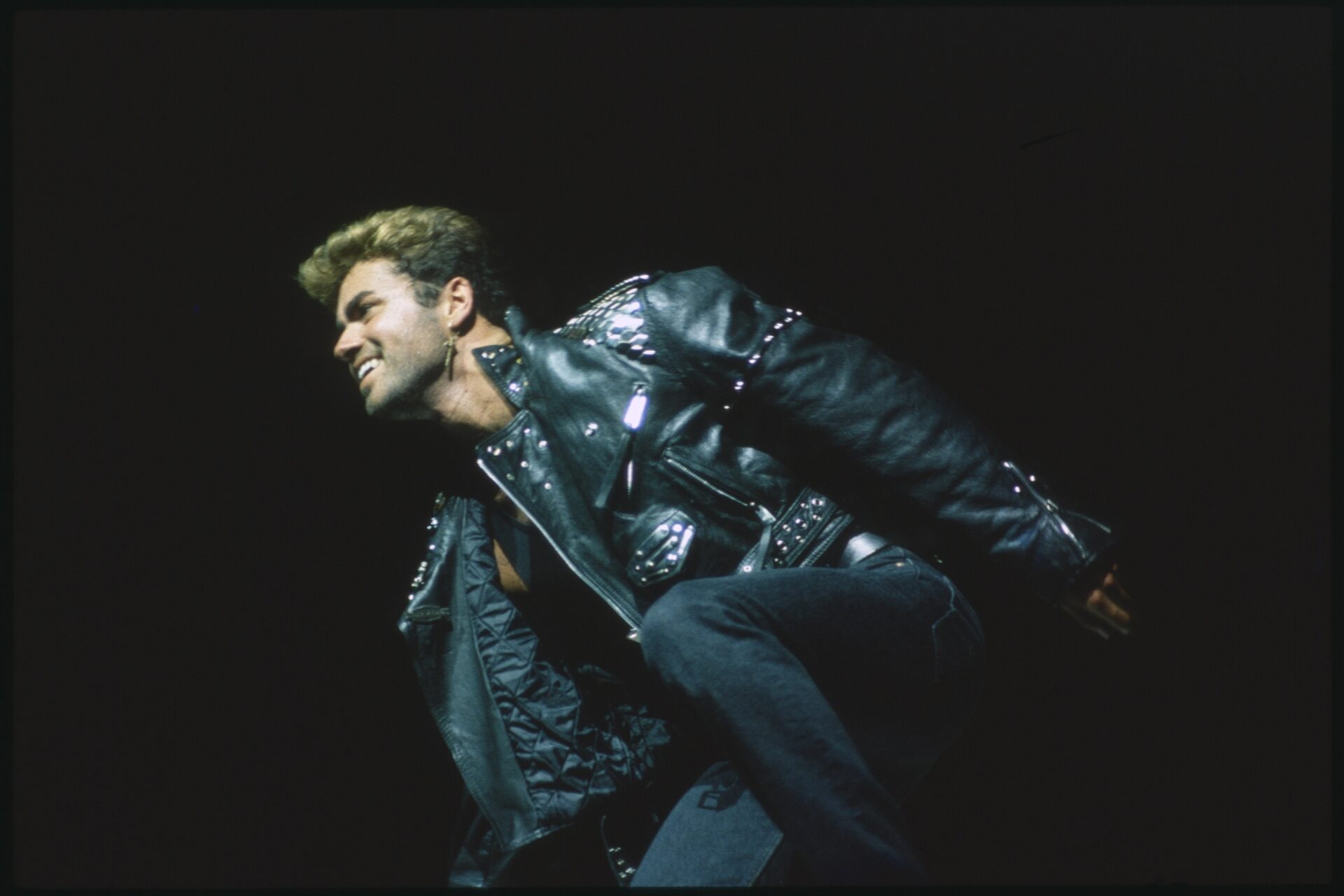
Hips swing side to side, the trademark leather jacket gets thrown off a shoulder as George Michael looks back across a baying crowd of fans – mostly girls and young women, countless gay men, and no doubt many curious straight men. The applause, whoops and screams must have been a curious cacophony for Michael to absorb over his 109 shows across 16 countries.
Then 24-year-old George Michael was sailing the crest of global superstardom touring his debut album Faith, a 25million-selling record that established him as more than the heartthrob from Wham! but a remarkable talent whose voice effortlessly fused soul, R&B, and rock. He was an artist that not only wrote and produced every song on his debut album, but also played many of the instruments.
For the first time ever, original footage that has been assembled from a 14-camera shoot captured on 35mm film over two nights has been restored and remastered into an IMAX-ready tour film. Directed by longtime collaborators Andy Morahan and David Austin, George Michael: The Faith Tour is a rare insight into the world of one of the greatest British artists ever – a man whose world would look radically different a decade later.
The location is the Palais Omnisports de Paris-Bercy in Paris during the European leg of the 1988 Faith Tour – a suitable setting for George’s amped-up cover of the camp Labelle classic ‘Lady Marmalade’, performed near the show’s climax. (Other gems include Michael’s unreleased cover of Stevie Wonder’s ‘Too Shy To Say’ played during the credits – exclusive to the film.)
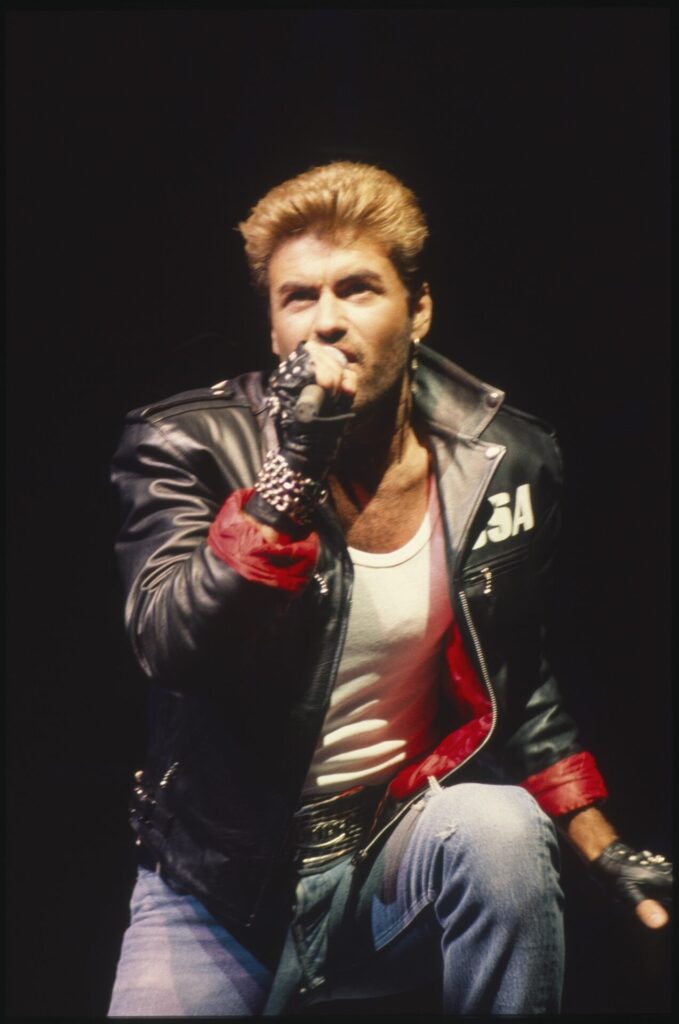
During the eighteen-song playlist Michael delivers a colossal one-man show that marries his unmistakable vocals with an adrenaline-charged performance. Album title track ‘Faith’ has him writhing against the mic stand, his crotch moving back and forth, before playfully turning around and skipping across the stage. One of the concert’s rare silences descends on the arena for ‘Careless Whisper’, the crowd fully in his thrall. What’s exceptionally impressive is that aside from the band in the shadows behind him, George takes control of the stage entirely solo, having decided late in planning against all-male backing dancers.
It will be no surprise that he reached out for the support of one of pop’s most famous choreographers when planning the physically demanding performance that would be the backbone of his first solo tour. Step forward, pop star and choreographer to the stars Paul Abdul.
“We developed a style that incorporated sharp hip movements, strong arm movements, and movements that could build into those big, high-energy crescendos,” Abdul says. “The goal was to make the choreography feel sexy and powerful, but also distinctly George.”
Those movements would inform Michael’s dancing and movement for the rest of his career. “I wanted the movement to become part of his identity as a performer—to create gestures and combinations that people would immediately associate with him,” Abdul adds of their work together.
It’s this effortless blend of playfulness and nascent sexual abandon that helped propel the Wham! lead from teen dream to global superstar. When George Michael stands behind the imposing cage-like set design dressed in a black vest, gloves and blue jeans while the instrumental to the original Freedom refrain plays out, it is starkly evident how his visibly sexual litheness would eventually become the cage he wanted out from.
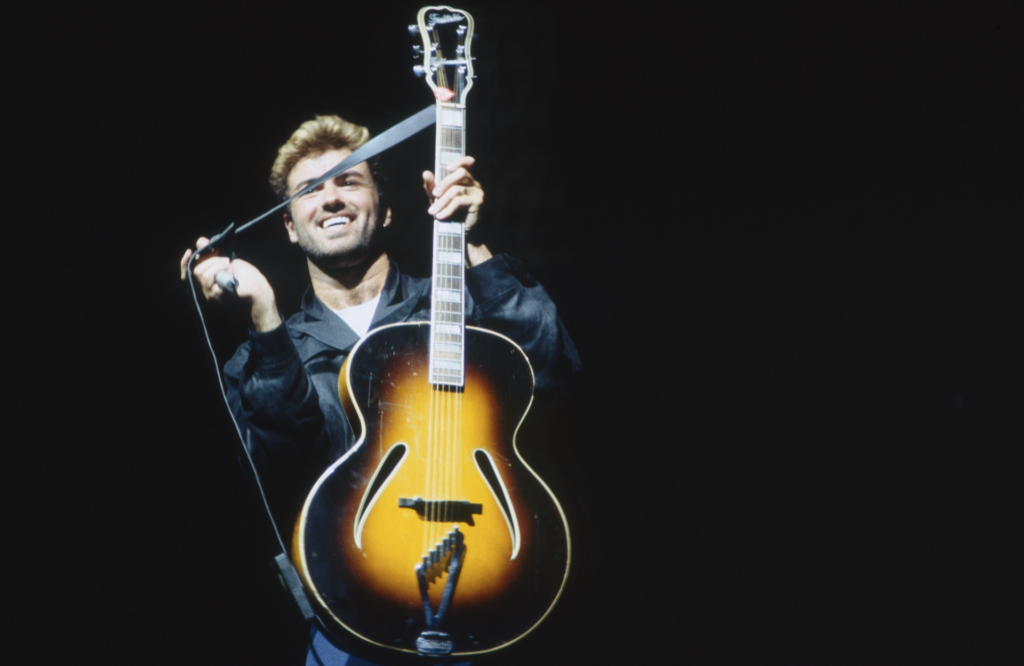
Two years later, his set dressing – guitar, leathers – would become the iconography that Michael would set fire to in the iconic ‘Freedom 90’ music video.
Some might label the Faith tour George Michael’s peak, but to do so would be disingenuous to an artist that willingly stepped away from the ‘sex god’ label with full awareness of the shelf life that trope brings, and the limit it can apply to creativity. When his sophomore album Listen Without Prejudice Vol. 1 arrived in 1990, he was more aware of his sexuality and the challenge it brought to a public pop profile during the homophobic music industry of the late 80s. As a result, Michael took a step back from platforming his identity before the music. It must have been a lonely place to be evidently free and sexually liberated on stage, yet feel so constrained and contained by the pressure of fame and success.
Here, Rolling Stone UK speaks to Paul Abdul about working with Michael to bring the artist’s energy and identity to stage, and what it was like to watch it back 40 years on.
Tell me about your vision for the Faith tour — what did you want to do with the choreography?
The Faith Tour was such an exciting project because George Michael was coming off his first solo album, and there was an incredible amount of anticipation around the tour. George was a huge star, and he was very involved in the vision for how he wanted the show to look and feel. I worked closely with George and the entire production team to bring that vision to life.
As a choreographer, my job was really to embellish what was already there. George already had this incredible presence and was very much a sex symbol, so I wanted to build on that rather than take away from it. I wanted to give him a vocabulary of movement that felt completely natural to him and that he could fall back on throughout the show.
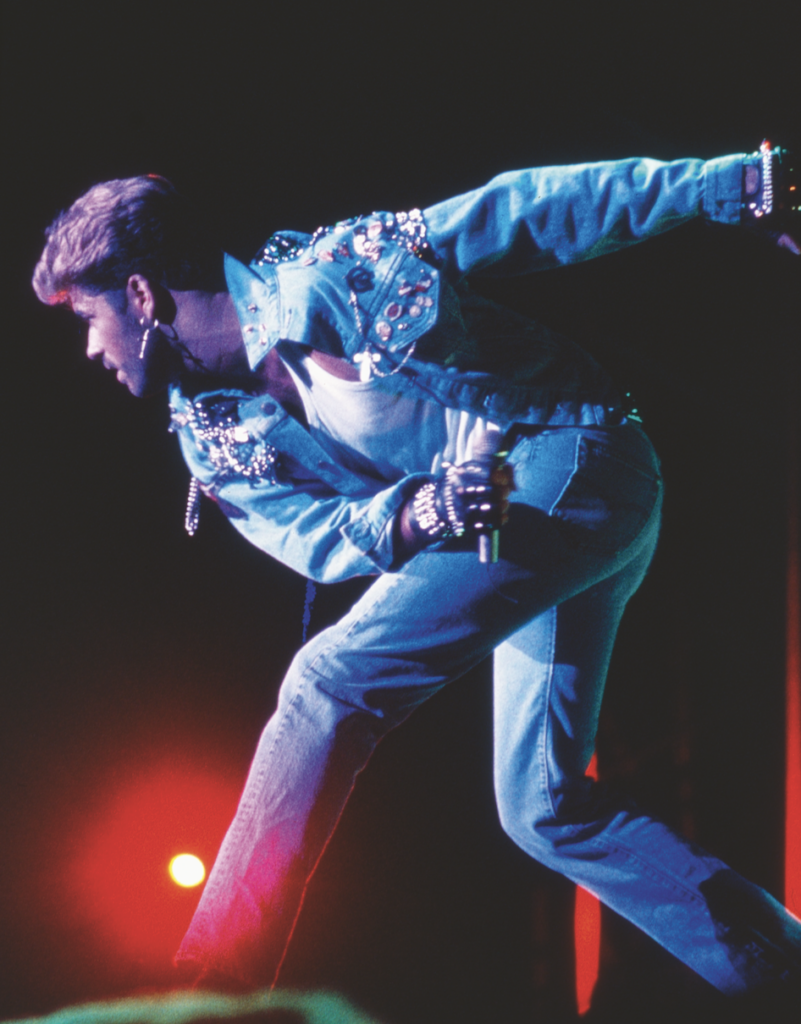
I incorporated lots of snap and flash movements with isolation both in his hips, torso and arms, as well as incorporating foot work to encompass the different highs and lows both musically and visually.
We developed a style that incorporated sharp hip movements, strong arm movements, and movements that could build into those big, high-energy crescendos. The goal was to make the choreography feel sexy and powerful, but also distinctly George. I wanted the movement to become part of his identity as a performer—to create gestures and combinations that people would immediately associate with him.
For me, that was the most rewarding part of the process – taking the qualities George already had as an artist and helping translate them into movement. The choreography wasn’t about making him into a dancer; it was about giving this incredible performer a physical vocabulary that amplified his charisma, his music, and his connection with the audience.
Can you remember the first session with George?
My first meeting with George was on a soundstage—I want to say it was Universal, although I’m not completely sure. And, you know, it’s always a “hold your breath” moment for me when I meet someone I deeply admire because inside I’m trying to hold it together! But I let him know right away what an honour it was to be working with one of my most favourite artists.
Even today, even after he’s gone, I think George is still considered one of the greatest vocalists. And what was so incredible was that his voice live sounded exactly like his recordings. I was so thrilled and honoured to have the opportunity to work with him.
When I work with an artist, I always start by building a foundation around what feels natural and comfortable for them.
From there, I create a vocabulary, so to speak, of movement that complements and is choreographed to their songs. But I also gave George the freedom to take any of those sequences and apply them to his more up-tempo songs, depending on how he felt in the moment or if he suddenly thought, “I don’t know what I’m going to do next.”
When it came to his ballads, though, I felt it was really important for him to stay as still as possible behind the microphone. I wanted the focus to remain on his voice, while using signature arm movements that would accent and emphasize the emotion—the cry—in his voice. It was about allowing his vocals to be the star while the movement supported and heightened what he was already expressing.
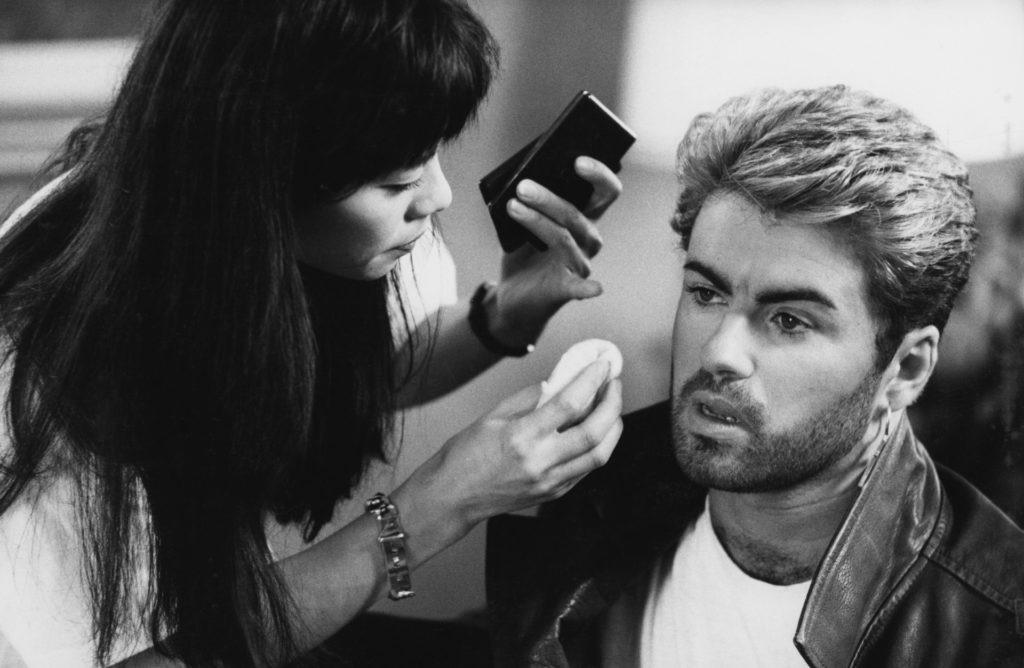
What sort of student was George?
What I learned about George during those sessions is that he was extremely focused and serious about his artistry. He was completely committed to the rehearsals. I mean, we would spend, on average, four to six hours a day together rehearsing.
I always stayed pliable and open to change because every artist works differently. One of the things I learned about George was that, at first, he wanted male backup dancers. So, I hired male backup dancers, but my approach wasn’t to have George doing traditional group choreography with them.
Instead, I wanted each of the dancers to have their own moment—to come out at different points in the music and really riff off of what George was doing. I wanted it to feel organic, almost like a conversation between the dancers and George rather than everybody doing the exact same thing.
That was really important to me because George had such a unique way of moving. I wanted the dancers to complement his movement, not compete with it.
He was so energetic on stage! How did he work on his stamina?
We worked a lot on stamina through repetitive movement. Whenever I’m creating movement patterns for an artist, one of the first things I want to do is get them into cardiovascular shape because performing onstage for over two hours is incredibly demanding.
So, we did a lot of calisthenics, a lot of running back and forth on the sound stages, really pushing the body and building that endurance. Then, we started incorporating the actual choreography into that physical training.
I wanted him to be able to perform the choreography and still have the energy and presence to connect with the audience so that by the time he was ready to launch his tour, he was in really great physical shape and had the stamina he needed to give that kind of performance.
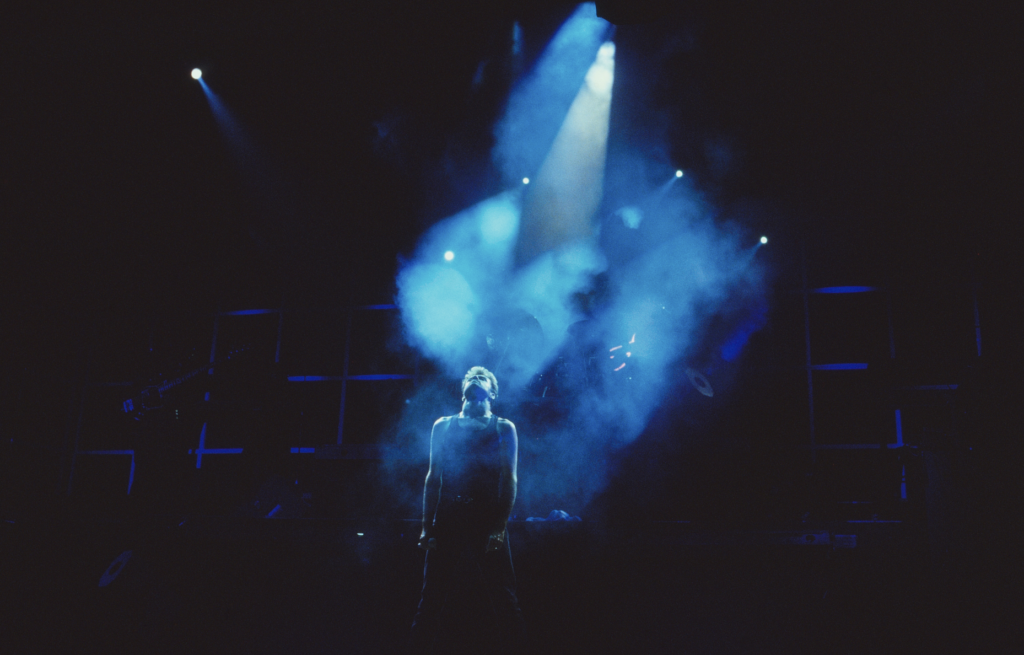
Did you get to see him live at any of the shows?
Absolutely! I went to the first week of his shows and it was mesmerizing. You know, it’s one thing to be in a soundstage working with an artist you completely admire and respect, but then you get to see that artist step onto a live stage, in front of an audience, and everything just comes to life.
That’s when you really understand how masterful he was. You could see his commitment, his discipline, and his love for being a performer. He was so completely committed to giving the audience everything he had. That’s what made him such a quintessential performer—and honestly, it was incredible to watch.
How was he feeling about embarking on this tour?
I think he was very excited because this was coming off his solo album, Faith, and it was so successful. This was going to be the biggest concert of all time. And it was. I think he was completely focused, but of course nerves sometimes would get the best of him.
When it was right before the tour was about to launch, he decided he didn’t want to have backup dancers. So, I said that the focus now is going to be solely on him. If he forgets a movement, forgets a step, it’s him on stage. He won’t be able to mimic any movement from the dancers.
But my hope as a choreographer is that we get enough dance vocabulary in you that you can fall back on any of the sequences that I’ve taught you. That way no one’s going to be saying, “Oh, you made a mistake” because it’s you in your element and that’s what I focused on – him as a male artist and the sex appeal that he inherently had.
How does it feel to watch your choreo back after all these years?
It’s funny, because I actually have footage of me talking about the choreography with him and showing some of the steps. Then it cuts to him live onstage, actually doing those same movements. It makes me smile every time I see it.
I think, “Wow, I was really there at the beginning of this.” To know that I had even a small part in helping shape the start of his solo career is something I’m incredibly proud of. It’s such a special feeling to look back and realize that the work we did together became part of his journey as an artist.
George Michael: The Faith Tour is in cinemas now. The Faith Tour live album is available now.