
Inside Saudi Arabia’s Music Reckoning: How XP Music Futures Is Rewriting the Region’s Cultural Score
In partnership with Riyadh Music Week
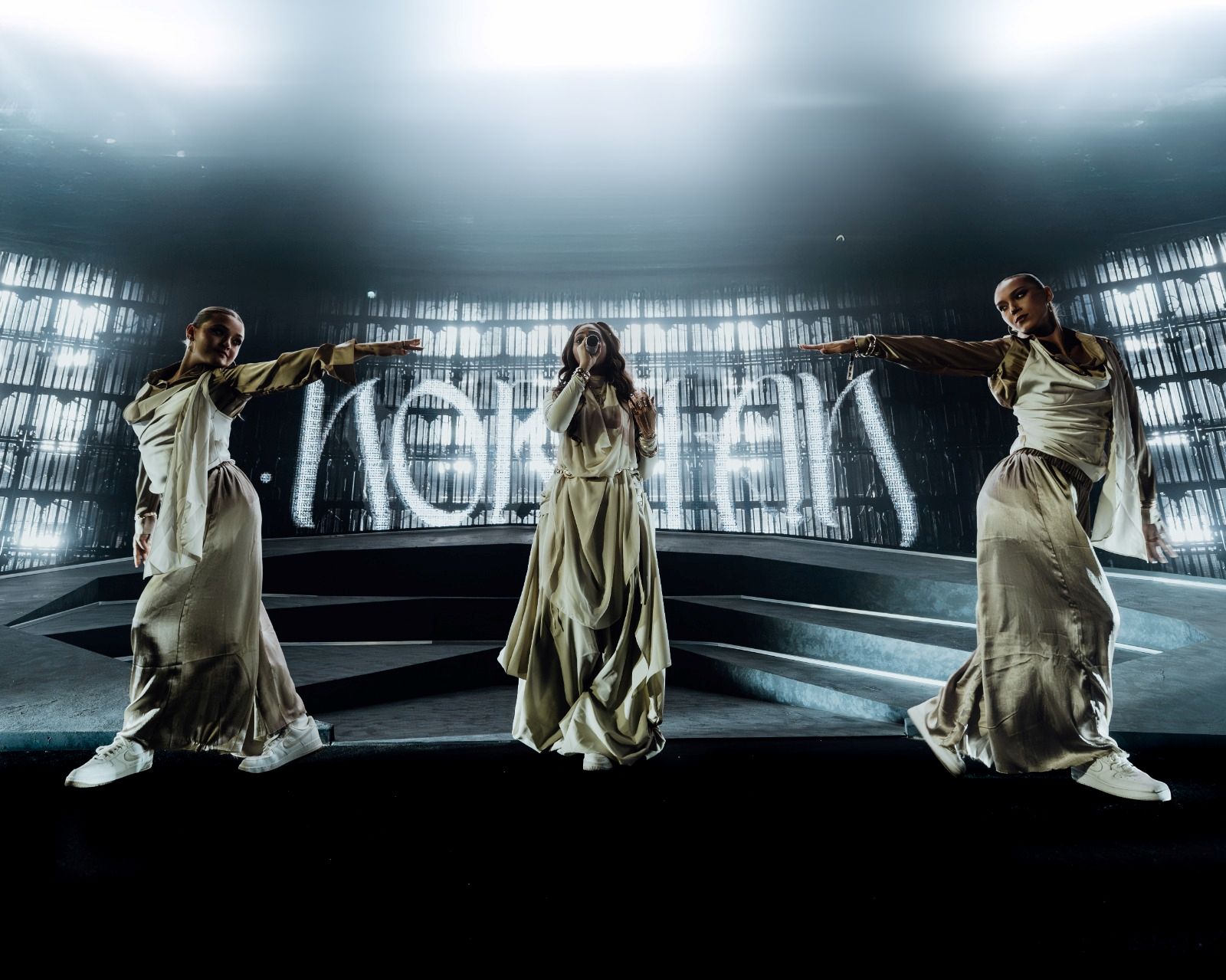
On a warm December evening in Riyadh, the bass travels farther than expected. It slips past the carefully purpose-built edges of JAX District, reverberates against concrete galleries and repurposed warehouses, and lands somewhere deeper, inside a country recalibrating its relationship with sound, visibility, and self-expression. This is XP Music Futures 2025, now in its fifth year, and while it may present itself as a music industry conference, its true objective is transformation.
Taking place December 4-6 in Al Diriyah Al Jadidah, XP Music Futures has become the Middle East and North Africa’s most influential music convening, not merely because of its scale, but because of what it represents. Powered by the MDLBEAST Foundation, XP is part-think tank, part-cultural laboratory, part-controlled experiment: what happens when a nation long defined by silence around secular music decides, with remarkable speed and investment, to build an entire music ecosystem from the ground up?
In a global industry that often mistakes volume for impact, XP’s significance lies in its intentionality. This is not a festival masquerading as a conference. It is infrastructure-building in real time.
A conference with an agenda
XP Music Futures was designed with a clear mandate: to professionalise the Middle East’s music ecosystem, create pipelines for emerging talent, and ensure that the economic value of music stays inside the region. Across three days, artists, executives, technologists, and cultural operators move between panels and performances, negotiating a future that feels both exhilarating and precarious.
The numbers alone suggest momentum. In 2024, XP welcomed over 5,100 attendees, hosted 380 speakers from across the globe, and staged 121 daytime sessions alongside 100 nighttime performances. Twenty-three partners – local and international – helped anchor a program that has grown year-on-year, both in ambition and reach. But metrics only tell part of the story. What XP offers is something more elusive: permission.
The Sound of Permission
To understand XP’s cultural weight, one must rewind to 2019, when MDLBEAST launched Soundstorm, Saudi Arabia’s first-ever mixed-gender music event. For Bader Assery, Senior Project Manager at MDLBEAST, Soundstorm was nothing short of seismic. “It was the big bang moment,” he says. “Not just for music, but for public life.”
The move signalled more than a taste for global headliners, though Eminem and Cardi B certainly made that clear. It marked a visible commitment by the state to reimagine culture as both a domestic force and an international signal. Music, long practised privately in bedrooms and compounds, was suddenly public. Controversy followed, as it tends to when culture moves faster than consensus. Yet Saudi Arabia seemed to understand something the global music industry has always known instinctively: music is not neutral. It is radical, political, and – perhaps most importantly – aspirational.
But if festivals like Soundstorm were about external perception and tourism, XP’s deeper question is internal: how does music reshape cultural openness from the inside out?
Building Belonging, Not Just Buzz
For Gigi “Amjad” Arabia, CEO and founder of Heavy Arabia Entertainment and one of the region’s first female label heads, the answer lies in being seen. “What’s changed isn’t taste,” she says. “It’s visibility.”
For decades, music in Saudi Arabia existed quietly, shared among trusted circles, neither fully denied nor fully acknowledged. The current shift has reframed music as a legitimate pursuit, not a private indulgence. “Music has become a tool for permission and belonging,” Gigi explains. “It’s created neutral spaces where different regions, generations, and subcultures can coexist.”
That neutrality is crucial. In a society navigating rapid modernisation, music offers a rare commons, one not explicitly political, yet deeply consequential.
The Infrastructure Problem
Still, ambition alone does not build an industry. While Saudi Arabia’s music economy is being constructed with intent, it remains uneven. National goals are bold: tens of thousands of music jobs by 2030, hundreds of live performances annually, and exponential growth in recorded output. Yet, as Gigi points out, the bottleneck is not talent or demand, it’s infrastructure.
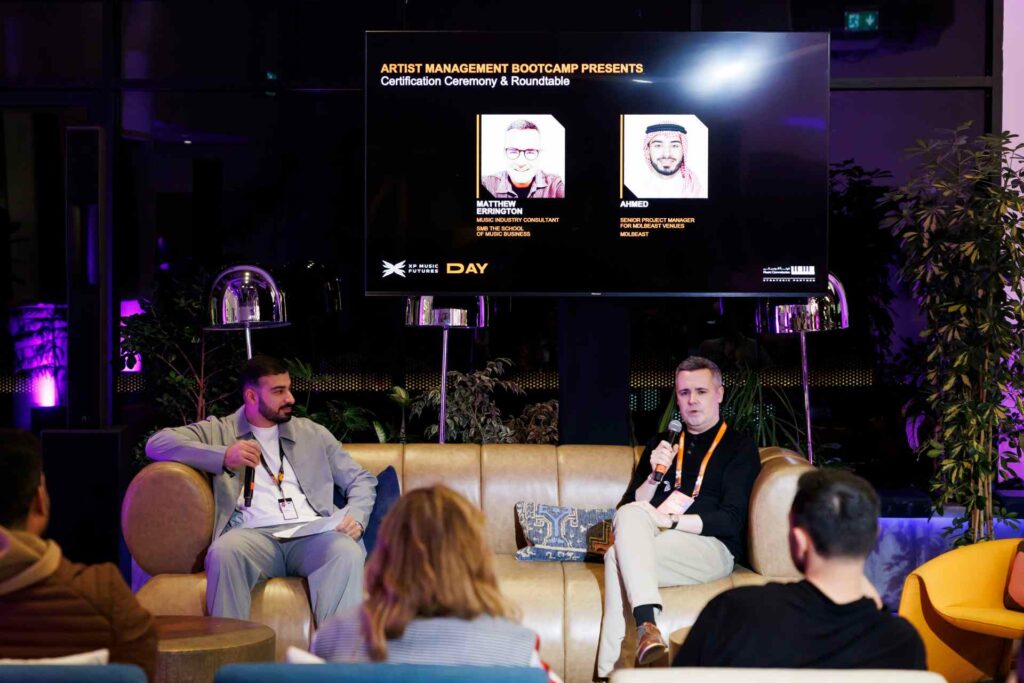
Artists speak candidly about the gaps: a shortage of rehearsal spaces, recording studios, independent music schools, experienced managers, instrument retailers, and mid-sized venues. The result is a scene that feels fast but fragile, spectacular festivals rising atop an ecosystem still finding its footing. These missing layers explain why XP matters. Its focus extends beyond performance into education, management, production, and long-term sustainability. The next phase of growth, insiders agree, won’t be louder; it will be deeper.
As these layers develop, locals are increasingly finding roles not just onstage but behind the scenes: sound engineers, stage crews, producers, educators, and venue owners. This is how value circulates internally rather than leaking outward, a lesson learned the hard way by many emerging markets before it.
Singing in Arabic, On Purpose
Perhaps the most striking feature of Saudi Arabia’s music renaissance is its linguistic confidence. At a time when global success is often equated with English-language output, many artists here are making the opposite choice.
Independent Palestinian-born artist Lina Makhoul sees this as both strategic and sincere. “We want people to come towards our culture,” she says. “Look at K-pop, music opened doors for people to learn Korean, to want to understand the culture. That wouldn’t have happened if everything were in English.”
Makhoul, who won The Voice Israel in 2012 and later opened for Little Mix, now operates independently, governing her own creative output. Her presence at XP is deliberate. In an industry obsessed with scalability, showcasing an independent artist might seem counterintuitive. Yet XP and the MDLBEAST Foundation recognise the broader implication: representation itself is infrastructure.
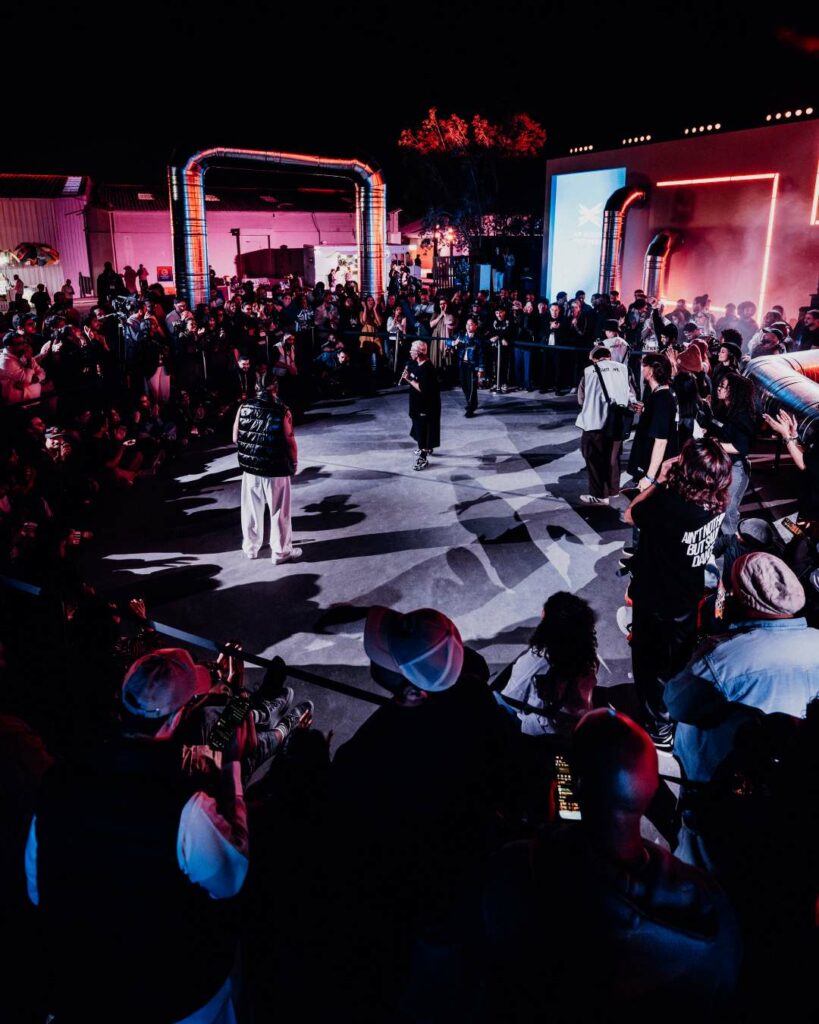
“My songs tell my story,” Makhoul says. “There’s vibrancy here that isn’t told through the media. Art is bigger than business. Music is the bridge.” Her insistence on Arabic is not nostalgia; it’s cultural integrity. “The language is incredibly diverse, but I’ll never say never. Saudi rap travels across the diaspora because of its cadence. We want people to understand these nuances.”
Underground, By Design
While cultural pride runs deep, commercial reality is never far from view. Ahmad “Baloo” Alammary, Chief Creative Officer at MDLBEAST and head of Gabu Records, straddles both worlds with ease. A DJ and producer himself, Baloo is adamant about protecting what makes the region sonically distinct.
“We have to keep the underground alive,” he says. “We have different instruments, different rhythms. Our job is to keep our ear to the ground locally, even as we scan globally.”
That global scan is constant. MDLBEAST’s teams monitor international underground scenes not to replicate them, but to converse with them, bringing new sounds into dialogue with local traditions.
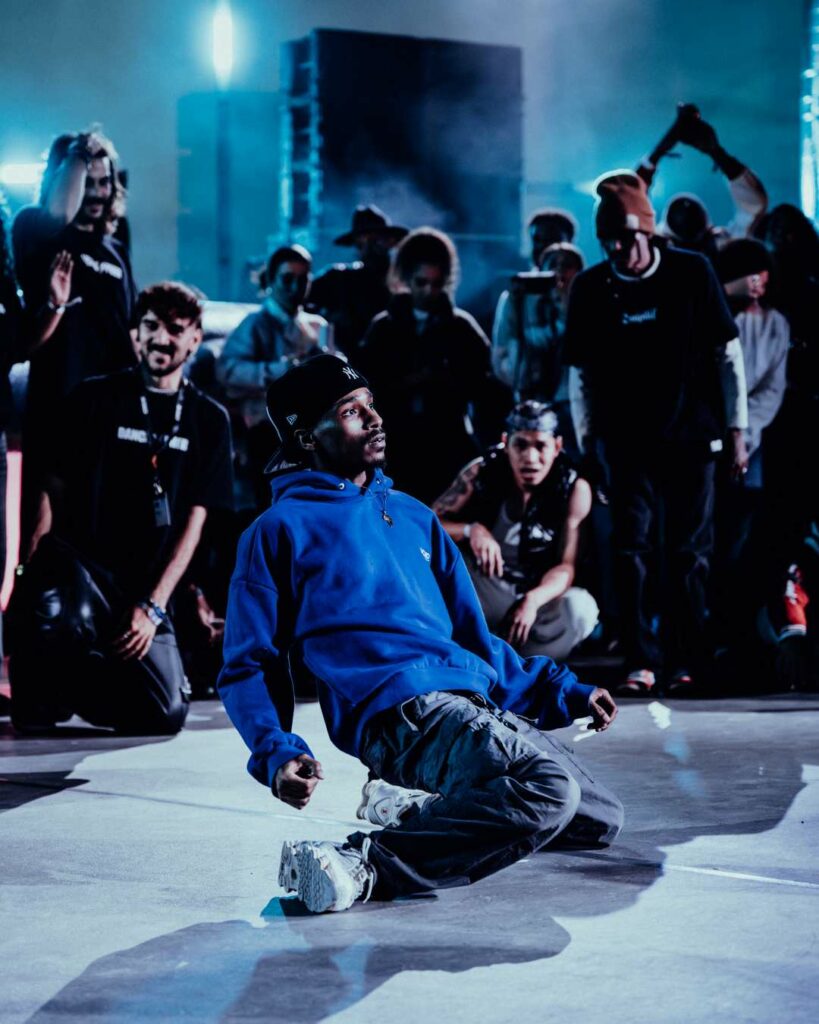
Bader Assery points to second-generation Saudis raised abroad as particularly potent cultural translators. Artists like Mishaal Tamer, who grew up in the United States before returning home, embody a fusion that feels organic rather than opportunistic. Blending indie rock, pop, hip-hop, and R&B, Tamer became the first Saudi artist to sign to a major international label, RCA Records under Sony Music, in 2020.
“Because he has access to both cultures,” Assery notes, “the opportunity is greater here.”
A Controlled Acceleration
There is a palpable sense of anticipation at XP, a collective awareness that the breakthrough moment is not hypothetical, but imminent. Every artist seems poised, every executive alert. Yet what distinguishes this scene from others at similar stages is its discipline.
Many of the industry leaders shaping Saudi Arabia’s music future are veterans, professionals who honed their instincts at US and UK labels before returning home. They bring not just expertise but restraint. The build is strategic, structured, and acutely aware of precedent. If XP Music Futures feels different, it’s because it is. It is not chasing validation from the West, nor retreating into insularity. Instead, it is constructing a parallel centre of gravity, one where Arabic-language music, regional narratives, and global ambition coexist without apology.
Five years in, XP is no longer asking whether Saudi Arabia can sustain a music industry. The question now is what kind of industry it wants to be. And in the low-frequency hum echoing through JAX District, one hears not just music, but intention.