
Jarvis Cocker on Pulp’s new career-spanning documentary: ‘It’s like seeing your life pass before your eyes!’
As ‘Pulp: What Do You Do for an Encore?’ prepares for a MUBI release, Cocker tells about the film, what's next for Pulp, and whether he's going to Oasis next summer...
By Nick Reilly
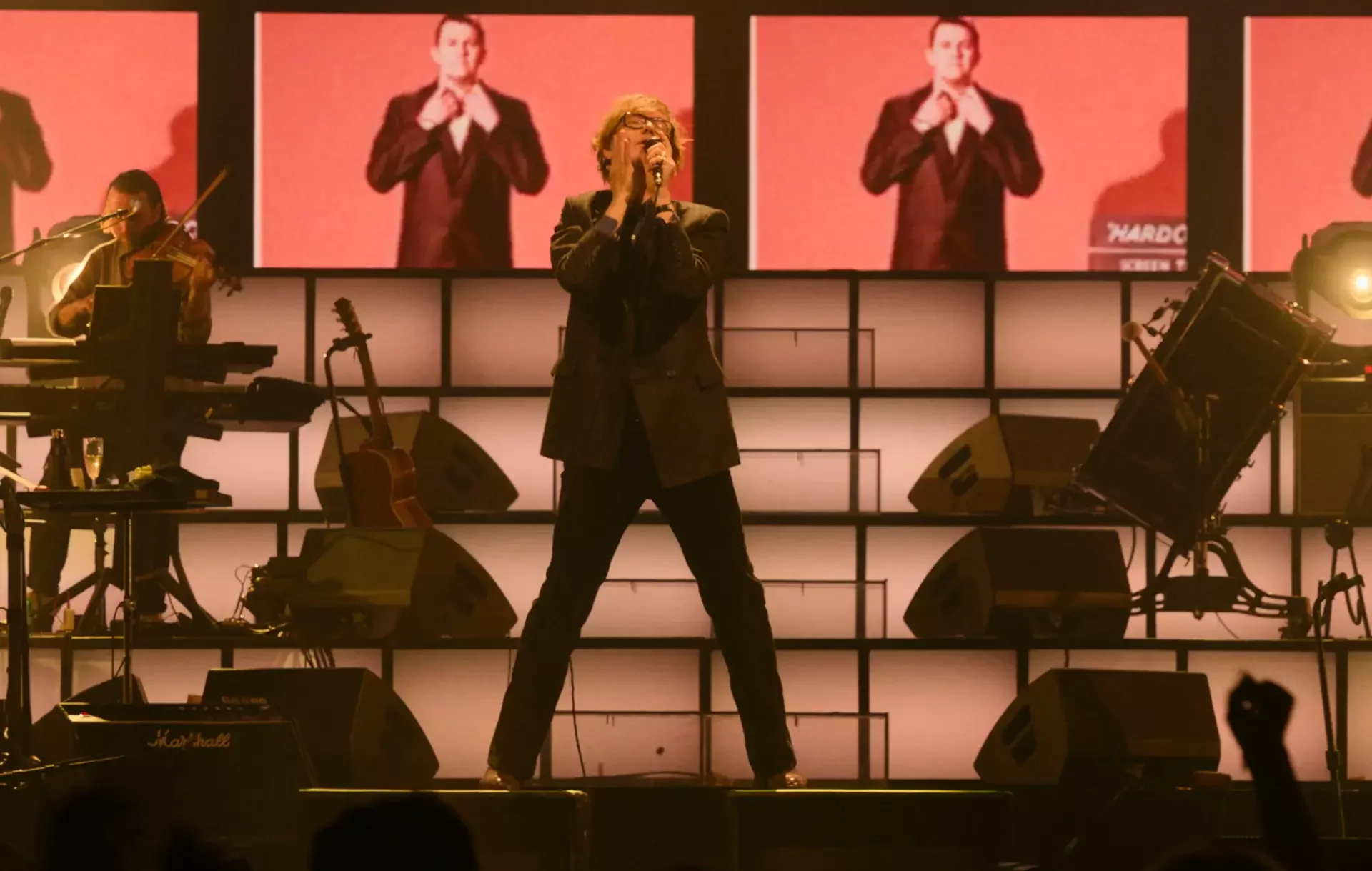
As Pulp prepare to share their new documentary What Do You Do for an Encore?, legendary frontman Jarvis Cocker has told Rolling Stone UK about the film’s genesis, the band’s glorious second reunion, and why he’s feeling optimistic that we haven’t the last of the Britpop titans.
Pulp: What Do You Do for an Encore? arrives on MUBI from Friday (25 September) and tracks the band’s two glorious shows at London’s O2 Arena in the summer of 2025. But in the hands of director Garth Jennings, a longtime friend of Cocker, the film also uses a wide array of archival footage to tell the story of how these Sheffield outsiders became one of Britain’s best and most beloved bands.
“It was a bit like seeing your life flash before your eyes,” Jarvis neatly sums up, describing the experience of watching the career-spanning documentary for the first time. You can read our whole Q&A with the frontman below.
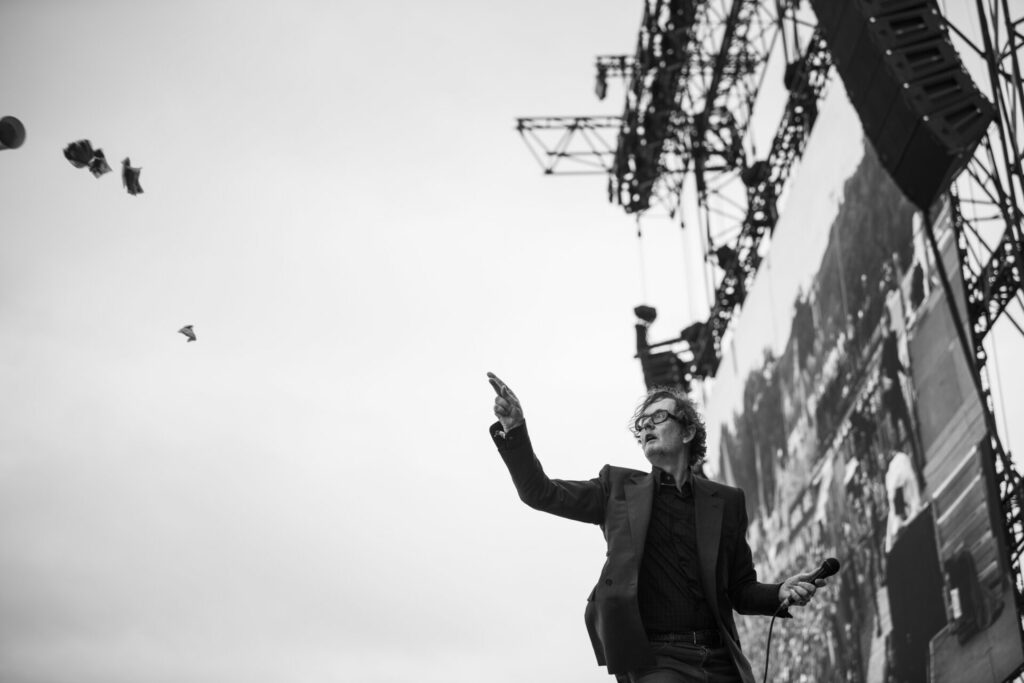
How’s things Jarvis? Are you excited for the release of the film?
It’s going to be interesting. I’ve not thought too much about it in the run-up because we’ve been touring, but it’s suddenly become a reality. The story of the film is that Garth Jennings designed our stage show, and I was very happy with the designs he came up with. Garth is a filmmaker, so then the question came up of whether we should try and film it. It was originally going to be two nights at the Hammersmith Odeon but the money fell through just before that happened, and then we got MUBI on board to film at The O2. What was interesting with Garth was that he wanted to look at the archival stuff to tell the story of the band.
There are so many lovely Pulp moments in there, both formative and seminal. What was it like looking back at the past for yourself?
I didn’t know how it would work because we were still on tour, but just before Christmas last year Garth invited me to see a rough cut of the film. It was a strange experience, a bit like seeing your life pass before your eyes. There was all this weird stuff that I’d forgotten about, like being on kids’ TV, and it was pretty strange, but I thought that he had done it in a way that would appeal to people who already knew Pulp, but could also tell the story for people who, well… it had been 24 years since we last made an album. This kind of fills in the story for them.
What’s the residing emotion when you’re watching, as you say, your life flash before you?
I don’t really know! I was quite disenchanted with it all around the time of This Is Hardcore, but there’s a funny clip from the time which I’d never seen. It was some Scandinavian reporter interviewing me and Candida [Doyle, keys] and they said something like, ‘You have to top yourself’, meaning of course to do better than the past, but I mimed cutting my throat. I was glad to see I didn’t lose my sense of humour!
One thing that really comes across, and one of the reasons why so many people love Pulp, is the outsider spirit that existed so strongly within the band. Do you think that still exists in music today?
Yeah, I think so. The last show on our tour was at End of the Road festival earlier this month. I found it quite heartening to go to that festival, because you get lots of bands you’ve never heard of before, and there’s lots of weird and wonderful characters making music still. Whether there’s the apparatus for those groups to then become well-known is another thing.
Pulp emerged at a time when pop music still existed as a mass medium, and I think that has splintered now. That was always an obsession with Pulp, because we were always telling people that we were a pop band and they would always just laugh at us and say, ‘No you’re not, you’re an indie band’. We were an indie band, I suppose, but it was because we’d been brought up in that pop era where quite unusual stuff could end up on Top of the Pops and be seen by millions of people on a Thursday night, and it was our ambition to do that. That’s paled a bit, but there’s still lots of good music and lots of crazy people making it.
Was there any specific examples of that at End ofthe Road that you digged?
I can’t remember the name, but there was this one weird band that seemed to have been dragged out of the swamp. They were covered in bits of moss and you couldn’t really see their faces. They looked like a swamp thing that formed a band with some friends. Yeah, they were pretty good.
Ed: It appears Jarvis was referring to US psych outfit Ak’chamel, The Giver of Illness.
That show was Pulp’s last scheduled show. Have you thought about the future?
Yeah, and I’m hopeful because the concerts have gone well and [2025 album] More… went down well and people liked it and I was very happy doing it. It wasn’t a painful thing, and everybody’s in a good mood so I think everybody’s going to have a rest for a bit now and I’ll try and write some songs. If those songs are good, then maybe we’ll try and do something else. If they’re terrible then maybe we’ll call it a day!
We’ve never really operated with a masterplan, to our detriment. I did write one when I was 13 but I never followed it. I think it’s much more interesting to just see where you get to. It’s not up to me either, it’s all up to the other members of the band and if we still are getting on and if we still are making music that’s worth playing to people, then yeah, I would hope we could do another record.
That album was a glorious part of your second reunion as Pulp, but we could also talk about the Finsbury Park shows. About your Glastonbury set. The list goes on and on. Is there a less spoken about highlight for yourself from the last few years?
In terms of shows, we played Red Rocks in America and that’s incredible because it’s an amphitheater but really steep. It’s on the side of a rock face, and that was a pretty amazing thing to do. We also played a venue in Mexico, maybe my favourite venue in the world, called Palacio De Los Deportes. It was built as a basketball arena for something like the 1968 Olympics, and it’s a big bulbous building. We played there back in 2012 and then we went back and played again we broke our record for the longest ever concert that we played – it was nearly 3 hours. Some places have a really crazy atmosphere, and that venue has definitely got that. It seems to amplify the effect of the audience and you can get this crazy thing going. I loved that place, and that was one that stuck in my mind.
Pulp won’t be on the road next year, but your 90s contemporaries Oasis very much are. Did you catch them in 2025 and will you be going next year?
We played Tramlines in Sheffield last year on a Saturday and a friend had managed to get me on the guest list for Oasis the next night, so I got on the train and went down to Wembley with my son. It was just an incredible concert. We were at pitch level and the only time I’d been to Wembley before was ten years ago when I saw AC/DC up in the gods. This was right on the pitch, and we were surrounded by people singing. As soon as Oasis came on, the atmosphere was so unbelievable. I’d never really witnessed a crowd like that and it was incredible, so I really hope I get to see them again next year.
Noel Gallagher said in the recent Don’t Look Back in Anger documentary that he was genuinely surprised by the sheer excitement of the crowds and how good the shows turned out to be. Have you experienced that with Pulp shows in the last few years?
Well, I was talking to someone from The Guardian and they told me about a term called ‘collective effervescence’. It was coined in 1912 by some psychologists, and it’s when you get a thing like a big sporting event or a concert where lots of people are together, they’re all looking at the same thing, and it creates this atmosphere that you can’t really get anywhere else. It’s not any one thing – the band obviously have a lot to do with it, that’s why people are there, but if you’re just playing to an empty stadium, it’s not gonna happen. It’s when the audience are really into it, and then they feed that excitement back to you, it sets this chain reaction up and it’s collective effervescence and it’s great. Look, it’s pop, but very fizzy!
Pulp: What Do You Do for an Encore? is on MUBI from 25 September, with special One Night Only preview screenings at US theatres on 25 September. Buy tickets here.