
Kid Harpoon on becoming pop’s super producer: ‘I just love being in the studio’
One of music’s most in-demand songwriters and producers, Kid Harpoon discusses what attracted him to work with Harry Styles, with whom he has worked for nearly 10 years
By Nick Reilly
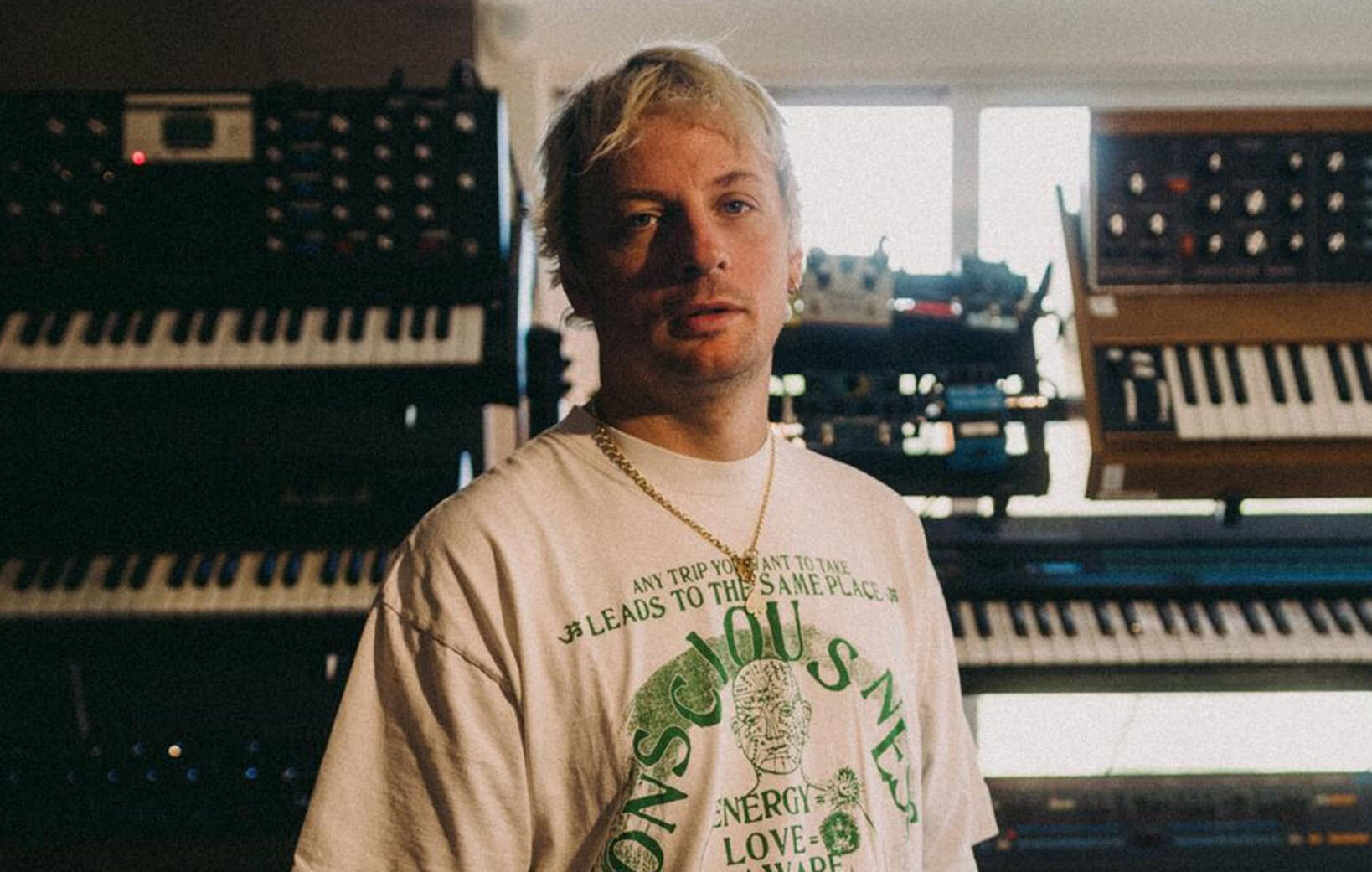
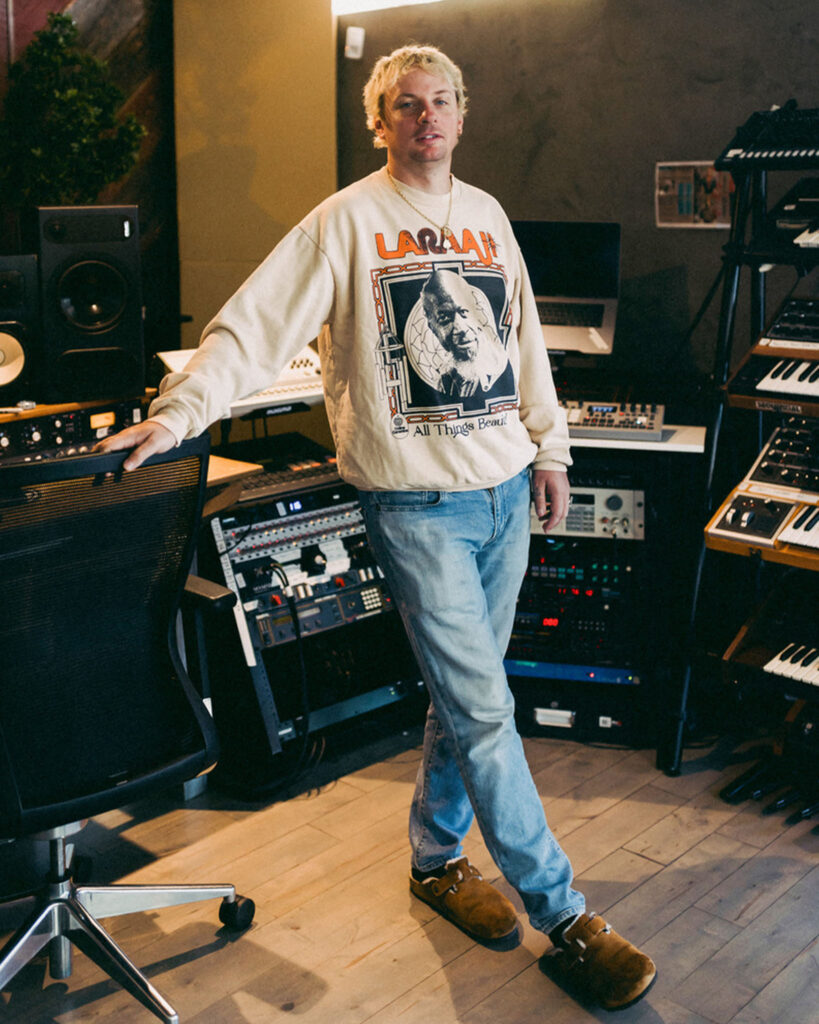
When Kid Harpoon jumps on a mid-morning call for this interview, he’s surrounded by a plethora of instruments and recording gear which he has selectively plucked out while finishing off the build of a new studio in Los Angeles.
“I just have loads of gear, and I’m a bit of a hoarder, so I thought, ‘I’m just gonna keep it in the warehouse and bring it in when I need it.’ It’s quite fun to be honest,” he admits.
Building a new studio is a labour of love, of course, but even more so when you happen to be one of the most in-demand producers and songwriters on the planet. He’s been Harry Styles’ go-to guy for four solo albums now, while also known for his work with Florence + The Machine, Maggie Rogers and Miley Cyrus. Having a lot on his plate barely covers it.
“Everyone’s got stuff going on. I’ve got kids, family and all that, you know what I mean, but all of it, it all gets figured out somehow,” Harpoon, real name Tom Hull, sagely puts it.
It’s a modest way of describing life for the man who, alongside Tyler Johnson, has been the primary contributor to Styles’ albums since 2019’s Fine Line. The pair first worked together on the melodic ‘Sweet Creature’ from Styles’ debut album but had initially met during the singer’s breakout years with One Direction. It was Styles’ musical tastes which had initially piqued Hull’s interest.
“He’d listen to a lot of folk like Joni Mitchell and John Martyn. It was stuff that might feel like it’s been around for ages now, but at the time felt quite leftfield,” he recalls of their early meetings. “There was stuff that felt quite unique to Harry too, like David Gray’s White Ladder, and it was the way he’d love certain lyrics and listen to specific lines. I found that really interesting.”
But what is also interesting is Hull’s journey. He started out as a solo artist in the UK indie scene of the 2000s and even worked on a 2009 debut album with 80s supremo Trevor Horn. It was during these sessions that Hull realised the studio was in fact where he truly belonged.
“I’d do all these shows, and it was fun, but it’s also tough being an artist with the amount of touring. I remember I’d go in the studio to work on music, and I’d always get really jealous of the people in the studio ’cos I’m like, ‘Oh, they get to do that tomorrow. But I’ve got to go and try and sell this or tour or travel up to Newcastle for a show where I’m performing to maybe four people and it’s a grind,’” he reflects. “I was working with Trevor Horn, and it was at that point where I thought, ‘Oh, I get it. This is how records get made.’”
Having ditched the stage for the studio, Hull’s first major hit came when he teamed with Florence Welch, an old friend of his, for the haunting 2012 song ‘Never Let Me Go’. His star-studded body of work since then has notched up tens of billions of streams.
Hull’s list of collaborators, including producing the entirety of David Byrne’s 2025 album Who Is the Sky, is every bit as star-studded as it is endless. But it is his work with Styles that has proved to be the most enduring chapter of his career.
Though the pair had met before, Hull and Styles worked on his first album together because he had made a playlist of songs he was influenced by and a couple of Welch’s tunes written by Hull made the cut.
“I was just kind of around from then on,” says Hull. “I helped out with some live stuff and we just got closer, and it got to the point where I know what he wants intrinsically ’cos we’re spending so much time together and we’re quite similar people.”
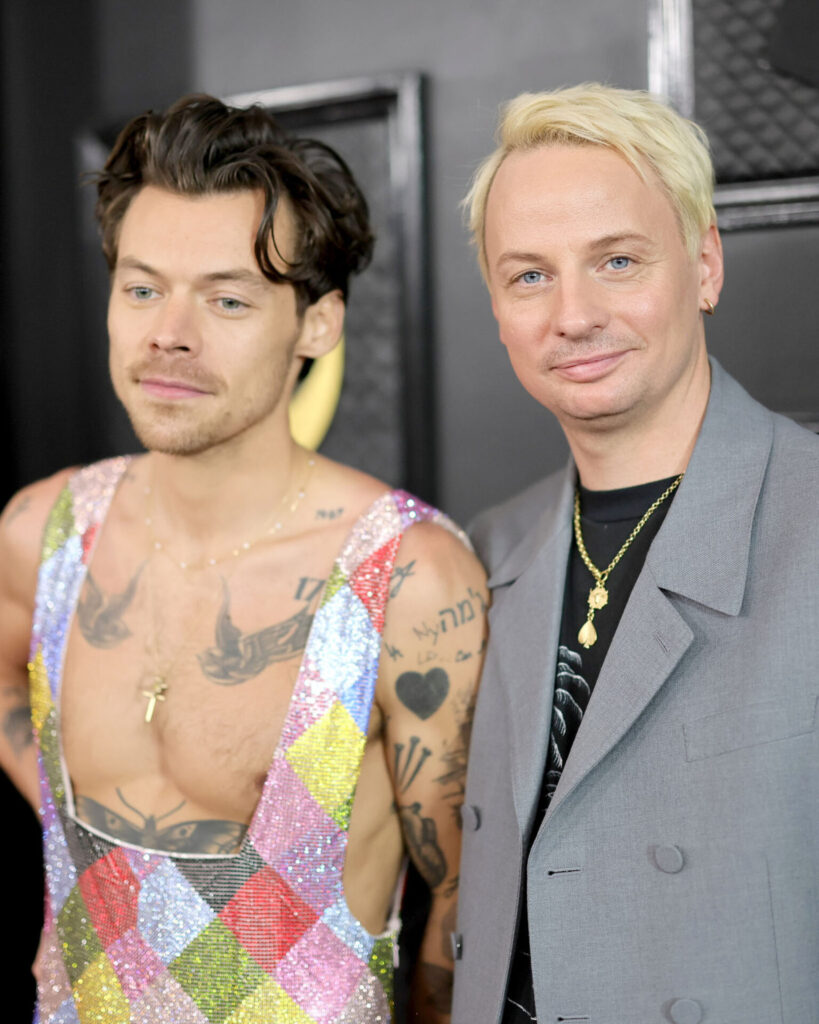
Since fully working on that second album, Hull has been the constant on Styles’ albums, playing a role in an evolution which has included the 1970s introspection of Harry’s House and, most recently, the dance evolution of Kiss All the Time. Disco, Occasionally.
“It’s actually the best thing about having such a close relationship with him,” he says of their partnership. “Because instead of jumping from project to project, I can really be part of figuring out where he’s at and what he wants to go do next and how we get there. There’s songs like ‘Season Two Weight Loss’ on the latest album which is a modular dance song and that means people can see the growth in his sound, which is nice.”
He adds: “This is the most interesting thing about watching an artist develop in public for me. I love all that kind of thing, so being able to grow with him and help be part of that and go, ‘Where do we go next? What would be really fun to do next?’ and be part of that is just such a blessing because, oftentimes, what people do to do that is just jump to a new producer. Or, equally, they can be stuck with the same producer, so it’s also about changing our working and thinking, ‘OK, how do I work with Harry now, ’cos he’s a different person than he was when we met.’”
How has Styles changed in that time?
“He’s grown immensely as a songwriter,” says Hull. “‘Coming Up Roses’ is doing really well, and he just turned up with that song; it was a brilliant song. I mean, he basically wrote ‘Sign of the Times’, so it’s already always been there throughout his career, but he’s just getting more consistent. You’ll be in the studio and he turns up and goes, ‘I’ve got this,’ and then he basically sings a version of ‘Carla’s Song’, and it’s amazing. But he needs support in a different way now to just give him confidence to know that it is an amazing song. That’s not exclusive to him; I think it’s just anyone that’s making music is inherently quite vulnerable when they write songs. There’s a nerviness to it.”
Circling back round to the topic, he adds: “The thing that I find really hard is I actually see a lot of the people I work with as very vulnerable, and it makes me very protective. I get a lot of anxiety, whether it’s Miley or Harry or whoever, and I just see how much they’re having to put in emotionally to make those records, and it’s quite a brave thing in a world where you could write the wrong tweet nowadays and everyone’s on you. They’re doing whole albums with music that people are gonna judge and they’re in a world where it’s meant to be judged and talked about and trying to be part of culture. You feel like as you get bigger in your progression, that would get easier, but it actually gets even harder, you know what I mean? But that’s the gig.”
For Styles, that vulnerability no doubt came further to the fore at a recent Madison Square Garden gig when he played ‘What Is Enough’, which he described as a tribute to his late bandmate Liam Payne.
“I was really proud of him actually for singing it,” says Hull. “What a cool thing that he could do and I know what the whole situation meant to him, so yeah, I was proud of him and really glad that he played that song. It really is a good one.”
Next year, then, will mark a decade since they first worked together, and Styles, with another sold-out tour and his first Glastonbury headline set next summer, is going nowhere soon.
“What I’ve seen is the person grow, and grow musically, which is a little more unique to my experience of him. I guess people have experienced it through the music itself, but I’ve seen him grow as an artist and that’s not changing. He’s just getting stronger and stronger.”
And Hull, now one of pop’s most in-demand producers, is showing little sign of slowing down either.
“I just love being in the studio,” he concurs. “This is the best bit; it’s the most fun bit. The rest of it, like playing onstage, is really fun. But there’s also a lot of stuff around that that has to all line up. There was part of me that always wanted to do that, and when I started looking into producing some stuff and writing with people, it all snowballed.”