
Head through Liz Lawrence’s poignant new album ‘Vespers’, track by track
This powerful album ruminates on the grief of Lawrence losing her sister in strikingly intricate detail
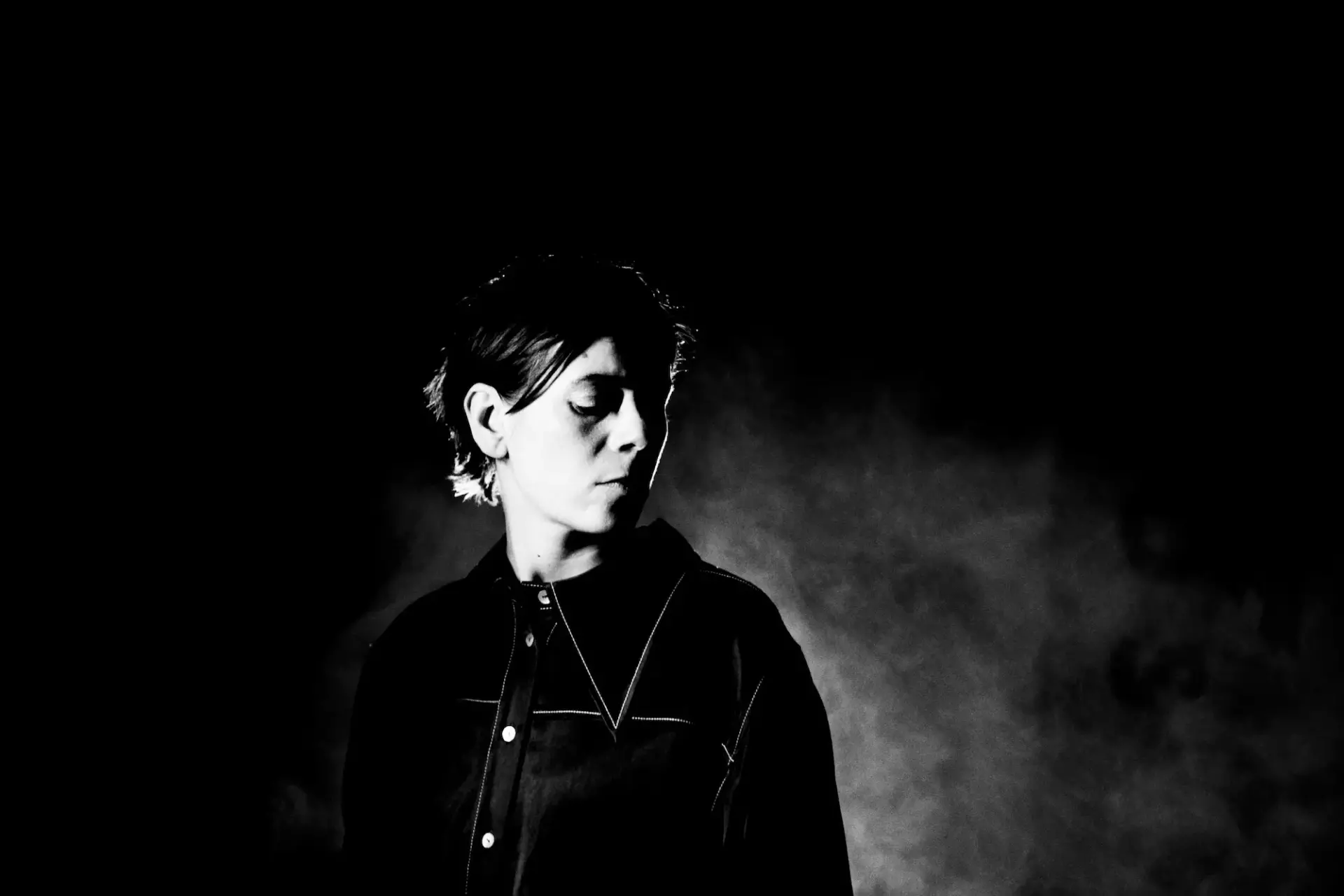
Liz Lawrence‘s powerful new album Vespers centres around the loss of her sister and the maelstrom of emotions that followed.
“What followed was the most profoundly altering period of my life,” Lawrence says of the time following the news, in which her world was permanently altered. “I learned about the beauty of the dying, the resilience of the living and the infinite fountain of love that sustains us.”
These feelings and plenty more flow through Vespers, a record that zooms in on minute details as well as providing big-picture feelings on a life-altering event. “The thing about trauma or tragedy is that it’s such a novelty in the human mind,” she says. “It’s so unusual that your brain is fully on, and you’re really aware that you’re taking in every detail of that moment.”
Listen to Vespers as you read a track-by-track guide to the album from Rebecca Nicholson, with insight from Lawrence, below.
‘Mt. Nephin’
Vespers opens with ‘Mt. Nephin’, named for the mountain in County Mayo which overlooked the house where the family stayed, as they watched over Jessie and her final days in the hospital. “It’s like the prologue of a novel. It’s a panorama of the characters, a play by play,” Lawrence says. It was written for voice, and underlaid with drones in the studio. Liz wanted to create a contemporary version of keening, the Gaelic tradition of laments for the dead.
‘Where Did You Go’
‘Where Did You Go’ zooms in on the minutiae of grief, the sheer disbelief that a person can be here and gone. It pays attention to the mundane rhythms of death, the soft, painful procession of the lives that continue around it. “I really wanted things to be quiet, and I felt that the metronome paints a frame around the quiet.” The metronome on the record belonged to the siblings’ grandmother, its tick-tock keeping time with a gently insistent heartbeat.
‘Black Ulysses’
Late in 2024, after playing a show in Dublin, Liz and her band boarded the Ulysses ferry to travel back to the UK. It was a journey that her sister was supposed to take. “And I couldn’t cope with the fact that my sister never did. She never came home.” ‘Black Ulysses’ is about the chaos, about the crisis of an entire family being tipped into devastation at exactly the same moment. “Everything that was previously solid for you is now not. And I think that you cannot underestimate as a family, the dynamic shift that happens when you lose someone out of order and out of place. We fundamentally lost the boss.”
‘Sister’
‘Sister’ is a direct tribute to the sibling relationship, with its fierce love and protection, which co-exists with the teenage conflicts and bickering of sisters. “People who have sisters will know that you love them like you love nobody else,” says Liz. “If she wanted to tell me I looked a twat in my leather jacket, then she was going to tell me that. Nobody else could. There are so few people in your life who will give you that honesty. It’s irreplaceable, and it’s about honouring that.”
‘Three-Legged Dog’
On ‘Three-Legged Dog’, Liz finds a purity and starkness in the image of an injured dog. She was walking on the country hills near her home, and found a Latin inscription on a monument which, when she looked it up, read, “a simple dog”. “I was really comforted by that,” she recalls. “I kept going back to the idea of a resilient creature, limping along. It’s the idea that in spite of it all, it might be enough that there is a sunny day, and your dog might lay down next to you.”
‘Yves Blue’
‘Yves Blue’ takes some of its inspiration from Maggie Nelson’s Bluets, and the artist Yves Klein, who created the famous shade of blue that would become his signature and his legacy. “This is about the simple fact of tragedy being commonplace,” says Liz, but it is also an expression of the inexpressible, an acknowledgment that no blue will ever be blue enough for the sorrow.
‘A Good One’
On ‘A Good One’, Liz sings of loss on a wider scale, of the shock of a small town in the face of a sudden tragedy. It pauses on a memory of her teenage sister, then builds to a crescendo of drums, in an explosion of noise. “It’ll hit you like a ton of bricks,” she sings, repeatedly, as the cymbals crash. “I said to my drummer that I wanted it to sound like he was throwing the drums out of the window,” she says.
‘Heaven Didn’t Need Another Angel’
‘Heaven Doesn’t Need Another Angel’ is a short howl of pain. “I just wanted to feel sorry for myself for a bit,” Liz explains, simply.
‘May Queen’
‘May Queen’ is a portrait of Jessie as a child. She was chosen to be the May Queen in a procession through the streets. “Our friend’s dad had a camcorder, so we have a video of her doing that. And my sister was an incredible gardener, and I associate her so much with spring, and with birth and life and her children and her garden. It was an image of her with a flower crown, and then an image of her at the other end of her life.”
‘Exploded Into Flowers’
The breathtaking ‘Exploded Into Flowers’ tells the story of Jessie’s funeral. “Because she was so young, her grave was a mound of flowers,” says Liz. “And as she died so suddenly, she went from being alive to those flowers, so quickly.” The haunting image of “strange confetti” was almost the album title; it refers to a sense of ceremony, the notion of a huge occasion, without an adequate ritual to contain it. The song hangs from the framework of a gorgeous, rousing string section. “It’s a song for a beautiful day. And it was a beautiful day.”
‘Birthday Party’
‘Birthday Party’ was written for Jessie’s children, on the occasion of the first birthday they had without her. “I wrote this for my nieces, because I felt I needed to mark that, in some way. So it’s for them, and it’s for Jessie.” It is another deceptively simple song, another act of witnessing. “But this time I’m witnessing it for them. In the beauty and innocence of children, you make this Herculean effort, to make sure they have the room for joy in their lives.”
‘Thank God For You’
Vespers ends in gratitude. “Once I had written ‘Thank God For You’, I knew that the writing was done,” Liz explains. The song came after a session with her counsellor, in which she had talked about feeling overwhelmed by the pain and the chaos of grief. “And he said, you need to make time for your partner, and make time for each other.” On the drive home, she sang the song as it came to her, into her phone, recording it a cappella as a voice note. To finish it, she added lush strings and recruited her friend Rae Morris to play piano. “It is about acknowledging gratitude, because actually, I’m finding it very easy to be grateful,” Liz says. In wrapping up the harsh demands of life in the plain warmth of love, it is a romantic and frank finale, offering some of the comfort and catharsis that she hopes Vespers will offer to others, too.