
Mumford & Sons are on a hot streak: ‘We’re feeling pretty fired up, man’
After an extended break and losing a founding member, the folk revivalists have released two albums within a year. ‘Prizefighter’, the second of these, is an Aaron Dessner-produced ode to collaborative community spirit
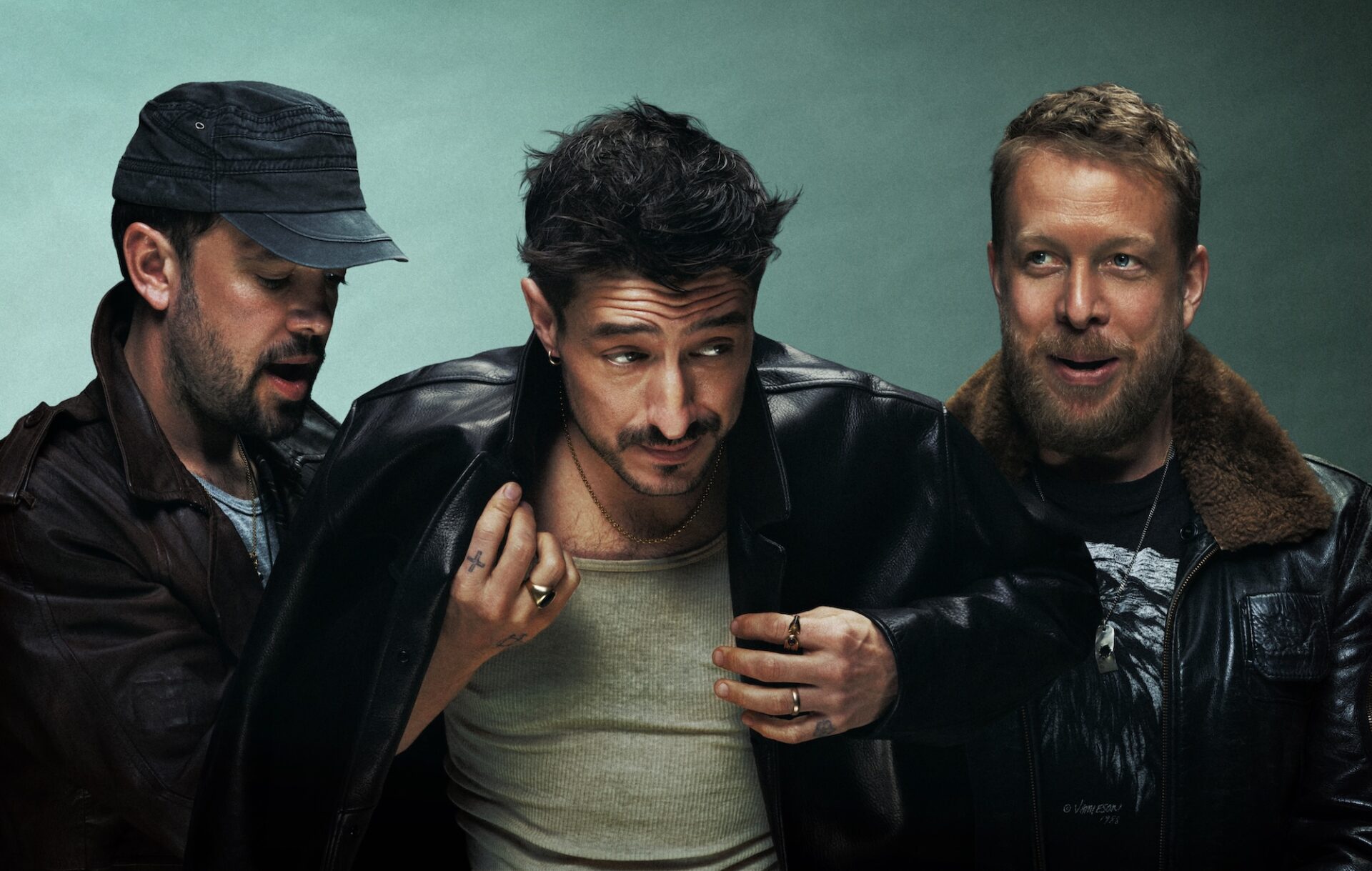
It was October of 2022 when Ted Dwane and Ben Lovett stepped gingerly on stage to join their Mumford & Sons bandmate Marcus Mumford at a show he was playing behind his debut solo album at the Ryman theatre in Nashville. The performance was a last-minute decision from the band, and a complete surprise to everyone in attendance.
It had been four years since their last album, three since they last sung together, and a year since they became a trio following the departure of founding member Winston Marshall, who left the band after sharing support for right-wing agitator Andy Ngo. In the understated but pointed cameo, the trio played five songs from across the career that had made them leaders in the 2010s revival of raucous folk music, and arena stars in their own right.
“It was the three of us getting back together and renewing our vows,” bassist Dwane says today in a dreary January London. “It was saying, ‘We really want to do this.’ It was viscerally amazing.” He adds: “It’s funny. When you step away from something, you can see it so much clearer.”
If that moment in Mumford & Sons’ career felt fragile and like a rebirth, they enter 2026 with their second new album inside 12 months, as a raging force with plenty of points to prove. “We’re proceeding with real clarity and intentionality,” Dwane smiles.
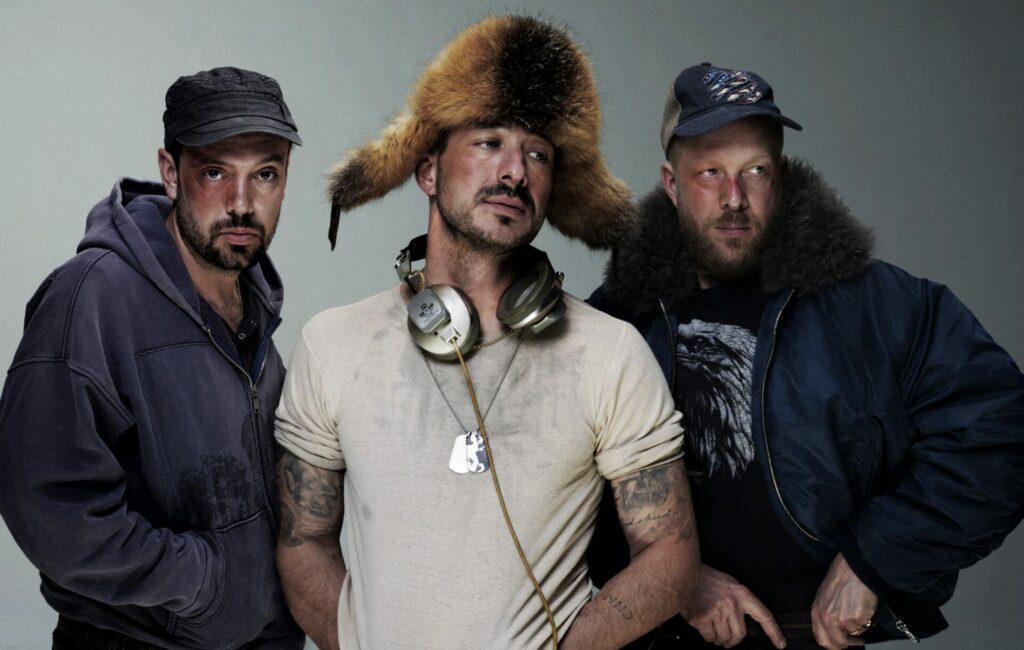
Mumford & Sons’ 2025 comeback album, Rushmere, saw them return to the folksier roots of their earliest work, after detouring into crunchier, leather jacket-clad rock on Delta and previous album Wilder Mind. It also set the wheels in motion for the most creatively productive period of the band’s career, one which continues apace.
While mixing Rushmere, the band found themselves in the same studio as The National’s Aaron Dessner, who they had previously worked with on Wilder Mind. Ideas were exchanged, both Mumford demos and Dessner sketches, and the idea of another album became fixed.
“It felt like being a new band again,” Mumford remembers of the time. “There was no expectation – no-one outside of our world knew what we were doing, and I think that comes through on the writing.” He adds of Prizefighter: “It’s my favourite thing we’ve ever done, and one I feel is most similar to the first record [2009’s Sigh No More].” It’s a common line trotted out by musicians on their sixth album or beyond, but the twinkle in his eye shows that he deeply believes it.
Sessions at Dessner’s Long Pond studio in Hudson, New York, at Mumford’s home in Devon, in Paris and beyond followed, with an infectious energy fuelling it all. So much so that the band, so keen to carry on writing and working, “kidnapped” Dessner while he was in the UK to close Glastonbury’s Other Stage with The National in 2024 for an afternoon’s writing down in Devon at the Mumford family home. “I then drove him back up the M5 to make sure he got back to Glastonbury for his headline slot,” Mumford beams.
Prizefighter sees Mumford leaving the “universal themes” of Rushmere to write far more personally. The album’s standout track, ‘Alleycat’, was written by Mumford as part of one of the poetry workshops he runs in prisons. “This is pretty much who I am,” he says of the album’s lyrical content. “That’s why I think I’m proud of this record, because I feel like it’s the most honest.”
While lyrically the album sees Mumford retreating inwards, it also sees the band return to the collaborative, community-led creative process of their early days. Led by the ringleader Dessner alongside the band’s own plentiful collaborators and peers, it welcomes Chris Stapleton, Gracie Abrams, Hozier and Gigi Perez as guest singers, as well as a host of collaborative musicians including Bon Iver’s Justin Vernon.
“He’s pinging stuff all over the place, and things come straight back,” Dwane smiles. “It’s how we met our drummer who’s touring with us now.” Mumford adds: “This community is what makes it folk music, because it’s about people and stories, and bringing that community in to make the record, including people we hadn’t worked with before.”
It echoes the early days of the band, when the London folk scene was a bubbling cauldron of collaboration. Mumford wistfully recalls Laura Marling singing on their early songs, while he drummed at her gigs. Members of Noah & The Whale were also popping up on every album made within the scene. “With Aaron, we have a lot of shared friendships,” Mumford says, but also the same collaborative spirit. “That’s why it felt quite so comfortable. It’s how these clothes fit, this community making music together and all lending each other their talents.”
Inspired by their return to open and instinctive collaboration, 2025 also saw the band return to their legendary 2011 tour of the US railroad, which saw them tour the States on trains with a rabble of collaborators. Last year saw Noah Kahan and Maggie Rogers hop aboard for a tour that sums up this era of the band.
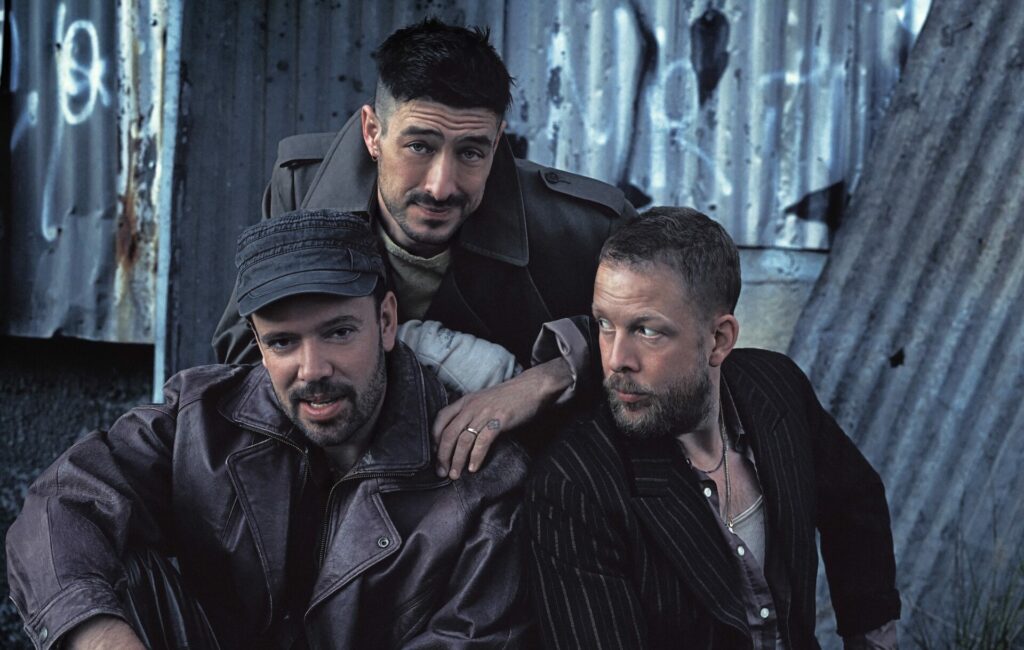
Like Rushmere, Prizefighter sees Mumford & Sons embracing all parts of their musical makeup and identity, including the often-ridiculed parts that they had run from on previous albums. Most obvious is the track ‘The Banjo Song’, with the instrument being a key part of their initial iconography, one that people both worshipped and teased them for.
Its inclusion here shows a band content with their past and present, and eager to explore their future. “Accepting who we are and being comfortable in our own skins, that’s a lot of what makes this record prizefighter-y to us,” Mumford says. “After the second record [2012’s Babel], we got so much bigger, so much faster than we’d expected. We were like, ‘Look, we haven’t yet represented all of our interests. Let’s not just be that band forever’.
“I was listening to so much hip-hop. Ted’s favourite band is Led Zeppelin! Ben and I grew up playing jazz bands together! We didn’t want to just be the band that we were known for for those first two records. Of course, you’re in a rush to present yourself to an audience and show what you can do artistically, but we were nervous of being pigeonholed.”
Wilder Mind and Delta, he says, was an aim to show the band could be “expansive,” before “stripping it all back again” on Rushmere. “With Prizefighter, we wanted to hone it.” Mumford says he has “no idea” what’s next, but is already itching to get back into the studio.
“We’re feeling pretty fired up, man,” he smiles, adding that the band have “unfinished business”. “It’s taken me quite a long time to have the confidence to be that vulnerable,” the singer adds. “There’s a bunch of factors that helped with that, but whatever it is, I just feel free.”
Prizefighter is released on February 20 via Island Records.