
On the Road: breaking sound barriers as a female engineer
Sound engineer Beth Denton discusses weaving behind-the-scenes magic to make live music sound as good as it can, and making it as a female technician in a male-dominated field
By Beth Denton
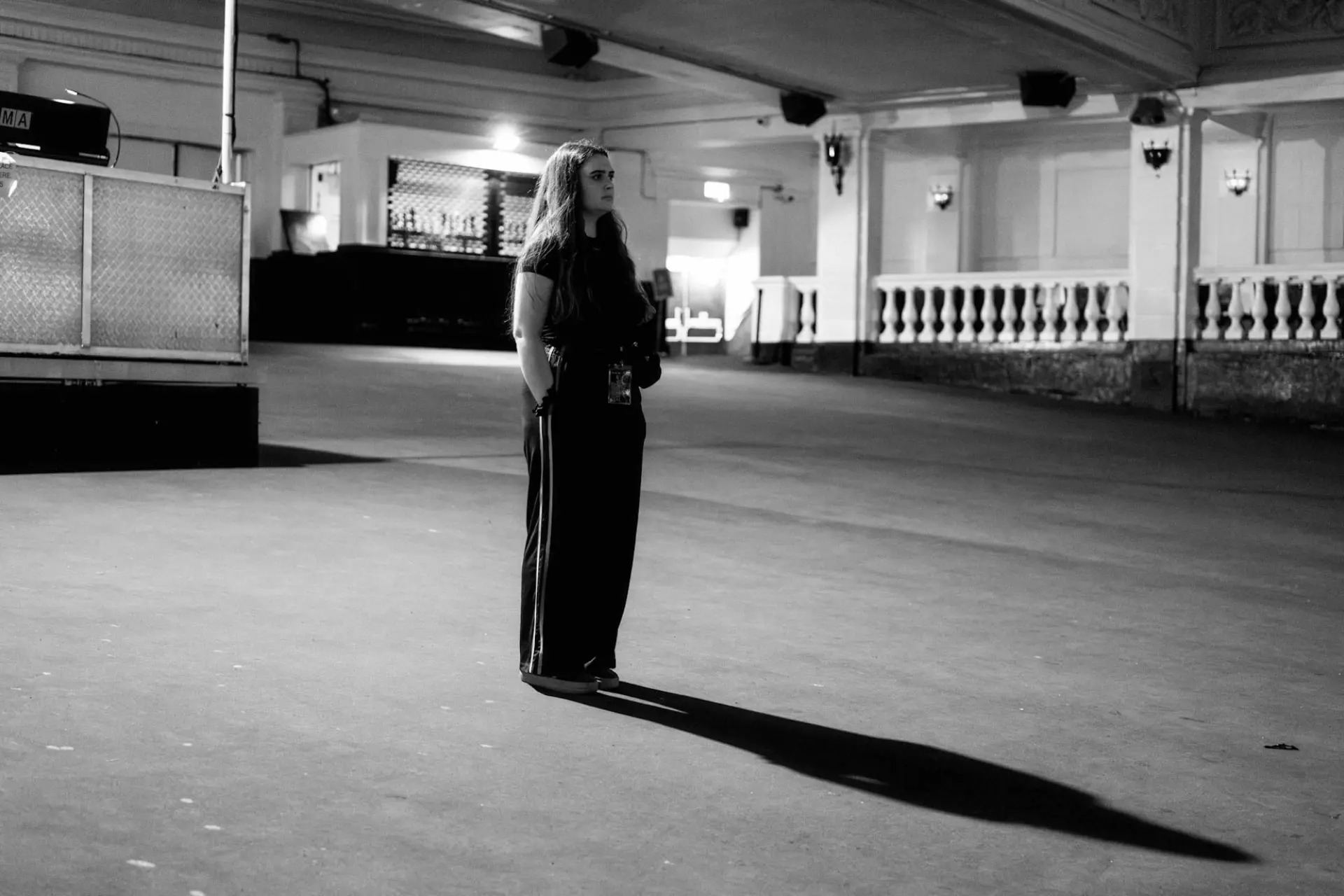
Hello! My name’s Beth. I go by Beth Denton Sound in the music industry, as live, front-of-house sound engineer for the best bands in the world – in my opinion.
I started my journey by studying a Technical Services degree at the Academy of Contemporary Music in Guildford, before shadowing engineers in all the venues I could get into. I shadowed for way too long, and didn’t think I was up to the job until I realised I was questioning what the engineers were doing. “I wouldn’t do it that way; I should probably take over…” I worked freelance at The Boileroom Music venue in Guildford until Covid-19 and then stayed in touch until they could hire me full time once restrictions were lifted. I’ll be forever grateful to them for having full faith in me and giving me the confidence I needed.
I know that people want to hear my perspective on being a woman in this industry, and to be fair that’s what I would’ve wanted to read about when I was starting out, so here’s my take: The Boileroom was entirely female-run, and I assume the fact that I’m a woman played a part in me being offered the head engineer role. They gave me an “in” that I may not have got elsewhere, and a safe environment for me to learn my craft. I am a good engineer, and I care massively about looking after the spaces I’m working in, so I’m certain that I was a good hire anyway. At this stage in my career, I like to think my gender doesn’t have much of an impact, so I generally don’t find myself talking about this much anymore. The irony is that I’ve come across some really blatant sexism since agreeing to write this piece.
The reality of the industry we’re in is that there’s not enough girls. Full stop. But the ideal world is one where gender has no impact, and I can be a live sound engineer, not a female live sound engineer. I’ve had that mindset for a while now, but after recent events (“Are you the girlfriend?” “The band needs you for your mothering instincts”), I realise that we’re still a long way away from ideal. It is a bit of a fantasy right now, and deep down I’m happier to find out there’ll be another woman on tour, or to feel fully respected by a roomful of men.
“The reality of the industry we’re in is that there’s not enough girls. Full stop. But the ideal world is one where gender has no impact, and I can be a live sound engineer, not a female live sound engineer”
The natural response is that in supportive environments the girls are being pushed to the front, and it might seem to be acting like a privilege right now. There will be people who oppose “tokenism” and the “female forward” spaces generally, but we’re not living in an equal world where these spaces aren’t needed – YET! Remember this, there’s a lot of girls who’ve been pushed to the back, turned away, or undermined enough that they back down. I’m taking it back for all the women who have previously been overlooked and have not got the job. I’m doing it for those girls. One day, we’ll have the ideal world where we don’t have to worry about gender – but not yet.
It’s worth mentioning the downside of this. Your gender can be such a factor that it makes you question whether you’d be hired solely for your skill level. Being recognised for being a female FOH Engineer, for example, or being nominated for a Women In Live Music Award is a lovely thing to happen, but it invites impostor syndrome right in. I can have loud thoughts of ‘It’s not that I’m a good FOH engineer; I’m just a girl in a FOH role.’ I’d love to see more women nominated for the TPi Awards to give more women recognition. (TPi magazine’s awards recognise the creative and technical professionals who work behind the scenes in live music.) Judging by the first names of the shortlist for the FOH category, it was only men nominated this year. While we wait for that to be addressed, we have organisations like WILM (Women In Live Music) giving us the recognition that’s needed.
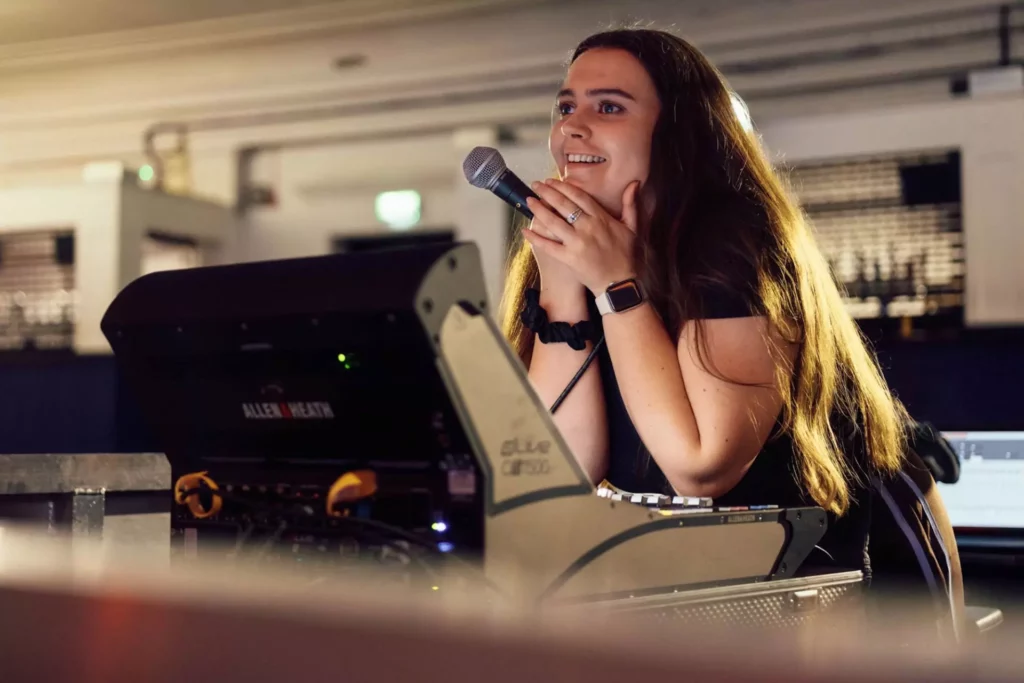
Anyway, back to me. After a few years working full time at the Boileroom, I was confident I could mix gigs well there. I worked on my show file for years there and knew exactly how to get bands sounding good within the noise restrictions – if people trusted me to do my job. I did start to feel suffocated by it. Impostor syndrome, my old friend, meant that I needed to prove to myself that I could mix shows in different rooms on different desks. As soon as those thoughts started, it was time to get out of that job.
I started emailing and messaging people I’d met through the venue. (You meet so many people as a house engineer. I would one thousand per cent recommend it to anyone starting out. There is no better way to get experience and build a network at the same time.) I then started emailing managers of artists that I thought I would suit as a growing FOH professional.
Ellie Dixon’s manager at the time responded, saying it was perfect timing ahead of her headline tour. I was ready to confirm when he told me that the tour was cancelled because they’d booked something else – support for Pentatonix around Europe for a month in venues of up to 13,000 capacity. EMOTIONAL WHIPLASH! It was the most insane thing I had ever heard, but for some reason their team trusted me to help them put on this tour, despite how inexperienced I was at the time and the fact that we’d never even met. I can’t put into words how little hesitation I felt. The stars had truly aligned. I think it was about two weeks between confirmation and the first show. I quit my job, we had two rehearsals, found out I was allowed to use Pentatonix’s FOH desk, and the rest of it we’d work out on the road.
It was the biggest adventure of my life. We were just three girls in our little van driving across Europe (respect always to Evangelista, our tour manager, for doing all the driving in a French van, having never driven in Europe), entering these huge venues and doing our thing. Somehow, we finished the month still giggling. Even in the stressful moments when the drives were long, or we didn’t get a dressing room on the hottest day, or the playback laptop kept crashing mid-song, we all got through it together. I’ll always appreciate Ellie’s calmness and professionalism. After that first tour, I really did feel like I was coming home a hero. That feeling faded after each tour. For better or for worse, this is just my job now.
During the first few tours, I came across a handful of people who seemed to have a personal problem with the fact that I was a Genuine Touring FOH Engineer – people who seemed to make it their mission to say the word “no” to me at every opportunity. I’d get in trouble for standing too close to the stage before our soundcheck, get threatened to be removed from the tour for taking 10 seconds too long on something, and get belittled for fixing something mid-tour. In all seriousness, would I have been treated that way if I wasn’t on tour with a group of girls in their early twenties? What if we were a group of middle-aged bearded men that looked more like “classic roadies”? I’ll admit I had to hold back the angry tears on the job a few times, but I did learn a lot about myself and how to approach those kinds of microagressions.
I’m not the kind of person to speak out against sexism and it’s hopefully something I’ll learn to do. I am good now at brushing it off, usually by venting it in the green room, and using humour to get past it – “Oh, my silly woman brain!” When I feel disrespected in real time, to my face, I usually remove myself from the situation. Honestly, sometimes I only realise it’s happening much later.
In this role as a younger person, I have always felt that I have to prove myself every single day, especially when I was working as a house engineer and with new people every gig. I would make sure I was looped into every email chain and my name was mentioned, so that people weren’t too shocked on arrival to see me.
Now, as a touring engineer with a few years under my belt, I do feel that there’s a level of respect already there when I walk in the door. I still make sure my name is mentioned ahead of time, but there’s definitely a different energy around me now.
That same year, I started working with The Bug Club. We’d met a few times over the years at their Boileroom gigs, and I already knew their manager at the time. Their tour route took us to every part of the UK. I never thought I’d see so many small towns in this country. The venues also varied so much from 100 to 1,500-capacity headline shows, plus main stages and big-venue festival slots. Due to the frequency and variety of shows, I’ve learned how to get a good mix out of almost any digital sound desk that gets put in front of me, and I’m actually more comfortable starting from scratch instead of touring with my own desk.
These days, I tend to get my work through word of mouth or, in rare cases, through Instagram. It still feels like word of mouth because everyone has mutual followers and connections, and you’d be more likely to follow up on a request if you see that you know 100 mutual people. One of the things I have to remind myself when I’m not feeling very confident is the fact that the people that hire me already know me and value my skills. My career has been so organic. I didn’t do apprenticeships; I didn’t work in warehouses; I don’t get gigs through agencies. It’s very much down to my own professional relationships.
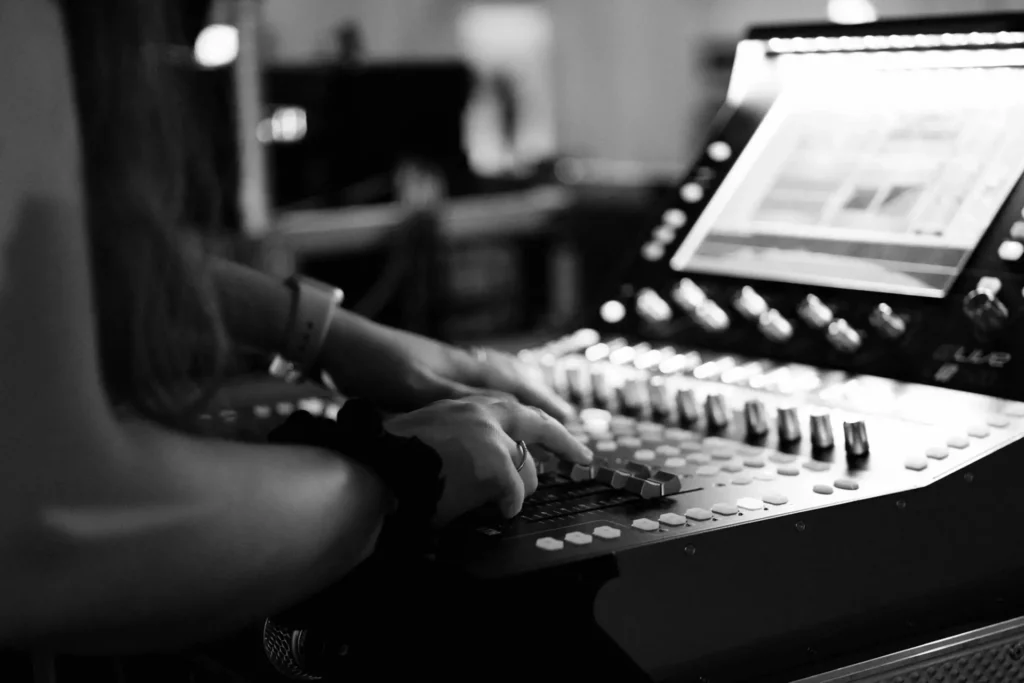
My working style is also best suited to word of mouth mainly because I want to be known by the artists I work for, and for them to understand that I can elevate what they do in a live environment. My drive is to almost be another member of the band, and part of the creative process that means I’m not just someone pushing buttons. I don’t want to be an unknown figure who turns up, puts together the audio puzzle, loads up a completed show file and sits down for the evening. It’s much more valuable for me to be guided by my instincts, reacting to what’s happening at a gig in real time. It sounds pretentious, but when I’m in full flow, it’s like playing the desk like an instrument.
“I’ve learned how to get a good mix out of almost any digital sound desk that gets put in front of me”
I know that there’s a lot to learn on a technical level, and areas of knowledge that I haven’t explored, but I’ve proven again and again that I can mix without fancy gadgets and gizmos. I have full faith in my ear and my understanding of music to be able to produce a decent gig with pretty standard stuff – within reason. I’m not a fan of an analogue desk. (Actually, side note, in my experience using analogue desks I’ve found that I’m just too short. I usually have to stand on a box to see over all the dials and reach everything. Is that the real reason there were so few female engineers? Only joking. But maybe?)
In my touring life now, I have found a balance. I’m not motivated by mixing the biggest bands in the world on the biggest stages. The goal isn’t to make a huge wage. I work with bands that I care about, and I’m a bit more selective about the types of roles I take on.
There’s clearly an issue at the grassroots touring level where money is a limiting factor, and people are asked to do too much. I categorically disagree with the existence of tour manager/front of house/monitors/driver roles. It comes down to ensuring safety for everyone involved. It’s not possible for all of those jobs to be fulfilled to their max by one person. For me, because I’m primarily a FOH engineer, I’d worry about the quality slipping there, but more alarming would be tiredness while driving. There’s a danger to life which isn’t worth it to me for any amount of money. The fact that this is normal in some areas of the music industry is worrying, and if I say no to a mixed-role job, I know someone else will do it instead. Engineers and tour managers undercut each other by working themselves to the bone, because bands can’t pay to have more than one crew member. I’m not saying it’s the band’s fault; it’s the systemic issue of undervaluing creatives.
But honestly, the only solution here is for bands to understand that they’re not in the position to have everything done for them on the road. Shared driving and shared show/hotel/catering information means it no longer sits on one person’s shoulders. In that scenario, I can happily be the FOH/monitors engineer and give all my attention to that while everyone shares the rest of the load. There’s nothing stopping band members from looking at the hotel booking or asking the show rep to get them some water.
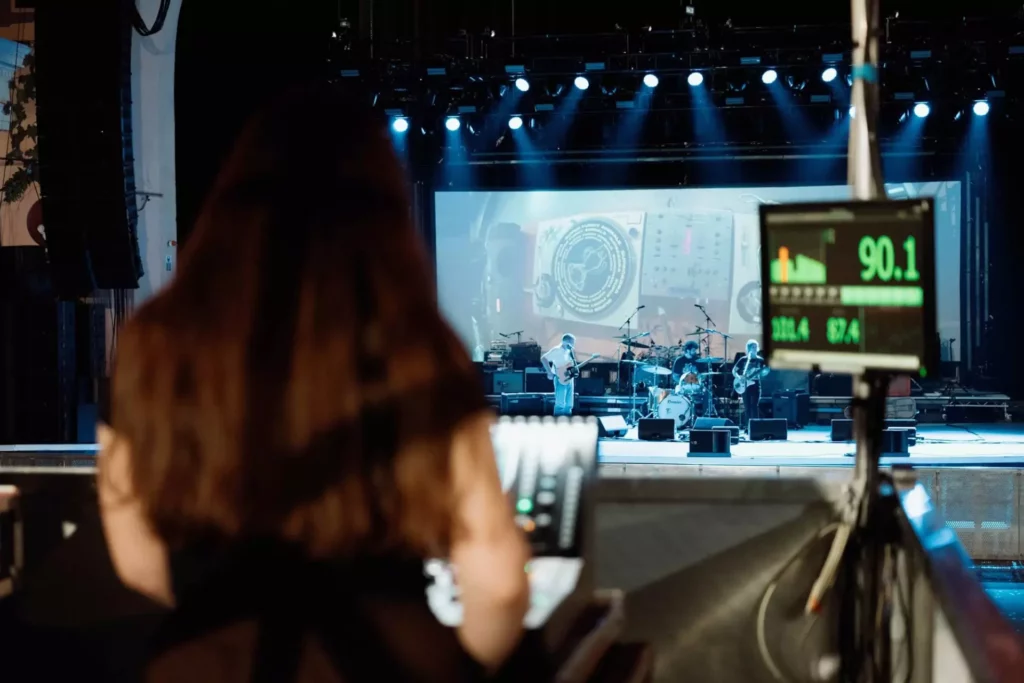
I’ve done and still do the DIY touring thing – seven people sleeping in a static caravan, no rider or buyout, driving four hours home after a show. I think it’s important to still keep grounded by having a passion project. They know who they are. There’s a different energy on a tour like that. That is all about the show, and all about the music. You can’t be there for anything else. If you start thinking about the money, it’ll invite resentment, and I’ve had to work hard to avoid that.
It’s worth saying that the bands that pay well are the ones that keep me afloat but also keep the DIY artists I work with afloat. It’s impossible for me to work with a band for peanuts unless I’m getting paid well elsewhere, and it’s kind of beautiful to think about the flow of investment there. My decent-paying bands inadvertently pay for the production value of my DIY bands by allowing me to be there.
It sounds like I’m so strong in my boundaries and beliefs, but it’s not always the case. Standing up for myself can be the hardest thing in the world to do. After saying no to a tour for the above reasons, and having 20 music industry friends affirm that I did the right thing, I can still find myself awake at night stressing that I’m burning too many bridges and watching my roster of bands shrink. It’s true that a year ago I had more than a handful of bands that would pop up throughout the year with tours and shows for me, but now after putting in some clear boundaries for myself and trying to keep my work in line with my values, I suddenly find myself worrying that I’m not busy enough.
I’ve parted ways with touring acts who don’t resonate with me. I’ve set some boundaries when it comes to mixed roles, and even just boundaries when it comes to “vibes” on tour. I’m usually settled enough into who I am and what I want out of my work to stick with the bands that I value because I love mixing their shows. Also, in between the tours, I can pick up some shifts in the corporate conference world to supplement my income, without it affecting my pride and the fact that I am a FOH engineer in the music industry.
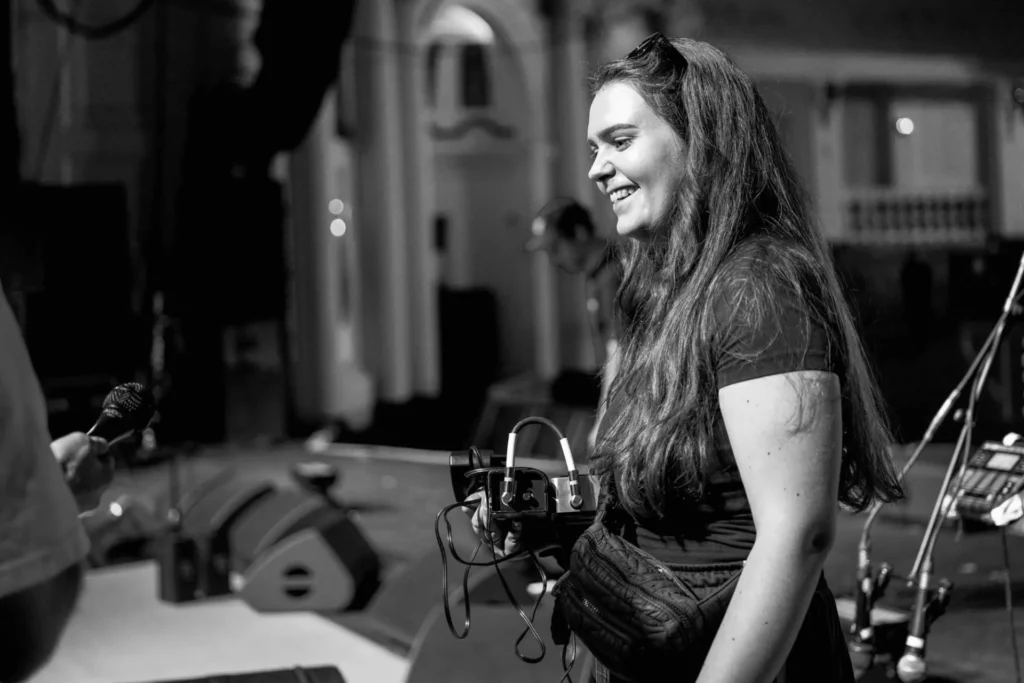
Trying to find a balance in this job is scary. When you have a lot of shows on, it’s easy to wish for time off, and when you have a quiet period, you yearn to get back out there. Sometimes, I’ll finish a tour and not know when the next shows are going to happen, thinking ‘Oh well, it was nice while it lasted!’ It’s also easy to assume that no one else has quiet periods like yours.
Instagram comparison is dangerous. I am guilty of making my feed look like I am constantly on tour or busy with other cool things. Of course, I am less inclined to post when I’m just at home, grocery shopping, going for a run, doing my laundry, but I do sometimes wonder if it’s best to be honest about the fact that I can have really quiet months. There’s got to be a balance of looking busy but still available so people can get in touch with new projects.
For me now, touring is who I am. I actually had enough time off this winter to recover from some pretty awful burnout, during which I was really struggling to get my head around anything. While I was so grateful for the time at home to rest, I feel the most myself behind a FOH desk. After a few weeks or months at home, I’ll always get that itch to go out and be Beth Denton Sound again. A lot of my self-worth comes from my work, which I think is a trait that most freelancers would share. Managing your mental health is obviously a huge challenge. Coping with being away from home, but also coping with being home, the ebbs and flows of your calendar, constantly waiting for invoices to come through, and the impostor syndrome. I know I’m not alone in feeling this all-encompassing doubt from time to time. It can be devastating, almost career-ending, to also be able to brush off every win by searching for a reason that it wasn’t a big deal. I’m lucky that I’ve not often had to really convince people to hire me, in that I mainly get my work through word of mouth, but to set yourself a decent day rate and set boundaries with what you will or won’t do is the hardest thing to do when you don’t fully believe in yourself.
“Standing up for myself can be the hardest thing in the world to do”
For me, there’s a continuing struggle to separate Beth from Beth Denton Sound. I know that Beth Denton Sound is great at what she does, and people want her around because of that. It’s harder to find value in yourself just as a human being though when you’ve only ever worked towards “being good at mixing gigs” for your entire adult life. I don’t have the answer to that one, unfortunately.
I’m not really sure what the parting message is here, to be honest. Writing this has really made me realise how much of an underlying theme being a woman has been in my career, and how much it is still a thing. It’s also proof that you really have to look after yourself out there. This job has the most incredible highs: travelling, meeting people, being part of something positive – but it is not an easy lifestyle to manage. You have to be “all in”. I’m not sure how long I’ll be doing this – we’ll find out, I guess – but I will forever be grateful for the experiences I’ve had so far.
Taken from the August/September issue of Rolling Stone UK, out now. Order your copy here.