
Overmono: ‘We’re absolute animals in the studio’
Recording on 1930s train announcement speakers. Breaking pedals on purpose. Cooking cymbals in the oven. The dance duo’s second album, ‘Pure Devotion’, sees the high-flying Welsh brothers go delightfully analogue
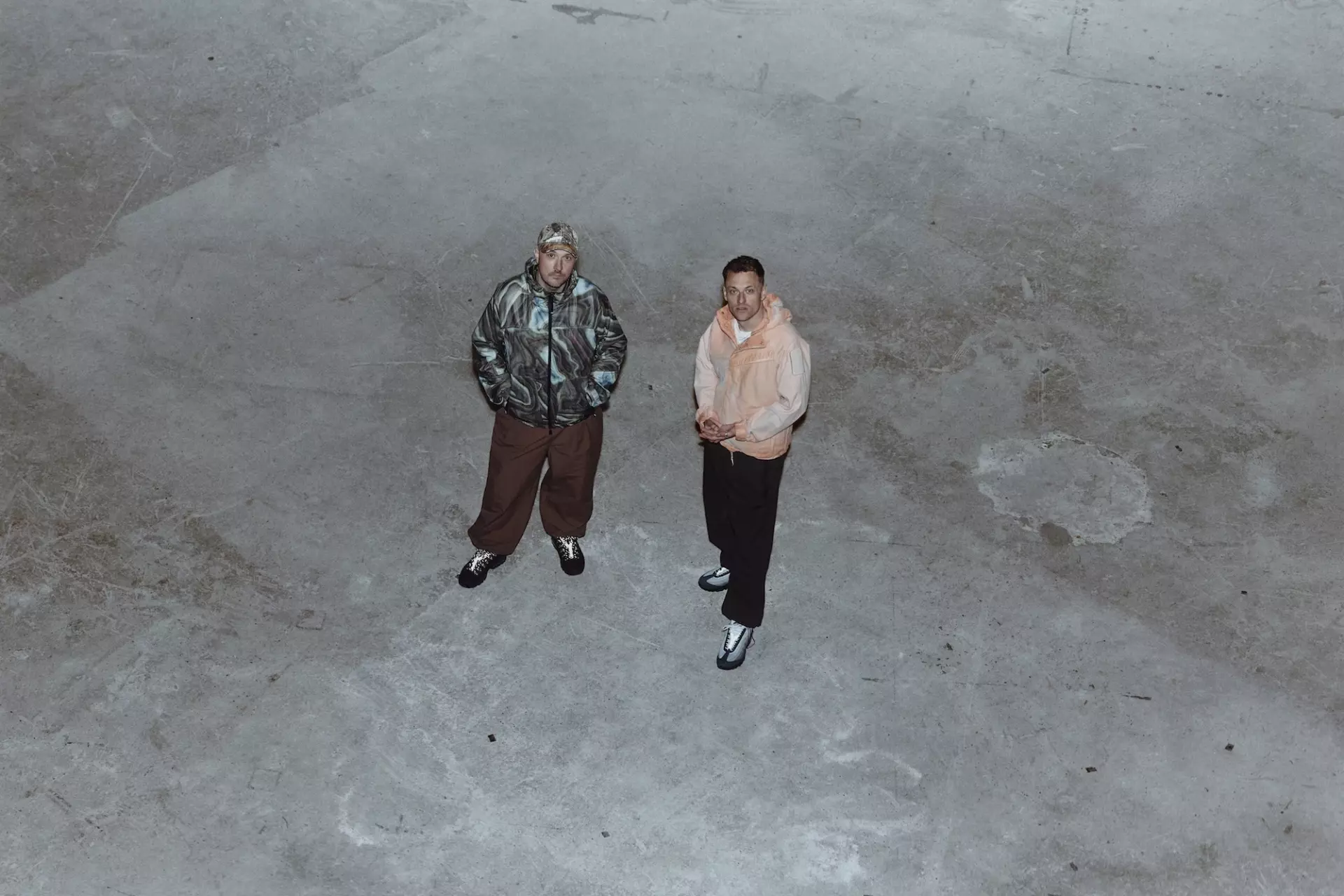
When describing themselves in the studio, Overmono paint a picture of two mad scientists. In the basement room of his Bristol home, Ed Russell and his brother Tom concoct all manner of unusual noises from vintage equipment, stretch their imaginations to the furthest points possible, and (literally) cook up unusual new ways of unlocking creativity.
“We’re absolute animals when we get into the studio,” Ed smiles as the pair meet Rolling Stone UK for coffee around the corner from their studio-cum-laboratory. In the 10 years since they started the project, the brothers have gone from underground electronic darlings to headlining London’s Alexandra Palace and Glastonbury’s West Holts stage. Influenced by techno, drum and bass, UK garage and beyond, their sound – defined by its clattering drums that recall the enigmatic legend Burial, and distinctive vocal sampling – has made them one of the UK’s premier dance acts. A reverence and interest in the past and a sense of wonder and discovery for the future play equal parts in their intoxicating sound.
On new album Pure Devotion, Overmono – named after the suburb Overmonnow in their hometown Monmouth in South Wales – go deeper than ever before into obscure recording techniques, finding obtuse ways to make undeniable dancefloor hits. Inspired by the work of 70s and 80s British post-punk and producers including Dan Carey, Trevor Horn and Sylvia Massy, Ed says he and Tom wanted an approach that could “make everything as real and as physical as possible”.
First stop? Put the oven on. From reading Massy’s book Recording Unhinged, which includes such outlandish techniques as distorting guitars through pickles (the electrolytes give a wonderful signal, apparently), the pair discovered a recipe for “baked cymbal”.
The recipe required all the lacquer to be taken off a crash cymbal, before covering it in a “thick black paste” made up of coffee grounds, ready salted crisps and vinegar. “It stank of fish and chips,” Ed winces, but when its roasting overnight in the oven was done, “it was perfect”. As well as its literal sound, heard across the new album, the brothers saw the process as an end in itself, with Ed adding: “It’s about having a sense of ownership. With anything that we do, I want it to feel like it’s coming straight from us.”
Other experiments on the album included buying an old train station announcement speaker from the 1930s to be recorded through, “overwhelming” an FX pedal to make it sound like “everything’s collapsing”, and countless other micro actions that make tiny differences to the album’s sound but play a huge part in giving it its character and heart.
On the first track and lead single, ‘Lockup’, this physicality knocks you round the chops. Anchored by a mangled vocal sample of late-70s Birmingham post-punks Fast Relief, the track explodes into a bubbling avalanche of rave synths and kick drum not unlike 90s Chemical Brothers – another set of “brothers” called Tom and Ed.
In the track’s second half, a scything noise emerges that sounds like an engine being revved to breaking point. The vicious sound barges in and out of the mix at odd and offbeat moments, delightfully out of kilter with the returning kick drum. “If that’s the way that it was recorded, then that’s the way it’s supposed to be,” Tom says, welcoming the imperfection of the erratic noise and unwilling to clean it up too much in the song’s production. “It’s quite a liberating thing to succumb to that way of working and embrace its chaotic nature.”
Though ‘Lockup’ is destined to be spun at prime time at raves worldwide this year, its biggest impact is the mental image of two brothers in a basement, wringing the most aggressive noise possible out of a poor synth and slowly losing their minds together.

The Russells rose to prominence with their separate solo projects in the early 2010s. Tom made muscular techno as Truss, while Ed recorded and performed as Tessela, a key figure in the breakbeat scene of the decade (his song ‘Hackney Parrot’ holds a rightful place as an enduring anthem of UK dance music).
Finding themselves “pretty fed up” by their respective projects in the middle of the decade, the pair decamped to a cottage in Wales to find out what making music together might be like. The almost immediate response, Ed remembers, went something like, “Why the fuck didn’t we do this 10 years ago?!”
Though admitting that “people were angry” about the sudden disappearance of Tessela and Truss (the UK underground dance scene can be more than a little protective and precious), Overmono became a rich well of ideas that is still flowing freely today. “Both of our fanbases wanted a very specific thing from each of us,” Ed reflects, “but we want to explore loads of different angles and different influences. It wasn’t even like, ‘Let’s bin off our solo careers and we’ll go and start this new project.’ It was more like, ‘This could just be really good for both of us to go and have this creative holiday and see what happens when we’re there.’” Ten years on from that cottage trip, Ed is still yet to write another second of music as Tessela.
Working holidays have since become a vital part of Overmono’s creative process, and the pair headed to Iceland to plant the seeds of Pure Devotion before working in Spain and at home in Bristol. Embracing limitations (the Iceland trip saw them use only the synths they could carry on the plane) and recording “like a band” helped them get the most out of a finite set of ingredients, says Tom. “You’re limited to a certain number of pieces of kit, so you’ve got to really explore these pieces, shut the door, hit record and get to it.”
“It’s no big revelation that having some parameters and restrictions really aids creativity,” Ed adds, but regardless, the initial wave of excitement for laptop-based production and its ability to make almost any sound is wearing off a little for musicians, and can feel paralysing. “Humans don’t like infinite choice,” Ed affirms. “That’s something we think about in our process and creativity.” With a backdrop of the creeping presence of AI in the music industry, “it’s more important than ever to find your own voice in it all,” he says.
Overmono’s voice is unmistakable across Pure Devotion. From the whirlwind of ‘Lockup’ to the insatiably catchy ‘Even Angels Ghost’ and euphoric closer ‘After the Rain’, it stretches their sound and broadens their appeal while leaving ample room for interpretation. Tom shows clear pride when he recalls two recent interviews about the album. One writer told the band that Overmono music makes them feel positive and euphoric. “A couple of days before that, someone else told us they felt so melancholy listening to it!” he smiles. “That’s job done for us.”
Most striking on the new album is the song ‘Knight in Shining Prada’, a collaboration with the poet John Joseph Holt. An ode to brotherly love and a tribute to Holt’s late brother, it’s not too hard to make the narrative connections. On the track, Overmono lift up Holt’s impactful Cockney verses with swirling synth lines that grow ever louder and more aggressive. At the time of recording the collaboration, the band weren’t even aware of the name of Holt’s brother and the song’s subject – Thomas Edward.
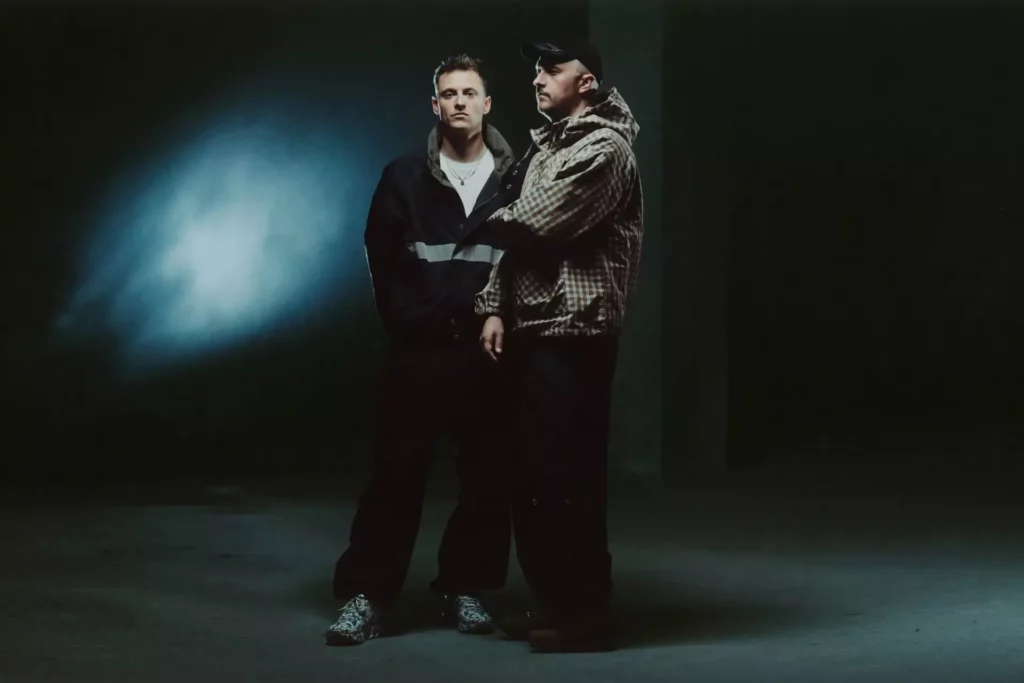
Pure Devotion is the perfect title for an album like this. The phrase initially came to the pair out of thin air, as most of their ideas do, and became the name of their 2024/2025 world tour. As work on the album accelerated though, it began to capture the brothers’ insatiable drive and energy perfectly. “I’m wary of making it sound too grandiose,” Ed laughs. “We’re just so devoted!” If they won’t say it for themselves though, we certainly can – it’s exactly this level of commitment to detail and adventure that makes Pure Devotion such a triumph.
“Neither of us do particularly well when we’re forced into working in normal routines,” Ed says of the band’s process. “The nicest times to be in the studio are when everyone else is out having fun! If it’s Friday night, or it’s a bank holiday, and you’re just like, ‘Oh, everyone’s out drinking in the pub,’ it’s those times when making music is the best.”
Tom adds of their crazed studio routine: “You sleep when you’re tired, eat when you’re hungry, all routine completely goes out the window, and you can be working, working, working. I say working…” he adds. “It’s not really working. It’s just dicking about.”
At one point during the creation of Pure Devotion, Ed went off grid for a couple of weeks. Tom remembers telling his partner that he thought his brother “might be having a breakdown”. It turns out he was squirrelled away in the studio with no outside contact. For days on end, he’d been determined to make the groove-led track ‘Laxbrook’, one that had been swirling around for nearly a decade, finally work. “Holy shit, he’s actually done it!” laughs Tom of his reaction when his brother finally resurfaced and presented the Pure Devotion highlight.
Though Ed says this relentlessness in their work can eventually come crashing down on them – “we’ve worked ourselves to complete failure sometimes” – it’s also the running joke of their family and friends. “What do they do on a day off?” Ed parrots of loved ones’ reactions. “They go to the studio!”
With Pure Devotion in the can and being released to the world soon, the brothers are already deep into the “gathering” phase once again for what comes next. More books will be read, samples discovered, instruments tampered with and deeply human creativity unlocked. It’s this insatiable, childlike appetite for discovery and music-making that sets Overmono apart and gives their sound its soul.
“What’s on these records?” I ask as Ed scans the haul of vinyl he picked up at a shop next door just before our interview. “No idea,” he says with a beaming grin as he and his brother almost jog back to the studio, impatient to get back to their happy place.
Taken from the August/September issue of Rolling Stone UK, out now. Order your copy here.