
Bash Croft discusses his debut music and ‘Celebrity Traitors’: ‘I don’t want to make queer music; I want to make pop music through a queer lens’
The ‘Heartstopper’ and ‘Game of Thrones’ star is stepping out as a pop star at the same moment he enters Claudia’s castle in front of millions. He discusses his queer pop heroes and taking his musical dreams off the backburner
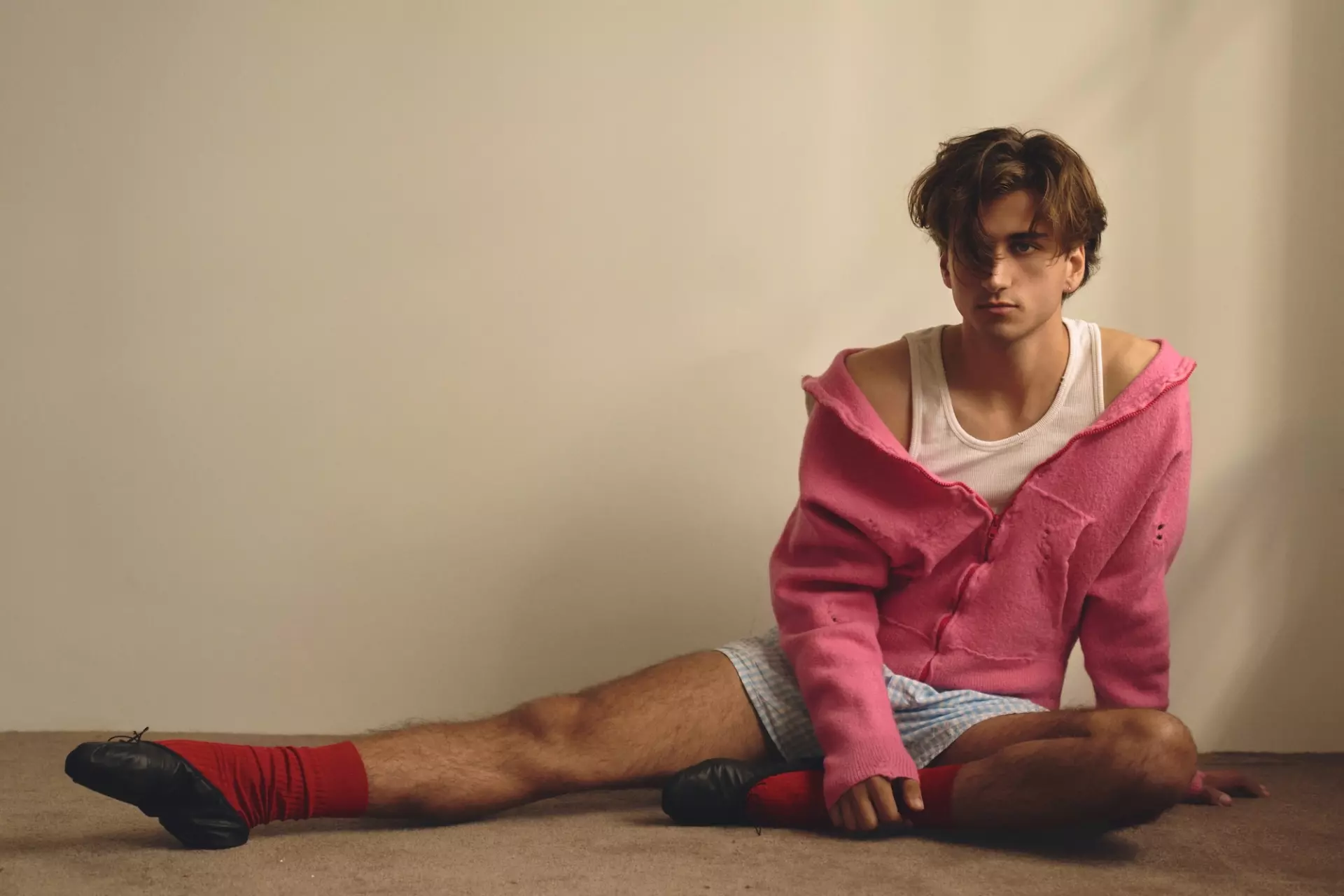
For most entertainment fans, seeing behind the scenes on an era-defining show like Game of Thrones would be the pinnacle of excitement. For Sebastian Croft (known as Bash both to his friends and now as a recording artist) though, it was nothing compared to being backstage at London’s BST Hyde Park, where he supported Lewis Capaldi last summer. “I feel quite accustomed to what that entails,” he says of blockbuster TV sets. “But music… even doing this is mindblowing. What do you mean people want to talk to me about my music?!”
It feels so strange, he thinks, because in the years when Croft became a star through his roles in Game of Thrones and Heartstopper, he was always making music at home in secret. “There was something very intimate and private about it,” he reflects. “I think music took on a different life form around the time that I was starting to figure out my sexuality.” Through the harrowing process of being outed at school and subsequently dropping out, music became a refuge for Croft. It was only through a world-shaking breakup that came later that the idea of releasing any of it came to him.
The songs are now beginning to be released under the name Bash Croft, and they swerve from soft and acoustic towards something more bombastic and in tribute of his queer pop heroes. With new single ‘Pretty People’ arriving on the same week he enters the legendary castle as a contestant on the new series of The Celebrity Traitors, Croft tells Rolling Stone UK about his determination to break out of the box and take his dreams off the backburner.
What did music do for you as a secret hobby, one that you didn’t have to share with anyone?
I was outed at school at quite a young age, and it was so horrible. I felt like I lost lots of friends, and like I was trying to pretend. I was trying to figure out navigating my sexuality and other people’s perceptions of it. Music was this space where I could go and write a song, and no one had to know about it. There was something so cathartic [about it]. I’d write a song about something, and then every time I felt that feeling, I could play it. It was like this personal song that was written just for me.
I had this weird experience just before I dropped out of school, where I did a concert in front of a lot of the school. I wrote this song called ‘Orange Dinosaur’, which is about this boy that I was in this secret relationship with, and he was in the audience. It sounds very coming of age movie, but it was like, ‘I can write it in a song, and I can get up on stage and I can perform the song, and I’m actually standing in front of the whole school and telling them about this secret relationship, and no one knows’.
What made you want to take the music public after keeping it to yourself for so long while becoming a successful actor?
I would hear songs on the radio, and the idea of one of [my] songs being that out there and accessible felt scary. The songs I was writing also didn’t feel like songs that I heard out in the world. I don’t know if it was embarrassment, but I just never thought about bridging the gap. There was maybe also a desire to be taken seriously as an actor, because I could see serious actors, and I could see that people put respect on that, and so I was very focused on just acting. Music and singing felt like it got left behind until I had this first breakup.
Can you explain what happened and why it triggered this desire to share your songs?
I was doing a play in Chichester, and I got broken up with over the phone. This two-and-a-half-year relationship ended that I thought was gonna last forever, as lots of people’s first love did. I was so devastated by it, and immediately the first thing I clung to was, ‘I need to buy a guitar. I need to write’. So I bought a guitar, and I wasn’t thinking about anything; that’s just how I’ve learned to process what I’m feeling. Then this burning, white-hot desire came, where it was suddenly like everything I actually care about – from being in Heartstopper and feeling like I can represent my sexuality in my younger self and from all these years of writing – exists in being a pop star.
How did the music sound at the start, and how has it evolved since?
It took me a while to get to pop. I started with an indie, acoustic, singer-songwriter vibe. It was this awakening, like it was the most obvious thing in the world. Looking back, my heroes were always musicians, but it wasn’t at all on my radar. Then it arrived all at once, like I’d just woken up from a coma. I was like, ‘What am I doing?’
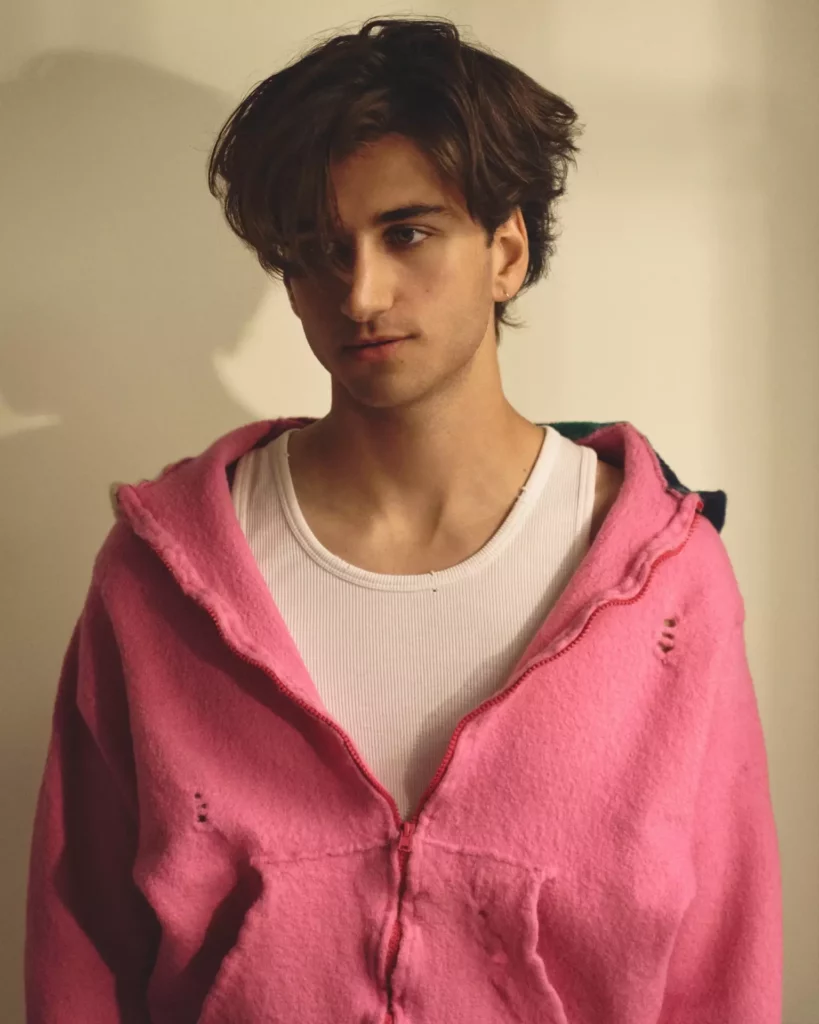
There’s a really lovely throughline with the queer pop songs you’re now releasing, whose audience is larger because of the representation given by a show like Heartstopper…
I feel very connected to something that’s a lot bigger than me. Maybe this is just like anyone who feels like they’re part of a somewhat marginalised community, but when I was in school and feeling really alone, probably because of overhangs of Section 28 and stuff like that, the education system feels like there’s no other queer people really visible. One of the biggest shining lights and connectors to all that stuff is pop music and pop culture. Elton John and Freddie Mercury and David Bowie and George Michael, who were people that my parents loved and I knew were queer, were these big floating characters where I was like, ‘Well I’m here, and I feel so ostracised and alone, but I can also see these big figures’.
Then to be a part of a show like Heartstopper, at a point where I was still, as an actor, [feeling like] I can’t be open about my sexuality because that will affect the parts I can get, Heartstopper just broke that open and was like, ‘Absolutely not’. By leaning into that, it felt suddenly like a superpower rather than this thing that was going to hold me back.
You’ve self-described as a ‘queer pop star’, but a pop star first and foremost – the ‘queer’ part is almost incidental…
The thing I was afraid of, which is being more vulnerable and pushing the boundaries of what I felt comfortable with, is actually the bit I’m most interested in. Writing songs and talking about the queer experience, I’m feeling like, on the one hand, I’m trying to connect to this incredible queer lineage and history that has existed, and the other queer artists that exist today. But also I want to make a world in pop music and pop culture that’s so big that kids and younger people, wherever they are, can feel connected to that and then pass the baton on to more people.
First of all, there wasn’t allowed to be queer music, and then there was like, ‘This is queer music’. It’s a small distinction, but it feels important to me. I don’t want to make queer music; I want to make pop music through a queer lens. To me, the queer experience isn’t this ostracised, different one. Queer people have heartbreaks. Queer people feel lonely. They feel jealous. They are all universal feelings. I don’t want to be told [that] because it’s queer, it will only ever be a subculture or a sub-genre. I want to make big pop songs, and for them to have come from a queer experience.
How are you expecting to balance your musical and acting endeavours moving forwards? Do you want to, and are you able to, do both?
I don’t see either as flash in the pan things. This is the thing that I’m dedicating my life to, and in many ways I have no interest in anything else – I will do both until the day I die. I’m sure there will be periods of my life where I do more acting, and there’ll be periods where I do more music, but music is something that I want to take really seriously, and I am really ambitious with it. Right now, music feels really urgent, and in some ways, I feel like I have some catching up to do! I’ve been acting for 17 years, and I’m about to put out my first EP music-wise, so they’re at quite different stages. There’s a lot of time and energy that I have for music, and it feels really fresh and exciting. My hope is to be able to do both, but I think this next little chapter definitely will be a lot of music. That’s the thing I’m really focused on and interested in.
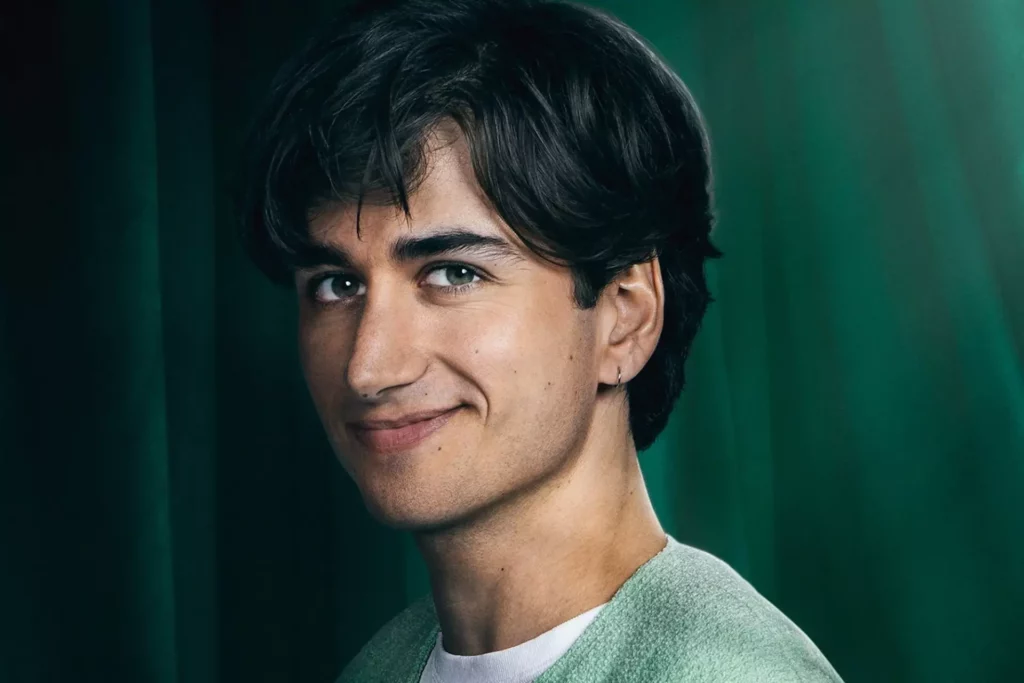
You also managed to find time to play the best TV game show around though! Tell us about your time on The Celebrity Traitors…
Honestly, when people ask me, I’m like, ‘It’s so weird. It’s like I’ve I hit my head. I can’t remember anything!’ No, I’m just very excited. I feel the same about music as I do about Traitors. It’s been this thing on the horizon for so long, and it’s so weird that both are starting to be put out into the world [at the same time].
Are you finding it hard to keep the secrets the nation are desperate to know?
I remember going to school when I found out I’d been cast in Game of Thrones, and there was probably a six-month period where I not only couldn’t tell anyone, but there was a really big character and people weren’t sure if he was alive or dead. I knew [the answer] because I’d been in a trailer next to that person! I had to keep that a secret, and I would have taken that to the grave. So no, it’s not difficult!
As a fan of the show from the beginning, did you imagine yourself as a traitor or faithful?
I just love playing games, honestly. I grew up playing versions of the game, like Mafia and stuff like that. I couldn’t believe I was even asked, because obviously I love the show, and it’s such a crazy lineup. I’m just very excited and happy to be there.