
Sienna Spiro: ‘I’m the most unclassy person ever’
The jazz, soul and pop starlet on a complicated relationship with food, her "validating" ADHD diagnosis, and how RAYE inspired a generation of artists like her
By Hannah Ewens
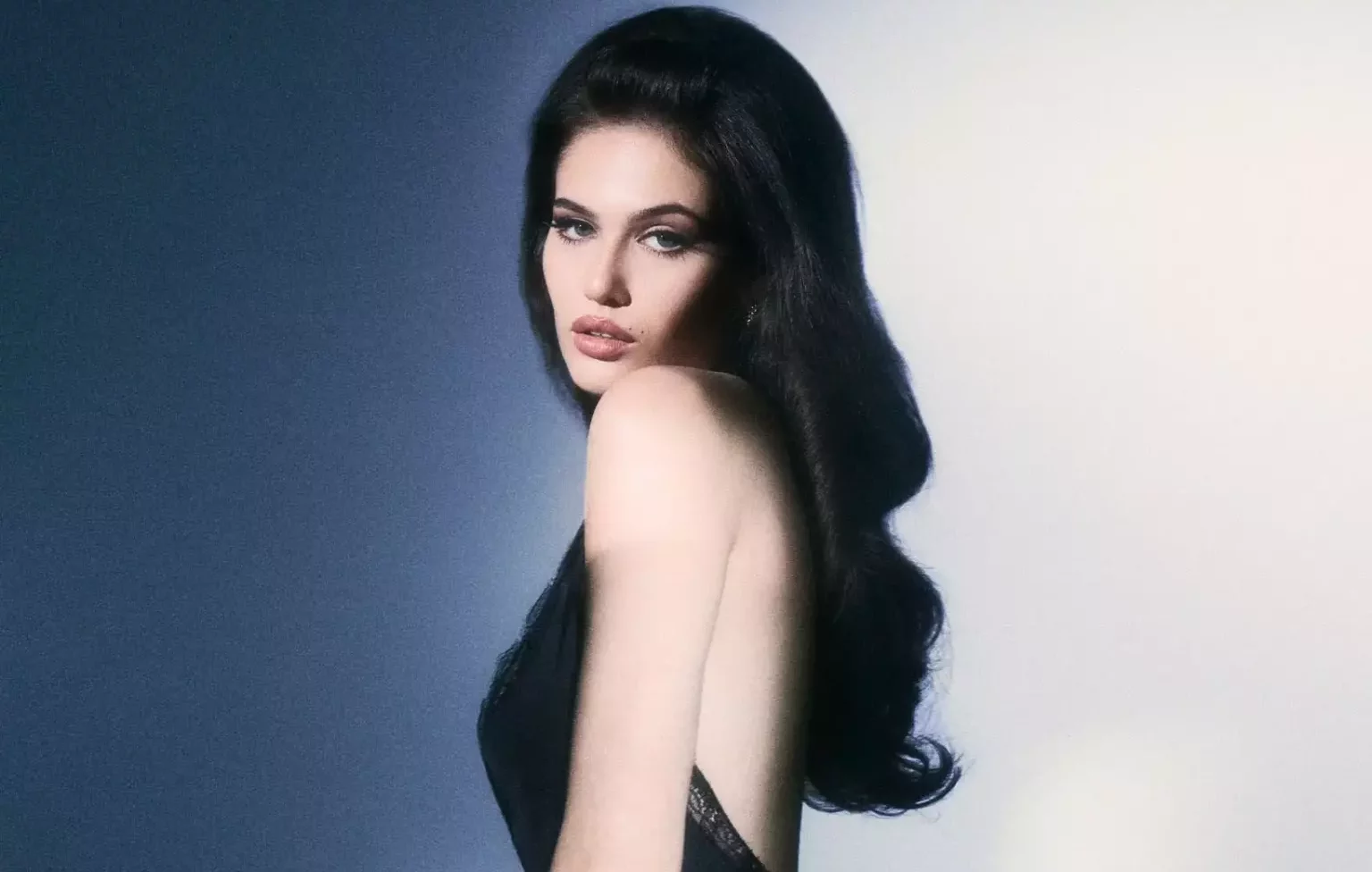
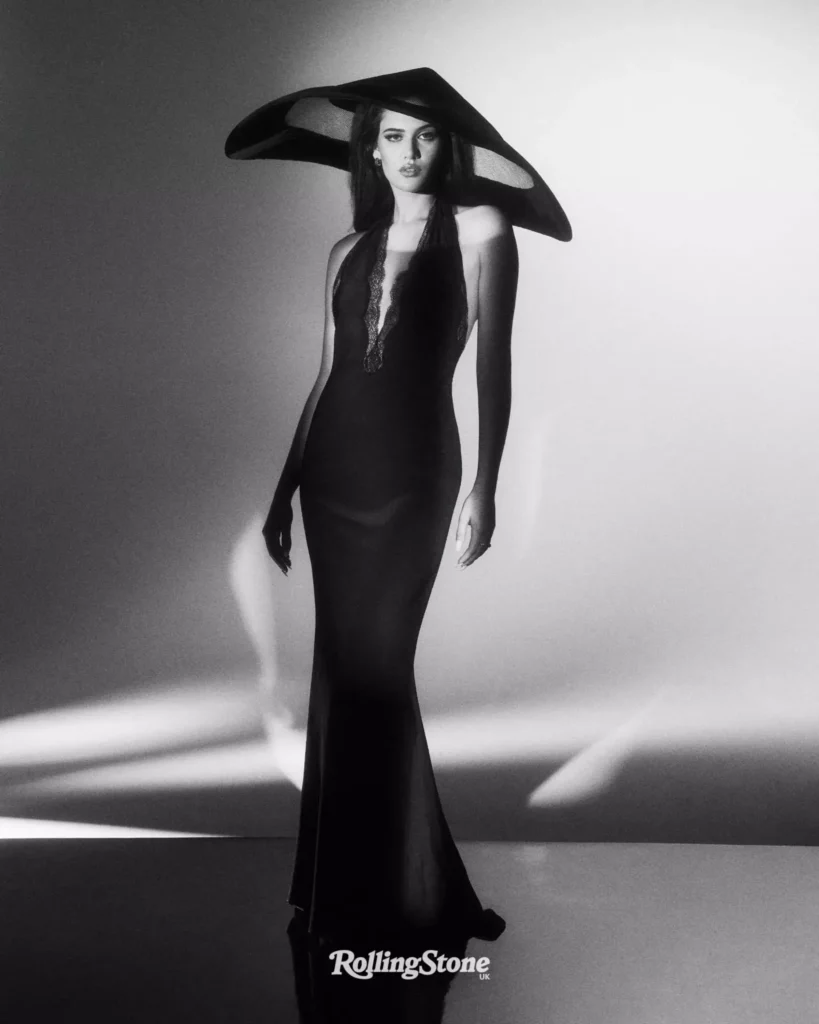
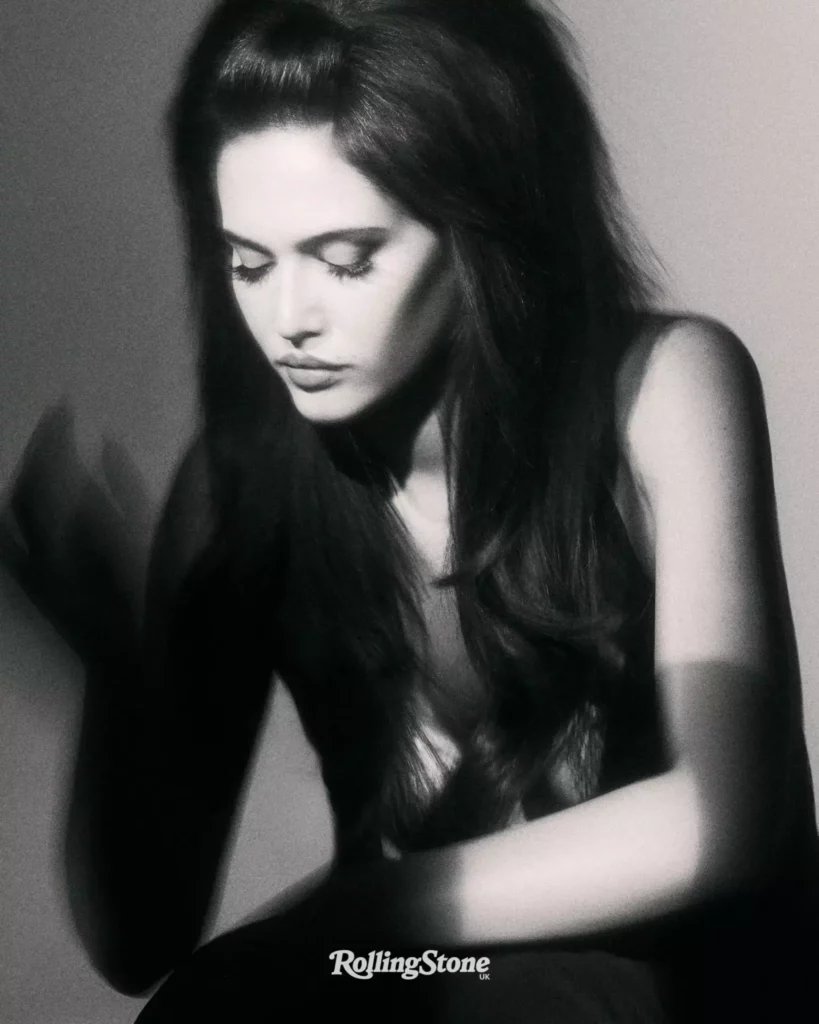
‘I’m the most unclassy person ever,” says Sienna Spiro, teetering on her heels before falling gently backwards onto the floor, folding her legs elegantly on the way down. The irony lands with her, perfectly. Her 60s-indebted Rolling Stone UK cover shoot feels quick and effortless, in the way it only can when a pop star is this stunningly photogenic. With a voluminous beehive, the 20-year-old is Twiggy meets Lana Del Rey. When she opens her mouth – both in conversation and in the huge, belting romanticism of her UK Top 10 single ‘Die on This Hill’ – she’s Adele, but lifted from Sloane Square, rather than Tottenham. A few shots of the same pose, give or take an arched eyebrow, and everyone gathers around to admire the results. She might be called back behind the lens, shifted a fraction, so her chiselled cheekbones can catch the light the way God intended.
But every day for this future classic artist is part of her frictionless ascent. Like her contemporaries Olivia Dean and RAYE, Spiro is operating in the space of soulful, classic pop, deeply traditional in its bones, but with a touch of the self-awareness of Lola Young and PinkPantheress, who in turn follow in the caustic, witty British lineage of Lily Allen and Kate Nash. These artists are the latest “British invasion”, female edition, and Spiro is the newest addition to the group.
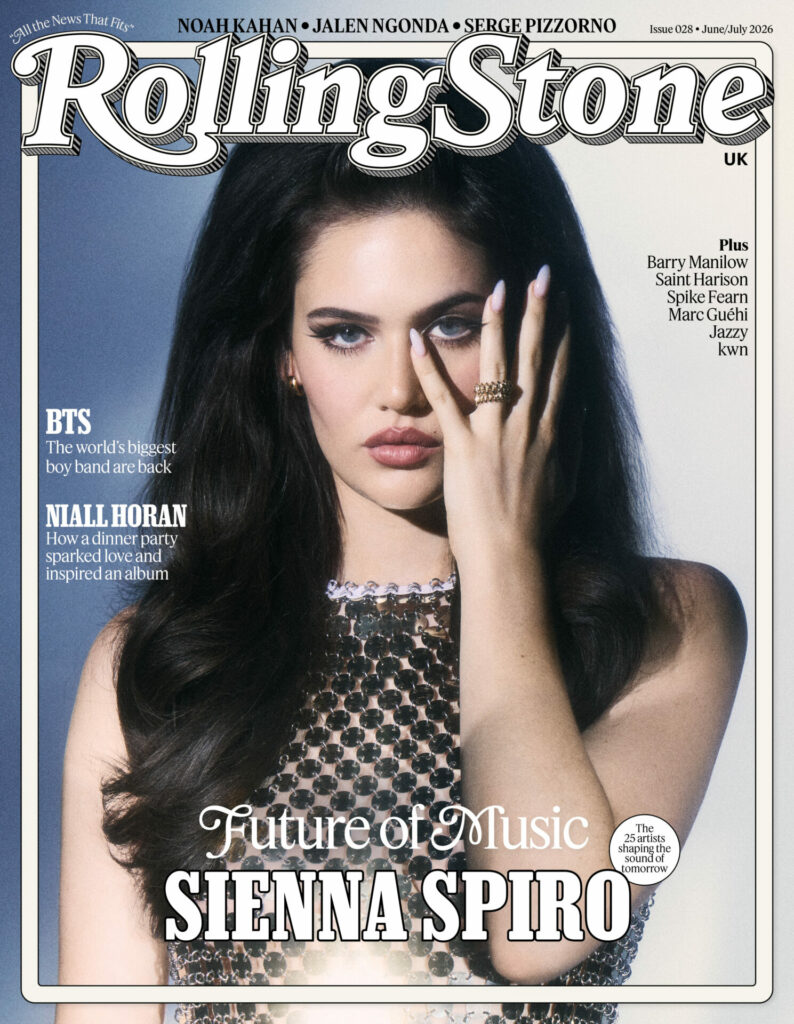
Critics and fans are being as gauche as to call Spiro the next Amy Winehouse, the next Adele. “I feel lucky to have just been alive in the same timeline as them,” she says carefully from her hotel room a few days later, dark brunette hair falling around her face, blue doe eyes bright against her velvety soft complexion. “I’m honoured for the comparison. I really hope I can do even half of what those women have done in my life.” She’s in Stockholm for work but prior to the shoot in London, she was in the US to hit all the big milestones, having already captured the hearts of Americans: a streak of premium press, a performance on Jimmy Fallon, a first North American headline tour with sold-out shows in LA and New York.
To Spiro, the overseas popularity of this current crop of female artists is down to the strange singularity of Brits. “The UK has always bred very individual people – everyone’s honest and a bit miserable in an amazing way. With our insane honesty, there’s this innate kind of roughness…” she trails off, sighs and smiles. “Our collective attitude is one of heads down in the rain, expecting the worst, denying better for ourselves.” In that vein, her recent songs could all be filed under “melancholic yearning”: they’re sparing but cinematic, using only piano and simple strings to memorialise unavailable relationships. On the ballad ‘The Visitor’, she paints a vivid portrait of feeling replaceable in a lover’s life. Her smoky voice captures the unease of being treated like something temporary: “I want to be remembered, so I get hysterical.” On ‘You Stole the Show’, she asks a romantic interest if they love her, and they simply shrug – a painfully British response somehow.
These songs come from instinct and feeling, she says wistfully. “Any love song I write, I’ve got to flip it – it’s always got to have some sadness to it.” All her songs are recorded in one take – including the breaks in her voice, the rustling of her dress – to recreate the humanness of music from the past. “I’m 20 and I’m scrolling every day, seeing different pop stars that I don’t see myself in. It’s refreshing to see people where you’re like, ‘Oh, you’re a human and you have feelings.’”
Spiro grew up in the heart of London with three siblings. Her father is Glenn Spiro, a celebrated jeweller to the stars. Profiles of his work note his old-school sense of privacy, his considered artistry and the tastefulness of his work, all of which must have been passed on by osmosis to his daughter. To her mind, she inherited his love of jazz and his generation’s music from the 60s; he turned her on to Frank Sinatra and Nina Simone when she was young. “Even now I’m older and can listen to all the music I want, it’s still my favourite,” she remarks.
At school, Spiro would have always been regarded as popular, but says she slipped between friend groups, unable to settle. When she was given her ADHD diagnosis, that made sense: executive dysfunction, masking to fit in and people being “out of sight, out of mind” are common experiences for neurodivergent people, all of which make keeping friends difficult. “That’s what a lot of the music is about, like ‘The Visitor’ – struggling to keep up with people and being [too] aware of everything, you end up losing people – and you’re temporary.” The way her brain works has been “honestly quite validating and interesting to learn about”.
She set her sights on going to ELAM, a high-level performing arts and tech school similar to the BRIT School – so only applied there, banking on them accepting her. “I was so sure I was going to get in, I told everyone I did, and then I remember being at Reading Festival and got an email from the school saying I was on the waiting list,” she says, laughing deeply and leaning back in her chair. “It was only a month before school started and I was like, ‘Oh my God, I’ve dropped out of school – I’ve told my parents I’ve gotten in.’ She started a frenzied petition to ELAM to let her in. “I was sending them videos every day. ‘Here’s another original song I wrote, I hope you guys like it!!’” Eventually they let her in, possibly to stop the emails.
The pandemic caused difficulties for her, as it did for many teenagers at home during that isolated period. In particular, a lifelong issue with food and eating got “really bad”, which she says was amplified by not being able to be outside and be a young person with other people. At 16, she met her manager, Miriam Maslin, of Method Music, who took the time to get to know her, develop her as an artist, and to whom she credits much of her success (“It’s so sad that people behind the scenes don’t get the credit and flowers they deserve, because artists are nothing without their teams,” she says). Initially in her solo career, Spiro dressed in baggy, street-style clothes: big boiler suits, medallions and thick-rimmed glasses, not unlike Lola Young. Her clothing style then, and now, has been dictated by her body issues.
“I’ll be transparent: I really struggled with food and the way I saw myself,” she explains. “I’ve never felt connected to my body. When I started doing more performances or doing pictures, I couldn’t figure out how I wanted to dress and how I wanted to look. I hated the idea of people being able to see me and perceive me. So I used to wear bigger clothing and I didn’t really do anything with myself because I was figuring myself out.” Now it’s another approach: minimalist, conservative fashion and well-presented cat-eye flicks. All Barbra Streisand, Nancy Sinatra; mod silhouettes, big bouffant hair, box dresses. It’s not messy or baggy at all but careful and covered up – a considered evolution.
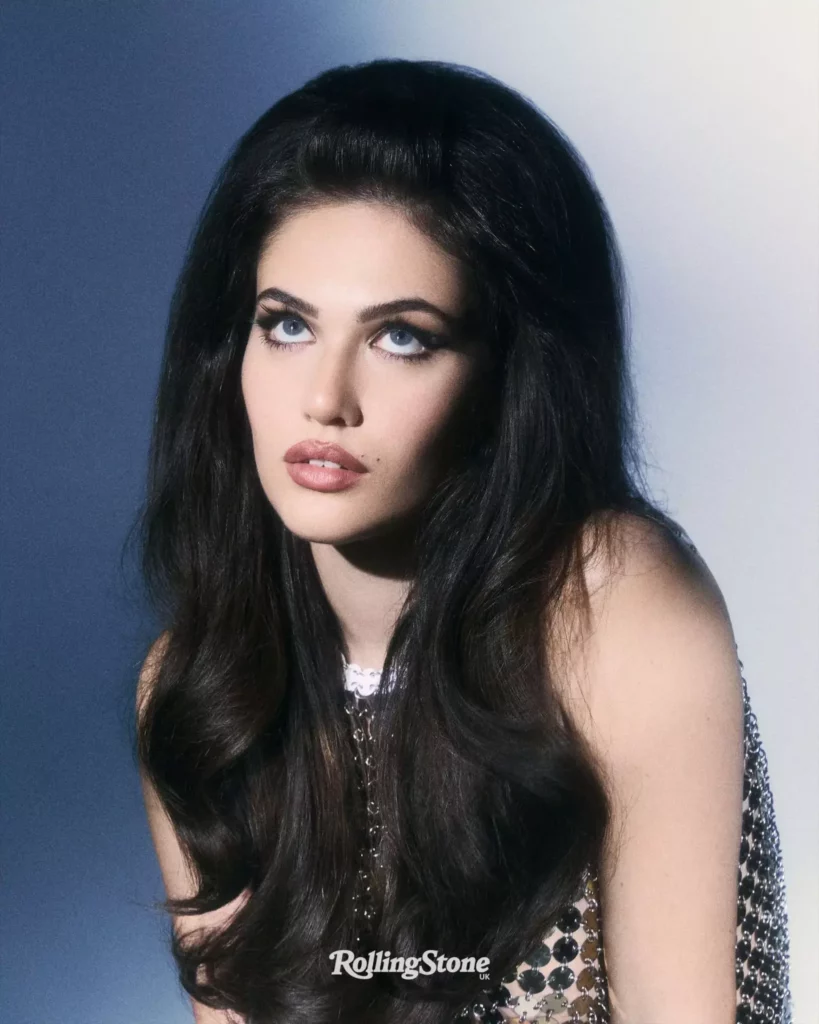
The hair unlocked the pop-star confidence she needed. “My hair felt like armour. It made me feel more myself, even though it looked less like me,” she says. She’d never experimented properly with makeup before either, so the 60s makeup with the outfits felt to her like a consistent uniform: “To know exactly how I’m going to look – as an elevated version of myself – made me feel really secure.”
Spiro feels grateful to have had a smooth ride in the music industry. Maybe it’s down to her young female manager, she says, someone she can trust to guide her out to success and back home to herself, who took the time to genuinely get to know her and listen to her. It could be artists like RAYE, speaking out about the mistreatment of women in the industry. Spiro was at ELAM when RAYE’s social video in which she talked about her album being shelved indefinitely became a global talking point. “Pretty much every girl in my class wrote about her when we had to write about who inspired us,” she says. “That she was able to call shit out straight up on a video, of her own accord, not on any other platform, just by herself. That’s raised an awareness for smaller artists that I think is massive.”
She’d heard so many stories, of course, of women having problems in the industry, issues with men in the studio. “Thank God I’ve never had a problem like that, and I genuinely think it’s down to people like RAYE saying something,” she says.
Her specific aspirations are possibly predictable given who she is, and you can imagine her achieving them all. She wants to perform at Royal Albert Hall with an orchestra (a shared dream with her manager), to be asked to do a Bond theme (“I know it’s probably clichéd because I make cinematic music, but that would be everything to me”), to play Glastonbury, because it’s a celebration of the British music that she’s intentionally crafted her work to be a part of, and an album of jazz covers, in the vein of Winehouse or noted Tony Bennett lover Lady Gaga. “I’d also love to take proper piano lessons – I cheated a lot when I was younger, skipped all my lessons and tried to teach myself, and it’s left a lot of gaps in my knowledge,” she says impishly.
“I think that’s been a bit of a downfall of music – when musicians are too aware”
You don’t create a look and a sound from a previous time by allowing in a cacophony of influences, and Spiro does everything she can to avoid modern trends in music and culture. “I think that’s been a bit of a downfall of music – when musicians are too aware,” she says. “We have so much access now, you can post something and see what people feel, and what other people are doing so quickly. You don’t have to go to a show; you can just open your phone and see it. I think it’s made music a little less original.” She takes a politician’s pause. “It’s something you have to be really conscious about: making sure everything is coming from you.”
All you have to do to be a singular artist, she says, is to be present. “Make sure you’re not thinking about anything other than how you feel, and what you want to make in the room that day. Be as present as possible because it’s hard… it’s really hard.” The funny thing is though, she makes it all – the poses, the tremulous, belting notes, the elegant heartbreak songs, the American takeover – look so inappropriately, gracefully easy.
Taken from the June/July issue of Rolling Stone UK. Buy it here.
Keep up to date with all our Future of Music content for 2026 here.
Photography: Rachell Smith
Styling: Edie Rose at Storm Management
Hair: Jack Luckhurst at The Only Agency
Makeup: Brooke Turnbull at The Wall Group