
Solomun on his Alexandra Palace film: ‘All the music I get to play, that is the real treasure’
“I am there playing the music, but it all only comes together because of the thousands of people who help write the story”
By Dale Fox
Solomun sold out both nights of his Alexandra Palace debut this February, adding the second date once the first went and playing the Great Hall for close to five hours a night.
Rather than turn the weekend into a straight concert film, the German DJ has cut a long-form piece from the final three hours of night two, out now on his YouTube channel. It watches the room from the floor rather than the booth, landing, as he puts it, somewhere between a document and a music video with a 90s aesthetic.
It was also the first time the Diynamic boss built live vocalists into a night of his own. Tarek from the German rap group K.I.Z came out for a reworking of ‘Samstag Ist Krieg’, Manchester’s Antony Szmierek previewed the unreleased ‘Life Affirmer’, and Inéz of the duo ÄTNA aired ‘Raider on the Storm’ before its release.
Here, Rolling Stone UK speaks to Solomun about capturing a night made to be lived once, the live debuts that shaped it and 20 years of Diynamic.
Rolling Stone UK: The film captures the weekend from inside the Great Hall rather than from the stage. What did you want a viewer at home to understand about those shows that a standard stage-front recording wouldn’t give them?
Solomun: When you film from only the front of the booth, it seems like the night belongs to the person on stage. But for me, the real story of an evening like this is always more interesting than that. Of course I am there playing the music, but it all only comes together because of the thousands of people who help write the story.
The film documents the last three hours of the second night, and the whole idea was to take the focus away from me, as far away from me as possible. It follows the rhythm of the night through different perspectives and cuts, always observing rather than pointing at one person. It sits somewhere between a documentary and an energetic music video- with a little bit of a 90s aesthetic to it.
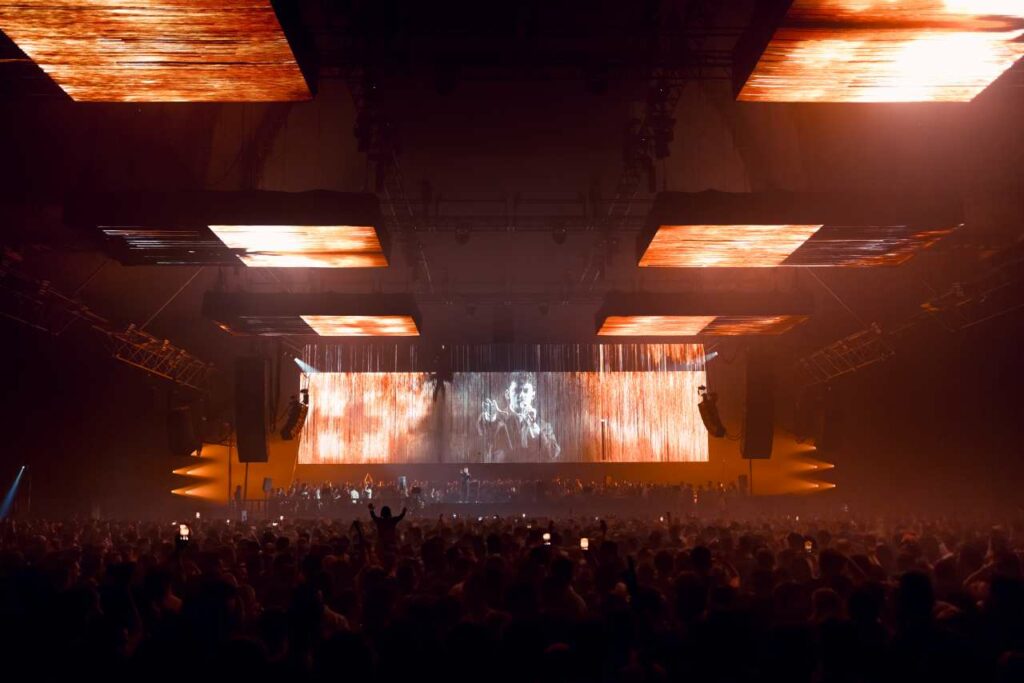
That is what I wanted the film to show. Not just, “Here is Solomun at Alexandra Palace,” but what it actually felt like to be part of those two nights. Arriving at the venue, the scale of the Great Hall, the production, the people together in the middle of it, the booth, the small details you miss when everything is shot like a performance video. More than a traditional concert film, it was an attempt to hold something that usually slips away, the small moments, the shifting atmosphere, the story unfolding quietly beyond the music itself. The aim was for it to feel less like watching a DJ set and more like you’re actually part of this experience, with the music, of course, still at the centre of it all.
For these shows the Great Hall was turned into something between a warehouse rave, an art installation and a live concert. What was the brief for the space, and what were you trying to avoid as much as what you were trying to create?
The main goal was to respect and capture the magic of the venue itself. Though that part was actually difficult, because to protect the sound we had to cover up a few of the beautiful architectural elements. So we decided instead to take the grandeur of that interior and transform it into sound. I would have loved to keep more of it visible, but the sound is of course the most important thing. That is also why we show the building from the outside, because as a guest that is exactly how it feels: you dive into this building, you step into its history, and that alone is feeling enough.
The brief was to make it feel authentic and deliberate, but not over the top. I’m always about the details, but I don’t like things overdesigned. We wanted the night to fluctuate between moments where you almost feel like you’re in a warehouse before suddenly remembering that you’re standing in this very grand, historic room. That type of contrast was essential.
And within all of that, it was important for the production to give the music room to breathe. Especially with the live performances, which was something I never did before.
Alexandra Palace has a long history with large-scale electronic shows. What does a room like that ask of you as a DJ that a club or a festival stage doesn’t?
First of all, you are of course proud that you even get to join that lineage, to play a room like that as an electronic act. And it was all our own production, which takes an enormous amount of preparation. Alexandra Palace asks you not to be too impressed with yourself. That is maybe the first thing. You walk into a room like that and you understand immediately that you are in this magical place for just a moment in time. I’ve played this city so many times, and yet these two nights touched me in a way I didn’t expect.
So as a DJ, you of course have to bring your own energy, but you also have to listen to the room to a degree. In a club, you have a much better idea of how the night might unfold. A place like Alexandra Palace is far less predictable. You can prepare, but a venue like that will help define the night as it unfolds. But honestly, big room or small room, it’s the people on the dancefloor that are creating the incredible moments that I am lucky enough to be part of.
The release highlights a few guest moments from the run, among them K.I.Z joining you on a reworking of ‘Samstag Ist Krieg’. How did that come about, and what made the track right for a moment like this?
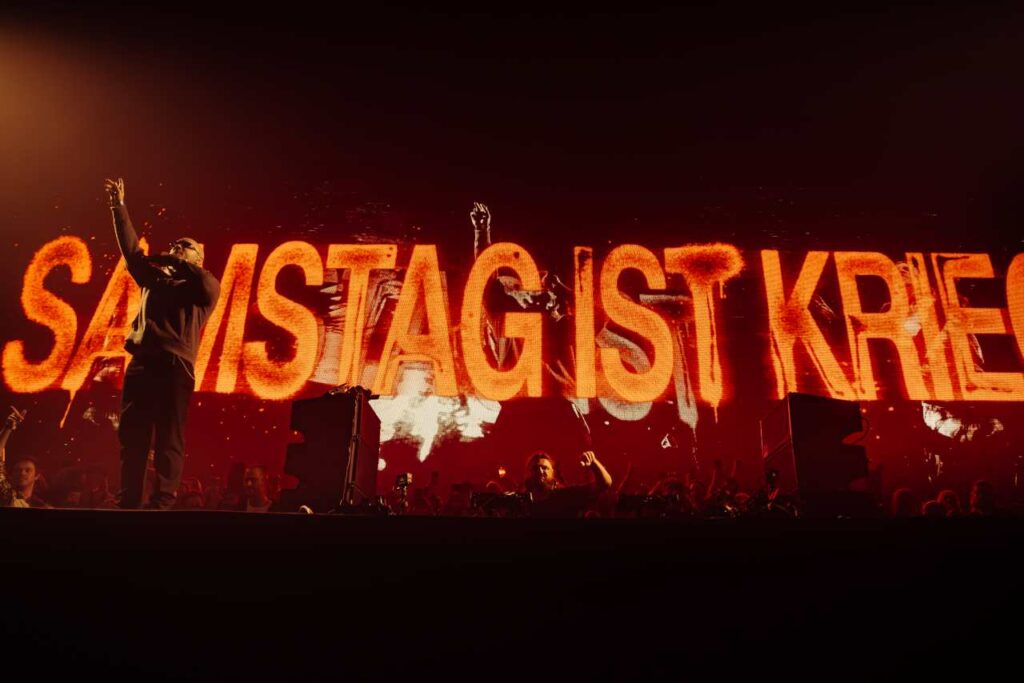
For this one I have to bring in my manager, who has been a huge K.I.Z fan for 20 years. When he first played me ‘Samstag Ist Krieg’, I immediately had this picture in my head that I wanted to make a remix of it, and I ended up playing that remix a lot. So when we started building the Alexandra Palace show, it was clear how great it would be to have Tarek perform it live. Working on the remix with him was so much fun that he even recorded an extra part for it, where he screams a bit more aggressively. That is something I love when I work with artists, when they add things that weren’t there in the original. And then hearing that part live gave me goosebumps. And the beautiful part is that the whole band came along, and we had two wonderful days together in London.
Antony Szmierek previewed ‘Life Affirmer’ with you. What drew you to working with him, and what can you say about the track at this stage?
I discovered Antony a little while ago and was immediately fascinated by his way of rapping, or really more his spoken word. It somehow pulled me back into an earlier time, even though what he does is completely of this moment. I’m very, very happy that we got to make this track together. He is simply a great guy. He is a modern poet; his lyrics are wonderful, deep and a little dark at the same time. He is someone I grew very fond of very quickly, and someone who absolutely belonged on that stage.
Inéz brought ÄTNA’s ‘Raider on the Storm’ to the room ahead of its release. How do you decide which unreleased music to test in front of a live crowd?
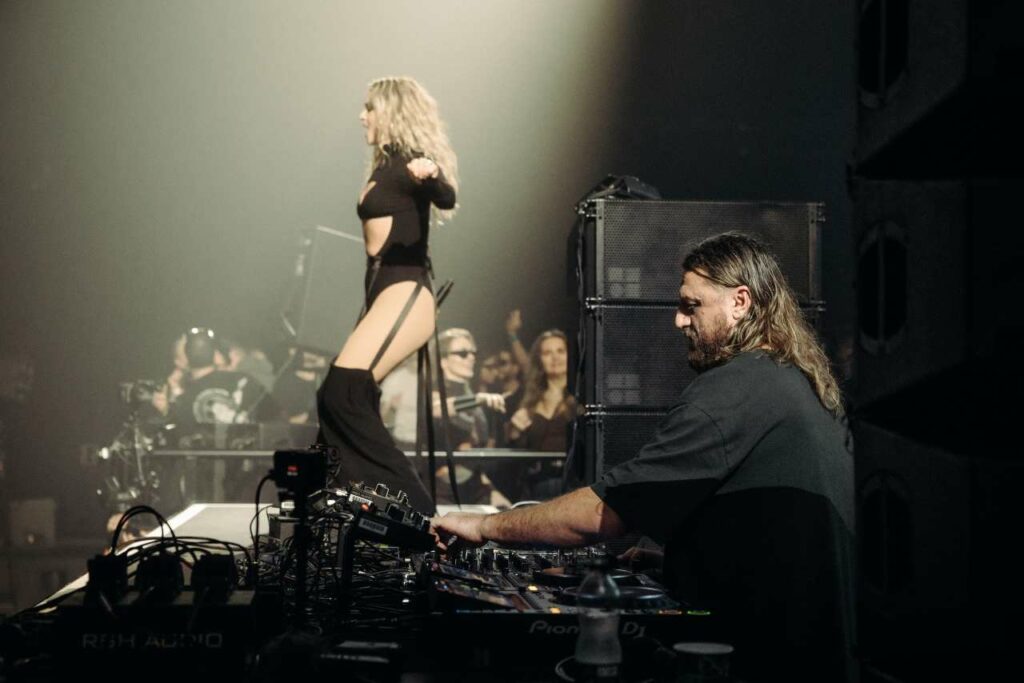
Honestly, most of what I play in a set is music nobody has heard yet, so the real question is only which unreleased track belongs in that particular moment. With Inéz that came naturally, because we’ve already done quite a lot together, for example ‘Tuktuk’ on my last album, ‘Nobody Is Not Loved’. She is an exceptional artist, music, fashion, all in one, and I’m a real fan of hers, it’s so much fun to work with her. ‘Raider on the Storm’ is a track I really love, and I’m very happy that we are finally releasing it soon. With her there in the venue, it was clear it was made for this moment.
You built your sound from scratch, starting with second-hand tapes and record-store digging. Standing in a sold-out Alexandra Palace two decades on, does that earlier version of you feel closer or further away?
That earlier version of me should feel very far away, but when I think about it honestly, I still feel rather in touch with that version of myself. In the beginning, I was just trying to find records that made me feel something. It was me chasing a feeling, and I think that is still basically what I’m doing now.
Solomun +1 is back at Pacha, with the residency now in its 14th year. After that long, how do you keep the guest curation from settling into routine?
It’s crazy that it’s really been 14 years now. I can’t quite believe it myself. But the beautiful thing is that the concept is so simple that it still gives me so much joy to invite the most different DJ colleagues and, in the end, to play alongside them.
There are the artists who join me for the first time, like Desiree, Max Styler, KETTAMA, or Idris Elba, which was great because he’s not only a very good DJ, we also get along really well as people. Then there are the ones who keep coming back, like Skrillex, Jamie xx, Chloé Caillet, DJ Gigola, and this July especially Peggy Gou and Anyma, who have both played with me many times and are always highlights.
And of course some of my longtime friends who’ve been coming since year one, like Dixon, Âme or Four Tet. I’ll also play five Sundays all night long, something I started a few years ago. Those are also very special nights.
This year marks 20 years of Diynamic. Looking back at the artists who came through the label, what do you think it got right, and what would you do differently if you were starting it now?
What Diynamic got right was that it came from a real place and a real group of people. We weren’t trying to be everything to everyone, and I think that worked for us in the long run. It let artists be themselves and gave the label a certain mood.
It still gives me so much joy to be a platform for artists and to do everything I can so that they get as much out of it as possible. Every single release is a matter of the heart. If I were starting it now, it would be wrong to try recreating that exact version. A label has to understand the time it exists in. In 2006, the needs were different. Today, music moves faster, and everything can become disposable very quickly. But honestly, I am simply grateful that so many outstanding producers still trust me and Diynamic, and keep sending me so much music that I can play and release. That is truly a great treasure.
And that brings me back to Alexandra Palace once more: all the music I get to play, that is the real treasure, and I am endlessly grateful that I have had these possibilities over the years and the decades.
The set is built around the idea of music that brings people together without a word being spoken. Where does that conviction come from – and has it ever been tested?
For me, music is a divine force. It connects people without a single word. There is really nothing that brings people together as quickly as music – well, maybe football at the moment, that one works without words too. But music, to me, is a world language. When people are in the same room, hearing the same music and moving to it together, it has these very strong emotional, spiritual effects. It reaches the soul, which is more or less where the word soul comes from in the first place. And I have felt this same thing time and time again playing in so many places. At Alexandra Palace the crowd held the room together from the opening note until the very last, everybody riding the same wave.
A film fixes one night in place, but a DJ set is built to be lived once. Is there anything lost in capturing it this way, or anything gained?
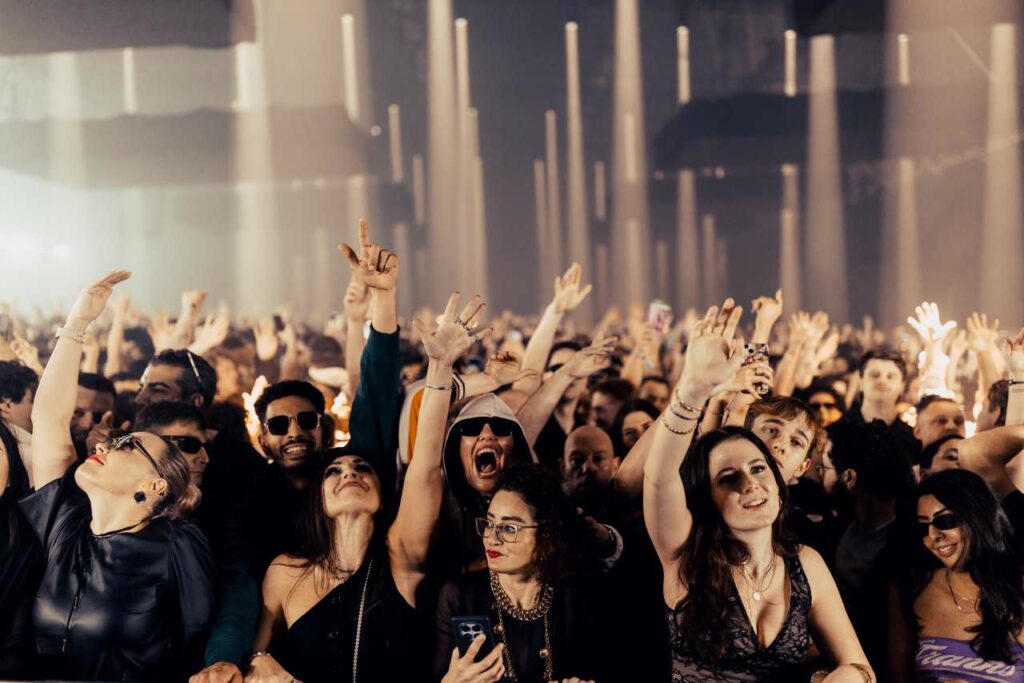
Not every set needs to be filmed, for God’s sake. What matters is being in the moment, and you can’t reproduce all of that digitally. A lot of the time you probably shouldn’t even try. Our culture is born in the moment. But Alexandra Palace had something tangible about it that felt worth preserving. Because it meant so much to me, I didn’t just want to record it; I wanted to hold on to the feeling of it. So we cut a little film out of the last three hours of the second night, something that holds on to the atmosphere, the energy of that night and that room. There was something very complete, and even a bit magical, about those nights that I didn’t want to be lost.
Sometimes there is a single element of something that gives you a certain artistic feeling. Alexandra Palace did exactly that, inspiring the filmmaker’s point of view in me. I started to see it through a lens before a lens was even there.
Honestly, no film can ever replace the night. It shouldn’t try to. But it can capture something from it. It gives people who were there another way to remember it, and people who weren’t there a way to understand why it mattered and what made it special.
The rest of 2026 takes you to Manchester, Ibiza and Sarajevo. Is there anything at this stage of your career that you still haven’t found?
Who knows? The culture has changed in almost every visible way, but the reason for it hasn’t moved. Dancing, gathering around a rhythm, these are among the oldest things humans do. The beautiful thing, over all these years and decades, is that some things never change, and the biggest one is the moment when people simply lose themselves in the music. I see people with their eyes closed, disappearing into themselves for a while. Young faces discovering that feeling for the first time, older faces returning to something they never left. That’s what still leaves me feeling full. As long as I can enjoy this, not as an escape, but as a reminder that we’re not as separate as we sometimes feel.