
The guitarist’s guitarist: Mick Ronson
As Gibson prepares to release Mick Ronson's ’68 Les Paul Signature, the late guitar legend's family and friends explore the legacy of David Bowie's right-hand man.
By Kat Pelosi
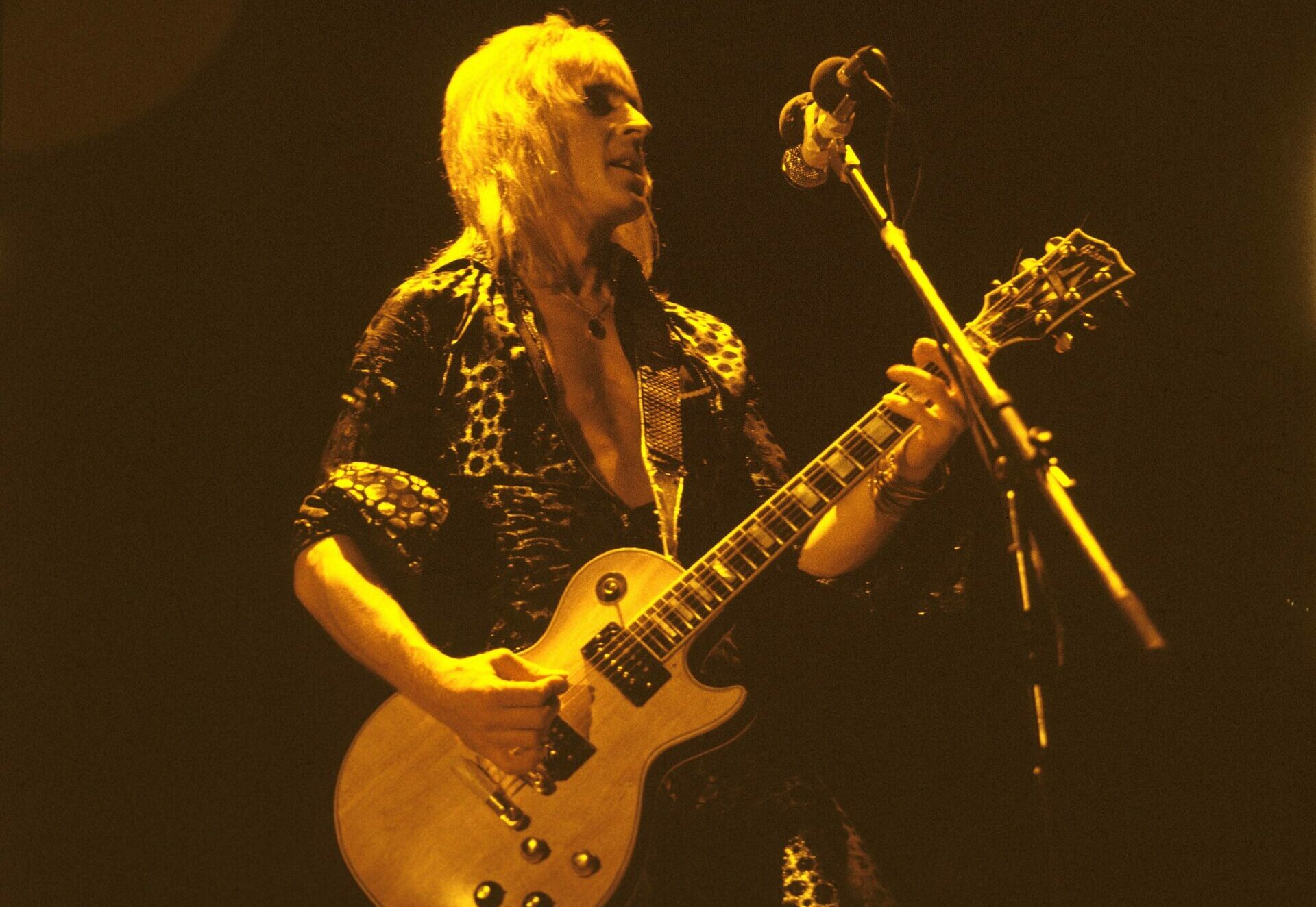
Mick Ronson is known to many as the guitarist’s guitarist, David Bowie’s right-hand man, a platinum-haired diamond in the rough from Hull. But the truth is, he was so much more: a classically trained genius who could move between guitar, strings, piano and woodwind instruments, and the arranger behind some of the most everlasting songs of the 20th century. I also happen to be related to him, so I’ve listened to many stories of that era growing up, tales of a time gone by, holding a window up to the past and remembering a time where The Spiders From Mars ruled the world.
He modulated his guitar pedals to find new sounds, even pioneering the sustain effect, which would become part of the modern guitar vocabulary. He even sanded down the black finish on the front of his 1968 Les Paul while playing alongside Bowie in The Spiders from Mars, revealing the raw pale wood beneath. He was a perfectionist in pursuit of the unique and special.
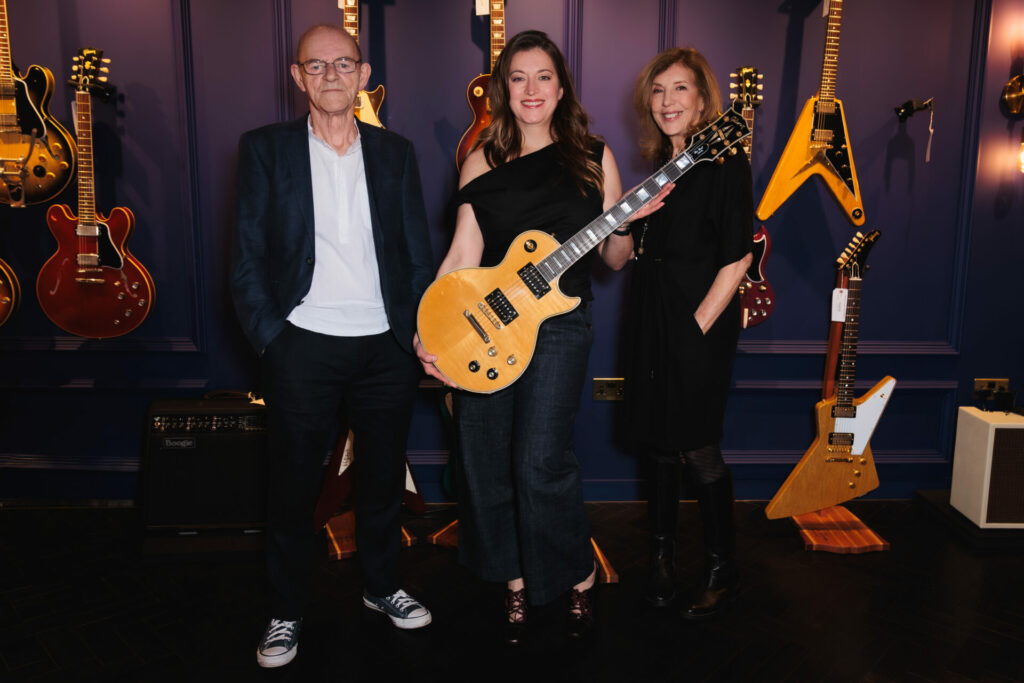
Gibson is now releasing that very same 1968 Les Paul Custom Collector’s Edition Guitar and it’s a thing of beauty. Looking at the guitar, you’d be forgiven for thinking that it’s Mick’s original on display. The detail is that precise. They’ve gone to incredible lengths to replicate the wear and tear, including the gold fading to silver on the pickups where Mick’s hands had worn it down over time.
It will be displayed alongside some of his stage outfits at the Gibson Garage from 24th-28th of February, one of which includes a silver outfit from the Ziggy days that I remember finding in my grandma’s attic. I still remember trying them on as an 11-year-old girl, not realising their significance. The trousers still wouldn’t fit me then, which shows how slim Mick was.
Mick helped transform ‘Life on Mars?’ into a cinematic masterpiece. Morrissey, who worked with Mick, once said that he thought Bowie never found a comparable guitarist, much as he tried. His arrangements stir emotion in all of us, not just because they’re intricate and powerful, but because Mick seems to be so undersung in the choir of rock and roll history.
Does his daughter Lisa have any memories of her dad being a rock star growing up? “Not really. When he was home, he was just a Dad. He loved The Price Is Right, any game show really… although he did wear mascara to the supermarket.”
Mick came on board with Bowie when Tony Visconti and Ken Scott were cutting Hunky Dory, which was originally more of a folk record. Woody Woodmansey, the drummer of the Spiders said “Mick could take fancy, folky chords, and he would just be like, ‘Fuck that,’ and rip a note over it and be like, ‘That’s rock and roll!’ David’s parts glistened over the top, that’s where the magic happened between them.”
Mick developed a close working relationship with Ken Scott on Hunky Dory. “They got on really well,” Suzi recalls. “Ken gives Mick a lot of credit for his input on those albums. Mick wasn’t a man who asked for credit, more’s the pity. He always thought people would do the right thing by him. Sadly, he was disappointed many times.”
“Although he looked like he had an ego on stage, he really didn’t have one. He didn’t really know how good he was. He just played what he thought was right, there was no big-headedness,” Woody adds.
Mick was only paid session rates at the time, with no points or royalties credited to him from any of his masterpieces. The Bowie years paid him just £50 a week. Woody continues: “We were able to buy groceries with that money. Everything else was paid for, you see, if we wanted costumes or anything.”
This payment structure continued when Mick co-produced Lou Reed’s Transformer. You can hear him all over that record, playing the piano himself. “Lou Reed is where his production skills are at their very best,” Suzi says. “The piano on ‘Perfect Day’. No one could have done it better.”
Later on, he toured with Bob Dylan after meeting him on a drunken night out in New York that turned into a jam session. Suzi recalls a memory from the tour: “On the Dylan tour Mick would be drinking, and down in the Louisiana swamps he accused a bloke of cheating at a game of cards. Guns came out, a knife whistled by Mick’s face. And Mick wasn’t backing down.”
His influence spans decades after. Gary Kemp of Spandau Ballet recalls: “The energy that came off Mick, it was like listening to music from the angels.” And Steve Jones of Sex Pistols says the only reason he plays a Gibson is because of Mick. Grammy Award-winning producer Andrew Watt owns two of Mick’s guitars, including one of his Les Pauls. Which means that his legacy lives on, having been used across a lot of the records that Watt has worked on, most notably on the final albums Ozzy Osbourne released. Andrew has cited that he feels deeply connected to Mick and his work.
The event at Gibson felt like a long-overdue tribute to a man who gave so much to music. “Lisa and I are both delighted that Gibson is recreating Mick’s fabulous Les Paul. It’s a beautiful guitar, and I hope it inspires people to play a little rock and roll,” said Suzi.
Maybe that is Mick’s legacy, he never chased fame, he just wanted to play a little bit of rock and roll. A quiet, unassuming, family man, a guitarist’s guitarist, yes. But more than that, a craftsman who built beauty that still resonates, long after the final note fades.