
“DOOD (Smoke)” — Arash Sobhani’s World-Jazz Chronicle of Exile and Renewal
In partnership with Artist Formula Record Group
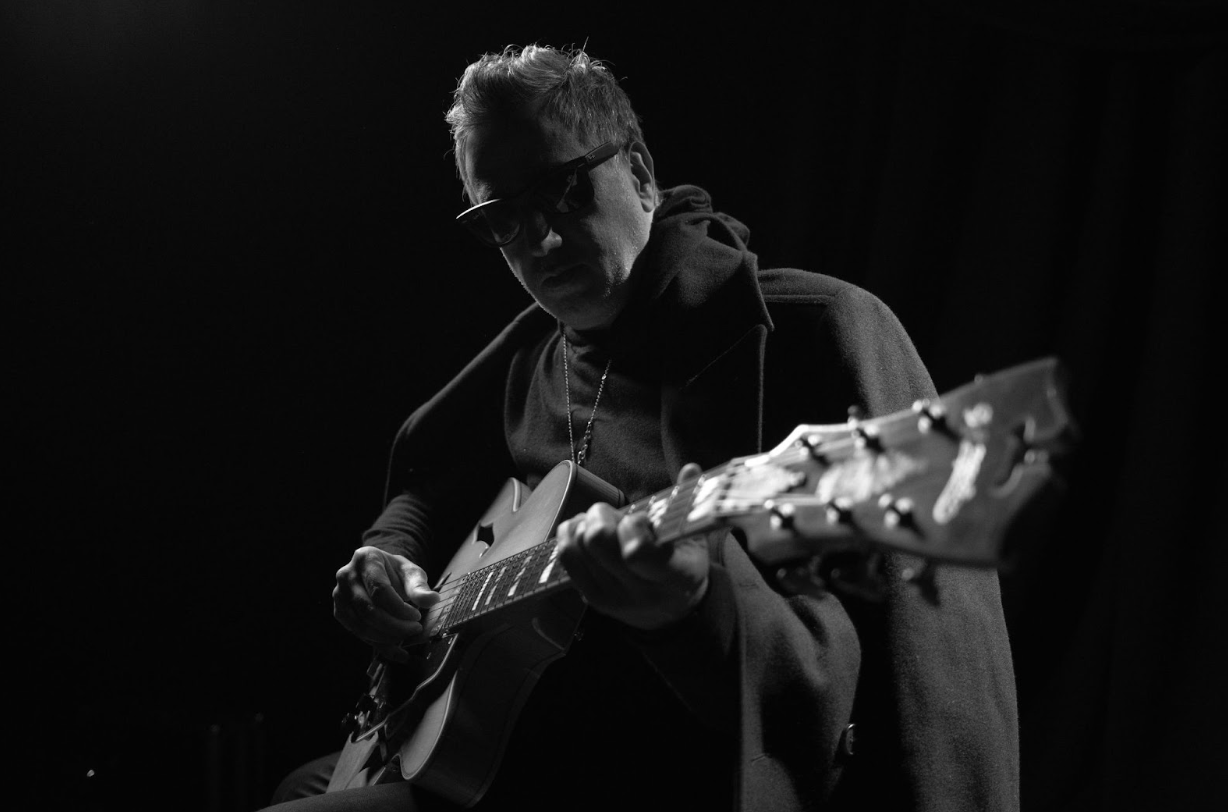
In an era where playlists blur into safe repetition, DOOD (Smoke) stands out for what it doesn’t do. The debut solo album by Arash Sobhani—the Iranian-born, New York–based songwriter best known as founder of Kiosk, a defining band of Iran’s underground scene—steps away from protest and into reflection.
Written in Farsi but fluent in every emotional language, the record transforms exile from tragedy into tonality. It folds Persian melody into world-jazz phrasing and New York’s restless pulse. Where Kiosk once wielded irony as armor, DOOD replaces satire with stillness. The record doesn’t shout; it listens. It moves through uncertainty with the calm of someone who has learned to breathe inside the fog.
Standing Strong in a Crowded Market
Sobhani’s stoic ethos—exile is not a wound to heal but a horizon to walk—guides the album’s weight and whisper. The title track, “DOOD,” opens like a slow-burn midnight ritual:
“The world feels so futile, futile yet beautiful. Hurry gently to meet tomorrow.”
From there, the record wanders into spaces where language and rhythm dissolve. “For Gina” swings with dry humor and tenderness in a Persian mood:
“One day up, one day down / Like the stock market / Neither like Elon Musk nor / Like a Jack Dorsey / You’re not like anyone else.”
It’s a love song disguised as social commentary, delivered with a wink and a sigh.
Then comes “Mohandesi (Engineering),” where Latin-jazz pulse meets philosophical bite:
“What they sold you / Was illusion, not hope. / If your world is small enough, / Maybe there’s somewhere to go.”
Each lyric arrives measured and deliberate, giving silence room to echo back meaning.
Shaping a Unique Sound
Recorded between Brooklyn, Lund Sweden, and Toronto, DOOD brings together a remarkable international ensemble: Musicians from Serbia, Russia, Greece, Norway, U.S, Canada and Iran lend their accents to a shared vocabulary of improvisation.
The project was largely recorded live in the studio, allowing players to react in real time, capturing the tension and trust of genuine conversation. Sobhani spent two years writing and refining before committing to five concentrated sessions, each in a different city, each carrying a fragment of his journey.
The result is not a postcard collage but a lived-in sound. Rebetiko phrases brush against tango cadences; klezmer weaves through swing; Persian modes dissolve into modern jazz time. Every influence keeps its identity yet folds naturally into the next. It’s cosmopolitan not by design but by instinct—the way New York itself sounds at dusk when windows open on every language at once.
Themes That Do the Heavy Lifting
“Smoke” becomes both image and philosophy. For Sobhani, it’s what remains after fire—formless, fleeting, filled with what survived. The songs dwell on distance, loss, and the discipline of starting again. In “Naro (Don’t Go),” he writes:
“Whether you stay or leave, it makes no difference to the clouds or the sky.
Day and night come and go; winters bring snow or rain as they pass by.
With or without you, the world keeps spinning on its axis.
But my world will halt, come to an end, if you leave. So, don’t go.”
The lyric balances stoicism and vulnerability—the acceptance that the universe continues, even when one’s personal orbit stops. That tension defines the record. “Challenges don’t disappear,” Sobhani says. “You just learn to carry them differently.”
Connecting With Listeners
Sobhani’s audience now spans languages and continents, but DOOD keeps its invitations open. Its hybrid sound—part world-jazz, part Persian noir, part existential groove—feels both intimate and borderless. Listeners don’t need to translate; the emotion does it for them.
Belonging, Unbound
What makes DOOD (Smoke) powerful isn’t only its diversity of sound but its coherence of feeling. Sobhani’s Persian poetics keep it grounded in memory; his jazz sensibility lets it drift into freedom. He builds rooms for reflection rather than spectacle—music that honors quiet as much as crescendo.
This is world-jazz as spiritual architecture: fluid, borderless, tenderly unresolved. It’s for anyone who has ever left a city, a language, or a version of themselves—and found beauty in the blur between.
“From Tehran’s underground to New York’s skyline, Sobhani turns exile into sound.”