
From Beta to Boom: Aiode’s Revenue-Share Model Puts Musicians at the Center of AI Music
In partnership with Aiode
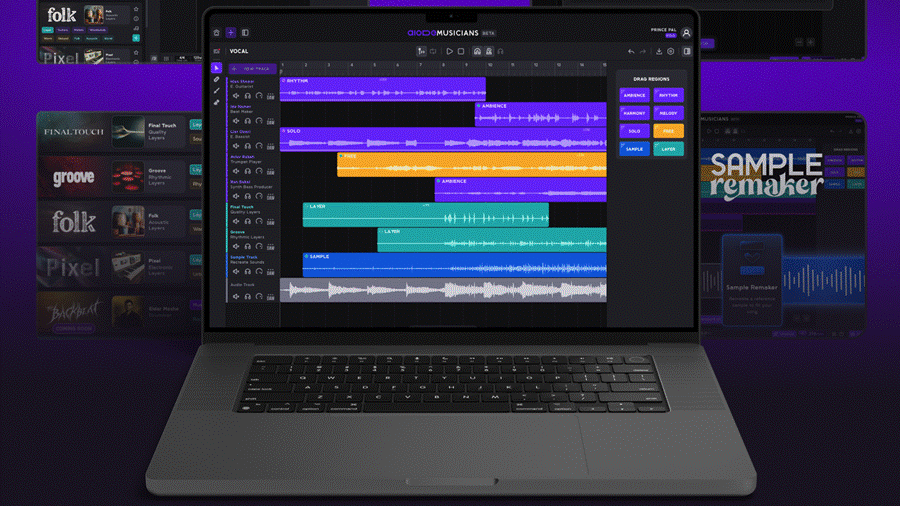
Aiode is preparing to exit beta after months of growth, powered by a business model that compensates the musicians whose performances fuel its AI technology. The music production platform has built something unusual in the generative AI space where artists get paid every time producers use their virtual counterparts.
As the company prepares to announce major partnerships and expand into additional markets in 2026, the bet is that ethical AI can drive real business success.
The platform, supported by Abbey Road REDD, generates real audio stems by working directly with virtual session musicians. Real musicians record performances across different genres and techniques, which train AI models to recreate their individual playing styles. Producers can then collaborate with these digital versions inside a virtual production environment, adjusting takes and controlling parameters like they would with a human session player.
“Aiode is positioned as the first musician-based STEM generator,” says Varda Caspi, the company’s CMO. “Our goal is to create an ecosystem of ethical, professional music production tools that lead creators around the world to create better and faster, while supporting the artist community.”
Revenue Sharing, Built Into the Core
Part of what separates Aiode from other AI music tools is how it handles the musicians behind the technology. The revenue-sharing system makes up the foundation of how the business operates.
“We are among the first companies to both build a proprietary AI architecture as well as create a revenue share model for musicians, that is the core of our business,” says Idan Dobrecki, Aiode’s CEO and co-founder. “Our product aims to be one of the first AI DAWs designed to create a true synergy between production needs and musicians-powered AI.”
Musicians whose data trains the models participate directly in the platform’s economics. When a producer uses a virtual counterpart, the real artist behind that virtual version is compensated. The company states that every sound generated carries commercial clearance, aiming to reduce the legal uncertainty surrounding AI music platforms.
The approach responds to mounting pressure from the music industry. Between 2023 and 2024, more than 400 music organizations published or co-signed ethics statements demanding licensing requirements and fair compensation for AI training data, according to a Water & Music report. Groups like GEMA and FIM have called for payment systems that account for both initial training costs and ongoing revenue from AI-generated content.
Solving Workflow Problems
Aiode targets a specific production challenge. Text-to-song generators can create full tracks, but they lack the granular control professionals need over structure, harmony, and arrangement.
Aiode analyzes uploaded tracks, understanding tempo, key, and musical context. Producers can then add virtual musicians and other AI models that respond to what already exists, generating parts that fit the existing material. Sample Remaker, another tool on the platform, transforms any audio file into tempo-matched, harmonically compatible samples, seamlessly aligning with the song’s vibe, style, and feel.
“Aiode solves a core challenge in modern music production, translating creative intent into professional, production ready output, without losing control. The platform helps producers overcome creative blocks and experiment faster while maintaining access to performances that sound human,” explains Aiode COO and Co-founder, Blue Dobrecky.
The platform generates actual audio rather than MIDI data. The virtual musicians create new performances based on their training, delivering the sonic character of real instruments and the decision-making of real players.
Recognition and Momentum
The company joined Abbey Road’s REDD Incubator in April 2025, gaining access to one of the music technology industry’s most selective accelerator programs. Aiode also won MusicAlly’s SI:X 2024 award, took the audience choice prize at Global Media-Tech by RAW Ventures in 2025, and earned a spot on TheMarker’s list of 15 startups to watch for 2025.
Those achievements arrived during Aiode’s open beta period, which launched at the end of September 2025. The platform operates through a desktop application, released in September 2025, and a web browser interface. Both versions use subscription packages that meter access to the virtual musicians.
The difference comes through the ethical framework and artist compensation model. Where other AI music companies face uncertain legal futures, Aiode’s fully licensed approach offers producers peace of mind.
Moving Beyond Beta
Aiode describes 2026 as a transition year for the company. The focus shifts from beta testing to full commercial launch, with partnership announcements planned and expansion into English-speaking markets underway.
The platform already serves a global user base, and is expanding to additional markets. Aiode plans to announce key partnerships throughout the year while continuing to expand its library of virtual musicians and production tools. The company is building on momentum from its beta period, when strong growth validated demand for ethically trained AI music production technology.
With Abbey Road REDD’s backing, industry recognition, and a product that addresses the ethics questions dominating AI music conversations, Aiode has positioned itself as proof that compensating artists and building successful AI technology can happen simultaneously.