
Perceiving the Future of Music in a Classical Perspective
In partnership with EWG Press
By Matt Emma
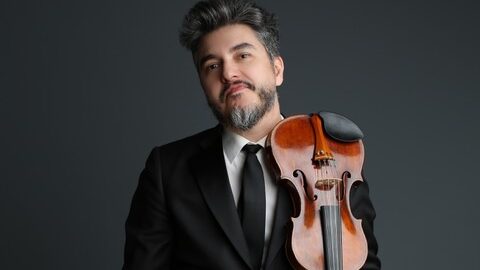
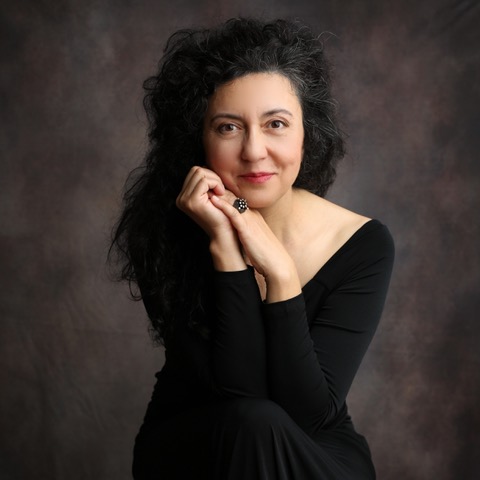
There may be a future in which art of all forms is created by AI. It is equally certain that people will return to the indisputable organic construct that has existed longer than history. There is simultaneously an asymmetry and a divinity possible in art that finds its perfect receiver in humans. This was on display recently at St Mary’s Church, Islington where the Anglican church was the setting for original compositions from siblings Ümit Önder and Dr. Ayşe Önder. Appearing as both composers and performing musicians, this brother and sister from Turkey reminded the capacity crowd in attendance that music which originates in the soul and emanates from a corporal form possesses an emotional spectrum that has yet to be equaled by any digital code. While the future remains to be seen, the benevolent qualities of music created by actual humans are as present today as they’ve ever been.
A Spiritual Setting for a Soulful Performance
From an artistic perspective, St Mary’s Islington offers a distinctive atmosphere particularly suited to the type of classical repertoire presented by the Önders. Unlike the modern concert venues designed to present such concerts, St Mary’s Islington is not a space created for such an event but yet is somehow suited for it. Just as fitting is that music serves as a universal language, speaking to the hearts of listeners without any need for interpretation of explanation. What could possibly communicate more directly to the spiritual nature of this art form?
An Emotional Presence in Musical Form
Dr. Ayşe Önder presented the world premiere of two original pieces at this concert. “Music for String Orchestra” has its first movement shaped by a sense of modern romanticism, where long, arching melodic lines emerge from a finely detailed harmonic landscape. Its second movement offers a sharp contrast: faster, more restless, and driven by an underlying rhythmic energy. Built around a fugue-like idea, it develops through layered entries and interwoven lines, where motifs circulate and transform across the ensemble. Dr. Önder’s second offering was “Voice”, a work for soprano, piano, guitar, and string orchestra. Vocalist Oya Ergün’s technique and depth brought a compelling presence to the stage, complemented equally by Ayşe Önder herself on piano. As the composer at the piano, Ayşe Önder’s interpretation added an additional layer of immediacy and authenticity to the performance, shaping the flow of the piece from within and reinforcing its intimate, deeply personal character. This dual role reflects an artistic approach in which composition and performance are inseparable.
A Harmonic Blend of Cultural Distinction
When Ümit Önder took the stage as the first violinist at the performance, it was for the premier of “Das Meer” and the “Kamancha Concerto.” A commissioned composition for the Germany-based Kammerphilharmonie Hamburg string orchestra, “Das Meer” was created to explore the expressive possibilities of the string family. Subtle variations of density, bow pressure, register, harmonic tension, and internal motion are overt in this piece as the unified timbral field of the strings make it possible to shape a sound world that feels at once fluid, continuous, and structurally alive. Rather than relying on contrast between unrelated instrumental colours, the work develops through transformations within a single resonant body. In contrast, the “Kamancha Concerto” (featuring Göktuğ Çelik on kamancha) examines the relationship between a singular solo voice and a surrounding orchestral body. The Kamancha has a highly distinctive sound — intimate, vocal, fragile, but at the same time piercing and emotionally direct. The result is a rich but flexible sonic field that sustains the solo instrument without obscuring it.
Evolution Does Not Equate to Extinction
Ignoring the impact of AI in the realm of music is futile but it may not be as threatening as popular opinions would indicate. Ümit remarks, “I do not see artificial intelligence as a threat. On the contrary, I find myself among those who hold an optimistic view of it. I have already touched on the compositional aspect, but I would also like to share my perspective as a violinist working within a contemporary classical context. For many years, we have already been working with technologies such as VSTs and MIDI instrument libraries. In that sense, the idea of ‘artificially generated sound’ is not new to us. We are already familiar with mediated sound, and some of these tools have reached an extremely high level of sophistication. They are valuable as supportive elements: they expand the palette of possibilities, reduce certain practical limitations, and open new pathways for experimentation. But importantly, they function as extensions of musical thinking, not as replacements for it.”
Ayşe considers the concept to be one which is more defining for modern musicians and composers as she states, “We have undeniably reached a point where it raises a more fundamental and difficult question: what does it mean to be a musician today? We are now in a situation where individuals without instrumental training or compositional background can generate music that appears fully formed, even professional. This shift is not only technological, but conceptual, it challenges how musical value is perceived and understood. While this increased accessibility is not something we oppose, it also raises an important question of artistic responsibility.
When music is generated without a developed musical awareness or practice, the relationship between sound and intention becomes more fragile, and this can lead to a certain ethical ambiguity in how authorship and artistic value are perceived. In that sense, we believe this situation may also constitute a potential risk for musicians, particularly in how artistic value is recognised and sustained.”