
Rebecca Lafon: Proving the Human Element is Essential to Filmmaking of the Future
In partnership with Kelly King
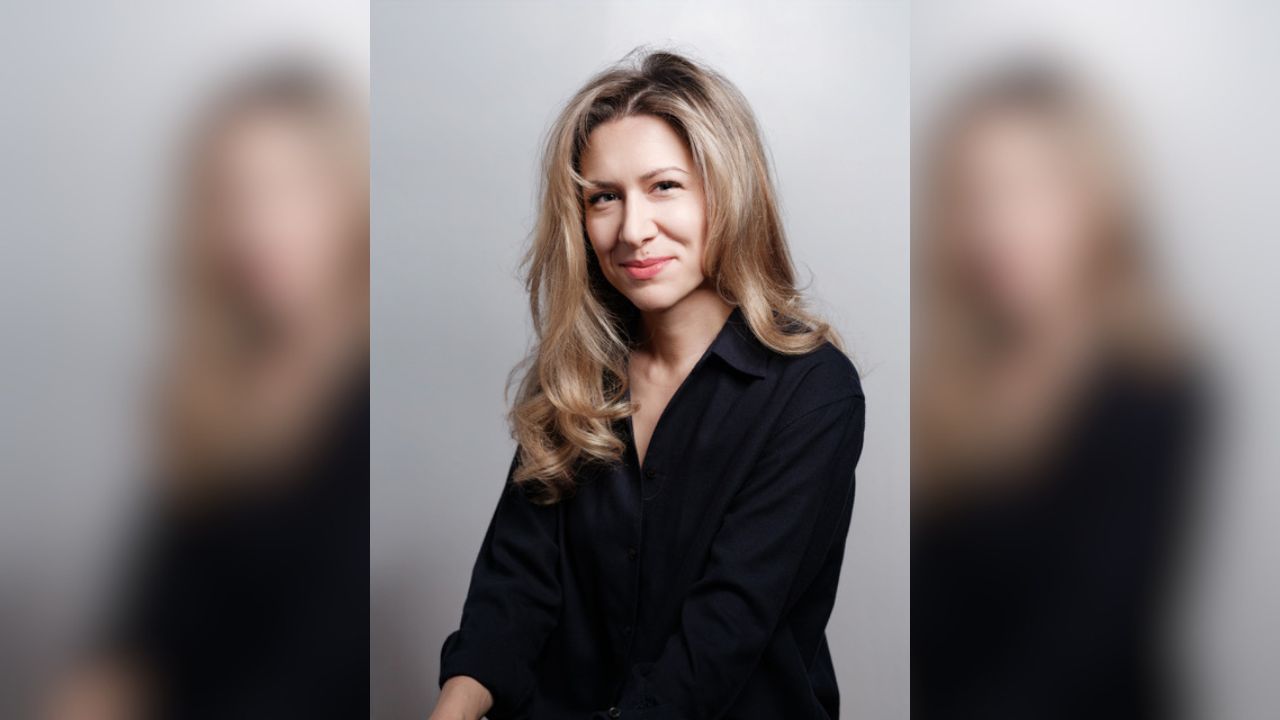
Independent cinema sometimes relies on those willing to believe in difficult ideas. Not simply unusual ideas, but films which resist easy categorization and stories that refuse familiar emotional rhythms. Projects that ask audiences to embrace contradiction rather than certainty rarely begin as obvious commercial prospects, yet they often become the works that linger longest in the cultural imagination. Such films often require a particular kind of producer; someone capable of balancing budgets and schedules while protecting something infinitely more fragile: the creative conviction that persuades everyone to make the film in the first place. Rebecca Lafon is such a producer. Her resume spans queer body horror, period drama, intimate social realism, psychological horror, documentaries, and coming-of-age stories. Again and again, Lafon gravitates toward filmmakers with singular voices and stories that explore identity, empathy and the complicated ways people search for belonging. Genres may change but the emotional mission rarely does. “I don’t produce based on genre,” Lafon has said. “I produce based on vision.” It is an approach that may resonate with a new generation of producers focused less on following trends and more on developing distinctive artistic voices. Her own story offers some context for that perspective.
Born in France before spending formative years in rural Indiana and later returning to an international school outside Paris, Lafon’s upbringing was shaped by movement between cultures rather than permanence within one. Those experiences exposed her to radically different ways of seeing the world. In Indiana, she discovered an America far removed from the version often portrayed on screen. Back in France, classrooms filled with students speaking more than a dozen languages transformed diversity from an abstract concept into everyday reality. Rather than narrowing her perspective, every move expanded it. It is perhaps unsurprising, then, that empathy sits at the heart of almost every film she chooses to champion. Long before attending the AFI Conservatory in Los Angeles, where she refined her producing craft, Lafon studied political science alongside theatre. At first glance, these disciplines appear unrelated. Yet together they reveal something fundamental about her creative instincts. Political science asks why societies function the way they do and how people understand one another. Cinema can create opportunities to experience those questions emotionally rather than intellectually. Rebecca perceived filmmaking as the place where those interests converged. She speaks about film less as entertainment than as an instrument capable of changing people by allowing audiences to inhabit perspectives they may never otherwise encounter. The stories she is drawn toward rarely flatten their characters into heroes or villains. Instead, they insist upon complexity, contradiction and emotional specificity. This philosophy has become increasingly visible across every stage of her career.
Practicality with Frightening Lady Parts
One of the clearest examples arrived with Lady Parts, a bold queer body horror film that differs from traditional coming-of-age narratives. The premise alone is provocative. Iris, a high-school student, develops an uncontrollable physical condition whenever she thinks about her classmate Ellie. Yet beneath the outrageous concept lies something remarkably honest about adolescence itself. The confusion of sexual awakening, the fear of exposure and the terrifying sense that one’s own body has become impossible to control are transformed into literal horror. This combination of emotional truth and ambitious filmmaking made the project impossible to ignore for Rebecca. The script reached her through the AFI Conservatory network, and she immediately recognized a film attempting something genuinely original. Horror, in this case, wasn’t functioning as metaphor for shock value. It became the language through which deeply personal feelings could be externalized.
Producing the film, however, demanded far more than creative enthusiasm. Lady Parts required practical effects, prosthetics, underwater photography, elaborate liquid effects and highly technical production design operating within the constraints of an independent budget. Water alone rarely reads effectively on camera, requiring carefully balanced combinations of glycerine, lubricant, lighting and production design to achieve the desired visual impact. Such challenges would simply become logistical hurdles for most but for Lafon, they represented opportunities for collaboration. She has spoken at length about working closely alongside production designer Masha Lyass and co-producer Julian Higgins, whose background as a director complemented her own producing instincts. Rather than separating technical problem-solving from emotional storytelling, every department became responsible for shaping the audience’s experience. The emotional weight of a scene wasn’t determined solely by performances; it emerged through lighting, texture, production design and countless invisible creative decisions happening simultaneously.
Perhaps no moment better illustrates Lafon’s producing philosophy than the film’s final days of production. The original ending called for an ambitious underwater sequence involving a fully submerged set. Preparations had already been completed. Crew members had spent days building the sequence. Underwater specialists stood ready. Then reality intervened. A broken pool heater rendered the water dangerously cold. As producer, Lafon faced a decision that countless filmmakers eventually encounter; pursue the shot everyone had imagined or protect the people responsible for making it. She chose the latter. If she could not comfortably remain submerged while wearing a wetsuit, she reasoned, she could hardly ask performers—particularly during an emotionally vulnerable scene—to endure the conditions themselves. Rather than allowing disappointment to overwhelm production, the creative team regrouped, abandoned months of preparation and developed an entirely different conclusion. The film not only survived, its new ending ultimately seemed stronger. This experience reinforced one of Lafon’s deepest beliefs: adaptability is not the enemy of artistic vision but often the mechanism through which better ideas emerge. The film screened at several festivals before reaching a wider audience through online distribution, introducing viewers around the world to a distinctly contemporary form of queer horror—one that positions society’s intolerance, rather than queerness itself, as the true source of fear. It is precisely the kind of nuanced cultural conversation that increasingly defines Lafon’s producing choices.
Struggle in the 70’s
Rebecca’s work on Dandelion demonstrates the same philosophy operating within an entirely different cinematic language. The period drama follows a queer teenager navigating foster care in 1970s Los Angeles, finding unexpected moments of solidarity during one transformative night. Unlike Lady Parts, where Lafon operated as producer, her responsibilities here centered on line producing—a role frequently misunderstood outside the industry. Much of the work involved budgets, scheduling and financial management, yet Lafon consistently describes those responsibilities in human rather than numerical terms. Budgets, after all, are never simply about money. Every financial decision determines what a department can achieve creatively. Every compromise forces conversations about priorities. Rather than treating those discussions as obstacles, Lafon sees them as opportunities to ensure the director’s vision remains protected despite inevitable limitations. This collaborative philosophy proved especially important on a period production, where authenticity depends upon hundreds of carefully coordinated details. Cars, costumes, locations, props and production design all contribute to convincing audiences they have travelled backwards in time. Success, in this context, meant making financial discipline invisible. The audience should never notice the compromises. They should only experience the story. Festival audiences responded enthusiastically, recognizing not only the film’s exploration of queer history but its broader meditation on isolation, compassion and community—subjects that continue to appear throughout Lafon’s work regardless of genre.
Venice Beach is Alive
Those themes become even more expansive in Venice Days, currently nearing completion. Initially hired as unit production manager before quickly being promoted to co-producer, Lafon became deeply involved in bringing Bradley Stryker’s intimate portrait of Venice Beach to life. The film follows Arrow, a widowed father living in his van while desperately attempting to secure custody of his young son. Yet, as Lafon often describes it, Venice itself becomes another character entirely. Rather than presenting the neighborhood through familiar clichés, the production sought to capture the intricate community existing beneath its colorful surface. Shop owners, skateboarders, runners and long-time residents all become part of the film’s emotional landscape. Notably, production took place without shutting down large sections of the neighborhood. Local residents continued their daily routines alongside filming, creating an unusual coexistence between real community and fictional storytelling. For Lafon, that experience reinforced something she increasingly values about filmmaking. Respect is reciprocal. Communities respond differently when filmmakers approach them with curiosity rather than entitlement.
Where Horror and Humor Meet
That same respect shapes the projects currently defining the next chapter of her career. Charrette explores addiction, recovery and female ambition through the framework of psychological horror, asking uncomfortable questions about competition within industries that often pit women against one another. Horror becomes less about monsters than emotional consequence. Meanwhile, Angel Wanted tackles one of cinema’s most delicate subjects—teen suicide—not through relentless despair but through warmth, humor and celebration of life itself. The project reflects Lafon’s belief that comedy and tragedy are not opposing emotional registers but complementary ones.
Humor, in her view, allows audiences to remain emotionally present during conversations they might otherwise avoid altogether. That willingness to embrace tonal complexity perhaps explains why so many emerging filmmakers continue seeking her collaboration. Throughout her career, Lafon returns repeatedly to one principle above all others: choosing collaborators whose character matters just as much as their talent. Film productions inevitably encounter crises. Storms interrupt schedules. Equipment fails. Budgets tighten. Locations disappear. Shots become impossible. What determines the final film is rarely the absence of those setbacks but the quality of the relationships holding the production together. Again and again, Lafon emphasizes trust. Trust built before the first day of shooting. Trust sustained through honest communication. Trust allowing creative teams to adapt without losing confidence in one another.
Rather than presenting producers as invisible administrators operating behind spreadsheets, Lafon views the role as fundamentally creative. Producers establish the environment within which artists are able to take risks. They safeguard emotional wellbeing alongside financial responsibility. They become translators between departments, advocates for directors and guardians of the film’s larger purpose. Perhaps that explains why, when asked about the highlight of her career, she refuses to choose a completed project. Her answer is always the next one. Not because previous films matter less, but because every production leaves behind something invaluable: new collaborators, harder-earned instincts and deeper understanding of what meaningful storytelling requires. In an era where independent cinema increasingly depends upon producers capable of navigating both artistic ambition and financial reality, Rebecca Lafon belongs to a generation evolving producing into a new direction of creative authorship, not by standing in the spotlight but by ensuring the filmmakers around her are able to reach it.