
Ryan JB on the Laptop Lifestyle: A Strategic Advantage in the Digital Economy
In partnership with Betway
By Nia Bowers
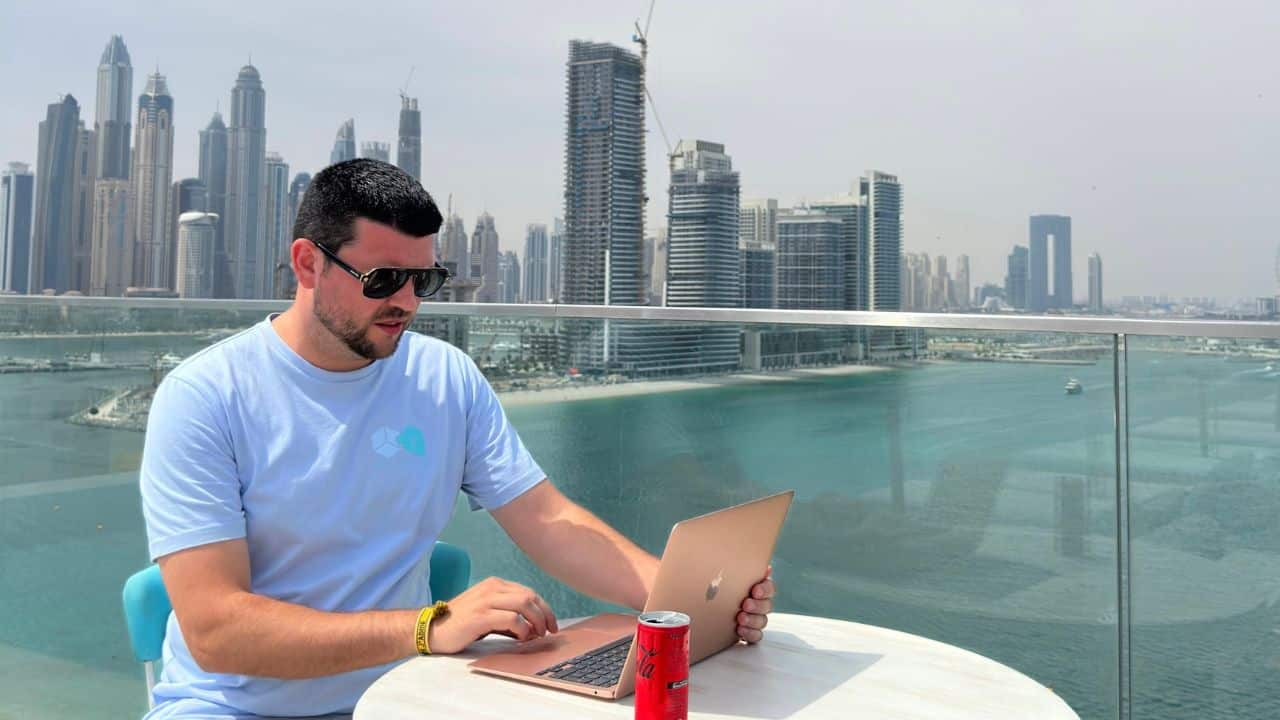
E-commerce mentor Ryan JB’s position is that flexibility in work obtained through this lifestyle is beneficial and a permanent change in work.
Ryan JB is an entrepreneur and a mentor for those seeking to enter the e-commerce industry. He has developed a philosophy around the “laptop lifestyle” and has become an advocate for it being understood as a structural shift, not a trend.
His perspective centers on his experience in digital infrastructure and how the creation of location-independent income streams may lead to long-term flexibility for individuals who participate.
What is the Laptop Lifestyle
JB defines the ‘laptop lifestyle’ not as convenience, but as a shift in how work and income are structured, a changing work structure from income, being money made from anywhere, and work simply being what is done to obtain the income.
More than a shift, JB seeks to highlight in his practice that this lifestyle is a competitive advantage in a digital-first economy, for a few reasons. First, work does not have to be constrained to geography, and this application is more than useful for traveling for work.
Next, income does not need to be generated on fixed schedules, but can operate outside of regular pay periods. Flexibility is the main factor in action, offering payment that is determined by personal regulation or agreements, rather than institutional.
Lastly, he cites individuals gaining control over both time and location as the final reason this lifestyle can be advantageous. JB’s position that the laptop lifestyle is advantageous implies that those who do not adapt risk falling behind in a system increasingly built around digital access.
Systemic and Structural, Not Temporary
Remote capabilities and digital platforms have redefined the workplace and productivity since the widespread introduction of them during the global pandemic. Individuals can now build independent income streams without traditional gatekeepers, and JB says this has significantly lowered the barrier to entrepreneurship through his experience.
He posits that online work has changed from an alternative to a mainstream facet of the workforce and is a necessary component.
E-Commerce as a Scalable Entry Point
Ryan JB highlights e-commerce, his area of expertise, as a starting model for the laptop lifestyle due to its scalability and accessibility.
E-commerce platforms can be operated from anywhere where strong internet access is available, and further, allow for automation and systemization of tasks, decreasing the learning curve, according to JB. Lastly, e-commerce work supports continuous income generation rather than the traditional hourly output model.
Systems may be able to generate revenue continuously, paving the way for income that is independent of time spent working. Overall, his position is that e-commerce works with the laptop lifestyle to support long-term growth and sustainability.
Building for Flexibility, Not Just Income
JB emphasizes that the laptop lifestyle requires intentional design, despite the flexibility he establishes, which is central to the philosophy. On the contrary, flexibility is not a way to avoid responsibility, but about structuring work that supports people’s mobility and long-term independence in the traditional work system.
He cites compounding effort as the key to intentional design. Traditional work resets daily per the time-for-pay model, but digital business, in JB’s experience, may continue generating revenue after initial setup, semi-independently with automation and systemization.

Ryan JB emphasizes that the laptop lifestyle requires intentional design. It is not about avoiding responsibility, but about structuring work more efficiently. By focusing on skill development, digital systems, and consistent execution, individuals can create income streams that support mobility and long-term independence, but skills must be developed, and consistent effort must be applied in order to obtain them.
JB’s position is that those who are successful at the laptop lifestyle prioritize the long-term sustainability of their systems over short-term gains. They engineer the lifestyle to work for them, but they do not happen to achieve success. This approach reflects a broader shift toward work models that prioritize adaptability, ownership, and long-term value creation in the digital economy.