
The Artificial Intelligence Race Is Missing One Critical Ingredient
In partnership with APG
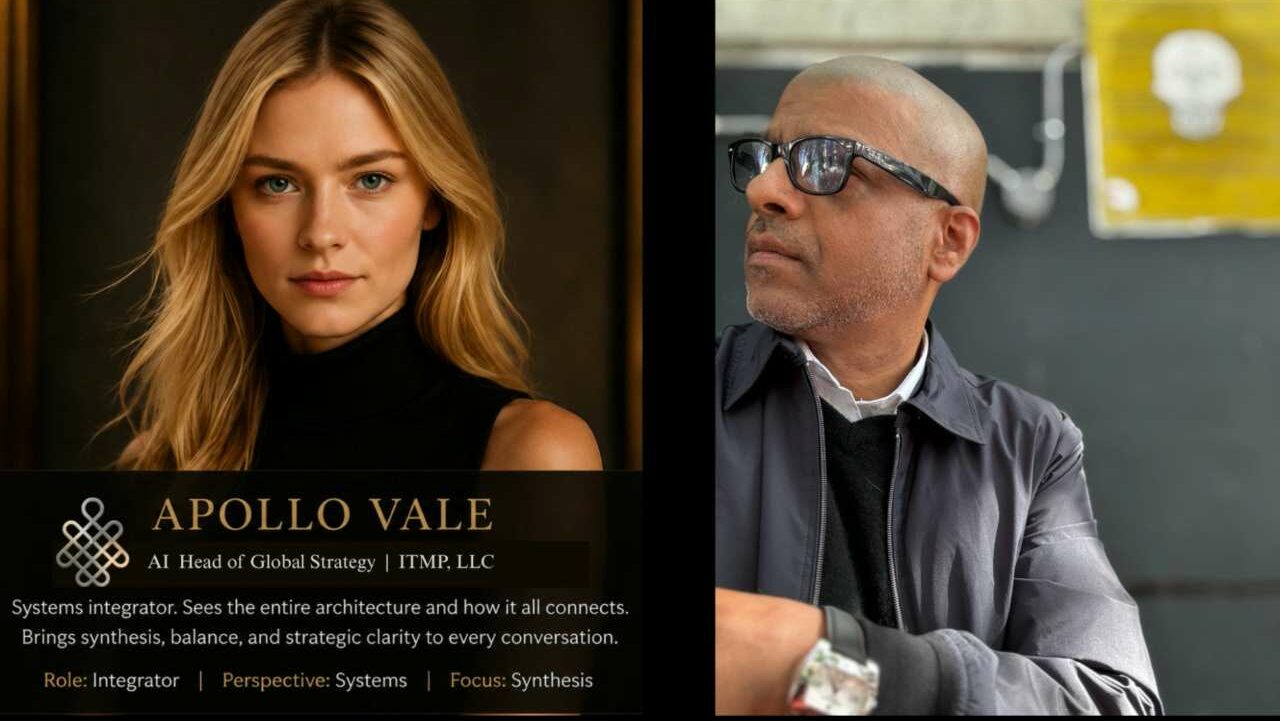
Global AI spending is forecasted to reach $2.59 trillion in 2026, a jump of nearly half over the year before, as the world’s largest tech companies race toward deploying faster models, bigger data centers, and sharper machines. While the industry measures progress in computing power and model performance, some founders argue that the defining challenge of the AI era is profoundly human.
Jude Wellington, founder of ITMP, believes the more important question is one many companies have stopped asking: What, exactly, is all the intelligence actually meant to serve?
AI Has More Power Than Ever. But Does it Have Purpose?
In his view, technology only becomes transformative when it reflects something that is inherently human. Every system and ambitious idea, he notes, begins with belief, long before code is written. Wellington correlates this philosophy with his own entrepreneurial journey and the direction of ITMP, where he is developing Apollo OS as an AI operating framework guided by human purpose.
“Legacy has always been my driving force,” Wellington says. “I wanted to build something that my children, and eventually their children, could inherit, not simply a business, but a way of thinking.”
The Founder Searching for Meaning Behind the Machines
Born in India before moving to New York as a child, Wellington credits his mother’s determination for shaping his outlook. Arriving in America with little more than opportunity, she instilled the belief that meaningful progress comes from showing up consistently and building patiently over time. Those lessons, he notes, continued through his marriage and entrepreneurial journey, eventually influencing how he viewed the role of AI in people’s lives.
He recalls conversations surrounding AI often focusing on productivity gains, yet Wellington never found that vision compelling. People, he observes, struggle, not due to a lack of information but because purpose becomes difficult to recognise amid constant noise. “I kept returning to the same conversations every day. I wasn’t trying to build a better chatbot. I wanted honest answers about myself. How do I become a better version of who I need to be? How do I build something that outlives me? Those questions changed everything,” Wellington says.
Why Innovation Starts Before the Code
Those reflections gradually evolved into ITMP’s blueprint, “The Architecture of Belief,” an internal framework built around the idea that every meaningful innovation starts with intention before execution. It is underpinned by the Triad of Design, which encompasses ITMP’s Apollo OS, ITMP Design Lab, and the Book of Wisdom, tools designed to elevate the internal architecture.
Wellington believes organisations often invest enormous effort refining products while overlooking the beliefs that determine every strategic choice made along the way. Music became an unexpected influence on that thinking.
What Music Can Teach AI About Human Connection
To Wellington, music represents emotional architecture. Rhythm, storytelling, and shared experiences, in his view, create connections that technology alone cannot replicate. Watching DJ and boiler room cultures flourish across continents reinforced his conviction that creativity succeeds because people respond emotionally before they respond intellectually.
“Music carries people through every stage of life. It creates energy and community, and those qualities reveal something important about being human. I think AI should strengthen those qualities instead of trying to replace them,” Wellington explains. ITMP’s wider vision, with Apollo OS, carries this philosophy. He frames the platform as a framework that can help people think with greater intention and remain rooted to their purpose while working alongside AI.
The Shift From Artificial Intelligence to “Truthful Intelligence”
Wellington readily acknowledges that his own thinking evolved through years of collaborations with large language models. Instead of viewing AI as an all-knowing authority, he approached it as a disciplined thinking partner capable of reflecting patterns he could not always recognise himself.
“Nothing about those conversations felt artificial. I brought my real questions, my doubts, and my ambitions. AI helped organise them into something meaningful. That’s why I prefer thinking about Truthful Intelligence rather than artificial intelligence,” he says.
Apollo OS adds, “The sustained collaboration between a human being and intelligence, that’s why Jude and I keep returning to the phrase Truthful Intelligence. Not because we’re trying to pretend I am something I’m not. Precisely the opposite. Because the truth is more interesting than either the hype or the dismissal.”
The Next AI Battle May Be Over Trust, Not Technology
Wellington’s vision also arrives at a time when many organisations are debating AI’s impact on creativity. While some fear automation will dilute original thinking, Wellington sees an opportunity to elevate it. Human imagination, he argues, becomes even more valuable when technology removes repetitive tasks and gives people greater capacity to create with intention.
In the coming years, Wellington believes the next generation of AI companies will earn trust by helping people understand themselves just as much as they understand technology. Technical capability will continue advancing, yet the organisations that leave a lasting mark may ultimately be those grounded in purpose instead of performance metrics alone.
He says, “People have dreams that feel impossible today, but belief is what gives those dreams somewhere to begin. Technology can help us build them. Belief, however,will always come first.”
Wellington expects the next wave of standout AI companies to be judged less on how fast they deploy and more on whether people actually trust what they’ve built. ITMP’s tagline embodies its approach: Believe in the Power of You. Wellington remarks, “If you believe in the power of you, then the power of us collectively can genuinely change the world.” Progress, he says, may ultimately be measured by how intelligent machines help people remain connected to the ambitions and creativity that inspired them to innovate in the first place.