
There is a particular kind of cultural shift that only becomes visible in retrospect. It does not announce itself with a manifesto or a movement. It accumulates in small individual decisions, in the slow migration of consumer choices from one set of values to another, until one day you look around and realise something has fundamentally changed and you cannot quite identify the moment it happened.
The shift in how a significant portion of British consumers relate to what goes into their bodies is that kind of change. It did not start with a single event. It started with a question, a quiet, persistent, increasingly hard-to-ignore question that kept surfacing at the kitchen table, at the farmers’ market, in the changing room, and eventually on the back of a protein tub: what is actually in this, and why won’t anyone say so?
The answer to that question, repeated across a decade and a half of purchasing decisions, has reshaped the food industry, the drinks industry, the fashion industry, and increasingly the wellness industry in ways that make for one of the more interesting cultural stories of the early twenty-first century. Strip it back. Keep it real. Show your working. The values sound almost aggressively simple. The fact that they constitute a genuine counterculture tells you something uncomfortable about how the alternative has been operating.
The Shift Started With Food
The organic food movement is where most people locate the origin of this shift, but that framing flatters it slightly. Organic food in its early mainstream form was not really about radical transparency. It was about a premium product category marketed to a premium consumer, with the ethics as lifestyle accessory. The deeper change was subtler and took longer.
It showed up in the slow erosion of trust in ingredients panels that read like chemistry syllabi. In the growing readership of books that explained, in plain terms, what the E-numbers and the modified starches and the flavour enhancers actually were and why they appeared in such volume. In the realisation, which arrived gradually and then all at once in the national conversation, that ultra-processed food had become the default rather than the exception in British households, and that the distance between what the packaging implied and what the product contained was, in many cases, substantial.
The conversation around ultra-processed food that has featured prominently in British public health and wellness discourse over the past two years is not a new conversation dressed in a new language. It is the endpoint of a process that began when consumers started reading labels and asking why simplicity was so apparently difficult to find. The answer, they discovered, was that complexity often benefited the manufacturer, not the consumer. Extended shelf life. Cheaper production. Products engineered for overconsumption. The list was long and not particularly flattering to the industry.
Then It Moved to the Glass
Natural wine did not make sense as a cultural phenomenon to the people who had always consumed wine comfortably. Wine was already natural, wasn’t it? Grapes, fermentation, oak if you were being traditional. What was there to rebel against?
Quite a lot, as it turned out. Industrial wine production had accumulated its own considerable arsenal of additives, adjustments, and interventions that the label was under no obligation to disclose. Mega purple for colour. Tartaric acid for balance. A list of permitted additions that the average wine drinker had no idea existed because there was no requirement to tell them.
Natural wine producers, to be clear, did not solve all the problems they identified. The category has its own contradictions and its own marketing excess. But what the movement demonstrated was that a meaningful number of consumers, given the choice, would take provenance and honesty over polish and performance. That they would accept a wine that looked different in the glass and tasted different on the palate if the person who made it could tell them, plainly and specifically, what went into it and what was kept out.
Craft beer made the same argument at a different price point and reached a different audience. The brewery whose output can be traced to a specific person, a specific place, a specific set of decisions made without the primary motivation of extending shelf life, found an audience that had already stopped trusting the mass-produced alternative. Not because mass-produced was necessarily inferior in every measurable way, but because the relationship between producer and consumer had been reduced to a transaction in which one party knew everything and the other was expected to know nothing.
The same instinct is visible in what has happened to fashion. The question of who made particular clothing items, which sustainable fashion advocates spent years trying to push into mainstream conversation, has not transformed the industry, but it has influenced how a significant portion of younger British consumers relate to the act of purchasing clothes. Transparency about supply chain, about labour, about materials has moved from niche ethical concern to genuine purchase criterion in a relatively short period. Brands that cannot answer the question have begun to feel like brands with something to hide, because they are.
The Last Frontier: What Goes in the Shaker
The wellness supplement market, by the standards of this trajectory, should have been ahead of the curve. These are products consumed directly by the body, often by people who are paying close attention to exactly what they put into it. The consumer profile, fitness-conscious, health-aware, interested in performance and wellbeing, maps precisely onto the demographic that drove the natural wine and clean food revolutions.
Instead, the supplement industry became arguably the most aggressively opaque sector in the entire consumer goods landscape. Proprietary blends, permitted under UK and US regulations, allow brands to list ingredients without disclosing individual quantities. Fillers, artificial sweeteners, flavour compounds, and colourants appear in products whose marketing implies scientific precision while the label makes precision impossible to evaluate. Words like “matrix,” “complex,” and “ultra-advanced formula” entered the vocabulary of supplement marketing not because they described anything specific but because they helped create the impression of science for a consumer who wanted to believe someone was being rigorous on their behalf.
The frustration this generated took time to surface in the market because the supplement consumer had not yet applied the same critical toolkit to their protein powder that they were beginning to apply to their food. That changed, as these things tend to, in accumulation rather than all at once.
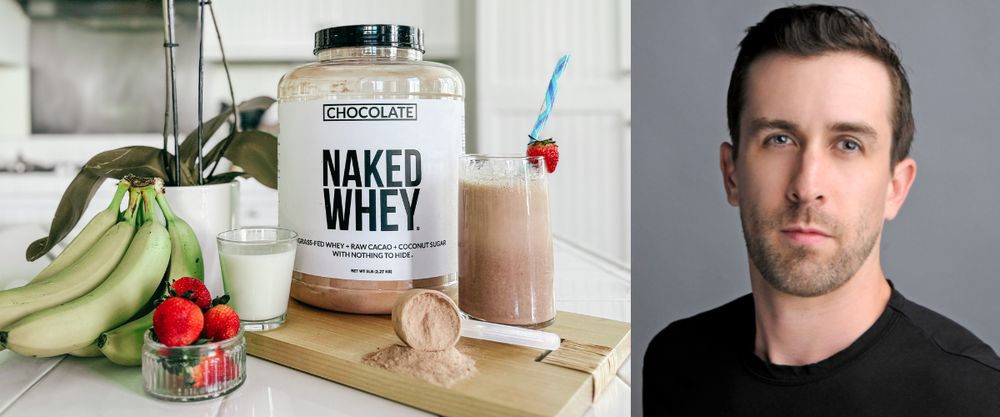
“I was a competitive athlete and I cared deeply about what I was putting into my body,” says Stephen Zieminski, who founded Naked Nutrition in the US in 2014 after a career as an All-American cross-country and track runner. “I started genuinely interrogating the products I’d been using for years and I couldn’t evaluate them. The ingredient lists were enormous. There were things in there I couldn’t identify. No information about sources, no clarity about quantities. I kept asking the most basic question: why does this need to be so complicated? And the answer I kept arriving at was that the complexity existed to prevent scrutiny. Not to improve the product.”
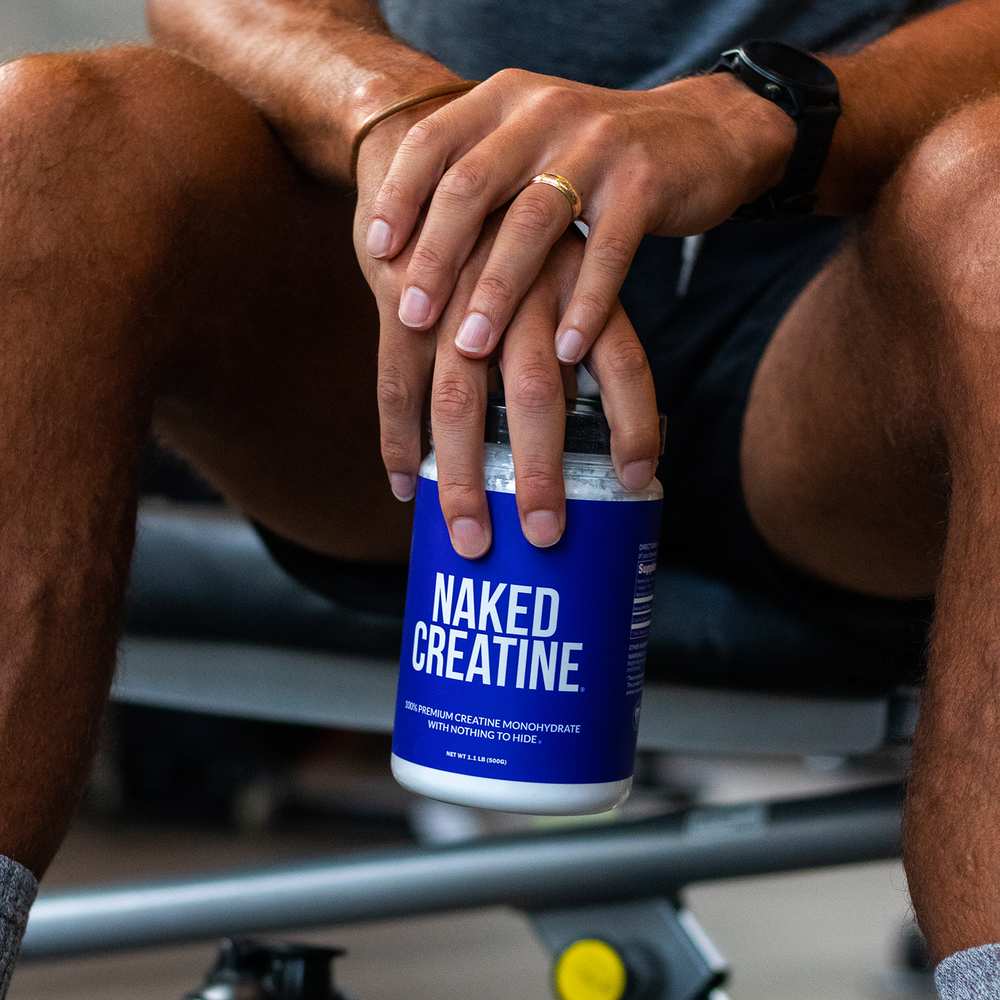
Naked Nutrition’s founding proposition, single-ingredient products, fully disclosed sourcing, nothing added that did not need to be there, sounded like a provocation to an industry that had convinced itself complexity was what the market wanted. Their flagship whey protein contains whey protein from grass-fed cattle on small farms. The ingredients panel is three words. There is nothing to hide because there is very little obscured from the consumer.
“The industry told us, in various ways, that we were being naive,” Zieminski says. “That consumers wanted science-looking products. That simplicity would read as cheap. We thought the opposite. We thought there were a significant number of people out there who were smart enough to be insulted by what they were being sold, and who would respond to something that just told them the truth.”
Ten years later, Naked Nutrition is one of the most recognised supplement brands in the United States. Last summer, it arrived in Britain.
Why Britain, Why Now
The timing is not accidental. Naked Nutrition’s UK launch lands in a market that has, over the past decade, primed itself precisely for this conversation. British consumers who have been reading Michael Pollan, tracking the ultra-processed food debate, choosing craft over mass-produced, and demanding to know who made their clothes are the same consumers who are now standing in a supplement aisle asking why the product in their hand lists forty-seven ingredients and won’t tell them where any of it came from.
The parallel is too neat to be coincidence. In every category where it has taken hold, the clean label revolution has been influenced by the same underlying shift in the consumer relationship to corporate production: a declining willingness to accept opacity as normal, and a growing sense that complexity is a performance designed to prevent rather than invite scrutiny.
British gym culture reflects this maturity in ways that would have seemed unlikely a decade ago. The hypermasculine, results-at-any-cost aesthetic that defined early 2010s fitness culture has given way to something more considered, an interest not only in performance but in longevity, in quality of input, in understanding rather than simply consuming. The gym-goer who once bought whatever had the most aggressive marketing is now reading ingredients panels. Applying the same scepticism they have learned to bring to everything else.
“British consumers have a healthy scepticism that I find genuinely refreshing,” Zieminski says. “You can’t just arrive and announce yourself as a clean brand and expect that to mean anything. You have to actually demonstrate it. That suits us perfectly because demonstrating it is all we’ve ever done. The decade of evidence in the US is the argument. We’re not asking anyone to take our word for it.”
What This Actually Tells Us
The clean label movement, traced from its roots in food through to its current presence in the supplement market, is not really a story about health. It is a story about trust. Specifically, about what happens to consumer behaviour when trust in institutional production is systematically eroded by the discovery that the institution has been exploiting information asymmetry for its own benefit.
Every category where this shift has taken hold tends to follow a similar pattern. A product that is more complicated than it needs to be. A consumer who eventually discovers that the complexity serves the producer rather than them. A demand for simplicity and disclosure that the existing market is structurally unable to meet without undermining its own model. And a wave of brands, some principled and some opportunistic, that emerge to serve the demand the old model could not satisfy.
What is interesting about the supplement industry specifically is how long it took to reach this point. These are products consumed by people who are, almost by definition, paying attention to their bodies. The clean food revolution had already happened. Natural wine had already happened. Sustainable fashion had already happened. And yet the protein powder in the gym bag retained its forty-seven-ingredient formula long after the same consumer had started demanding something different from everything else they bought.
The explanation, probably, is that the fitness culture within which supplements are consumed had its own particular relationship to masculinity and performance that made scrutiny feel like weakness for longer than it did in other contexts. The consumer who was asking hard questions about their food was, for a while, also accepting improbable claims from their pre-workout without the same critical apparatus. That is changing now, and it is changing in the same direction everything else changed in: toward simplicity, toward disclosure, toward the radical and somehow still controversial idea that a company should be able to tell you plainly what it has put in the product it is asking you to pay for.
Naked Nutrition’s arrival in the UK is a data point in that story, but it is not the story. The story is about what a generation of consumers, armed with more information and less tolerance for opacity than any previous one, has quietly decided it expects from the industries it sustains. Strip it back. Show your working. Be transparent with consumers.
It is, when you lay it out plainly, not a complicated task. The fact that it constitutes a counterculture may suggest how far parts of the mainstream had drifted from it.
These statements have not been evaluated by the Food and Drug Administration. This product is not intended to diagnose, treat, cure or prevent any disease.