
Bloc Party’s Kele Okereke: ‘I was starting to believe that love and romance wasn’t real’
The band’s bracingly honest seventh album, Anatomy of a Brief Romance, sees the frontman chronicle both the birth and death of a whirlwind relationship, warts and all. Of making the record, he says: “I’m wondering if I’ve made myself undateable”
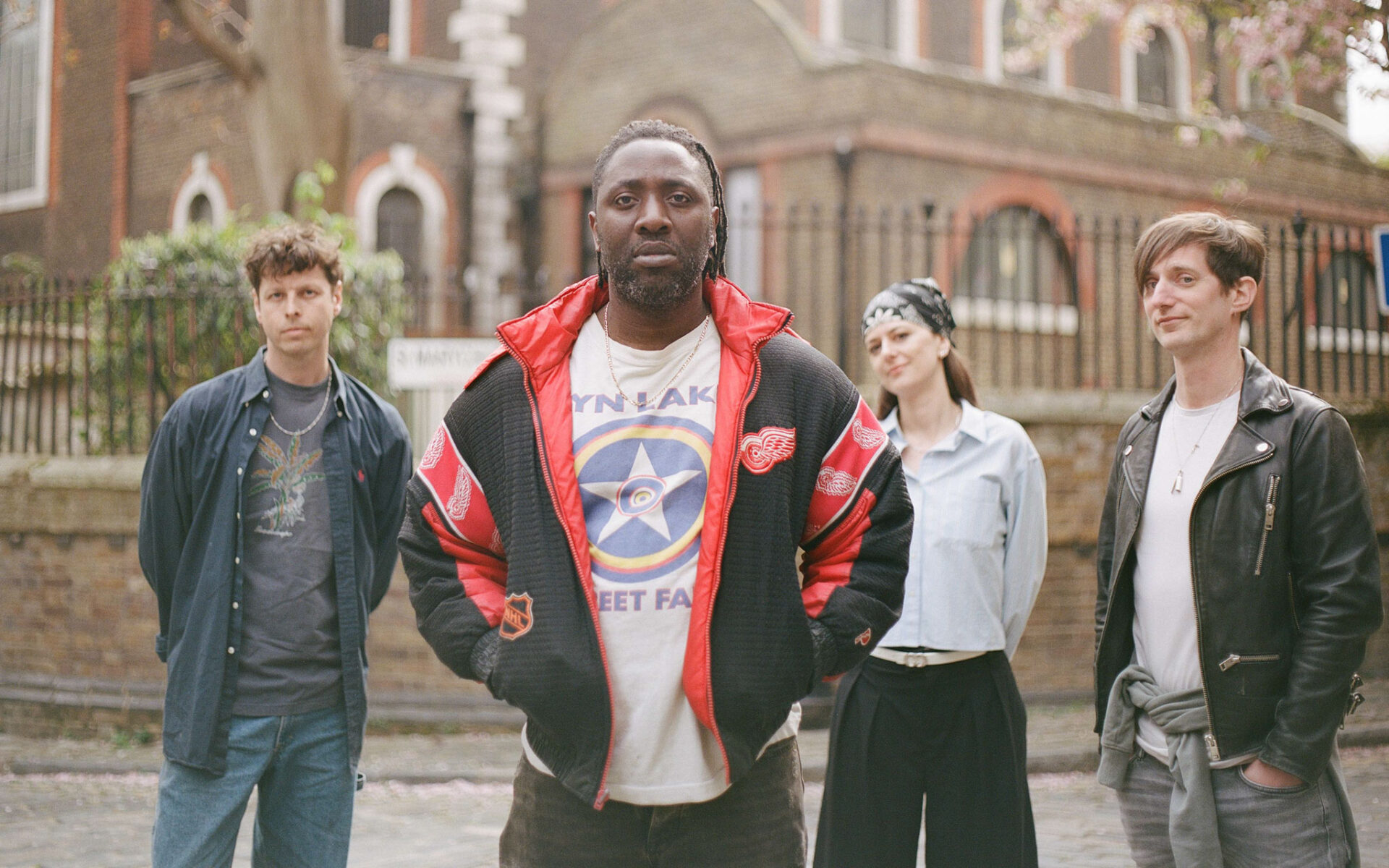
Bloc Party’s new album is a striking departure for the indie heroes. Anatomy of a Brief Romance is an entirely honest, chronologically told story of a turbulent period in frontman Kele Okereke’s life. The breakdown of his relationship with the father of his children led to a whirlwind year-long romance that is documented on the new record, from the heady highs to its crushing end. “In the past, there’s been aspects of my life in songs that I’ve written, but I’ve never written this autobiographically before,” Okereke says. “I had to get it down to make sense of it for myself. Once I did that, it was like our chapter had been closed.”
We spoke to the singer about this new level of candidness in his lyrics, the foregrounding of his sexuality, why this sequence of events made him doubt the existence of love, and the upcoming 20th anniversary of the band’s dark and prescient 2007 album A Weekend in the City.
Anatomy of a Brief Romance is a truly candid portrait of a short but impactful relationship. What happened?
I started dating this new person soon after my 11-year relationship finished. Going straight into another relationship meant I didn’t have to deal with a lot of stuff that I had gone through. I just went through this really tough time in this long relationship, but this new one was very much a beacon of hope. When that ended, it hit me doubly. I’d just come out of this very long life-partner situation, and I was starting to believe that maybe love and romance wasn’t real. Then this person comes along and revives me, only to be taken away.
The album starts with the song ‘22.01.22’, placing it at an exact moment in time.
We met then but didn’t start dating until the end of 2022, and we broke up at the start of 2024. As all my friends will attest, I was really inconsolable. I’d not been heartbroken like that before, and I think that’s why it did a bit of a number on me. I’ve generally been a serial monogamist, so I’ve not really had that much experience of that sort of thing. Lots of my single friends say this is what dating is like, you know, and I think I was quite delicate. In the past, there’s been aspects of my life in songs that I’ve written, but I’ve never written this autobiographically before. When [the breakup] happened, I thought, ‘This doesn’t really seem fair,’ so I had to get it down to make sense of it for myself. Once I did that, it was like our chapter had been closed.
The album’s first half is so vibrant and representative of a new love – how did you get into a headspace to write about those feelings when the eventual heartbreak had already come?
This record started when we wrote a song called ‘Blue’ that we put out on an EP in 2023. I was in the middle of this relationship and I was very lovestruck. ‘Blue’ was a declaration of that, and it was something I was really, really proud of. When the relationship ended, I got quite conflicted. I thought, ‘I’m not going to be able to sing this song night after night, because what I’m singing about isn’t real.’ But I was so proud of the song, and I thought, ‘No, I’ve got to go back and tell the whole story.’ So ‘Blue’ is only a beat of the story, rather than the destination. In order to make that song make sense, I had to tell everything from start to finish.
Every single lyric on the album is about something that actually happened – was that tough to force yourself to be so specific?
It’s really, really important that [listeners] hear the whole thing. I’m listening to [the album] a lot to see what it’s showing me about myself, with some distance and with the hurt gone. ‘What does this feel like?’ Everything that you hear about, every image, every scene, was something that really happened. It really does feel like a document to me, not a work of fantasy. That’s a new thing for me, to put my actual life out there without it being hidden in abstraction or collusion.
There’s one particularly brilliant and evocative line: “I’m thinking about learning the accordion / And serenading you under your window.”
I do have an accordion, and it’s something that we were learning together before we split up. Only recently, in the past month, I’ve actually started to play it properly.
How did making this record change you as a songwriter?
This is the seventh record that we’ve made, but my understanding of who I am and what it is that I do really came into focus when making this. It didn’t really come from a rational place; it was completely an emotional place. The act of songwriting was quite healing to me, and I just realised in that moment how lucky I was to be able to turn my angst into something, to spin it into gold and make something that will no longer be mine.
The album uses male pronouns prominently throughout, and it feels like your identity as a gay man is front and centre here in a way it wasn’t on earlier Bloc Party music…
It’s funny this, isn’t it. At the start of my career, I wasn’t really comfortable being open at all. Although I was out to friends and family, I wasn’t out in a professional way. There was a big thing at the start of my career about talking about my sexuality, and it was something that I always resisted. I feel with this record, and also with what’s happening in the world right now, there is a desire to be visible and a desire to live. Because it’s the life that I live. I’m a lot older, and I think I’m a lot more sure of what my space in the world is.
Bloc Party’s second album, A Weekend in the City, turns 20 next year, and its themes of creeping authoritarianism and observing anti-immigration sentiment feel even more relevant now…
It’s funny you say that, and it’s somewhat depressing to hear it, but [that album] is in my thoughts a lot right now. We’ve already started working on the next Bloc Party record, and I feel like it will somehow be connected to A Weekend in the City. That’s all I’m gonna say about that. Listening to that record, it’s scary how a lot of what I was singing about has come to fruition.
I was living the high life a bit, and I was feeling shit because of all the partying and stuff. I was travelling around the world as this representative of this new modern Britain, whereas back home I was feeling quite worried about where I could see Britain was going. I think we’ve been proven right to be alarmed about the way that Britain was going, because we’ve arrived there now.
Do you have concerns about the new album’s reception, when it’s so specific but all told from your perspective?
What I really hope is that people don’t come away thinking this guy is a bad guy or a villain, because he wasn’t at all. We came together and we fell apart, but there was no treachery. I see that now, whereas in the moment I was really hurt and angry and sad, but I think it’s important to make it clear that this guy wasn’t a villain. I keep thinking about that Lily Allen album [West End Girl], where she painted this story about [her ex], and I don’t want that for this guy. It was a fucked-up situation, but I see that there was no malice.
And are there any regrets?
The one regret I have about the record is on the song ‘Eulogy’, where I talk about what I learned from him. I say, “You did the best with what you had,” and I wish that I’d sung, “We did the best with what we had,” rather than putting it all onto him. Because it was a relationship, and there were things that I did that I realise might not have been easy either. That’s what I hope people get from this – it’s the sound of two people failing, not just one.
You’ve got some space from this relationship now. Aside from inspiring the album, what do you think that time did for you that you’ll take into the future?
I do have a slight worry that, because I’ve been so candid, I don’t know what love is going to feel like again. When I meet people now, there’s a sense that this isn’t gonna be forever, so just enjoy it for what it is. I do wonder if, in detailing all of these thoughts, I’m making it harder for myself to connect with people. I don’t know, and only time will tell. I’m wondering if I’ve made myself undateable!
Because of writing this album?
I feel like if anyone dates me, they might… I don’t want anyone who I’m dating to think they’re going to get a record, you know? There could be no more love songs, and I think that’s it for me mentally as well. I don’t want to sing about love and desire anymore. I’ve done this; I told this story, so now the next thing has to be something completely different.
Taken from the August/September issue of Rolling Stone UK, out now. Order your copy here.