
Why Fatma Helal’s Debut Novel About Female Identity Arrives at the Perfect Time
In partnership with Fatma Helal
By Will Jones
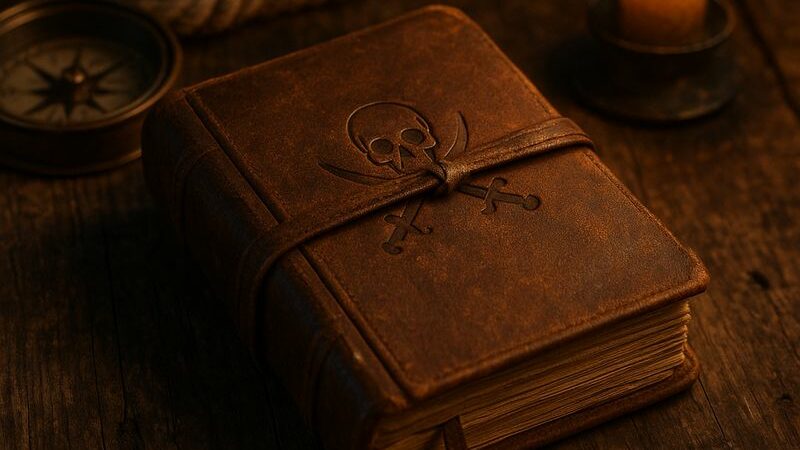
Maritime Fiction Reimagined Through a Female Lens
“Women who claim the sea claim something men have guarded for centuries,” Fatma Helal observes, her words carrying the weight of a debut novelist who spent years crafting a narrative that refuses to stay in its assigned lane. Her first novel, “The Legend of Moura: Swallows and Vultures,” arrives at a moment when publishing demographics are shifting and reader appetites are demonstrating a growing hunger for complex female protagonists who refuse simplification. The timing proves notable. Women now author the majority of published books, a reversal from 1960, when female-authored works accounted for 18 percent of new releases. Helal enters this landscape with a historical adventure that reimagines 18th-century piracy through the eyes of Isabel Cardoso, the granddaughter of a Portuguese shipbuilder, who transforms betrayal into liberation.
Helal describes herself distinctly when she says, “There are readers, authors, writers, and then there are storytellers. I’ve always carried scenes, places, and entire atmospheres inside my imagination. Characters grew there, lived there, whispered their stories to me.” Her approach to storytelling emerged from childhood fascination with pirates, ships, and the call of the sea, though she never imagined she would write a full heroic tale filled with so many characters. “Each character is very close to my heart and they are all like my children,” she explains. Her aim extends beyond publication success. “I want young generations to cosplay them at parties. I want readers to live with my characters and feel them.” She envisions her characters becoming legends, living beyond the pages through readers’ imagination and connection.
The novel follows Isabel’s journey from the Porto shipyards to a pirate captain. When a trusted partner betrays her, Isabel takes control of her fate. She steals what belongs to her along with her betrayer’s boots, purchases a ship, and recruits a crew comprising Éder and Inez, twins who survived childhood hardship, Amine, a cook from Tangier, Azhar and Ceferino, skilled fighters, and Tomé, a traveller from Macau. Together, they form a new kind of pirate crew, one that values loyalty, wit, and freedom above all else, including gold. The boots Isabel steals become a recurring symbol throughout the narrative, representing her rebellion, her inheritance, and the mysterious connection between the woman she becomes and the legend she’s destined to meet.
Craft and Character Development
Helal’s writing is described as rich in detail and feeling. Ports, shipyards, and coastlines throughout the story feel alive, grounding readers in sensory experience while advancing character development and plot. Isabel stands out as a believable and determined young woman who grows into her strength throughout the narrative. Her longing for Ana Maria, her childhood friend left behind, gives the story an ache that runs beneath the adventure, adding emotional complexity to what might otherwise remain purely action-driven. The story honors both the adventure and the ache, the freedom of the open water and the cost of leaving shore.
The capacity to weave multiple narrative threads together distinguishes accomplished fiction from competent storytelling. Isabel’s personal journey, her relationships with crew members, her longing for Ana Maria, the symbolism of the stolen boots, and the larger adventure framework all interconnect organically. Contemporary readers expect complex emotional landscapes even within action-driven narratives. The inclusion of romantic or deeply emotional connections enriches stories without becoming their sole focus, a balance that serves both character development and plot momentum. The novel explores themes of true friendship and love alongside empowerment, refusing to privilege any single element over others.
The narrative examines possessiveness and its consequences through Isabel’s relationships. When trusted partnerships dissolve through betrayal, the protagonist must navigate the wreckage while building new bonds based on different foundations. Her crew becomes her chosen family, yet the story acknowledges the complications that arise when loyalty confronts self-interest. Narcissism is evident in characters who prioritize their own advancement, regardless of its impact on others, creating tensions that drive conflict and character growth. These psychological complexities add depth to what could be straightforward adventure fiction, instead creating space for readers to consider how power dynamics shape human relationships.
Industry Context and Reader Appetite
Publishers accept between one and two percent of manuscripts they receive, with success rates for agented authors climbing to roughly 10 percent. Many debut authors write at least one complete novel before producing the work that ultimately gets published. The average age of debut novelists stands at 36 years, suggesting the journey toward publication requires substantial perseverance. Helal’s manuscript represents years of work, the story refusing to leave her until she finally sat down to write it.
Fiction sales rose 12.6 percent to $3.26 billion in 2024, driven partly by character-driven narratives exploring identity and relationships. Readers are demonstrating an increasing appetite for stories that move beyond Western frameworks, particularly those that examine female agency within complex cultural contexts. The Middle East publishing market, valued at over $2.8 billion in 2025, saw both digital and audiobook sales surge in 2024, signaling global interest in diverse voices. Historical fiction currently experiences strong market performance, frequently examining women’s roles in past societies while commenting on contemporary gender dynamics.
Helal joins numerous authors writing about female pirate captains, a subgenre that continues to attract both writers and readers interested in maritime adventures featuring women who defy historical constraints.
Stories That Shape Imagination
“I wrote this book because the sea has always been a place where the rules could be rewritten,” Helal reflects. “Women have been written out of maritime history, relegated to waiting on shore or serving as cautionary tales. Isabel represents the women who went to sea anyway, who captained ships, who fought and navigated and commanded respect through competence.” The novel explores how individual choices ripple through communities, how betrayal reshapes trust, and how chosen families form under pressure. Ships become microcosms where traditional hierarchies face challenges, where competence matters more than birthright, and where characters must negotiate new forms of social organization.
Isabel’s crew, comprising individuals from diverse cultures and backgrounds, embodies historical possibilities regarding maritime diversity. The twins, Éder and Inez, bring their survival instincts honed through childhood struggles. Amine contributes culinary skills and cultural knowledge from Tangier. Azhar and Ceferino offer fighting prowess. Tomé brings perspectives shaped by travels from Macau. Together, they create dynamics that explore friendship, loyalty, conflict, and reconciliation. Helal’s focus on an ensemble cast rather than a solitary hero allows for a richer exploration of how individuals function within groups, how power is distributed among equals, and how collective action requires negotiation and compromise.
The global book market is projected to grow from $142.72 billion in 2025 to $156.04 billion by 2030, with the Middle East expected to become one of the fastest-growing publishing regions during this forecast period. Censorship attempts increased by 65 percent in 2023 compared to 2022, targeting 4,240 unique titles, according to the American Library Association. Publishers and authors navigate complex landscapes where choices about which stories to tell carry various stakes. Helal’s debut enters these conversations, contributing to evolving dialogues about which stories matter and whose voices deserve amplification.
Reflecting on her work and its place within broader literary culture, Helal returns to fundamental motivations. “Stories shape how we understand what’s possible,” she observes. “When women see themselves as ship captains, as leaders, as people who take what’s theirs and chart their own courses, it expands the imaginative territory available to them. Isabel’s story is a work of historical fiction, but it resonates with anyone who has ever been told they cannot do something because of who they are. The tension between what we gain and what we lose when we choose ourselves drives everything worth writing about.”