
‘The Odyssey’: Christopher Nolan on ‘incredible’ Elliot Page and ‘dark, frightening’ Cyclops
As his magnum opus The Odyssey hits cinemas, Christopher Nolan talks to RSUK about his “dark, frightening” cyclops, why he avoids six-day working weeks and reuniting with “incredible” Inception star Elliot Page
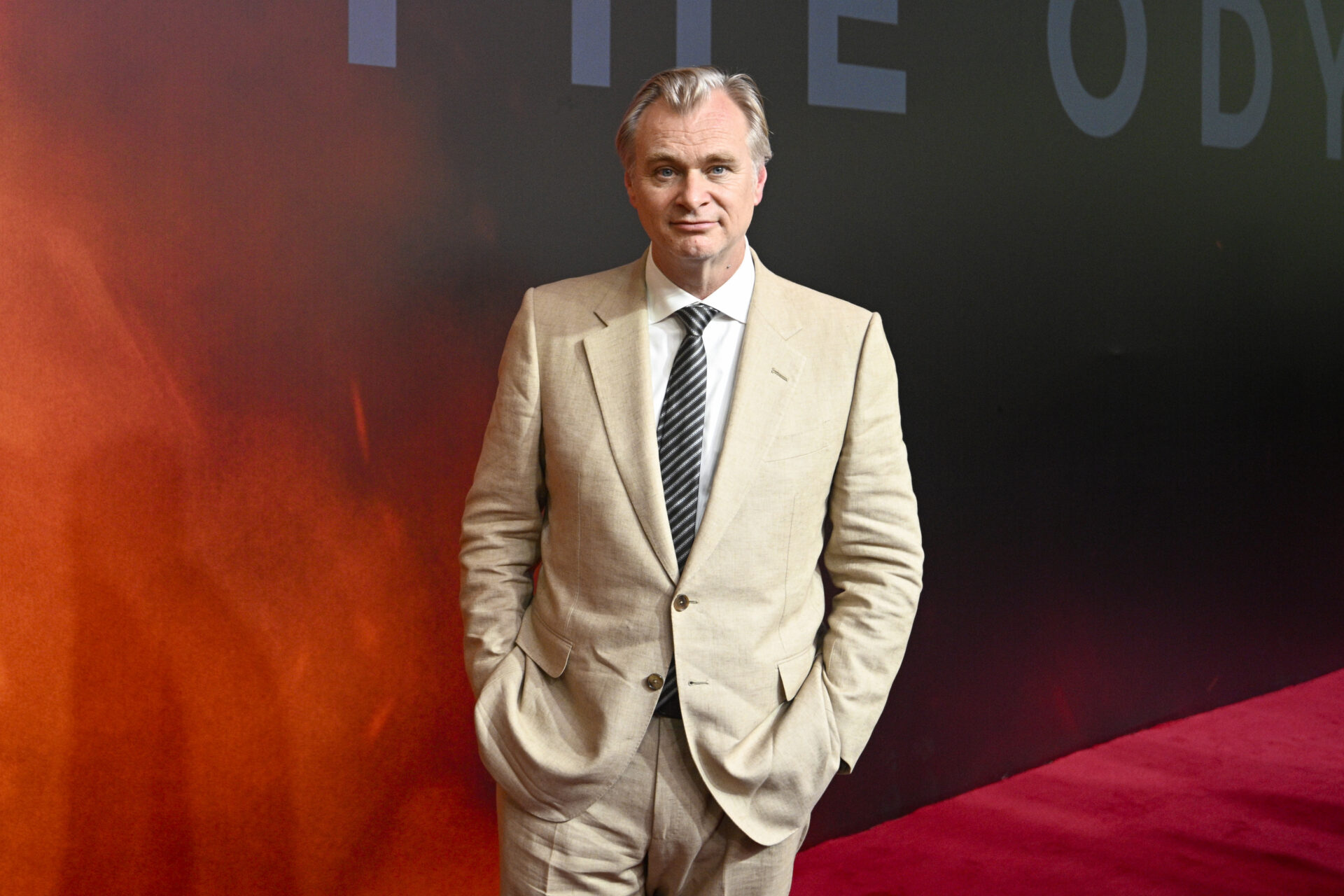
Formidable is the director whose aversion to smartphones is as newsworthy as his movies. And yet, Christopher Nolan is winningly laid-back when RSUK raises the (depressingly inevitable) prospect of viewers watching his latest masterwork, The Odyssey, on handheld devices.
“Eventually, yes, some people are going to be watching it on the Tube on their phone,” he concedes. “But the image on the phone is going to look great, because we shot it on IMAX!” he adds with a smile.
That said, the auteur would obviously encourage viewers to catch his staggering adaptation of the 8th-century BCE epic poem Homer’s Odyssey on the big screen if they can. “Well, if they can, it’s technically a really marvellous way to be immersed by the imagery and really feel like you’re part of the story,” the 55-year-old explains.
“But we’re putting the film out in all different formats. I’ve very carefully mastered all the different formats from our IMAX negative so that any cinema you go to see it in is going to be projected as well and as large as possible. Seeing it with an audience, that’s really the key. It’s not so much the technical, for me, as the thing of being in a group of people responding to a story. That’s very exciting.”
Here, the man behind Oppenheimer and Inception reflects on his star Matt Damon’s leadership style, balancing realism with fantasy and The Odyssey’s surprisingly therapeutic focus on the “elemental.”
“It’s all about food and drink and love and death!” he says.
What did this story teach you about good leadership?
That’s a really tough question, actually [laughs]. Because what The Odyssey tells you about leadership is ambiguous. Odysseus’s relationship with his men forms a really important part of the story. He makes a lot of questionable decisions. I put together a really great group of actors to play his crew, with Himesh Patel as the voice and face of them, most obviously. They were out there, they learnt how to row the boat, raise the sails. They’re out there on the waves with him really trying to burrow into that. I think there’s a lot of what not to do, in terms of, you know, he ignores a fair amount of warning signs, in terms of discontent, things that are going wrong.
But I don’t know, the thing about directing a film is, you have to be very mindful of really bringing a group of people together who can give of their best. This film in particular was a very challenging film for everybody. But there was a great spirit behind it.
The smartest thing I did was having Matt Damon come and play Odysseus. Matt, other than being a terrific actor and a great movie star, he’s a great leader himself. He leads from the front. He approached everything with this great spirit of optimism and can-do attitude. And that really was leading by example. You saw everybody fall into line with that.
I’m genuinely fascinated to hear about, when you’re leading on a film that I’m sure is a bit of a 24-hour commitment, do you take weekends off, do you take Sundays off? Do you take time to yourself where you can find it? Is that space important to you?
I mean, it is. But it’s not really so much time off, for me. It’s sort of rest period. Everybody needs [that]. I don’t like working six-day weeks, which a lot of productions do. We worked five days. Give people time to rest. For me, the Sunday is usually about going through the script from start to finish. Seeing, OK, what did we do the week before? How do we move it all forward? I want to be super prepared for everybody on Monday. So, I tend to use the weekends for a bit of physical recuperation, which we all need on a film like this, but also, always looking at the script.
I feel like a lot of fantasy films, including ones for adults, can sometimes be quite childlike, and there’s not necessarily anything wrong with that. But what I liked about this film is that there’s a seriousness to the fantasy that makes it realistic. Was it in your mind that you wanted to make a fantasy film for adults?
I wanted to make a fantasy film where the tone of the fantasy elements would have as much gravity as the more real and relatable elements. You’re trying to maintain a consistency of tone. For me, by definition, if you’re going into the cyclops’s cave and you’re experiencing that in a real way, that’s going to be dark, that’s going to be frightening, that’s going to be tense. It’s not so much being adult or childlike, I would say, because those are very blurred boundaries, really, in movies and how you receive stories. But it’s about having weight and gravity to these things, so that they feel as real as the more obviously real elements.
I found the film therapeutic because it depicts an age before technology. Was it as therapeutic to make for that reason?
There was something interesting about jumping back to an older time and looking at just really the most elemental things. It’s all about food and drink and love and death! And all the rest. That’s one of the fun things about cinema. You can take an audience into a world where it’s really the most primal and fundamental things in life that are brought to the surface.
My favourite thing about the film is Elliot Page. I think he’s brilliant in that role. It fits him like a glove. What does it mean to you to be working with him again?
It was really thrilling to work with Elliot again. We worked on Inception some years ago. I felt with his character [Sinon] in The Odyssey, he brings something really special to it. Because, in a way, you’re looking to put a face on certain elements of what Odysseus has done, what that means for the world as a whole. You’re looking to put a face on the tragedy of war. And I think he did an incredible job.
Would you be interested in doing an adaptation of Iliad?
I actually was attached to the film Troy 20 years ago. And that is a great script written by David Benioff based primarily on Iliad. It didn’t work out, but I spent a lot of time thinking about how I would do the horse. Because even though the horse isn’t in the Iliad, David put it into the script. So, I had to sort of work out my approach to how you would portray this with some kind of credibility when the whole audience knows it’s stuffed of Greeks. So that, the approach that’s in the finished film, is something I worked out a long time ago.
I watched the film on an IMAX screen. Then, on the Tube this morning on the way here, of course, everyone was watching content on their phones. Why is important to you that people see this on a big screen if they can?
Well, if they can, it’s technically a really marvellous way to be immersed by the imagery and really feel like you’re part of the story. But, you know, we’re putting the film out in all different formats. I’ve very carefully mastered all the different formats from our IMAX negative so that any cinema you go to see it in is going to be projected as well and as large as possible. Seeing it with an audience, that’s really the key. It’s not so much the technical, for me, as the thing of being in a group of people responding to a story. That’s very exciting. And eventually, yes, some people are going to be watching it on the Tube on their phone, but the image on the phone is going to look great, because we shot it on IMAX!
The Odyssey is in cinemas from 17 July