
Arlo Parks: Nocturnal Awakening
For third album 'Ambiguous Desire', Arlo Parks journeyed into New York clubland to rediscover herself through nightlife culture.
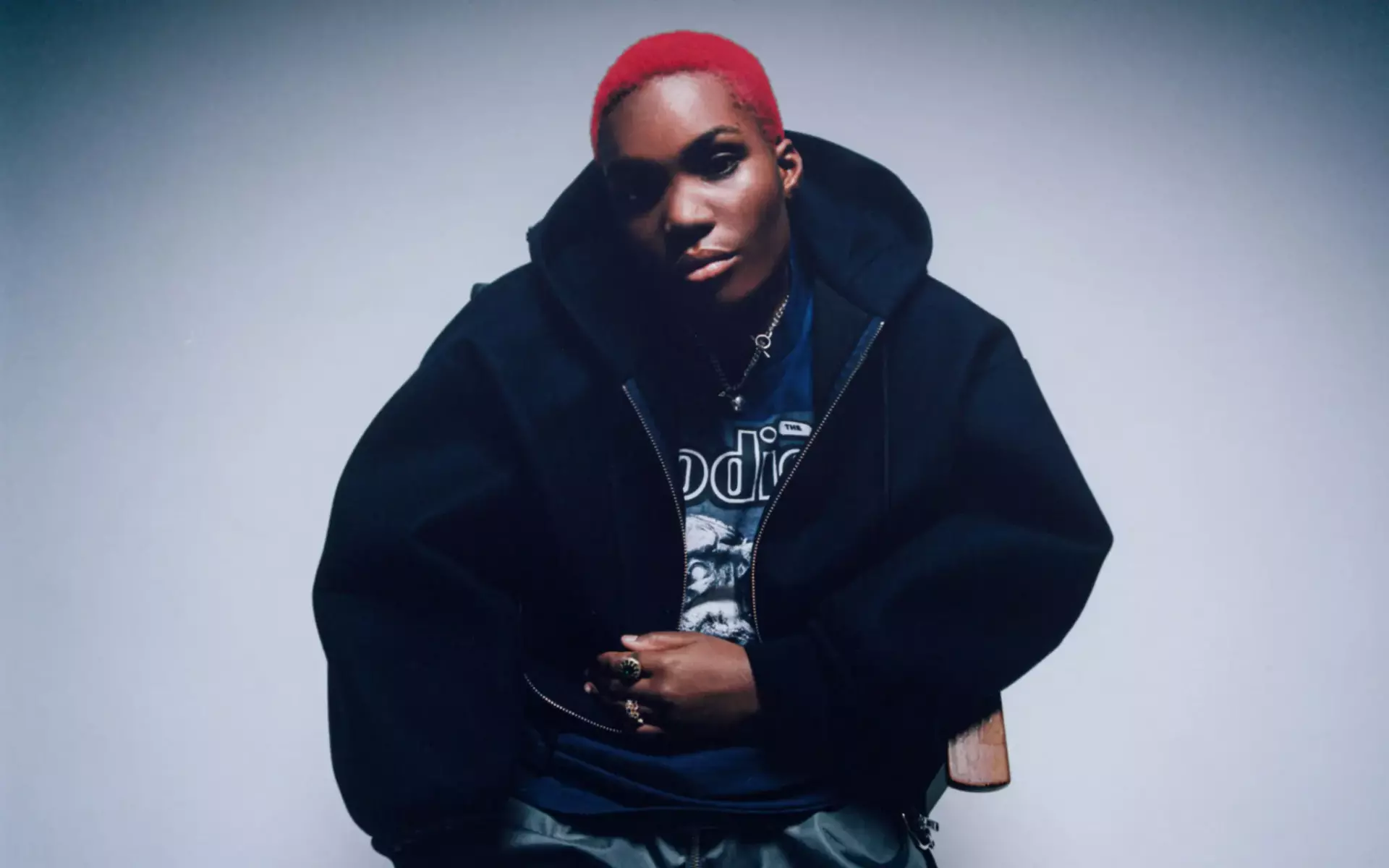
Arlo Parks is still curious. The 25-year-old has long submitted her third studio album Ambiguous Desire, scheduled for release in April, and her mind is fixated on the future beyond the record. “I’ve been feeling really creative,” she gushes. “I’m starting to have little melodies come into my head and starting to just read a lot and collect and chip away at things.” It’s 11am in LA and the sun is shining as Parks turns the camera on, her vivid red hair even brighter when we begin our exchange. “I’m grateful for this weather,” she laughs.
Known to the world for her sharply entrancing vocals, Parks operates as a multi-disciplinary artist, one who is keen to explore creative avenues that fuel her curiosity. She already displayed this artistic nuance during her early career as a poet and writer. “That’s how I got into writing in the first place,” she explains. It’s no surprise, then, that during this creative spike, Parks’ attention isn’t squarely on music; in fact, a large bulk of her time has been spent outside the studio, mulling over cinema.
“I’ve been thinking about this screenplay that I’ve wanted to write. It’s kind of been taking shape slowly.” Combing through The Criterion Collection film archive that’s driving her latest venture, the artist found refuge in the works of Cheryl Dunye and Jean Cocteau. “It’s the surrealist films at the moment for me,” she clarifies.
For Parks, the difference between screen and songwriting lies in showing not telling. “Screenwriting is very much about the unsaid, whereas in songs it’s very much about how I feel, what’s happening exactly,” she explains. Wong Kar-wai and Christopher Doyle’s queer romantic drama Happy Together is helping to tease out this gap of knowledge, teaching Parks how to display feelings, expression and dialogue to viewers. Parks has been greatly inspired by the 1997 film’s ability to move audiences. “I really personally love [Wong Kar-wai]’s style of storytelling and it’s something that I have been moved by a lot. I’m literally just looking across at my bookshelf and I’ve got this book called The Sensuous Cinema of Wong Kar-Wai that speaks a lot to his techniques and language,” she says.
As with sentiments on previous records, Ambiguous Desire is driven by captivating, emotive lyricism. On album opener, ‘Blue Disco’, she mourns the night that came before a 6am journey home – references to chips, gin, scratched walls and throwing up are all too familiar to anyone who has had a stretch on the club or house party circuit. Its woe is tied to the sobering drum sequence, garnished by tender electric guitar riffs, almost like a wolf crying out to the moon. “I like duality,” Parks reflects. “There is this bittersweetness here that almost acts like a mirror to life. Life is sometimes feeling everything, at once. For me, Ambiguous Desire is an album of contrast. So the moments where the chords get a little bit more melancholy feel like they contribute to it being this song that’s just about what it is to be alive, and add a tension there.”
The nocturnal fixation of ‘Blue Disco’ isn’t fleeting; night-time party culture is a theme Parks explores across Ambiguous Desire’s 11 other tracks. It’s an avenue that’s resulted from Parks letting down the guardrails for the past two years. After ending the My Soft Machine tour at Brooklyn Steel in April 2024, Parks spent some time diving into the wider New York nightlife. “I’d never explored the city as a person, outside of the artist stuff,” she says. “I needed to find spaces that feel playful and allow me to have a degree of spontaneity and anonymity.”
It’s a sentiment she shares with contemporary artists like Chappell Roan, who has spoken about yearning for everyday experiences sans the hypervisibility. “The darkness, even visually, has this magic to it. I think it allows you to really lose yourself and maybe feel a little bit less self-conscious,” says Parks.
She went back and forth between LA, New York and London. An extended stay in New York followed as Parks discovered new parts of herself as she danced to rapid BPMs under strobe lights. ‘Wow, I really love this,’ she told herself. Listing a tally of venues – from Nowadays to BASEMENT and Under The K Bridge – Parks found relief from the strict regime and heavy demands that are the lot of a mainstream music artist, with the likes of the US DJ Theo Parrish soundtracking her escapism.
This isn’t to say, however, that Parks’ alternative reality came easy to her – quite the contrary. At first, breaking from her routine felt uncomfortable in some ways. “It was a practice to get into my body and be really present in the moment,” she says cautiously, contemplating her response. Close confidants like Maddie Gavin aka DJ and producer Madgavs eased Parks into her new terrain. “Maddie is very steeped in club culture in LA. Knowing nights like Auntie’s, she had more access. It’s also being around more spontaneous people like her that helped me get out of my head.”
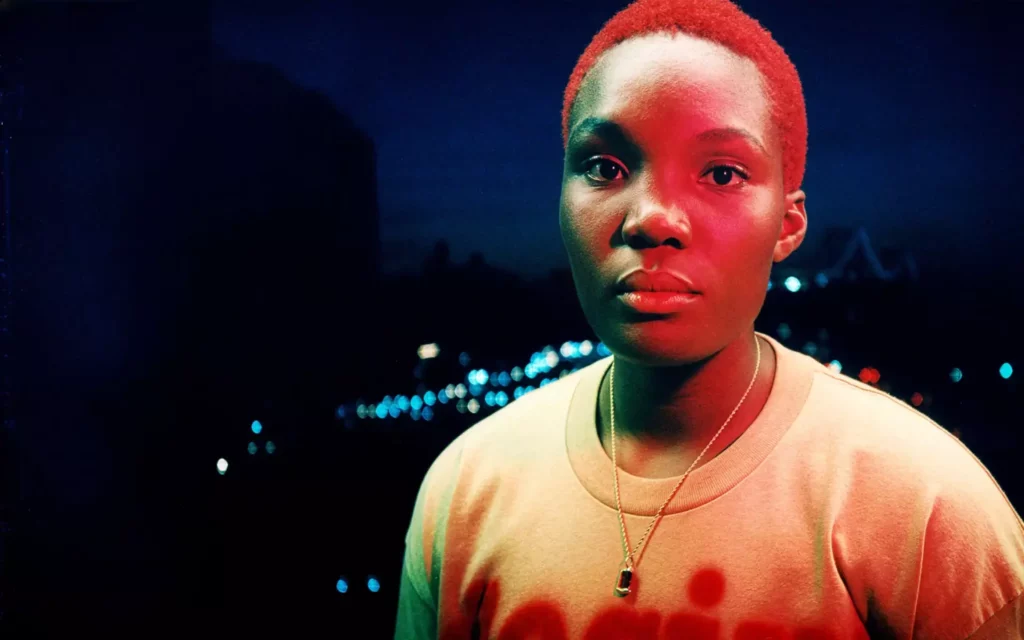
Adjacent to Parks’ visceral reactions to the dance floor grew a studious approach to the activity, a need to contextualise the world around her. She studied club movements in and around New York, as well as those in the UK. She became enamoured with the London sub-culture post-dubstep, while Manchester’s The Warehouse Project also made an impression. “It was falling in love with some of the Todd Terry and Larry Levan remixes or a Marcellus Pittman and being like, ‘OK, there’s something deep here I want to understand,’” says Parks.
Her thirst for knowledge led to layered discussions with Baltimore producer Baird and eventually led to the impetus behind Ambiguous Desire towards the end of 2024. Renowned for his lofty, electronic and hip-hop-laced productions with BROCKHAMPTON and Kevin Abstract, Baird sits at the intersection of both genres. After formally meeting through former BROCKHAMPTON member Romil Hemnani, he and Parks initially worked together on her second album My Soft Machine, with ‘Pegasus’ the result. But it was only when crafting ‘Senses’, ‘Heaven’ and ‘Blue Disco’ with Baird for her third album that something clicked for Parks. “It’s, like, this chemistry,” she begins. “It almost feels like falling in love in that way; it’s hard to describe but you just feel this affinity with each other, that was kind of it. And then we kind of embarked on this adventure: we were making a song every other day for a few years.”
Ambiguous Desire is as loose in its sonic palette as it is vivid in its dissection of people, places and emotions. Traversing electro-pop, dubstep, garage, house and electronic at large, Parks successfully drifts across her latest fascinations, her voice acting as an instrument of its own in places – a lesson she learned from the project’s sole duet, with Sampha. Atop the alt, electronic and pop creation ‘Senses’, the pair divulge on the pain of love in peril. “Maybe I asked you to feel better / If I tell you that I’m sorry,” Parks sings. She’s quick to praise the fellow British singer. “I think he teaches me the importance of sensitivity and that it’s essential to both of our work. Sampha encourages me to just lean into that.” By watching him perform over the years, she learned to position her voice more like an instrument. She does just that on album cut ‘Heaven’, her voice woven into the drums. “It’s so quiet that it’s almost subconscious but adds feeling.” Since debut album Collapsed in Sunbeams, there’s a natural maturation that not only comes with time, but creative experience. The vocal layering on new album cut ‘Nightswimming’, for example, echoes a confidence and assurance only a seasoned artist can convey.
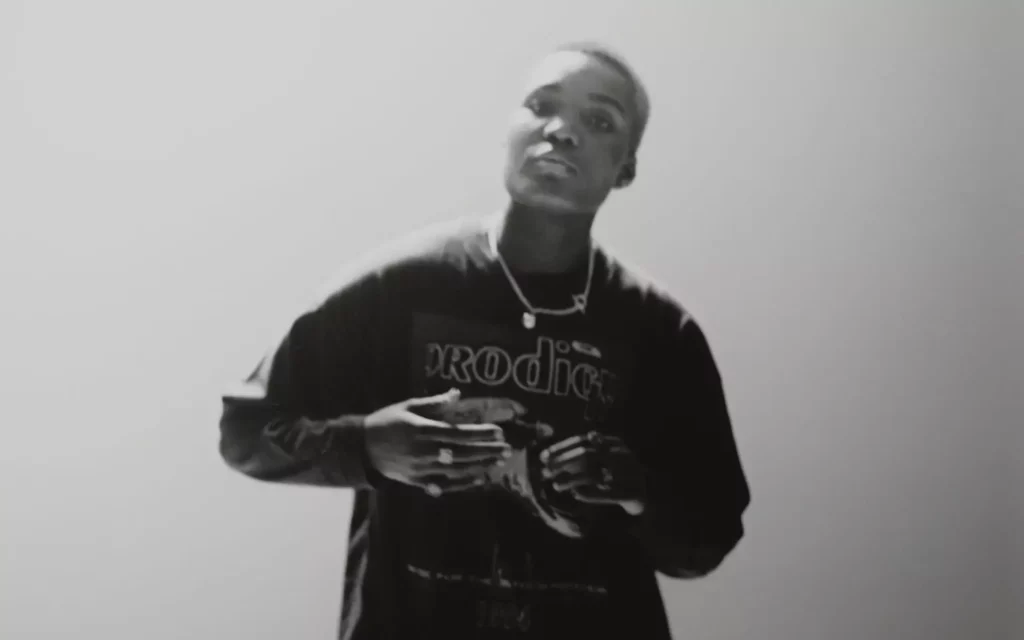
As well as Sampha, Parks is quick to pay tribute to her London roots across other album cuts like ‘Get Go’. Featuring vintage pirate radio adverts sampled from London Pirate Radio Adverts 1984-1993, Vol. 1 (the first volume in a two-part collection of pirate radio adverts and idents), the west London-raised singer wanted to pay homage to a crucial period of British pirate radio history that was born in the 60s. “I’d just been to this flea market in London, and I found this tape, bought it and was combing through all of the ads,” she says. “Guys would pay to broadcast their ads asking for their girlfriends back.” “Ravers Dateline”, an advert featured on the pirate radio project, even includes a hotline for ravers of the late 80s and 90s to socialise. Across this period, unapologetically British creations like jungle, drum and bass, and early iterations of garage would permeate across the city and wider England, the youth engaged in the cultural production of the time. Parks pays tribute to this era by crafting a lucidly hypnotic iteration of breakbeat across her third album. “Yeah, I don’t wanna let go,” she croons, her hedonism on the dance floor at its peak.
In the wake of her forays into clubland, Arlo Parks not only wants to curate nights as a DJ herself – as we’ve seen the likes of Little Simz, Charli xcx and Skepta do in recent years – but to attach nocturnal experiences to her tours. “It’s so special to be able to make people feel things and provide them with experiences. I’ve been practising,” she shares. “I’m talking so much about it; I guess I have to do it now.” Parks is also adamant that night-time venues have to be protected, as she firmly believes that they form the fabric of humanity and human experiences.
Still, before she can embark on contributing to nightlife culture, she has to debut her stage name as a DJ, something that’s a thorn in her side at this point in time. “I’m still dreaming my name up,” she says coyly. “I need to find something cool. I’m not good at naming things, but just like Ambiguous Desire, something will come.”