
Inside the indie label boom of the 2000s: ‘It felt like a paradigm shift’
In this exclusive extract from Janine Warren's The World Was a Mess But His Hair Was Perfect, a new oral history of 2000s UK indie, the likes of The Libertines, The Cribs and Bloc Party discuss the rise of the labels that would eventually give them a home.
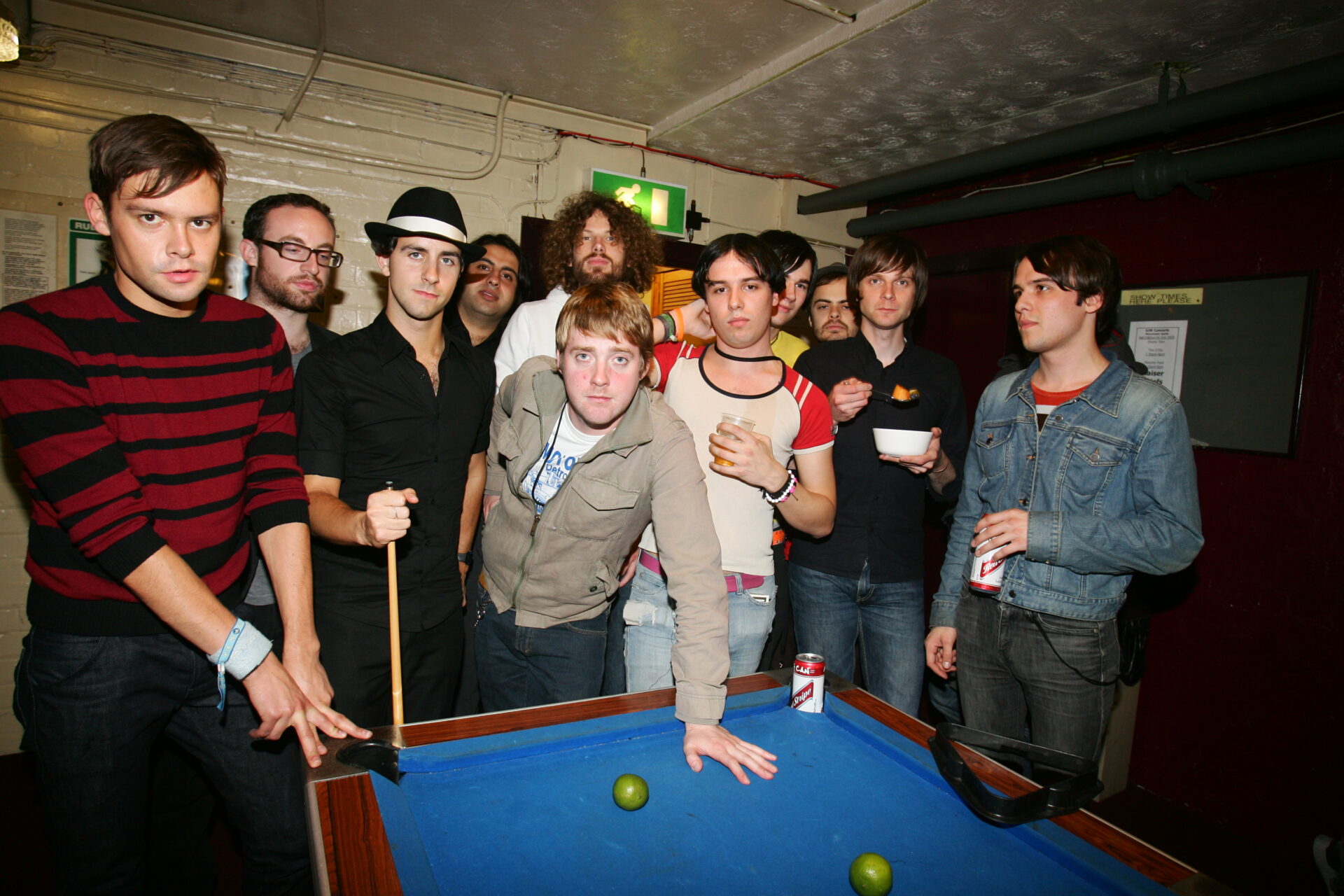
The music scene saw a revival of the ‘indie’ ethos, reclaiming its roots in independent labels and DIY creativity after the major-label dominance of 1990s Britpop. Bands gravitated toward labels such as Rough Trade Records, Wichita Recordings and Domino Recording Company, drawn by promises of artistic freedom, cultural credibility and rosters filled with cutting-edge acts. Often run by passionate music fans rather than executives, these labels offered modest advances that allowed musicians to leave day jobs behind and focus on their craft full-time. The relationship was built on trust and collaboration, aligning perfectly with the scene’s anti-establishment spirit and desire to develop music on its own terms. Major labels, by contrast, were widely regarded as corporate and controlling.
Navigating the industry required careful balancing. Large advances from majors were tempting, especially in the final years of strong physical- album sales, but many artists feared commodification or losing their identity. Indie labels offered authenticity and flexibility, while some companies, such as 679 Recordings, occupied a middle ground: appearing independent but backed by majors, they provided a hybrid model that combined creative control with financial stability.
Bands often had to weigh ideological purity against practical needs, making strategic decisions to secure a liveable wage without compromising their vision. The true strength of the indie sector lay in its patience. Bands were afforded time to evolve, experiment and find their voice, un-pressured by the expectation of immediate chart success. Majors, by contrast, were regarded as requiring quick returns, often tying contracts to steep sales targets. The vibrancy of the early-2000s scene came from this tension between idealism and pragmatism: a cultural moment in which physical records, relentless touring and DIY creativity still held sway, even as the industry began shifting towards digital distribution and 360 deals.
Alex Kapranos (Vocals, guitar, Franz Ferdinand): An independent label to me is the idea that you can put something out into the world which will have a cultural reach from a non-corporate perspective. But your primary purpose must be making something that is artistically sound and, to me, that was always the difference between an independent label and a corporate label.
Tom Greatorex (Bass, Black Wire): By 1994 the term ‘indie’ had really started to take a bit of a left turn from its original context, which was things like the C86 movement and bands such as The Pastels and The Jesus and Mary Chain. By the time Blur and Oasis were selling the same quantity of records as Queen, the term ‘indie’ was still being attached to these bands. Between 2001 and late 2004, the term ‘indie’ came back to
its original meaning. There was a lot of people striving to create things out of nothing, to cobble together either a scene or a band or a club night. Its etymological meaning was regenerating.
Alex Kapranos: In the nineties, ‘indie’ became major labels putting out guitar bands. We wanted to make independent music, we didn’t necessarily see ourselves as ‘indie’ in that sense; in fact, we were quite actively not ‘indie’. But we loved the ethos of an independent label.
Ben Myers (Author/journalist): That scene was more indie than Britpop was, because Britpop was a major label thing really, and Creation, but mainly it was EMI and Polydor and the like.
Ryan Jarman (Vocals, guitar, The Cribs): At the start of the 2000s, all the best bands were on independent labels. We were always going to sign to an indie.
William Rees (Guitar, vocals, Mystery Jets): The major labels really struggled at that point, because they weren’t cool, and that’s why we didn’t go with Virgin. We were talking to Rough Trade and 679 Recordings. The ball wasn’t in Virgin’s court, and that’s because you could sign to an indie and have some creative freedom, and it would work out.
Gary Jarman (Vocals, bass, The Cribs): The White Stripes had come from Sympathy For The Record Industry, which we’d known about for a long time, and so it felt like you didn’t need to be on a big label.
Paul Epworth (Record producer): The weird thing is labels such as 679 Recordings, who were The Futureheads’ label, appeared to be indie but were funded by Warners and distributed by Warners. Then you had Wichita, who were an independent label. I think indie identity is often about how you approach making a record. Paul Epworth’s own label Good & Evil was a boutique record label imprint, which at the time operated as a subsidiary of 679 Recordings.
Paul Epworth’s own label Good & Evil was a boutique record label imprint, which at the time operated as a subsidiary of 679 Recordings.
Gordon Raphael (Record producer, The Strokes, The Libertines): Indie turned into being, you’ve got a certain crooked haircut and a pair of converse and skinny jeans and you played music that sounded like The Strokes. To me, it had negative connotations and there was nothing interesting about the term. If someone said I’m an independent filmmaker, I’m an independent artist, I would pay attention to that. But when it was used in the music scene as a label or a style or a genre, I didn’t feel it meant anything.
Alan Donohoe (Vocals, The Rakes): It was just a job for me. If someone pays you some money to do your job, you take it. It’s a privileged position, to be able to turn down money. I’ve worked on building sites, cleaning the streets, all sorts. Why on earth would I turn down money once I was making some? So, I’m not that ‘indie’-minded. When you only see the outside, of artists doing their art and not realising they do need to make money, then you wonder, ‘Why the hell is the guy who starred in The Godfather ruining it all by doing coffee adverts?’ But it’s just a job. Take the money, don’t take it all that seriously, have a laugh, go home and pay your mortgage.
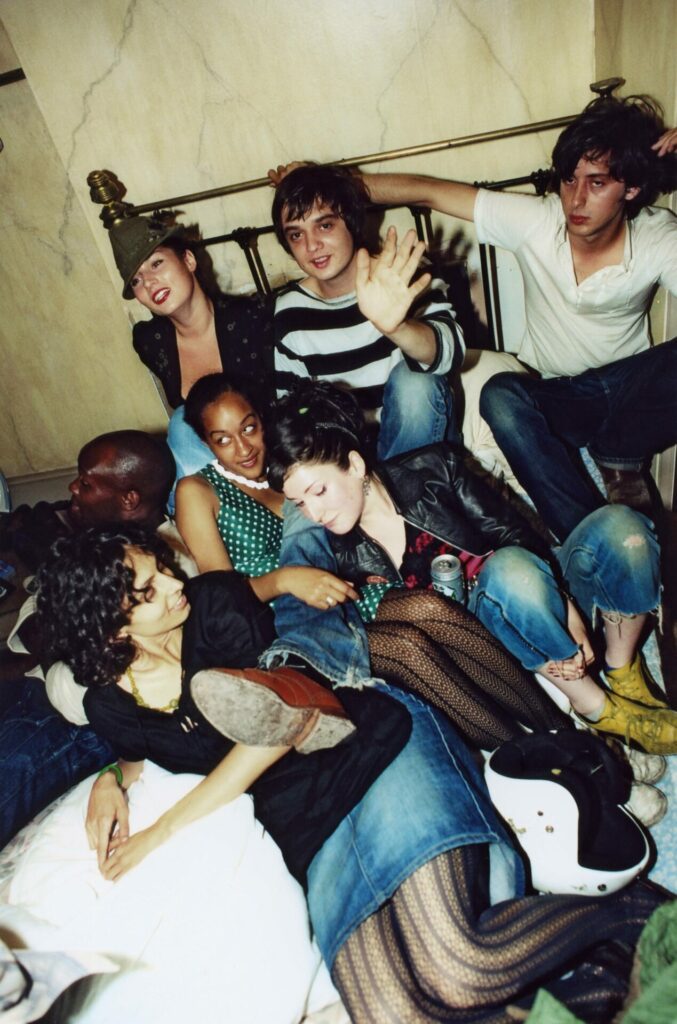
The Rakes signed to V2 in early 2005.
Ryan Jarman: We got asked to do a show in London and all these labels wanted to come down and see it. We went on first, and it was just full of industry, which was so weird because we were still working in a factory together. The stuff they were saying was crazy: ‘Quit your jobs, we’ll give you money, we’ll buy you a van, we’ll send you on the road.’ It was really exciting, the idea of being on tour and not having to worry about taking time off work.
Gordon Moakes (Bass, Bloc Party): Who wouldn’t take the payola and instead try and do it all themselves? The Clash signed to CBS. Most bands weren’t going to turn down a record deal because it’s a big company. It’s a great way to fund a band for a period of time. But in an ideal world, there would still be the opportunity to be Fugazi, right? I don’t believe that choice is there anymore.
Dominic Masters (Vocals, The Others): We really knew what we wanted from day one. I managed the band myself. I got us the first single deal, with Alan McGee’s Poptones. We all had full-time jobs and couldn’t afford the luxury of going on an independent label like some rich kids. An independent won’t give you enough of an advance, but they will give you notoriety. Rough Trade will give you the greatest notoriety and cool and lots of respect, but they won’t pay enough money in the advance to keep you above-board. We had a plan from day one to go to a major and divide the advance equally between the four of us. That way we’d have enough money to quit our jobs and concentrate fully on the band.
Gary Jarman: We did a show at the Metro [5 June 2003] in London we banned any major labels from, it was just for the independent labels. And it was so intimidating on stage, because they were all stood together. Because, of course, they all know each other.
Paul Smith (Vocals, Maxïmo Park): I have no qualms about people saying our music is indie, if you’re talking about the lineage of the Cocteau Twins and The Smiths and Magazine and The Slits and The Raincoats and people making melodic music which is considered but also has this burst of pure joy about it.
Screech Louder (Drums, The Long Blondes): I’m quite proud to be the last indie band if you will. That culture, I don’t think it exists anymore. Even our attitude and our aesthetic of wanting to sign to an indie label and wanting to do it all on our own terms. We didn’t have a manager, we had that punk aesthetic of we couldn’t play, we taught ourselves. Everything we did was from the ground up.
Gary Jarman: It felt like a paradigm shift, every month there was a new band to be excited about and all these great independent labels like Sympathy For The Record Industry, Kill Rock Stars, Thrill Jockey and then, later, the UK big three of Rough Trade, Domino and Wichita.
William Rees: It seemed to me that the indie labels were much closer to NME journalists than the majors. They seemed in cahoots. There was a lot of power there.
Paul Smith: We exist on the margins, and we always have, but the margins are a good place to be. You’re allowed to be yourself, to be creative.
Peter Doherty (Vocals, guitar, The Libertines, Babyshambles): Morrissey was signed before he was 23 and so I had decided years ago that my dream was to sign a record deal before I was that age. I had given up on signing to Rough Trade because they never seemed interested in what we were doing. I did it in the end. I was almost 23 when we signed. It was a personal watermark for me. I’d been at it since I was about 17. I was starting to get a bit desperate. It’s weird to think now, but at the time I thought 23 was old, and that after that age it would be too late. God knows what would have happened to me. Would I have lost faith?
The Libertines signed to Rough Trade Records on 21 December 2001.
Gordon Raphael: Ten months after meeting The Libertines I was told I wouldn’t be working with them on the album. It felt like I was 13 years old and being kicked out of my first band again. I felt sad, like my next level of glory had been taken away from me. I never found out why, but at one point they just said, ‘Our label said we can’t work with you. So sorry.’
Carl Barât (Vocals, guitar, The Libertines, Dirty Pretty Things): The style of music we played, we knew we were never going to get with a major anyway, and because Rough Trade had that pedigree with the bands that had been through there, they were the most likely to understand us. And, of course, they’d had The Smiths, which Pete was really into, and more importantly, they had The Strokes and they were right at the vanguard of that scene.
Lukas Wooller (Keyboards, Maxïmo Park): It wasn’t that it had to be an indie label. It was that they just spoke sense. EMI was the only other label we got serious with, and they just talked nonsense. They made comments such as, ‘We love the track ‘Apply Some Pressure’, but we need you to move the chorus to the front of the song.’ What?!
Dominic Masters: We were only signed to Poptones for one single, and then we got licensed to Mercury/Vertigo Records. We were expected to sell 100,000 records within eighteen months. Out of the twenty-eight bands that were signed to the label, after eighteen months only three remained, and they were the three bands that sold over 100,000. We knew our contract was a minimum of eighteen months, requiring three singles and an album; at maximum, it was going to be two years. We were damn sure that it was unlikely that we’d hit 100,000 sales, but we thought we would have a better chance of a career on Universal than we would have signed to an independent at the time.
Liela Moss (Vocals, The Duke Spirit): For a short time, we were on a small indie label called City Rockers. They were brilliant, they encouraged us, they had nights that we went out to, and we met some interesting people. It all seemed faster and easier, though it was quite short-lived, but that experience gave us the confidence to be prouder and more daring with our work. Then Martin Kelly from Heavenly started to manage us and he took us to Loog Records, which was a bit more corporate and part of Polydor, but he was doing the right thing by us.
He was like, ‘You guys need to earn some money, let’s get you a better record deal.’ Whether that was a terrible mistake or not, I don’t know. He was being a great manager at the time, he was trying to negotiate somewhere where we could grow, where we could earn a small wage. Because at that point, we were all doing shitty jobs and trying to rehearse and play gigs. Once we got onto a bigger label, it became a bit more self-important, we would have meetings about meetings.
Michael McClatchey (Co-founder, Moshi Moshi Records): We released Bloc Party’s single ‘Banquet’. That release was very easy, because the buzz was already there. We knew we’d only be doing one single, because the band had a deal with Wichita. It was a case of, we’ll do one more single on an independent, then we’ll get on with the album. It was one of the most important releases for us up to that point. Then, pretty much at the same time, we met Hot Chip, we did their first release and it changed everything for us. That established us, Bloc Party and Hot Chip. After that, things took off.
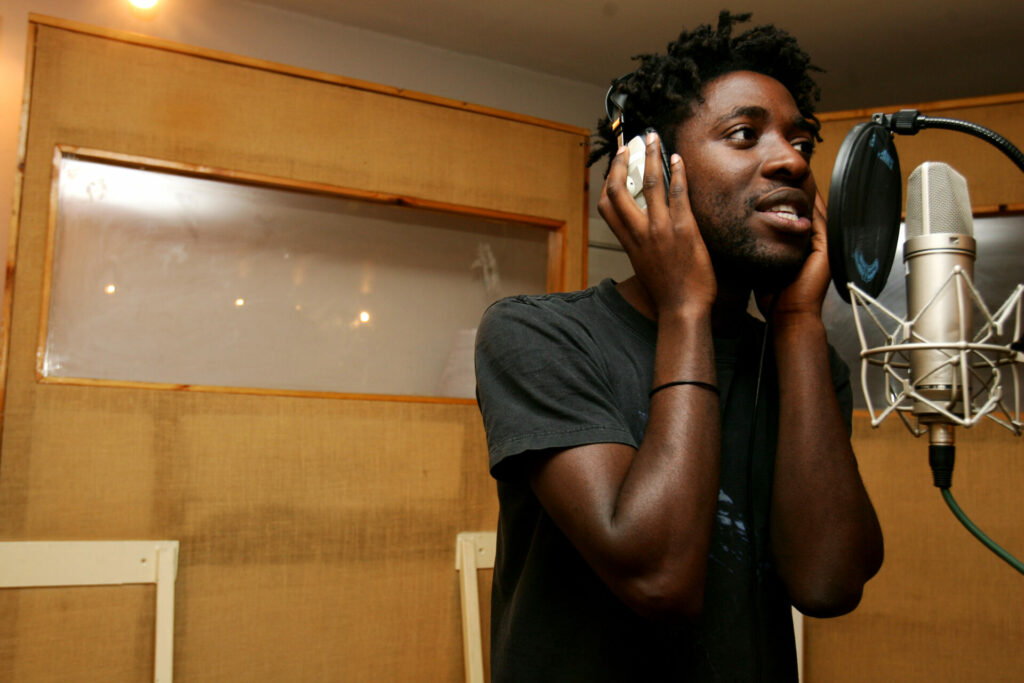
Kele Okereke (Vocals, guitar, Bloc Party): It was definitely important to sign to an independent label; all the music we liked was on independent labels and we knew we would be allowed to make the music that we wanted to make, rather than be forced into becoming something that we weren’t. We signed with Wichita Recordings and we trusted them, and we loved them. They would allow us to evolve. We would hear horror stories about young acts that signed to majors and be told they couldn’t do things, and we just didn’t want that. We wanted to do it our way.
Bloc Party signed to the independent label Wichita Recordings in April 2004.
Gary Jarman: Our first demo was very raw and lo-fi, so we didn’t think that it would be something that a label like Virgin Records would be interested in. In fact, we never sent a demo to any labels. We sent the demo to the promoters of the Leadmill in Sheffield in 2002. We wanted to do a show there and it turned out they’d handed it on to labels.
Ryan Jarman: I took the demo to the Leadmill, waited till the promoter was there and said, ‘There’s that CD that you asked for’, and left. He called me a while afterwards and said he loved it and wanted to put it out on his label, Sobriety Records. But he was too busy with this band Hoggboy. [Hoggboy were an indie and garage-rock band from Sheffield, England, formed in 2001. Early press coverage frequently compared them to The Strokes; while initially positive, these comparisons later became a point of criticism] so he handed it on to other people. After The Strokes had happened, we were getting phone calls all the time from people trying to sign us. The first person he handed it on to was someone from Virgin, which immediately rang alarm bells because we hadn’t done anything, just a few small shows.
Gary Jarman: We were naturally pretty suspicious of that. It felt like the first rumblings of people trying to commodify what had come before, such as The Strokes and The Moldy Peaches. Once Virgin had been in touch, loads of labels were in touch and they kept wanting us to come down to play in London. We had no way of going to play in London. We were still working in a factory. We had no money; we had no contacts to book a show. But then, serendipitously, a Wakefield band who we’d been playing shows with were playing in London, and we jumped on a bill with them. We played that show. We got offered a publishing deal that night with Chrysalis. Then next thing was to get a record deal, and we didn’t want to sign to a major because it wasn’t going to suit us. We weren’t from that background. We didn’t like the idea of being that kind of band.
Kate Jackson (Vocals, The Long Blondes): Rough Trade was our first choice because all our favourite bands historically and at the time were on Rough Trade. We were massive fans of Arcade Fire and they were on Rough Trade. The Strokes were on Rough Trade and The Fall and obviously The Smiths. It was the best label.
Carl Barât: We knew that getting signed was the next essential box to tick in our odyssey. But we didn’t really have any idea what it involved. I didn’t really realise it involved travelling anywhere. I thought I would be sitting at home watching TV, but I’d have a guitar-shaped swimming pool.
Peter Doherty: The ideal was to sign to Rough Trade, but actually, I wasn’t bothered. I just wanted to get signed to anyone so that we didn’t have to scratch around. We just wanted to be put in a studio so we could record these songs, that was all I wanted. The fact that it was Rough Trade in the end was beyond the stuff of fantasy for me.
Carl Barât: Plan A was to get the big deal, to spread our word across the world and to live the life. Plan B was Peter’s: he would have sold everything we had for a song. He was always accepting of any kind of offer from anyone in a pub or a backstreet or a trench coat who had a studio. I really wanted to do it properly, rather than just take the first thing that came along. I think Peter kicked back about Plan A, he was saying that the mechanism of it was corporate, but I think in the long term he’s probably grateful that we managed to achieve Plan A. But of course, it meant working and travelling endlessly, and it also meant that the freedom in songwriting became an obligation. It was necessary to make that change.
You can buy Janine Warren’s The World Was a Mess But His Hair Was Perfect in full here.