
The Big Moon: ‘I tricked myself into being hopeful and it worked’
In 2024, The Big Moon's frontwoman Juliette Jackson was diagnosed with a benign ear cyst that changed her world forever. Here, she opens up about making music with hearing loss and the importance of fun in her recovery process
By Alex Rigotti
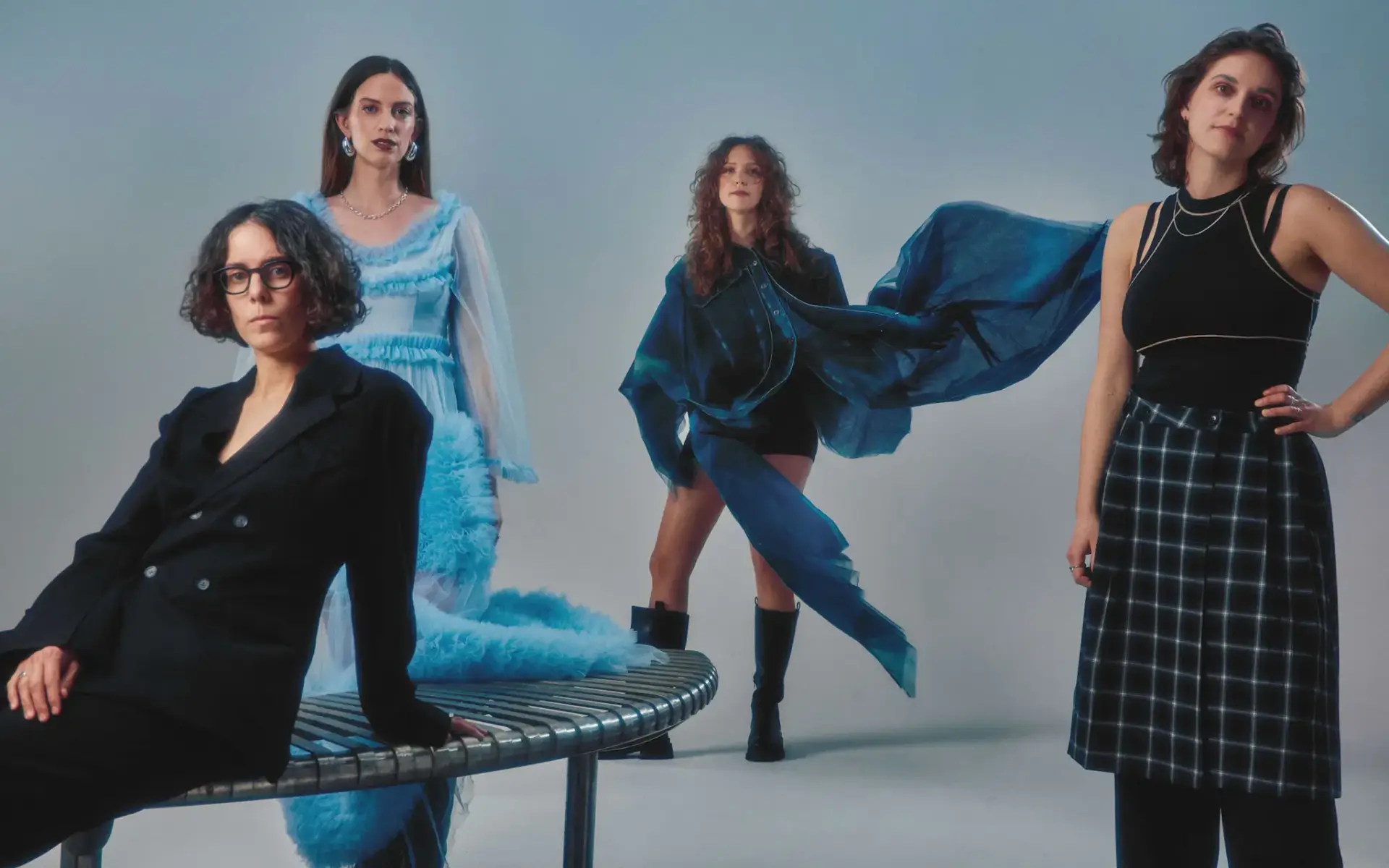
Juliette Jackson seemed to have ticked all the checkboxes in life. She’d started a band, found love, got married, and had kids. Then, in 2024, doctors found a benign cyst in her ear called a cholesteatoma. It required immediate surgery – but it also meant Jackson would permanently lose some of her hearing.
Her band The Big Moon’s forthcoming album Forever captures Jackson navigating the aftermath of the surgery. But this is not an album of despair; instead, it’s intentionally joyful, with Jackson looking to the future with hope after completing the major life milestones. “We really liked this idea of ‘forever’ as this gaping future,” she tells us. “I feel like that comes out in a lot of the songs, and we tried to make [the album] sound open and leave space for things to echo and reverberate.”
Here, we speak to Jackson about the challenges of making music with hearing loss, why hope informs so much of the record, and the lessons learned throughout a decade of being in the band.
Forever is informed by your cholesteatoma diagnosis. Can you tell us about that moment?
[The doctor] basically found it by accident. It was really shocking, actually. I’ve always had trouble with my hearing and I expected it to be a problem when I got older, but even if you expect something your whole life, it doesn’t make it any less surprising when it happens. It’s existential because I’m a musician, and it’s not just my job, it’s a lot of my personality, the way that I’ve made friends… so yeah, quite scary.
Had you ever faced a health issue, or anything that made you reevaluate life in such a pivotal way, before?
No, I’ve been lucky. This is the first thing that’s happened to me where I’ve been like, ‘Your body can go wrong for no reason, and you don’t deserve it, and you just have to deal with it.’ A cholesteatoma is not cancer, but it grows inside your ear like a tumour would and destroys everything it touches. If you don’t remove it with surgery, it grows into your brain and then you die. If this hadn’t been found… that scares me.
Tell me about how the surgery impacted your relationship with music.
It means I’m hearing things in mono, kind of. It has affected my enjoyment of music, actually. I still enjoy going to shows and seeing music live, because it’s really fucking loud, but I don’t listen to music on headphones anymore. When you’re listening to music, you can turn it up really loud and you can feel if it’s right… I’ve lost that ability. In the studio, I’m always talking to my bandmates – like, “OK, we recorded all the bits, but does it feel good?” So I’m trusting them now. Luckily, they know what they’re doing!
The song ‘Sounds’ contains some lyrics about sounds that are precious to you, like your son’s voice or the worms in the ground. How did that track come to be?
I actually wrote all the lyrics in the car park after I found out what was wrong with me. I was super charged up about it, and my initial reaction was rage because it felt really unfair. Then sadness, and then that’s when I started writing down all of these things. If someone says, “I’m gonna take something away from you,” you start noticing all the things that that thing gives you. Like, I’m about to move cities, and I’m walking around my city now, like, ‘I can’t believe I’ve never done that thing, or ‘I’ve never been there.’ I wanted to spew out all these details and record it, so I’d have a document of all these things… not that it would make any difference.
There’s also a lot of happiness and hope in the album – how did you reach that point?
When I was really ill and couldn’t hear anything, I was in pain and isolated because I couldn’t communicate with people very well. I was writing all these sad songs because I couldn’t really hear or sing in tune. Usually, writing songs is a cathartic thing, but writing sad songs about a sad thing, it felt too real. I was like, ‘You know what? At some point, I’m gonna get better. I don’t know what form that’s gonna take, but I’m gonna be playing with my band again, and I’m gonna want to be playing a song that is really fun and upbeat.’ I painted this picture of a happy ending in a year or two’s time, when we’d be playing at a festival and it’d be really sunny, and I was like, ‘Those are the songs I want.’ I feel like I tricked myself into being hopeful, and it worked.
On the song ‘Fun’, you sing: “Fun is as complex as misery” – what informed that lyric?
When I was writing this album, I wanted to write very short pop songs. I got really bored of verses; I got impatient. Maybe that’s something to do with my hearing as well, but I was like, ‘Give me the big juicy bit of the sandwich – I don’t care about having a starter!’ ‘Fun’ is a song about how you’re supposed to suffer for your art, and that’s how you make “real art”, but it’s just not true. Having fun is an integral part of life… it’s not a stupid way to spend your time. I feel like pop music gets put down for not being dark or mysterious, but it’s just as real and it’s just as juicy and important.
What do you make of André 3000 saying he couldn’t find ways to rap about getting his eyes checked in his forties? I feel like that relates to what you’re saying.
I really disagree with André 3000! I would love to hear him rap about going to the optician’s. If you’d asked me this when I was 21, I would have been like, ‘Oh yeah, I won’t have anything to sing about when I’m 40,’ but it’s just not true. There’s a million more things that you have to deal with emotionally. Also, there’s this myth about becoming invisible when you’re a middle-aged woman. It’s a nasty thing to say about a massive group of people, and there’s loads of things that middle-aged women need to talk about and process. I don’t want to shut up any time soon.
The Big Moon have been operating for 12 years now. What’s the biggest lesson you’ve learned in that time?
Oh god, I don’t think I’ve learned anything! I’ve definitely learned self-confidence. At the beginning, I would have been a lot more worried about what people think about my songs, but being supported by my bandmates, I definitely feel like my opinions are valid and my thoughts have worth. I’m not afraid to stand up for something that we’re working on. I feel like I know what I’m fucking doing. Twelve years ago, I was a bit more ‘What the hell are we doing?’ But in terms of music and playing in a band, I know what I’m doing.