
Triumph: Rebel Ride
From Bruce Springsteen and Bob Dylan to The Clash and Motorhead, Triumph motorcycles have long captured the hearts and spirit of musicians the world over. Here, we explore seven decades of the iconic British brand and the artists who have embraced them
Two wheels have always been about more than just a means of getting from A to B. From Marlon Brando’s brooding biker gang leader in The Wild One (1953) and Ray Winstone as a 60s Rocker in Quadrophenia (1979), to “The Cooler King”, Steve McQueen, in The Great Escape (1963), the motorcycle has long existed as a narrative device in popular culture to represent defiance and freedom. One bike in particular ties these rebels together: the Triumph.
First launching in 1902, Triumph is one of the world’s oldest motorcycle manufacturers. Beginning life as a simple motorised bicycle, the brand would supply over 30,000 bikes to allied soldiers in WWI, develop industry defining innovations – including the first mainstream twin cylinder engine – as well as secure a series of infamous racing successes over the next 100 years. Beyond the silver screen and the engineering world, though, Triumph has forged another enduring legacy entwined with music.
Motorcycles and music share a cultural language, rooted in shifting youth-driven landscapes and lived experiences away from the social norm. Tracks like Steppenwolf’s ‘Born to be Wild’ and AC/DC’s ‘Highway to Hell’ are commonly associated as biker anthems, capturing the adrenaline of a life lived with risk and on the open road. Youth cultures like the Mods and Rockers embraced two wheels as part of a lifestyle, intersecting their ride with fashion and music. And cultural icons – from Bruce Springsteen and Elvis Presley to Paul McCartney and Lemmy – would adopt bikes, particularly the Triumph, as a vital part of their personal image. Not to mention the possibility of escape and independence away from the public eye. Here, Rolling Stone UK takes a look at how the iconic British bike brand’s creativity and innovation has been at the heart of this relationship between music and two-wheeled culture for over 7 decades.
The 50s: Café Racer culture
Motorcycles were on the tip of the tongue in British youth culture during the 1950s. Where the postwar landscape of Britain was bleak, the motorcycle offered escape and possibility. Significant economic growth in the decade, along with demand for affordable modes of transport and the availability of credit and financing for young people, meant that working class kids could afford their own bikes. The influence of American music and movies aligned with the construction of arterial highways and the development of transport cafes. These factors led to something of a boom for the motorcycle industry, but also to the formation of one of the most distinctive visual youth movements in British history and one which Triumph would play a central role in: The Ton-Up Boys and the cafe racer culture.
British pubs were rarely accommodating for the leather-clad youths who borrowed their looks from the American rock and roll stars of the time, driving them to roadside cafes was a cheaper and more inviting option for socialisation. These hubs would unintentionally become a space where music, motorcycles and fashion would intersect. The most famous and culturally significant of these locations, The Ace Cafe in London, still exists to this day following a renaissance in the late 90s after being closed for almost 30 years.
The expanded and improved racetrack-like arterials roadways provided surfaces on which riders could test their speed, skill and nerve. The jukebox was a key tenet of the scene, making way for the infamous sport of record-racing. Riders would select a rock n roll hit of the day, from the likes of Gene Vincent or Eddie Cochran, before jumping onto their bike in an attempt to complete a loop of nearby roads and returning before the end of the track. An informal ban on American rock n roll records on UK airways, along with bans on screenings of The Wild One (1953) featuring the original poster boy of youthful rebellion, Marlon Brando, on his own 1950 Triumph Thunderbird 6T, furthered the allure for the illicit aura of two wheels.Combined with the influence of American rock music, Triumph’s parallel twin engines were light, quick and easy to modify, helping to define the cafe-racer identity: stripped back machines built for speed.
The 60s: Bob Dylan, Mods and Rockers, and Beatlemania
The 1960s was a decade of rapid change at home and overseas. The US was characterised by social upheaval, political turmoil, and civil rights movements, whereas the UK’s cultural revolution from the middle of the decade embraced hedonism, modernism and liberation, a time recalled with fondness now as the ‘swinging 60s’. In both cases, the rise of counterculture defined the decade and saw the symbolism of the motorbike shift even further from a utilitarian tool to a means of expressing identity. At the same time, music was becoming more experimental with the emergence of psychedelic rock, influenced by youth culture, and lyrics which focussed on social commentary.
Triumph gained significant popularity overseas throughout the 60s, driven by pop culture, racing successes and celebrity endorsements established them as a cool alternative to domestic brands. Perhaps one of the most (now!) famous of which would be Elvis Presley who ordered 7 Triumph motorcycles for him and his friends whilst taking a break from filming Western musical Frankie and Johnny in 1965, or the iconic American singer-songwriter, Bob Dylan, widely considered a defining voice of the generation.
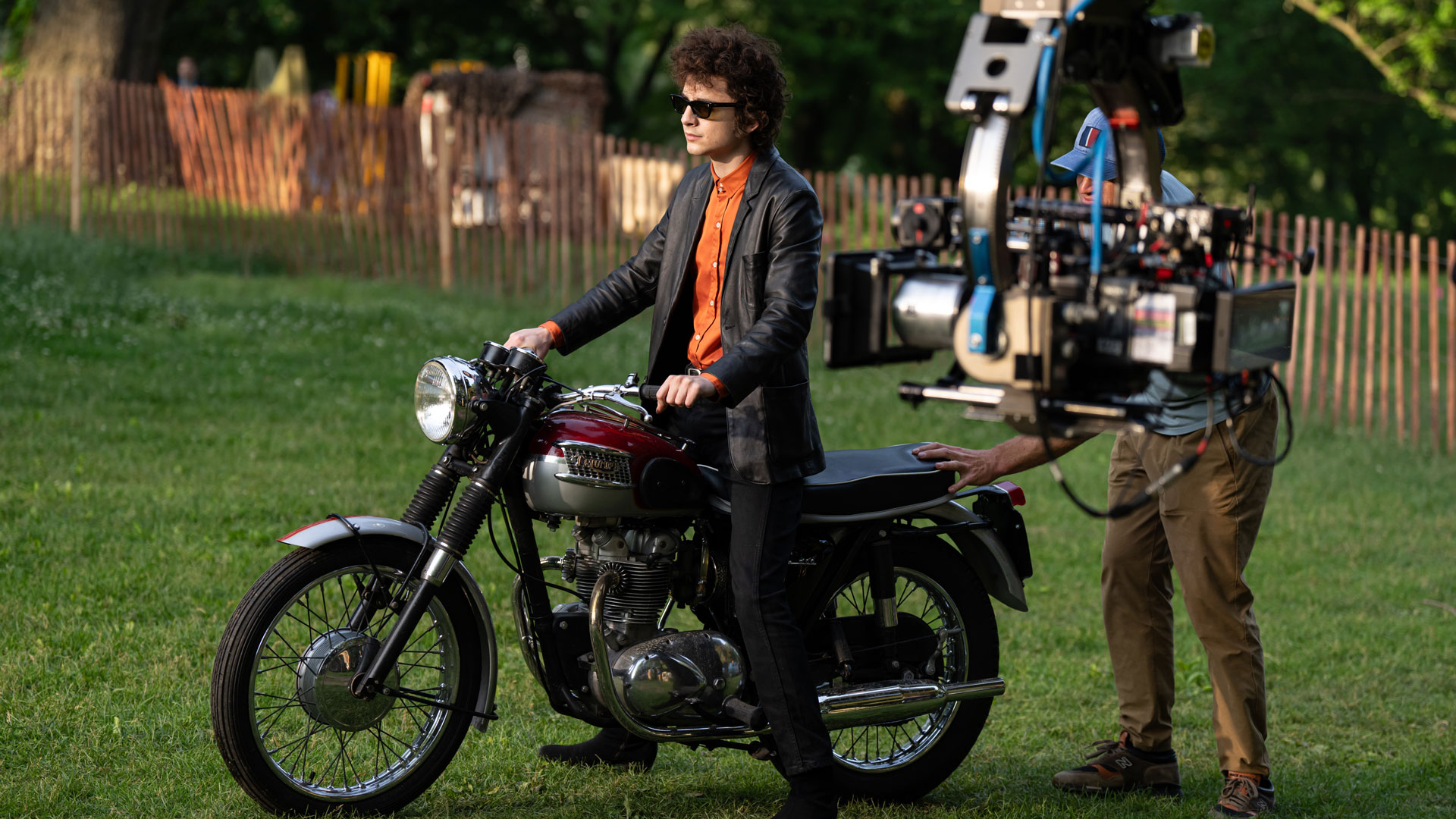
Dylan rode a ‘64 Triumph Tiger 100 at the height of his early days of fame around Woodstock, New York, where he was living. It represented an alternative image to the rise of the ‘outlaw’ biker image, popularised by the Hells Angels. Photographs by Daniel Kramer helped cement the motorcycle as a symbol of Dylan’s restless, counter-culture persona.
In 1966, however, Dylan suffered a now-legendary motorcycle accident on the Triumph near his home. The crash prompted him to withdraw from touring and public life for several years, marking a major turning point in his career and artistic direction. Speaking to Rolling Stone in 2012, Dylan described how he had been “transfigured” by the event. In 2024, the biopic ‘A Complete Unknown’ featuring Timothee Chalamet, has been widely described as a ‘celebration of Dylan’s Triumph years.’
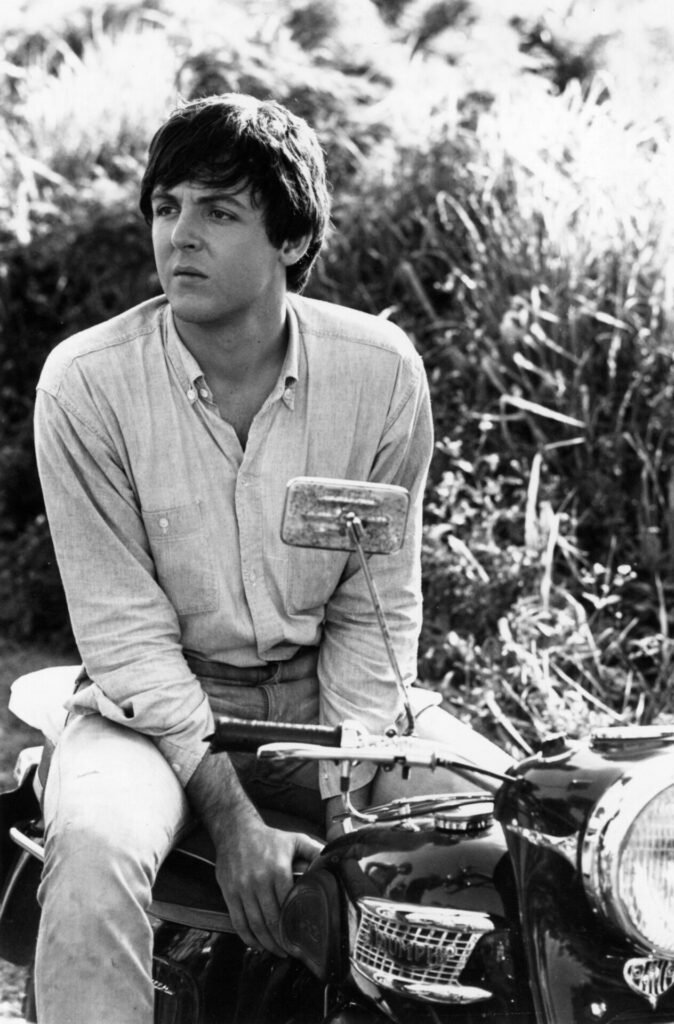
On home turf, the Rocker subculture hit a peak at the same time as the Mods, who favoured sharp tailored suits, Italian scooters and soul and RnB music over the tough ‘greaser’ look and rock and roll records of the Bikers who had found a firm favourite in the Triumph Bonneville. This rivalry was intensified by media coverage and reached a peak with violent seaside clashes on the May bank holiday of 1964. These clashes were famously immortalised by the 1979 rock opera written by The Who, Quadrophenia, and featured Ray Winston riding a Bonneville T100 alongside a host of classic scooters.The following year, during the height of Beatlemania, Paul McCartney would be photographed astride his Bonneville 650 in what has become one of the most widely reproduced informal portraits of a Beatle at the height of their fame. Triumph motorcycles were part of the musician’s lifestyle, as opposed to being an intentionally styled or promotional choice. Both McCartney and Triumph represented the peak of ‘British cool’ in the 60s.
The 70s: Springsteen, punk and hard rock
By the time the 70s rolled around, post-war optimism began to wane, and it became a decade defined by economic turbulence and civil unrest. In the UK, there was increased labour strikes and a shift towards conservative right-wing politics, whilst the US saw an overriding sense of political disillusionment and increased unemployment and inflation.
In the UK, this disenchantment was captured by the rising punk culture, influenced by the raw energy of 50s rock and roll and 60s garage rock, and brought with it staunch DIY ethics, a rejection of mainstream commercialism and an anti-establishment attitude. The leather jacket and straight legged denim of the Rockers of the earlier decades would reemerge as the uniform – albeit customised – of the burgeoning punk style.
Numerous artists of the era embraced the motorcycle as a continued symbol of protest against societal norms, including Steve Jones of Sex Pistols, Dave Vanian of The Damned, and J.J. Burnell of The Stranglers, who bought a Triumph Trident T160, in 1977, using early royalty earnings. But arguably none were influenced more so than The Clash’s Paul Simonon.
Growing up close to the 59 Club in Paddington in the 50s, cafe racer culture would leave a lasting impression on the bassist and painter, a love which would massively impact the band’s aesthetic. Having bought his first set of wheels as a teenager, Simonon would become a lifelong biker. His first Triumph was a white and gold 3TA, followed by a 5TA bought off a mutual friend. Today, his ride is a more modern, lightly modified Hinckley-era model. His 2015 exhibition Wot No Bike bottled his lifelong love of motorcycle culture, Triumph, and the uniting garment of the rockers and punks: the leather jacket.
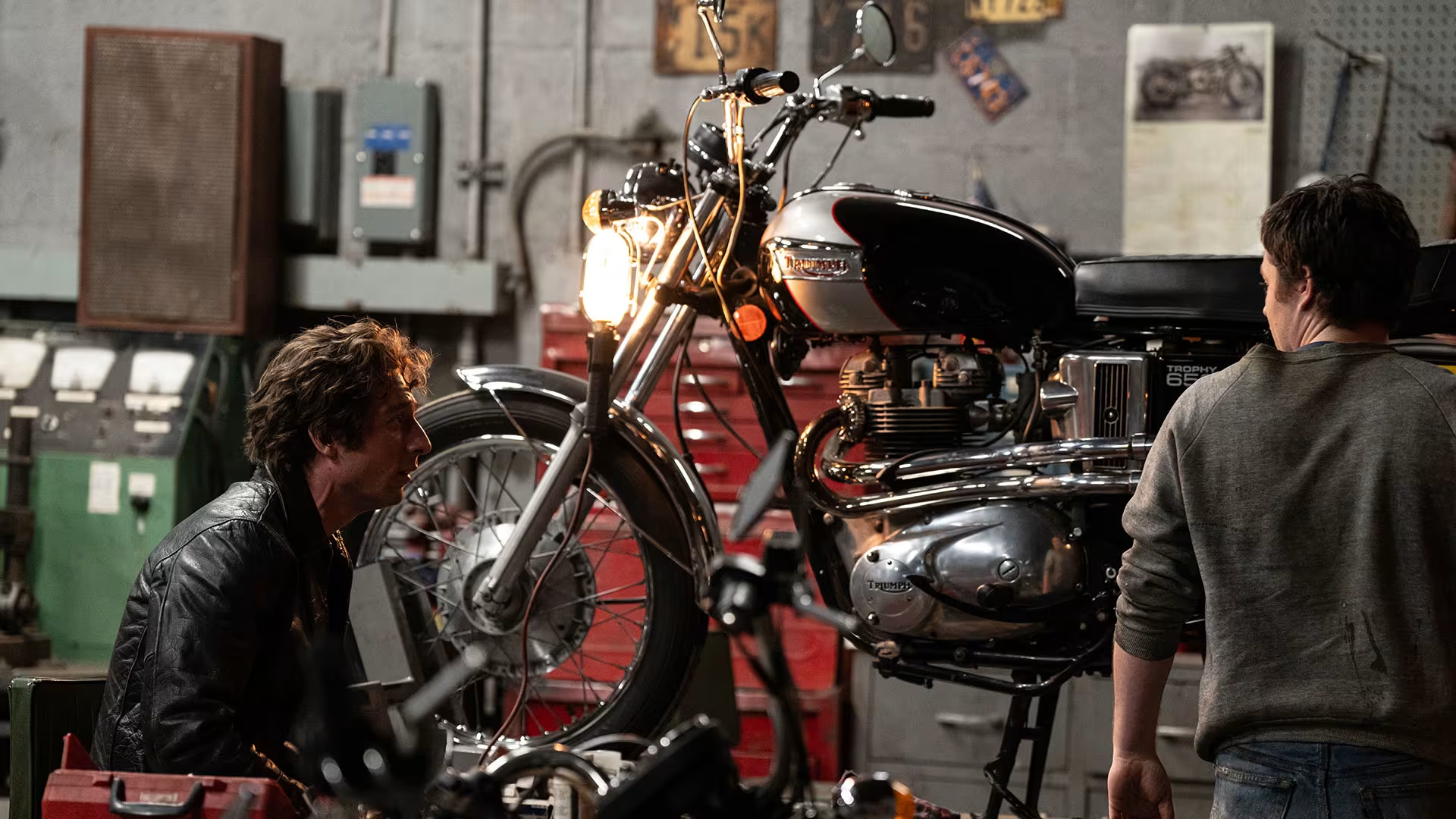
In the US, artists like Bruce Springsteen emerged and approached similar themes of working class struggles and the anxiety of youth, as well as the decline of the American dream. The singer-songwriter’s individual relationship with Triumph was cemented in the early 70s in a series of photographs in which he rode a T100C at a time when his public image was being formed. The now iconic photographs by Eric Meola became part of his visual identity, with the bike reinforcing his independence, restlessness and raw grit. The 2025 biopic Springsteen: Deliver Me from Nowhere starring Jeremy Allen White highlights his connection to Triumph, featuring a vintage TR6C as a visual metaphor for solitude and introspection during the Nebraska album era.
Elsewhere in the evolving sonic landscape, the image of hard rock and heavy metal was also becoming more defined and interwoven with two wheels, particularly in the wake of Judas Priest’s Rob Halford riding a motorbike on stage during the intro to ‘Hell Bent for Leather’ in the late 70s. Artists like Thin Lizzy, Led Zeppelin and Motorhead would all embrace the motorcycle as part of the rugged, outlaw image and hard-edged attitude of the genre. Led Zeppelin’s drummer John Bonham would ride a custom 1972 Triumph Bonneville nicknamed ‘Sunset Tripper’ in the band’s 1976 concert film ‘The Song Remains the Same,’ whilst Lemmy of Motorhead and Hawkwind possessed an authentic, personal relationship with Triumph motorcycles beyond the performative associations with rock. Frequently photographed posing and riding custom Triumphs and a Bonneville T140, the bassist spearheaded a high-speed brand of music which perfectly captured the adrenaline of riding on two wheels.
The 80s and beyond: Psychobilly, Quadrophenia and a shifting image
The release of Quadrophenia in 1979 sparked a revival in both the Mod and Rocker subcultures in the 80s and, with it, popularity for bikes themselves. The emergence of psychobilly, which blended 1950s rockabilly with the punk rock of the 70s, developed a brand new and distinct subculture which also helped to bridge the gap between bikers and scooterists.The psychobilly look adopted the outsider aesthetic of biker culture as well as the custom, cut-down style of 80s scooters as a shift away from the pristine, chrome-heavy look of the Mod revival. Leading bands like King Kurt, The Meteors and Demented Are Go were closely associated with the scooter scene, the video for The Meteors’ ‘Please Don’t Touch’ in 1989 heavily featured motorcycles, including Triumphs, which would also be a go-to ride for the likes of Billy Favata of Demented Are Go.
In popular music Phil Oakley of The Human League and David Essex would both be photographed with their Triumph bikes representing something softer than the historically hyper-masculine connotation of the motorcycle. Following promotion of the bike throughout the 70s, Essex was presented with a Bonneville T140E as a thank you, later using the image as the cover of his 1980 single, ‘On My Bike.’
This accessibility was somewhat representative of the shift in symbolism of the motorcycle in music throughout the 80s and 90s and into the new millennium, in which two wheels moved away from associations purely with outsider subcultures and outlaw personas towards more mainstream individual image and lifestyle choices. More contemporary artists like Green Day, P!nk and Sheryl Crow would adopt the Triumph in their day-to-day life, demonstrating how, despite this shift, its enduring legacy would continue to capture the hearts of musicians.
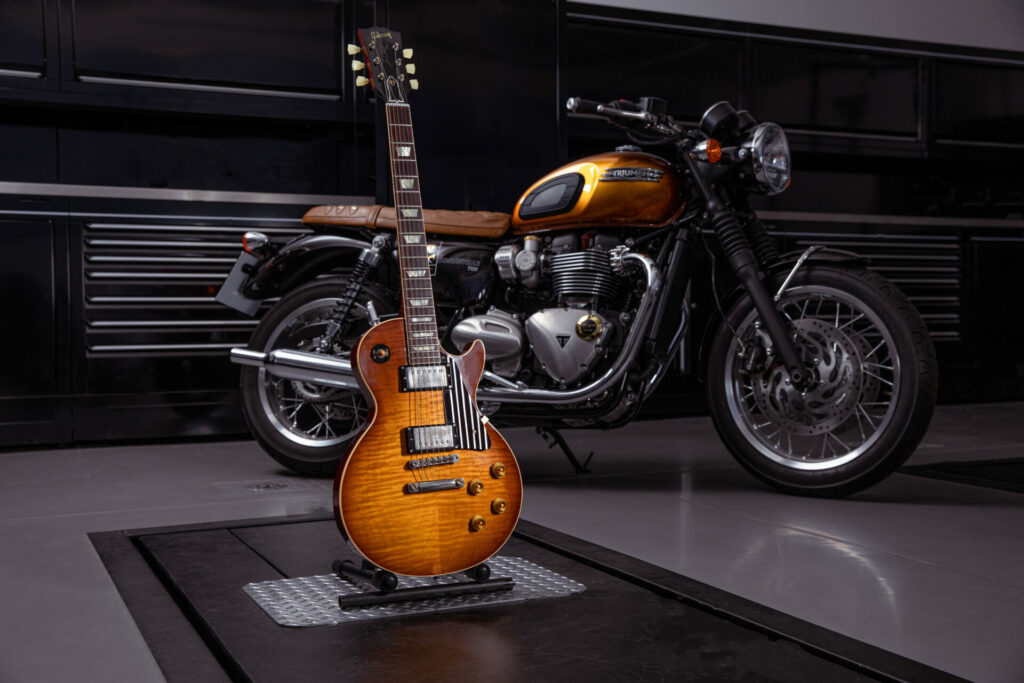
The strong connection between music and motorcycles remains to this day. In a joint celebration of legacy, Triumph and the iconic guitar manufacturer Gibson would come together for a one-off collaboration in 2022. 1959 was a breakthrough year for both brands, with Triumph releasing the beloved Bonneville T120 and Gibson the Les Paul Standard, played by the likes of Jimmy Page, Eric Clapton and Billy Gibbons. The resulting collaboration was a one-of-a-kind pairing: a custom Bonneville T120 and a matching Gibson Les Paul Standard Reissue produced to support the Distinguished Gentleman’s Ride, a global event bringing together thousands of riders for men’s mental health and prostate cancer charities.
In 2025, Dougie Poynter of British pop-rockers McFly would become the next in the ever-growing list of musicians to embrace motorbikes for the possibility and freedom they offer to experience the world around us. “I’ve always loved motorcycles because of how present they make me,” Poynter tells Rolling Stone UK. “To be honest, I’m not really interested in speed or racing. What I love is being outside and feeling connected to the world around me.”
“It’s never really about the destination,” he continues. “Some of the best days of my life have been spent riding with friends and not really going anywhere at all. I think that’s why motorcycles stay with people. They turn travel back into an adventure. In a world where we’re all trying to get somewhere faster, a motorcycle reminds you that the journey was the point all along.”
In collaboration with Triumph London and customiser Charlie Stockwell of Stockwell Design, the bassist would create a bespoke Bonneville T100 named the “Sunraiser.” Inspired by his love of vintage style, the “Sunraiser” would blend modern engineering with iconic Bonneville designs and would go on to earn the runner-up prize in the global Triumph Originals competition.
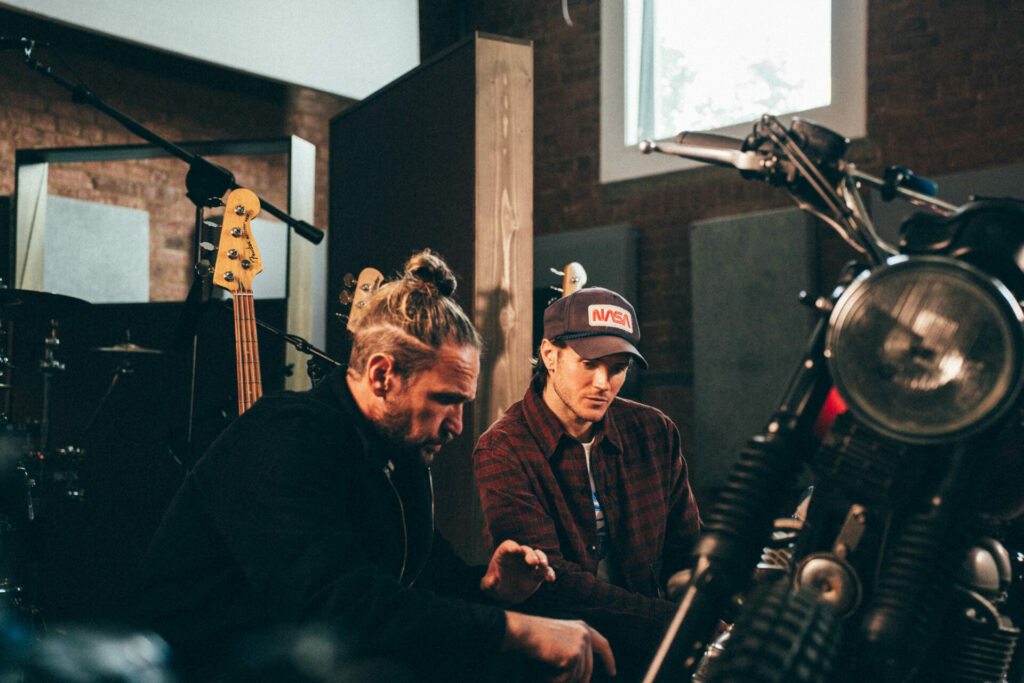
For over 120 years, Triumph has married engineering ingenuity with creative expression, in turn capturing the hearts and minds of artists and musicians as the perfect partner to their craft.
“[They] sit in this perfect space between heritage and modernity,” the bassist concludes. “They have history, character and soul, but they’re also brilliantly engineered modern machines. To me, a Triumph is like a great pair of Red Wing boots or a vintage leather jacket. They’re timeless. They never really go out of style. If anything, they get better with age.”